Paul B. Stares - Böcker
Visar alla böcker från författaren Paul B. Stares. Handla med fri frakt och snabb leverans.
9 produkter
9 produkter
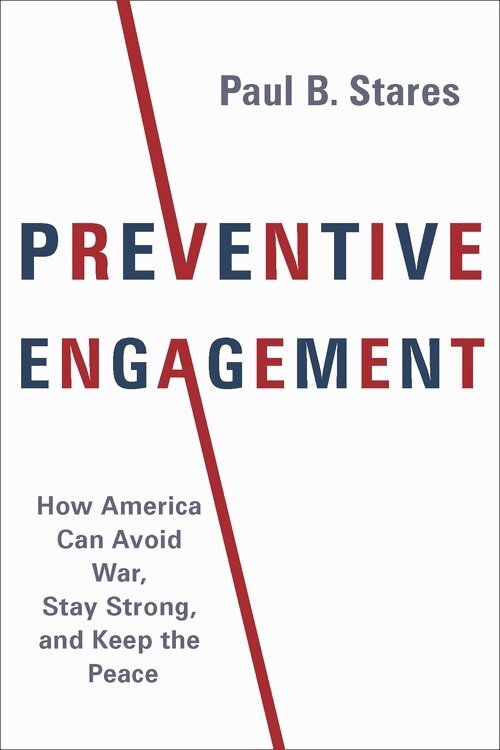
Preventive Engagement
How America Can Avoid War, Stay Strong, and Keep the Peace
Inbunden, Engelska, 2017
1 108 kr
Skickas inom 7-10 vardagar
America finds itself in an acute predicament: The international order it has helped construct over many decades is under increasing stress from various quarters. As the world's predominant military power and principal guarantor of global peace and security, the United States must fulfill its many responsibilities without becoming entangled in costly conflicts that threaten its security, deplete its national power, and weaken its international standing. Preventive Engagement proposes a long-term strategy for how the United States can manage the risks of a more turbulent world in a way that lessens the demand for--and potential drain on--U.S. power. Its novel approach adapts the basic techniques used to prevent many societal problems, such as infectious diseases, violent crime, and drug trafficking. Preventive engagement has three complementary components: the promotion of policies known to lower the risk of violent conflict and political instability; the anticipation of crises most likely to precipitate major U.S. military engagement; and a concerted effort to mitigate if not resolve conflicts that erupt in the short term before escalating into a threat to U.S. interests.This comprehensive approach stresses early detection and foresight to actively manage sources of conflict. Using examples from Syria, Ukraine, and the South China Sea, Preventive Engagement shows its strategy in practice and illuminates the role that international actors, including NGOs, the United Nations, regional organizations, and private businesses, can play to further U.S. preventive goals.
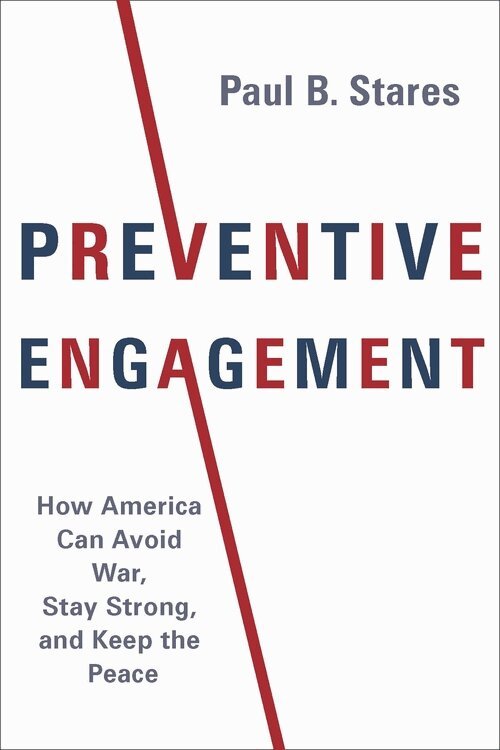
Preventive Engagement
How America Can Avoid War, Stay Strong, and Keep the Peace
Häftad, Engelska, 2019
282 kr
Skickas inom 7-10 vardagar
The United States faces an increasingly turbulent world. The risk of violent conflict and other threats to international order presents a vexing dilemma: should the United States remain the principal guarantor of global peace and security with all its considerable commitments and potential pitfalls––not least new and costly military entanglements––that over time diminish its capacity and commitment to play this vital role or, alternatively, should it pull back from the world in the interests of conserving U.S. power, but at the possible cost of even greater threats emerging in the future?Paul B. Stares proposes an innovative and timely strategy—“preventive engagement”—to resolve America’s predicament. This approach entails pursuing three complementary courses of action: promoting policies known to lessen the risk of violent conflict over the long term; anticipating and averting those crises likely to lead to costly military commitments in the medium term; and managing ongoing conflicts in the short term before they escalate further and exert pressure on the United States to intervene. In each of these efforts, forging “preventive partnerships” with a variety of international actors, including the United Nations, regional organizations, nongovernmental organizations, and the business community, is essential. The need to think and act ahead that lies at the heart of a preventive engagement strategy requires the United States to become less shortsighted and reactive. Drawing on successful strategies in other areas, Preventive Engagement provides a detailed and comprehensive blueprint for the United States to shape the future and reduce the potential dangers ahead.
1 886 kr
Skickas inom 10-15 vardagar
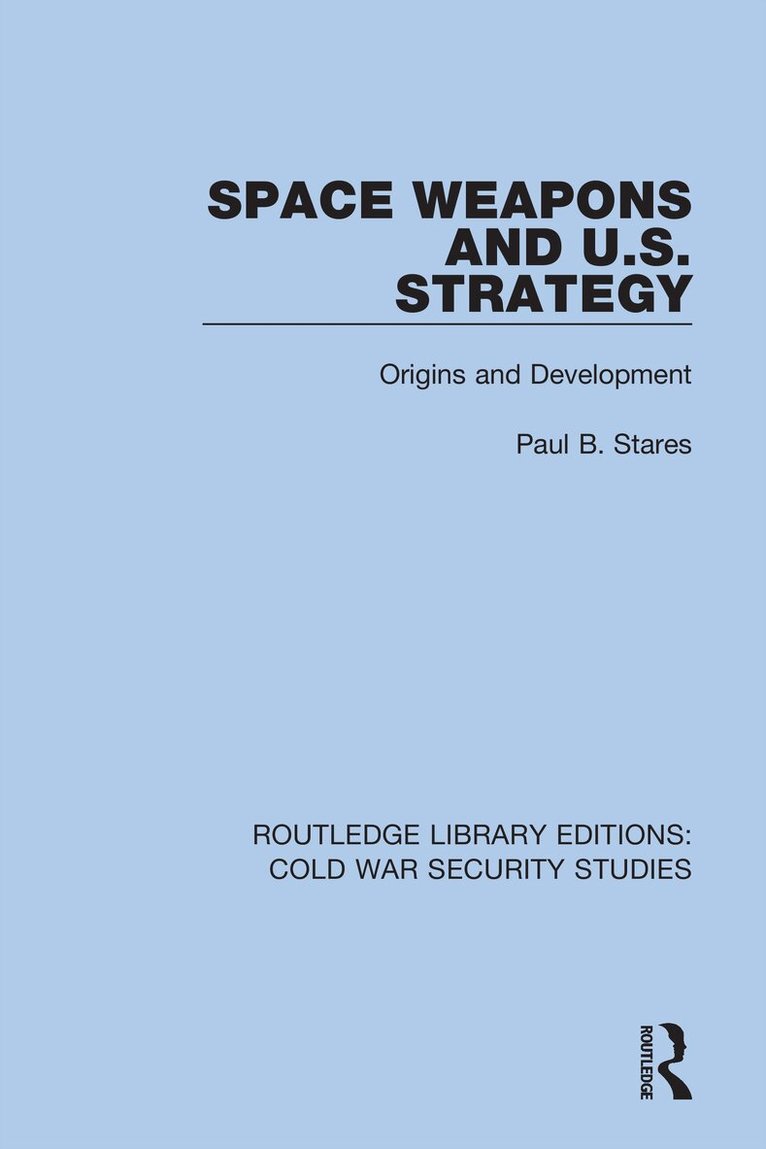
This book, first published in 1985, analyses the factors that have shaped the militarization of space. By examining in great detail the determinants of U.S. policy, it explains why for over 25 years space did not become the scene of an arms race, and why this began to change in the late 1970s. Both superpowers did, however, develop a limited anti-satellite capability in the 1960s, and these programmes are also discussed.
508 kr
Skickas inom 10-15 vardagar
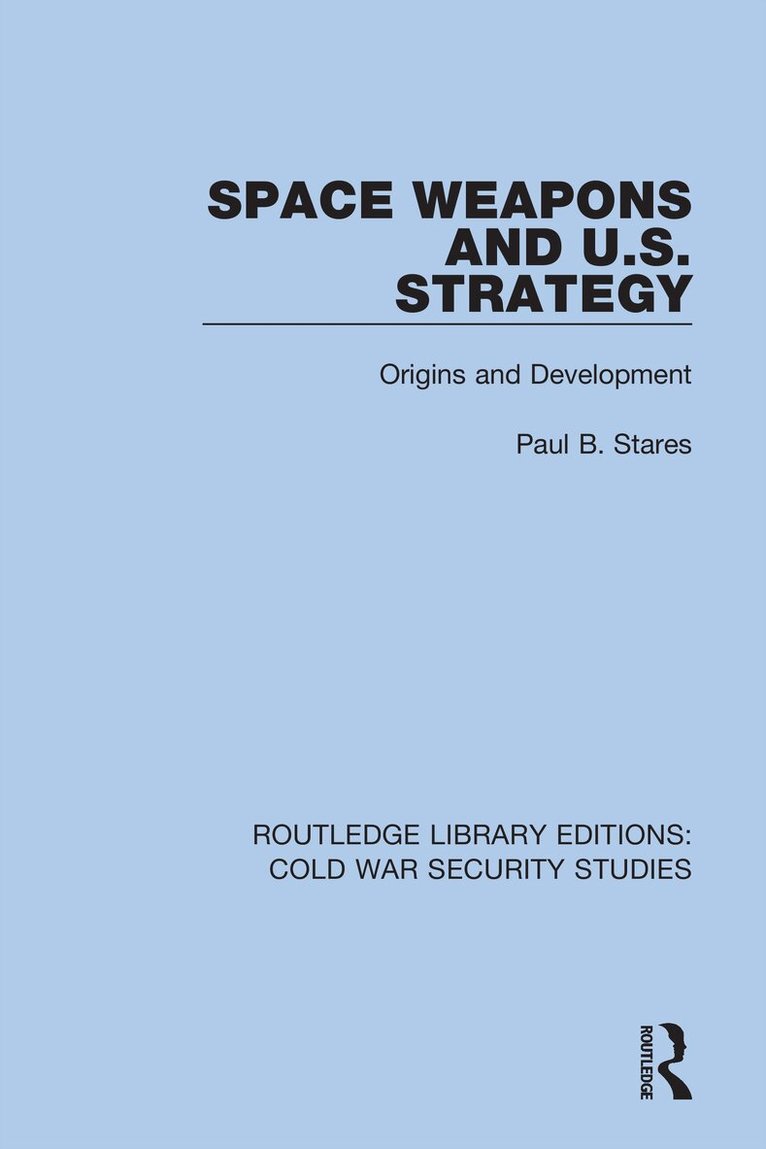
This book, first published in 1985, analyses the factors that have shaped the militarization of space. By examining in great detail the determinants of U.S. policy, it explains why for over 25 years space did not become the scene of an arms race, and why this began to change in the late 1970s. Both superpowers did, however, develop a limited anti-satellite capability in the 1960s, and these programmes are also discussed.
287 kr
Skickas inom 10-15 vardagar
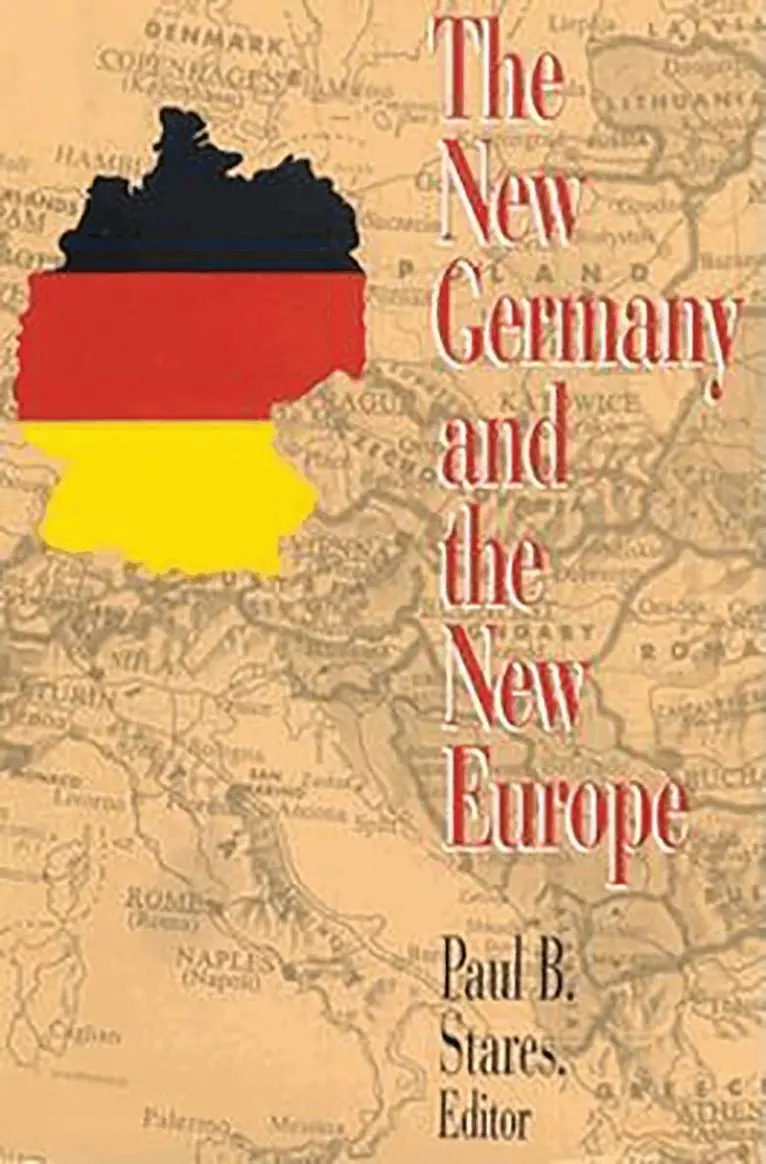
Since the first heroic and largely spontaneous acts precipitated the end of the Cold War, Europe has been transformed in a truly remarkable and wholly unforeseen manner: Germany has been unified, the Warsaw Pact has collapsed, and the Soviet Union has disintegrated, leaving in its wake many new independent states.These momentous events have taken place so rapidly and often in such confused circumstances that their full meaning has barely been comprehended let alone assimilated. A clearer and deeper appreciation of the forces and processes unleashed by the recent changes is vitally important, however, to meet the challenges and exploit the opportunities that now present themselves in Europe. This volume, therefore, is intended to promote wider understanding of the key issues, and it represents the most comprehensive assessment to date of the new Germany and the new Europe.The volume begins with detailed accounts by U.S. and German scholars of how unification came about and the resulting changes to the political economy, security policy, and foreign relations. A complementary section discusses the implications for the rest of Europe as well as Japan. While the focus of the book is on the new Germany, two separate chapters provide specific designs for a new adoption of a general system of cooperative security.
264 kr
Skickas inom 10-15 vardagar
The market for illicit drugs is expanding inexorably around the world. More kinds of drugs are becoming more available in more places than ever before. But the drug trade is not only growing, it is changing in character. It has ceased to be a marginal area of criminal activity and has now become a major global enterprise controlled by formidable interests that threaten much more than the health of drug users. Moreover, the immense wealth that has been amassed from selling drugs has given the principal trafficking organizations enormous power to corrupt and intimidate public officials and government institutions.In this major book, Paul Stares presents a compelling portrait of the global drug market and the consequences of this international plague. He explains that there are good reasons to fear that the global market for drugs will continue to expand in the coming years: profits to the traffickers are huge; the revolutionary advances in communications, transportation, and information technology facilitate smuggling, as do the lowering of border controls and trade tariffs and the trends toward privatization and deregulation. Meanwhile, the expanded volume of global trade, travel, and financial transactions makes it harder for customs and police authorities to detect and stop illicit activities. Added to the growing incentives and opportunities to supply illicit drugs, the level of demand is increasing in many new areas of the world, particularly in formerly communist countries and many areas of the developing world.What can done about this growing problem? One option is legalization, but Stares contends that its implementation would be problematic while its benefits remain unclear. Yet, continuing on the present course will not work either. Stares argues that reducing both the supply and demand for illicit drugs requires a fundamental shift away from the current overwhelming emphasis on negative sanctions to deter and deny their production, trafficking, and consumption. Instead, he calls for more positive control measures that primarily rely on persuasion and cooperation. He advocates the creation of a global drug monitoring and evaluation network, a global drug use prevention program, a global drug treatment training program, and an international drug crisis response program.According to Stares, the effectiveness of reorienting drug control policy to curb the global habit will ultimately depend on the international community's willingness to address much larger concerns to which the drug problem is inextricably linked-- including overpopulation, environmental degradation, poverty, illiteracy, ethnic strife, and disease. Only by recognizing the fundamental relationship between these larger issues and the global drug problem can meaningful progress be made. Selected by Choice as an Outstanding Book for 1996
270 kr
Skickas inom 3-6 vardagar
270 kr
Skickas inom 3-6 vardagar
315 kr
Kommande
Drawing on lessons from the Cold War, how can the United States manage its superpower rivalries without going to war?The broad consensus among most observers of world affairs is that a new Cold War 2.0 has now begun.What form and character this new era of major power competition will take is still a matter of debate but few if any expect that relations between the major powers—primarily between the United States on the one hand and China and Russia on the other—will be anything less than highly contentious and potentially very dangerous at times. The die has seemingly been cast for another prolonged period of great power competition and confrontation with all the costs and risks that attend rivalries of this kind. If history is any guide, this era could last many decades—most strategic rivalries do—and end in war—again as they have often done so in the past. But just as the Cold War was not inevitable, neither do today’s global tensions have to lead to a continual threat of war. The imperatives to avoid prolonged confrontation between the major powers are arguably greater today than at the Cold War’s outset. Besides the need to avoid a catastrophic nuclear war and the opportunity costs of a wasteful arms race, other challenges threaten humanity—some of them existential in nature––which require effective and collective international action. This is unlikely to be forthcoming without broad agreement among the major powers. The opportunity to forge a different, less dangerous and mutually beneficial relationship between the United States and its principal rivals will likely arise at some point in the future just as it did during the Cold War. The lesson from the past is that the United States would be wise to be prepared for just such moments. This requires not just a willingness to be open to the possibility of an alternative future, but also having a coherent vision and associated game plan for what a safer and more stable relationship among the major powers might look like.This book is intended to help the United States do just that.