Paul Bertagnolli - Böcker
Visar alla böcker från författaren Paul Bertagnolli. Handla med fri frakt och snabb leverans.
4 produkter
4 produkter
2 864 kr
Skickas inom 10-15 vardagar
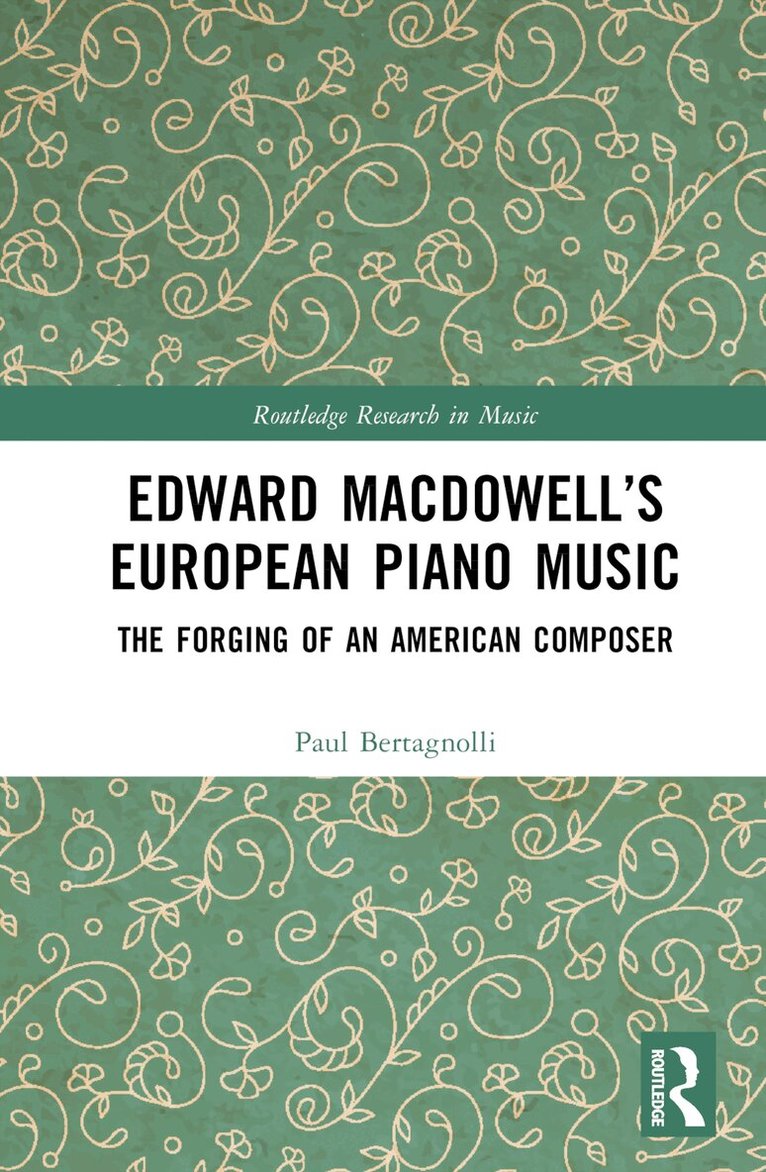
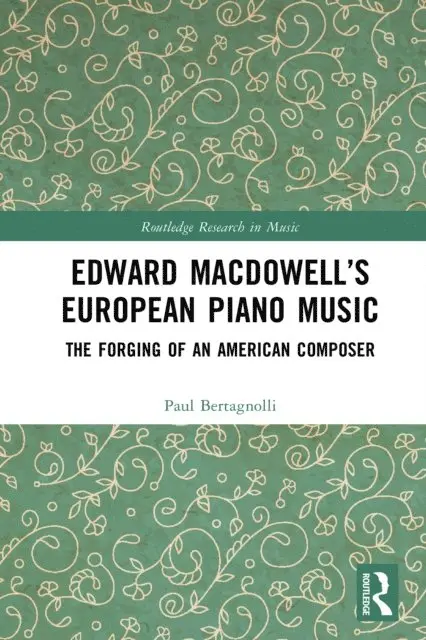
Edward MacDowell’s European Piano Music is a critical study of the piano music that MacDowell composed during his European sojourn (1876–1888), steeped in reception history and with a special emphasis of programmaticism.The book expands current knowledge of MacDowell’s childhood in four of the chapters based on his previously uninvestigated sheet music collection, thereby achieving a better balance among the stages of MacDowell’s life than is evident in most books of the life-and-works variety. Prolific contemporaneous music criticism, meticulously preserved in MacDowell’s scrapbooks, is likewise undervalued in the MacDowell literature, but it furnishes penetrating observations about the expressive and programmatic content of numerous compositions, especially as it was revealed to critics when MacDowell performed his own works. Lastly, the book offers explanations for why MacDowell immersed himself in European culture for decades and then, at a crucial juncture in his career, embraced diverse American heritages and worked toward a conception of a pluralistic music that was American “in a creative sense.”The book’s content and methodology would appeal most directly to specialists within the broad fields of musicology and music theory, particularly within American art music and its composers; nineteenth-century music; program music; reception history; and piano literature.
695 kr
Kommande
Edward MacDowell’s European Piano Music is a critical study of the piano music that MacDowell composed during his European sojourn (1876–1888), steeped in reception history and with a special emphasis of programmaticism.The book expands current knowledge of MacDowell’s childhood in four of the chapters based on his previously uninvestigated sheet music collection, thereby achieving a better balance among the stages of MacDowell’s life than is evident in most books of the life-and-works variety. Prolific contemporaneous music criticism, meticulously preserved in MacDowell’s scrapbooks, is likewise undervalued in the MacDowell literature, but it furnishes penetrating observations about the expressive and programmatic content of numerous compositions, especially as it was revealed to critics when MacDowell performed his own works. Lastly, the book offers explanations for why MacDowell immersed himself in European culture for decades and then, at a crucial juncture in his career, embraced diverse American heritages and worked toward a conception of a pluralistic music that was American “in a creative sense.”The book’s content and methodology would appeal most directly to specialists within the broad fields of musicology and music theory, particularly within American art music and its composers; nineteenth-century music; program music; reception history; and piano literature.
2 376 kr
Skickas inom 10-15 vardagar
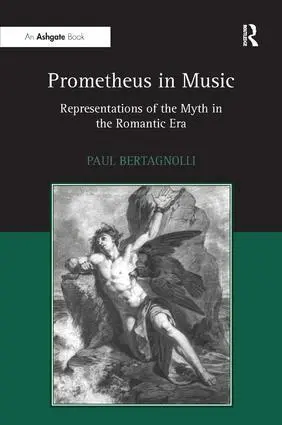
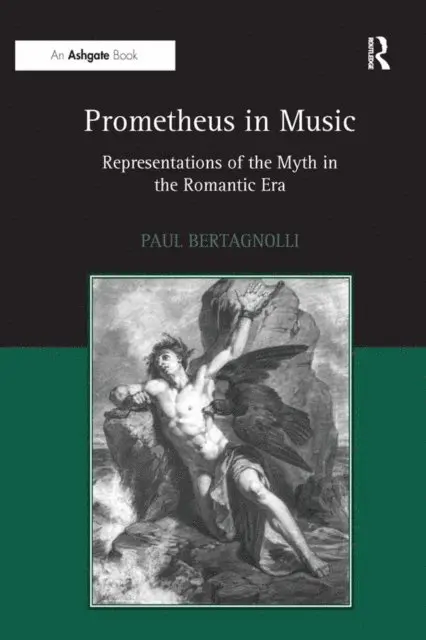
The ancient Greek myth of Prometheus, the primordial Titan who defied the Olympian gods by stealing fire from the heavens as a gift for humanity, enjoyed unprecedented popularity during the Romantic era. An international coterie of writers such as Goethe, Monti, Byron, the Shelleys, Sainte-Hélène, Coleridge, Browning, and Bridges engaged with the legend, while composers such as Beethoven, Reichardt, Schubert, Wolf, Liszt, Halévy, Saint-Saëns, Holmès, Fauré, Parry, Goldmark, and Bargiel based works of diverse genres on the fable. Romantic authors and composers developed a unique perspective on the myth, emphasizing its themes of rebellion, punishment for transgression and creative autonomy, in great contrast to artists of the preceding era, who more characteristically ignored the tribulations of Prometheus and depicted him as the animator of a naïve, Arcadian mankind who, when awakened from their spiritual dormancy, expressed astonishment at the wonders of nature and paid homage to the Titan as a new god. Paul Bertagnolli charts the progress of the myth during the nineteenth century, as it articulates an extraordinary variety of issues pertaining to culture, society, aesthetics, and philosophy. Drawing on archival research, dance history, sketch studies, literary theory, linear analysis, topos theory, and reception history, individual chapters demonstrate that the legend served as a vehicle to express opinions on subjects as diverse as aristocratic patronage, movements of the body on the public stage, rebellion against political and religious authority, outright atheism, humanitarianism of the German Enlightenment, interest in the music of Greek antiquity, industrialization, nationalism inflamed by war, populism, and the aesthetics of musical form. Composers often resorted to varied and unorthodox musical techniques in order to reflect such remarkable subjects: Beethoven outraged critics by implying a key other than the tonic at the outset of the overture to
843 kr
Skickas inom 10-15 vardagar
The ancient Greek myth of Prometheus, the primordial Titan who defied the Olympian gods by stealing fire from the heavens as a gift for humanity, enjoyed unprecedented popularity during the Romantic era. An international coterie of writers such as Goethe, Monti, Byron, the Shelleys, Sainte-Hélène, Coleridge, Browning, and Bridges engaged with the legend, while composers such as Beethoven, Reichardt, Schubert, Wolf, Liszt, Halévy, Saint-Saëns, Holmès, Fauré, Parry, Goldmark, and Bargiel based works of diverse genres on the fable. Romantic authors and composers developed a unique perspective on the myth, emphasizing its themes of rebellion, punishment for transgression and creative autonomy, in great contrast to artists of the preceding era, who more characteristically ignored the tribulations of Prometheus and depicted him as the animator of a naïve, Arcadian mankind who, when awakened from their spiritual dormancy, expressed astonishment at the wonders of nature and paid homage to the Titan as a new god. Paul Bertagnolli charts the progress of the myth during the nineteenth century, as it articulates an extraordinary variety of issues pertaining to culture, society, aesthetics, and philosophy. Drawing on archival research, dance history, sketch studies, literary theory, linear analysis, topos theory, and reception history, individual chapters demonstrate that the legend served as a vehicle to express opinions on subjects as diverse as aristocratic patronage, movements of the body on the public stage, rebellion against political and religious authority, outright atheism, humanitarianism of the German Enlightenment, interest in the music of Greek antiquity, industrialization, nationalism inflamed by war, populism, and the aesthetics of musical form. Composers often resorted to varied and unorthodox musical techniques in order to reflect such remarkable subjects: Beethoven outraged critics by implying a key other than the tonic at the outset of the overture to