Paul Blackmore - Böcker
Visar alla böcker från författaren Paul Blackmore. Handla med fri frakt och snabb leverans.
6 produkter
6 produkter
1 898 kr
Skickas inom 10-15 vardagar
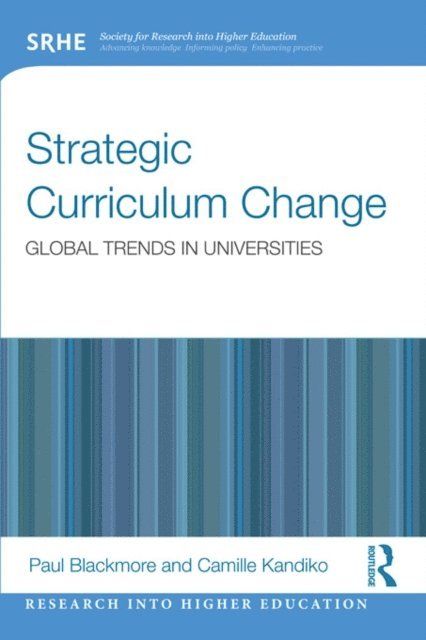
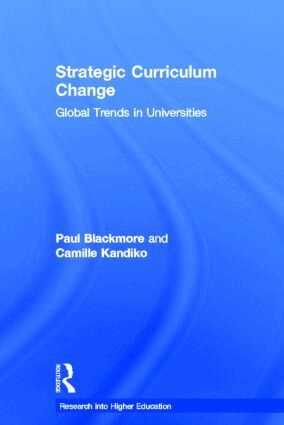
The curriculum is a live issue in universities across the world. Many stakeholders – governments, employers, professional and disciplinary groups and parents – express strong and often conflicting views about what higher education should achieve for its students. Many universities are reviewing their curricula at an institutional level, aware that they are in a competitive climate in which league tables encourage students to see themselves as consumers and the university as a product, or even a ‘brand’. The move has prompted renewed concern for some central educational questions, about both what is learnt and how. Strategic Curriculum Change explores the ways in which major universities across the world are reviewing their approaches to teaching and learning. It unites institution-level strategy with the underlying educational issues. The book is grounded in a major study of curriculum change in over twenty internationally-focused, research-intensive universities in the UK, US, Australia, The Netherlands, South Africa and Hong Kong. Chapters include: Achieving curriculum coherence: Curriculum design and delivery as social practice Assessment in curriculum change The whole-of-institution curriculum renewal undertaken by the University of Melbourne, 2005-2011 The physical and virtual environment for learning People and change: Academic work and leadership This book presents a theorised and contextualised approach to the study of the curriculum, and carries on much-needed research on the curriculum in higher education. It is an essential for the collection of all academics at university level, and those involved in policy making, quality assurance and enhancement.
520 kr
Skickas inom 10-15 vardagar
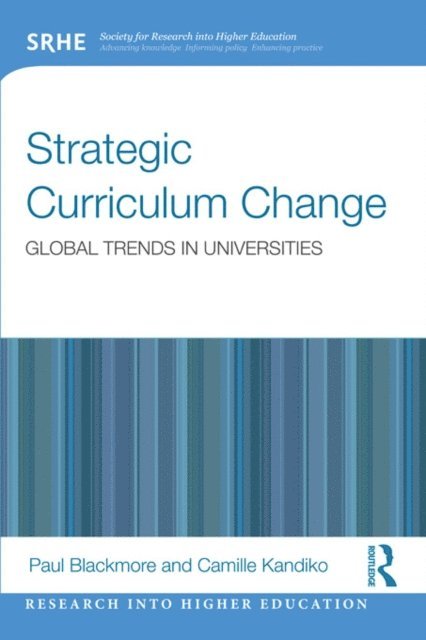
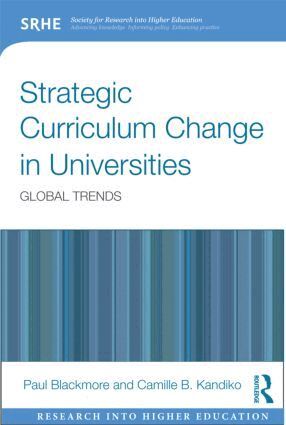
The curriculum is a live issue in universities across the world. Many stakeholders – governments, employers, professional and disciplinary groups and parents – express strong and often conflicting views about what higher education should achieve for its students. Many universities are reviewing their curricula at an institutional level, aware that they are in a competitive climate in which league tables encourage students to see themselves as consumers and the university as a product, or even a ‘brand’. The move has prompted renewed concern for some central educational questions, about both what is learnt and how. Strategic Curriculum Change explores the ways in which major universities across the world are reviewing their approaches to teaching and learning. It unites institution-level strategy with the underlying educational issues. The book is grounded in a major study of curriculum change in over twenty internationally-focused, research-intensive universities in the UK, US, Australia, The Netherlands, South Africa and Hong Kong. Chapters include: Achieving curriculum coherence: Curriculum design and delivery as social practice Assessment in curriculum change The whole-of-institution curriculum renewal undertaken by the University of Melbourne, 2005-2011 The physical and virtual environment for learning People and change: Academic work and leadership This book presents a theorised and contextualised approach to the study of the curriculum, and carries on much-needed research on the curriculum in higher education. It is an essential for the collection of all academics at university level, and those involved in policy making, quality assurance and enhancement.

863 kr
Tillfälligt slut
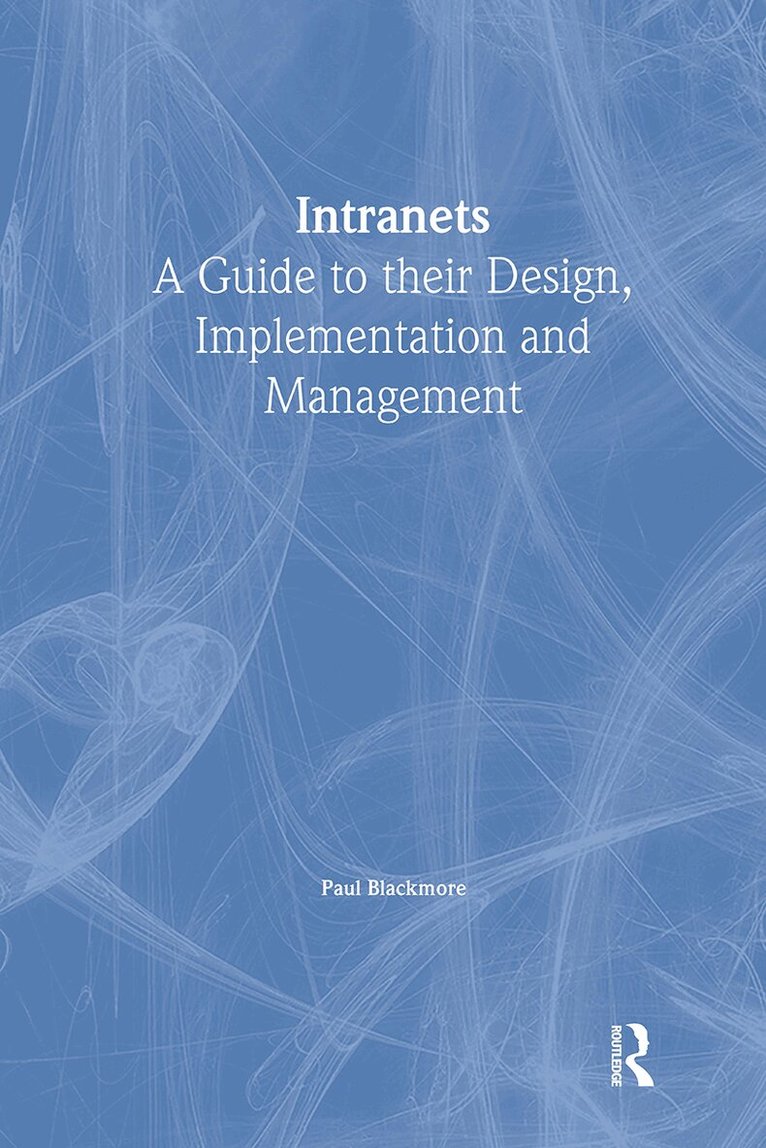
Supported by global case studies highlighting good practice, and from the results of a survey of Top UK Corporate Intranet developers and consultants, this book addresses practical business concerns and technical issues. It includes advice and commentary received first-hand from professionals experienced in their deployment, operational management and continuing development.
2 058 kr
Skickas inom 10-15 vardagar
Supported by global case studies highlighting good practice, and from the results of a survey of Top UK Corporate Intranet developers and consultants, this book addresses practical business concerns and technical issues. It includes advice and commentary received first-hand from professionals experienced in their deployment, operational management and continuing development.
1 898 kr
Skickas inom 10-15 vardagar
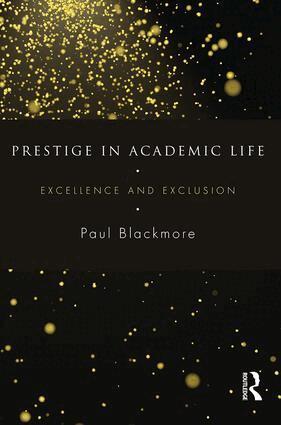
The achievement of academic excellence is inherently competitive. Deliberate government policies, globalisation and changes in communication technologies mean that competitiveness in the academic world is sharper than ever before. At the centre of this is the seeking of prestige, at all levels from the national system to the individual. Prestige in Academic Life aims to increase understanding of motivation in universities by exploring the part that prestige plays, for good and ill. The book’s focus on motivation and prestige helps to answer fundamental questions that run through much discussion on universities, such as why some problems are never solved; why change can be so difficult to achieve; and how individuals and groups can enable it to happen.Issues explored include:• What role does prestige play in academic life? • How does prestige play out in the working lives of academics, students, administrators and institutional leaders? • How can the positive aspects of prestige be encouraged and the negative ones diminished?University leaders and managers, academics, administrators and students, indeed all who are interested in universities, will find this valuable reading. It will help those in leadership positions to enhance the efficiency, effectiveness and wellbeing of their institutions, and will support academic staff in negotiating their career path.Paul Blackmore is Professor of Higher Education in the International Centre for University Policy Research, Policy Institute at King’s, at King’s College London.
771 kr
Skickas inom 10-15 vardagar
The achievement of academic excellence is inherently competitive. Deliberate government policies, globalisation and changes in communication technologies mean that competitiveness in the academic world is sharper than ever before. At the centre of this is the seeking of prestige, at all levels from the national system to the individual. Prestige in Academic Life aims to increase understanding of motivation in universities by exploring the part that prestige plays, for good and ill. The book’s focus on motivation and prestige helps to answer fundamental questions that run through much discussion on universities, such as why some problems are never solved; why change can be so difficult to achieve; and how individuals and groups can enable it to happen.Issues explored include:• What role does prestige play in academic life? • How does prestige play out in the working lives of academics, students, administrators and institutional leaders? • How can the positive aspects of prestige be encouraged and the negative ones diminished?University leaders and managers, academics, administrators and students, indeed all who are interested in universities, will find this valuable reading. It will help those in leadership positions to enhance the efficiency, effectiveness and wellbeing of their institutions, and will support academic staff in negotiating their career path.Paul Blackmore is Professor of Higher Education in the International Centre for University Policy Research, Policy Institute at King’s, at King’s College London.