Paul Christopher Johnson - Böcker
Visar alla böcker från författaren Paul Christopher Johnson. Handla med fri frakt och snabb leverans.
10 produkter
10 produkter
929 kr
Skickas inom 5-8 vardagar
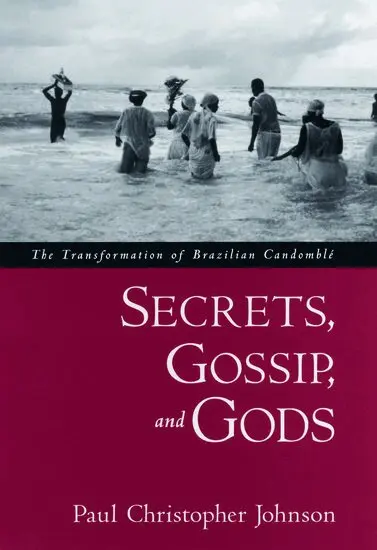
In this wide-ranging book Paul C Johnson explores the changing, hidden face of the Afro-Brazilian indigenous religion of Candomble. Despite its inportance in Brazilian Society, Candomble has received far less attention than its sister religions Vodou and Santeria. Johnson seeks to fill this void by offering a comprehensive look at the development, beliefs, and practices of Candomble and exploring its transformation from a secret society of slaves - hidden, persecuted, and marginalized - to a public religion that is very much part of Brazilian culture. Johnson traces this historical shift and locates the turning point in the creation of a Brazilian public sphere and national identity in the first half of the twentieth century. His major focus is on the ritual practice of secrecy in Candomble. Like Vodou and Santeria and the African Yoruba religion from which they are decended, Candomble features a hierarchic series if initiations, with increasing access to secret knowledge at each level. As Johnson shows, the nature and uses of secrecy evolved with the religion. First, secrecy was essential to a society that had to remain hidden from the authorities. Later, when Candomble became known and activily persecuted its secrecy became a form of resistance as well as an exotic hidden power desired by elites. Finally, as Candomble became a public relirion and a vital part of Brazilian culture, the debate increasingly turned away from the secrets themselves and towards their possessors. It is speech about secrets, and not about the content of those secrets, that is now most important in building status, legitimacy and power in Candomble. Offering many first hand accounts of the rites and rituals of contemporary Candomble, this book provides insight into this influential but little studied group, while at the same time making a valuable contribution to our understanding of the relationship between religion and society.
340 kr
Skickas inom 5-8 vardagar
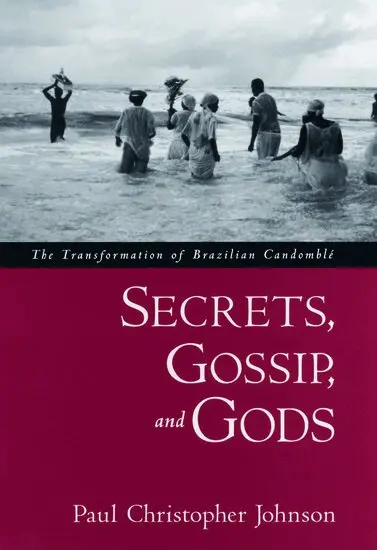
In this wide-ranging book Paul Christopher Johnson explores the changing, hidden face of the Afro-Brazilian indigenous religion of Candomblé. Despite its importance in Brazilian society, Candomblé has received far less attention than its sister religions Vodou and Santeria. Johnson seeks to fill this void by offering a comprehensive look at the development, beliefs, and practices of Candomblé and exploring its transformation from a secret society of slaves--hidden, persecuted, and marginalized--to a public religion that is very much a part of Brazilian culture. Johnson traces this historical shift and locates the turning point in the creation of Brazilian national identity and a public sphere in the first half of the twentieth century.His major focus is on the ritual practice of secrecy in Candomblé. Like Vodou and Santeria and the African Yoruba religion from which they are descended, Candomblé features a hierarchic series of initiations, with increasing access to secret knowledge at each level. As Johnson shows, the nature and uses of secrecy evolved with the religion. First, secrecy was essential to a society that had to remain hidden from authorities. Later, when Candomblé became known and actively persecuted, its secrecy became a form of resistance as well as an exotic hidden power desired by elites. Finally, as Candomblé became a public religion and a vital part of Brazilian culture, the debate increasingly turned away from the secrets themselves and toward their possessors. It is speech about secrets, and not the content of those secrets, that is now most important in building status, legitimacy and power in Candomblé.Offering many first hand accounts of the rites and rituals of contemporary Candomblé, this book provides insight into this influential but little-studied group, while at the same time making a valuable contribution to our understanding of the relationship between religion and society.
311 kr
Skickas inom 7-10 vardagar
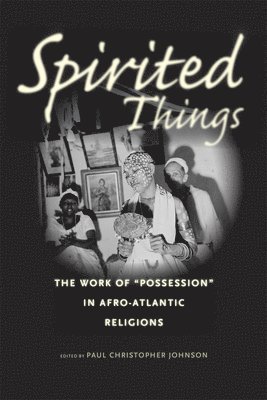
The word "possession" is trickier than we often think, especially in the context of the Black Atlantic and its religions and economy. Here possession can refer to spirits, material goods, and, indeed, people. In Spirited Things, Paul Christopher Johnson gathers together essays by leading anthropologists in the Americas to explore the fascinating nexus found at the heart of the idea of being possessed. The result is a book that marries one of anthropology's foundational concerns - spirit possession - with one of its most salient contemporary ones: materiality. The contributors reopen the concept of possession in order to examine the relationship between African religions in the Atlantic and the economies that have historically shaped-and continue to shape-the cultures that practice them. They explore the way spirit mediation is framed both by material things-including plantations, the Catholic church, the sea, and the telegraph-as well as the legacy of slavery. In doing so, they offer a powerful new concept for understanding the Atlantic world and its history, creation, and deeply complex religious and political economy.
799 kr
Skickas inom 7-10 vardagar
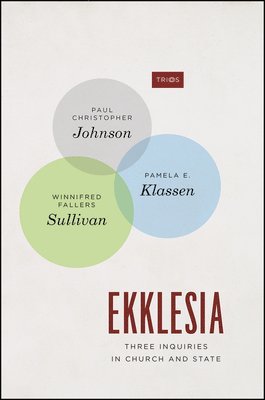
Ekklesia: Three Inquiries in Church and State offers a New World rejoinder to the largely Europe-centered academic discourse on church and state. In contrast to what is often assumed, in the Americas the relationship between church and state has not been one of freedom or separation but one of unstable and adaptable collusion. Ekklesia sees in the settler states of North and South America alternative patterns of conjoined religious and political power, patterns resulting from the undertow of other gods, other peoples, and other claims to sovereignty. These local challenges have led to a continuously contested attempt to realize a church-minded state, a state-minded church, and the systems that develop in their concert. The shifting borders of their separation and the episodic conjoining of church and state took new forms in both theory and practice. The first of a closely linked trio of essays is by Paul Johnson, and offers a new interpretation of the Brazilian community gathered at Canudos and its massacre in 1896-97, carried out as a joint church-state mission and spectacle. In the second essay, Pamela Klassen argues that the colonial church-state relationship of Canada came into being through local and national practices that emerged as Indigenous nations responded to and resisted becoming "possessions" of colonial British America. Finally, Winnifred Sullivan's essay begins with reflection on the increased effort within the United States to ban Bibles and scriptural references from death penalty courtrooms and jury rooms; she follows with a consideration of the political theological pressure thereby placed on the jury that decides between life and death. Through these three inquiries, Ekklesia takes up the familiar topos of "church and state" in order to render it strange.
247 kr
Skickas inom 7-10 vardagar
Ekklesia: Three Inquiries in Church and State offers a New World rejoinder to the largely Europe-centered academic discourse on church and state. In contrast to what is often assumed, in the Americas the relationship between church and state has not been one of freedom or separation but one of unstable and adaptable collusion. Ekklesia sees in the settler states of North and South America alternative patterns of conjoined religious and political power, patterns resulting from the undertow of other gods, other peoples, and other claims to sovereignty. These local challenges have led to a continuously contested attempt to realize a church-minded state, a state-minded church, and the systems that develop in their concert. The shifting borders of their separation and the episodic conjoining of church and state took new forms in both theory and practice. The first of a closely linked trio of essays is by Paul Johnson, and offers a new interpretation of the Brazilian community gathered at Canudos and its massacre in 1896-97, carried out as a joint church-state mission and spectacle. In the second essay, Pamela Klassen argues that the colonial church-state relationship of Canada came into being through local and national practices that emerged as Indigenous nations responded to and resisted becoming "possessions" of colonial British America. Finally, Winnifred Sullivan's essay begins with reflection on the increased effort within the United States to ban Bibles and scriptural references from death penalty courtrooms and jury rooms; she follows with a consideration of the political theological pressure thereby placed on the jury that decides between life and death. Through these three inquiries, Ekklesia takes up the familiar topos of "church and state" in order to render it strange.
1 066 kr
Skickas inom 7-10 vardagar
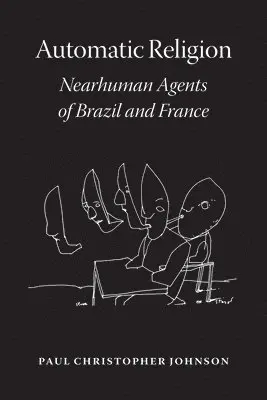
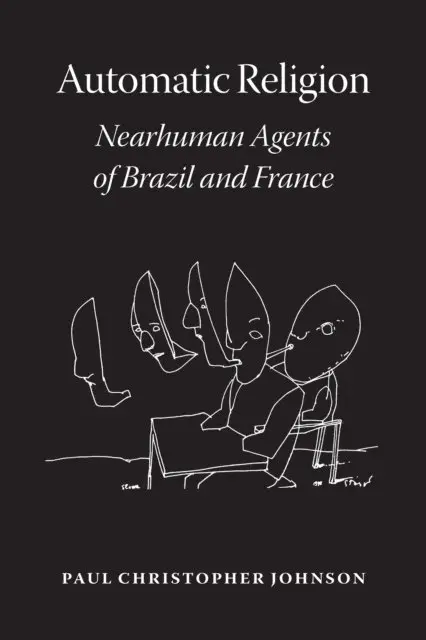
What distinguishes humans from nonhumans? Two common answers—free will and religion—are in some ways fundamentally opposed. Whereas free will enjoys a central place in our ideas of spontaneity, authorship, and deliberation, religious practices seem to involve a suspension of or relief from the exercise of our will. What, then, is agency, and why has it occupied such a central place in theories of the human?Automatic Religion explores an unlikely series of episodes from the end of the nineteenth century, when crucial ideas related to automatism and, in a different realm, the study of religion were both being born. Paul Christopher Johnson draws on years of archival and ethnographic research in Brazil and France to explore the crucial boundaries being drawn at the time between humans, “nearhumans,” and automata. As agency came to take on a more central place in the philosophical, moral, and legal traditions of the West, certain classes of people were excluded as less-than-human. Tracking the circulation of ideas across the Atlantic, Johnson tests those boundaries, revealing how they were constructed on largely gendered and racial foundations. In the process, he reanimates one of the most mysterious and yet foundational questions in trans-Atlantic thought: what is agency?
358 kr
Skickas inom 7-10 vardagar
What distinguishes humans from nonhumans? Two common answers—free will and religion—are in some ways fundamentally opposed. Whereas free will enjoys a central place in our ideas of spontaneity, authorship, and deliberation, religious practices seem to involve a suspension of or relief from the exercise of our will. What, then, is agency, and why has it occupied such a central place in theories of the human?Automatic Religion explores an unlikely series of episodes from the end of the nineteenth century, when crucial ideas related to automatism and, in a different realm, the study of religion were both being born. Paul Christopher Johnson draws on years of archival and ethnographic research in Brazil and France to explore the crucial boundaries being drawn at the time between humans, “nearhumans,” and automata. As agency came to take on a more central place in the philosophical, moral, and legal traditions of the West, certain classes of people were excluded as less-than-human. Tracking the circulation of ideas across the Atlantic, Johnson tests those boundaries, revealing how they were constructed on largely gendered and racial foundations. In the process, he reanimates one of the most mysterious and yet foundational questions in trans-Atlantic thought: what is agency?
3 117 kr
Skickas inom 10-15 vardagar
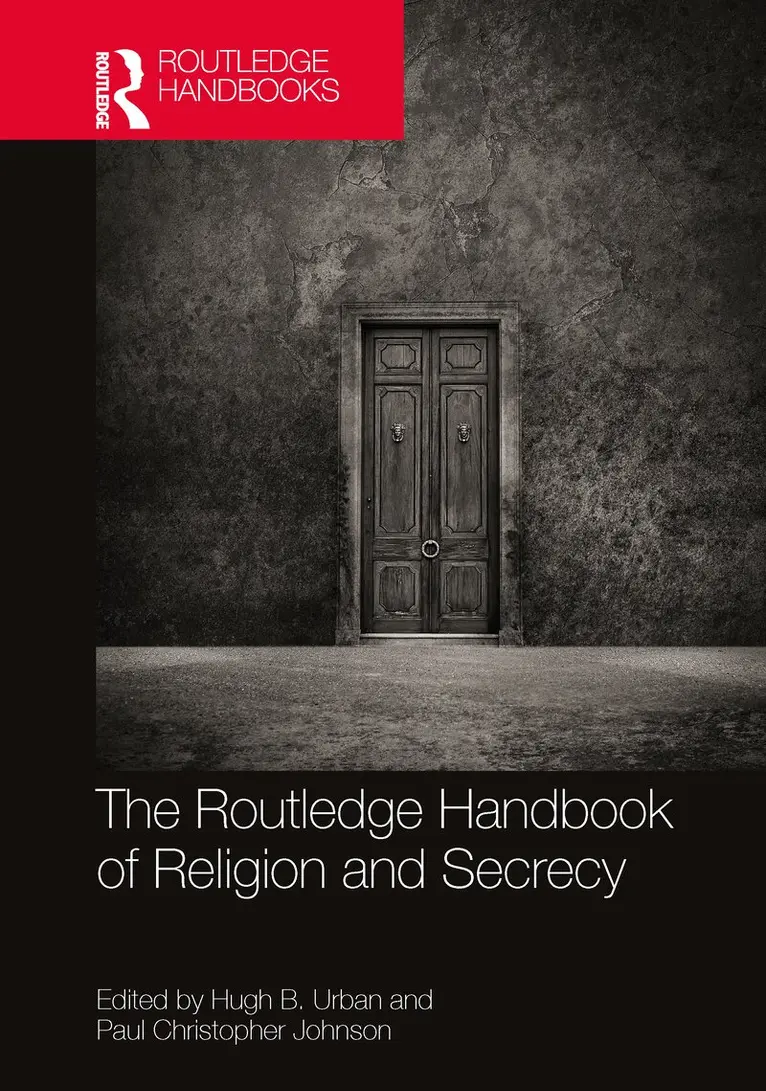
Secrecy is a central and integral component of all religious traditions. Not limited simply to religious groups that engage in clandestine activities such as hidden rites of initiation or terrorism, secrecy is inherent in the very fabric of religion itself. Its importance has perhaps never been more acutely relevant than in our own historical moment. In the wake of 9/11 and other acts of religious violence, we see the rise of invasive national security states that target religious minorities and pose profound challenges to the ideals of privacy and religious freedom, accompanied by the resistance by many communities to such efforts. As such, questions of secrecy, privacy, surveillance, and security are among the most central and contested issues of twenty-first century religious life.The Routledge Handbook of Religion and Secrecy is the definitive reference source for the key topics, problems, and debates in this crucial field and is the first collection of its kind. Comprising twenty-nine chapters by a team of international contributors, the Handbook is divided into five parts:Configurations of Religious Secrecy: Conceptual and Comparative FrameworksSecrecy as Religious PracticeSecrecy and the Politics of the PresentSecrecy and Social ResistanceSecrecy, Terrorism, and Surveillance.This cutting-edge volume discusses secrecy in relation to major categories of religious experience and individual religious practices while also examining the transformations of secrecy in the modern period, including the rise of fraternal orders, the ongoing wars on terror, the rise of far-right white supremacist groups, increasing concerns over religious freedom and privacy, the role of the internet in the spread and surveillance of such groups, and the resistance to surveillance by many indigenous and diasporic communities.The Routledge Handbook of Religion and Secrecy is essential reading for students and researchers in religious studies, comparative religion, new religious movements, and religion and politics. It will be equally central to debates in the related disciplines of sociology, anthropology, political science, security studies and cultural studies.
591 kr
Skickas inom 3-6 vardagar
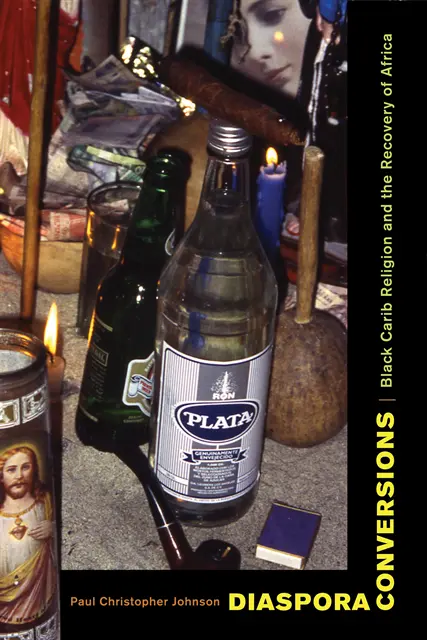
By joining a diaspora, a society may begin to change its religious, ethnic, and even racial identifications by rethinking its "pasts." This pioneering multisite ethnography explores how this phenomenon is affecting the remarkable religion of the Garifuna, historically known as the Black Caribs, from the Central American coast of the Caribbean. It is estimated that one-third of the Garifuna have migrated to New York City over the past fifty years. Paul Christopher Johnson compares Garifuna spirit possession rituals performed in Honduran villages with those conducted in New York, and what emerges is a compelling picture of how the Garifuna engage ancestral spirits across multiple diasporic horizons. His study sheds new light on the ways diasporic religions around the world creatively plot itineraries of spatial memory that at once recover and remold their histories.
649 kr
Skickas inom 10-15 vardagar
Secrecy is a central and integral component of all religious traditions. Not limited simply to religious groups that engage in clandestine activities such as hidden rites of initiation or terrorism, secrecy is inherent in the very fabric of religion itself. Its importance has perhaps never been more acutely relevant than in our own historical moment. In the wake of 9/11 and other acts of religious violence, we see the rise of invasive national security states that target religious minorities and pose profound challenges to the ideals of privacy and religious freedom, accompanied by the resistance by many communities to such efforts. As such, questions of secrecy, privacy, surveillance, and security are among the most central and contested issues of twenty-first century religious life.The Routledge Handbook of Religion and Secrecy is the definitive reference source for the key topics, problems, and debates in this crucial field and is the first collection of its kind. Comprising twenty-nine chapters by a team of international contributors, the Handbook is divided into five parts:Configurations of Religious Secrecy: Conceptual and Comparative FrameworksSecrecy as Religious PracticeSecrecy and the Politics of the PresentSecrecy and Social ResistanceSecrecy, Terrorism, and Surveillance.This cutting-edge volume discusses secrecy in relation to major categories of religious experience and individual religious practices while also examining the transformations of secrecy in the modern period, including the rise of fraternal orders, the ongoing wars on terror, the rise of far-right white supremacist groups, increasing concerns over religious freedom and privacy, the role of the internet in the spread and surveillance of such groups, and the resistance to surveillance by many indigenous and diasporic communities.The Routledge Handbook of Religion and Secrecy is essential reading for students and researchers in religious studies, comparative religion, new religious movements, and religion and politics. It will be equally central to debates in the related disciplines of sociology, anthropology, political science, security studies and cultural studies.