• Fri frakt över 249 kr
  • •
  • Snabba leveranser
  • •
  • Billiga böcker
Kundservice

Du är på sajten för privatpersoner.

Företag, bibliotek eller offentlig verksamhet?

Du handlar på classic.bokus.com, där alla dina funktioner finns intakta.
Till classic.bokus.com
Bokus logotyp. Gå till startsidan.
  • Erbjudanden
  • Student
  • Topplistor
  • Barn & ungdom
  • Bokus Play
  • E-böcker
  • Ljudböcker
  • Pocketböcker
  • Spel & pussel

Upp till 25% på utvalda nyheter →

Sidfot

Mina sidor

    Hjälp

    • Kundservice
    • Vanliga frågor och svar
    • Frakt och leverans
    • Retur vid ångerrätt
    • Reklamera vara
    • Betalning
    • Köpvillkor
    • Allmänna villkor
    • Information om webbplatsens tillgänglighet

    Om Bokus

    • Om oss
    • Pressrum
    • För studenter
    • För företag
    • För bibliotek och offentlig verksamhet
    • För leverantörer
    • Hållbarhet

    Populärt

    • Aktuella erbjudanden
    • Presentkort
    • Studentlitteratur
    • Nya böcker
    • Topplistor
    • Signerade böcker
    • Engelska böcker

    Inspiration

    • Boktips
    • BookTok
    • Populära bokserier
    • Barnbokskaraktärer
    • Populära författare
    Logotyp för Bokus
    Följ oss på Facebook (extern länk)Följ oss på Instagram (extern länk)Följ oss på YouTube (extern länk)Följ oss på TikTok (extern länk)
    bokus @ CookiesAnpassa cookiesIntegritetspolicyKöpvillkor
    Till Citymail hemsida (extern länk)Till Budbee hemsida (extern länk)Till Postnord hemsida (extern länk)Till Schenker hemsida (extern länk)Till Early Bird hemsida (extern länk)Till Walleys hemsida (extern länk)
    1. Filosofi och religion
    2. Religion och tro
    3. Religion: allmänt

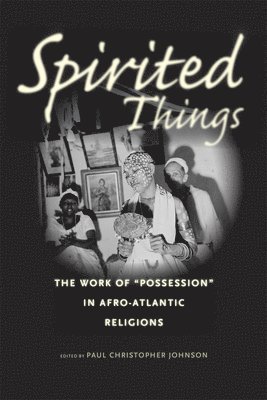
    Spirited Things

    The Work of "Possession" in Afro-Atlantic Religions

    AvPaul Christopher Johnson

    Häftad, Engelska, 2014

    316 kr

    Beställningsvara. Skickas inom 5-8 vardagar. Fri frakt över 249 kr.

    Beskrivning

    The word "possession" is trickier than we often think, especially in the context of the Black Atlantic and its religions and economy. Here possession can refer to spirits, material goods, and, indeed, people. In Spirited Things, Paul Christopher Johnson gathers together essays by leading anthropologists in the Americas to explore the fascinating nexus found at the heart of the idea of being possessed. The result is a book that marries one of anthropology's foundational concerns - spirit possession - with one of its most salient contemporary ones: materiality. The contributors reopen the concept of possession in order to examine the relationship between African religions in the Atlantic and the economies that have historically shaped-and continue to shape-the cultures that practice them. They explore the way spirit mediation is framed both by material things-including plantations, the Catholic church, the sea, and the telegraph-as well as the legacy of slavery. In doing so, they offer a powerful new concept for understanding the Atlantic world and its history, creation, and deeply complex religious and political economy.

    Produktinformation

    • Utgivningsdatum:2014-05-07
    • Mått:15 x 23 x 2 mm
    • Vikt:539 g
    • Format:Häftad
    • Språk:Engelska
    • Antal sidor:344
    • Förlag:The University of Chicago Press
    • ISBN:9780226122762

    Utforska kategorier

    • Religion: allmänt inom Filosofi och religion
    • Andra religioner och trosföreställningar inom Filosofi och religion

    Mer om författaren

    Paul Christopher Johnson is professor of history and Afroamerican and African studies and director of the Doctoral Program in Anthropology and History at the University of Michigan, Ann Arbor. He is the author of Secrets, Gossip, and Gods: The Transformation of Brazilian Candomble and Diaspora Conversions: Black Carib Religion and the Recovery of Africa.

    Recensioner i media

    "Spirited Things is an ambitious and provocative work that casts a brilliant light over one of the more complex and critical issues in anthropology. It brings spirit possession into the heart of anthropological theory, revealing its central place in the 'genealogy of modernity.'" (Stefania Capone, National Center for Scientific Research and School for Advanced Studies in Social Sciences)"