Paul D. Buell – författare
Visar alla böcker från författaren Paul D. Buell. Handla med fri frakt och snabb leverans.
13 produkter
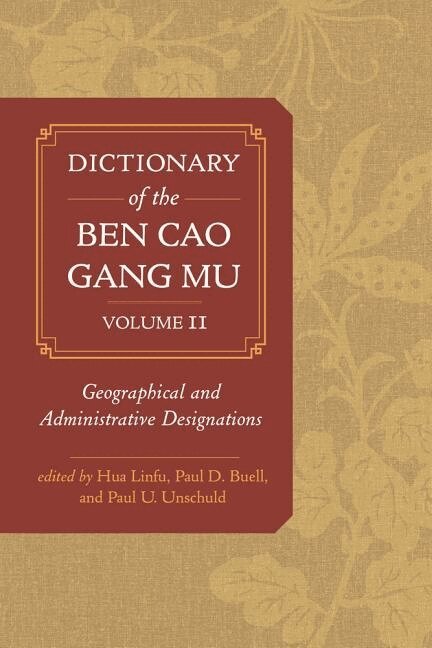
Dictionary of the Ben cao gang mu, Volume 2
Geographical and Administrative Designations
Av Hua Linfu, Paul D. Buell m. fl.
Inbunden, 2016
1290 kr
Lägg i varukorg
The Ben cao gang mu, compiled in the second half of the sixteenth century by a team led by the physician Li Shizhen (1518-1593) on the basis of previously published books and contemporary knowledge, is the largest encyclopedia of natural history in a long tradition of Chinese materia medica works. …
Dictionary of the Ben cao gang mu, Volume 3
Persons and Literary Sources
Av Zheng Jinsheng, Nalini Kirk m. fl.
Inbunden, 2018
1328 kr
Lägg i varukorg
The Ben cao gang mu, compiled in the second half of the sixteenth century by a team led by the physician Li Shizhen (1518–1593) on the basis of previously published books and contemporary knowledge, is the largest encyclopedia of natural history in a long tradition of Chinese materia medica works. …
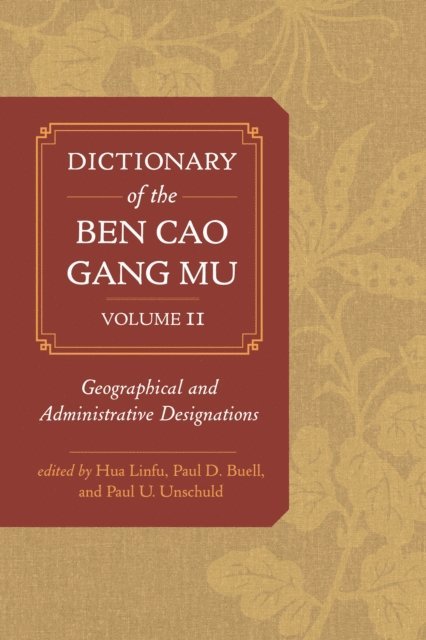
Dictionary of the Ben cao gang mu, Volume 2
Geographical and Administrative Designations
E-bok, 2016
2229 kr
Lägg i varukorg
The Ben cao gang mu , compiled in the second half of the sixteenth century by a team led by the physician Li Shizhen (1518–1593) on the basis of previously published books and contemporary knowledge, is the largest encyclopedia of natural history in a long tradition of Chinese materia medica works. …
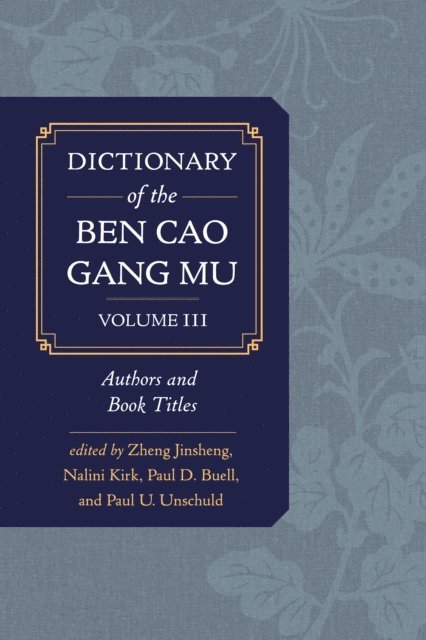
Dictionary of the Ben cao gang mu, Volume 3
Persons and Literary Sources
Av Paul D. Buell, Nalini Kirk m. fl.
E-bok, 2018
2181 kr
Lägg i varukorg
The Ben cao gang mu , compiled in the second half of the sixteenth century by a team led by the physician Li Shizhen (1518–1593) on the basis of previously published books and contemporary knowledge, is the largest encyclopedia of natural history in a long tradition of Chinese materia medica works. …
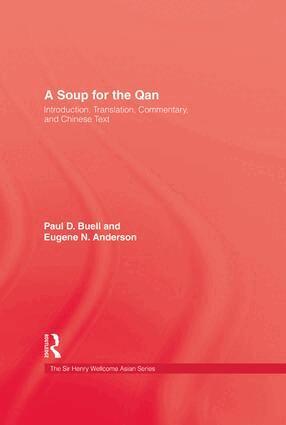
Soup For The Qan
Av Paul D. Buell, Eugene N. Anderson
Inbunden, 2000
4343 kr
Lägg i varukorg
First published in 2000. In the early 14th century, a court nutritionist called Hu Sihui wrote his Yinshan Zhengyao, a dietary and nutritional manual for the Chinese Mongol Empire. Hu Sihui, a man apparently with a Turkic linguistic background, included recipes, descriptions of food items, and …
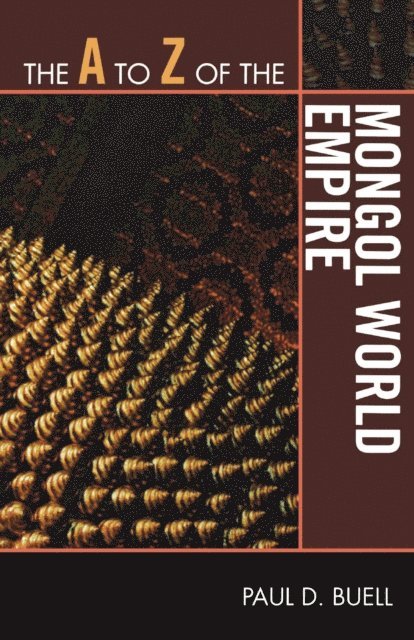
A to Z of the Mongol World Empire
Häftad, 2010
732 kr
Lägg i varukorg
The A to Z of the Mongol World Empire examines the history of the Mongol Empire, the pre-imperial era of Mongolian history that preceded it, and the various Mongol successor states that continued to dominate Eurasia long after the breakdown of Mongol unity.Divided into three parts, the first …
Soup For The Qan
Av Eugene N. Anderson, Paul D. Buell
E-bok, 2013
856 kr
Lägg i varukorg
First published in 2000. In the early 14th century, a court nutritionist called Hu Sihui wrote his Yinshan Zhengyao, a dietary and nutritional manual for the Chinese Mongol Empire. Hu Sihui, a man apparently with a Turkic linguistic background, included recipes, descriptions of food items, and …
Soup For The Qan
Av Eugene N. Anderson, Paul D. Buell
E-bok, 2013
856 kr
Lägg i varukorg
First published in 2000. In the early 14th century, a court nutritionist called Hu Sihui wrote his Yinshan Zhengyao, a dietary and nutritional manual for the Chinese Mongol Empire. Hu Sihui, a man apparently with a Turkic linguistic background, included recipes, descriptions of food items, and …
Soup For The Qan
Av Paul D. Buell, Eugene N. Anderson
Häftad, 2016
814 kr
Lägg i varukorg
First published in 2000. In the early 14th century, a court nutritionist called Hu Sihui wrote his Yinshan Zhengyao, a dietary and nutritional manual for the Chinese Mongol Empire. Hu Sihui, a man apparently with a Turkic linguistic background, included recipes, descriptions of food items, and …
A to Z of the Mongol World Empire
E-bok, 2010
779 kr
Lägg i varukorg
The A to Z of the Mongol World Empire examines the history of the Mongol Empire, the pre-imperial era of Mongolian history that preceded it, and the various Mongol successor states that continued to dominate Eurasia long after the breakdown of Mongol unity. Divided into three parts, the first …
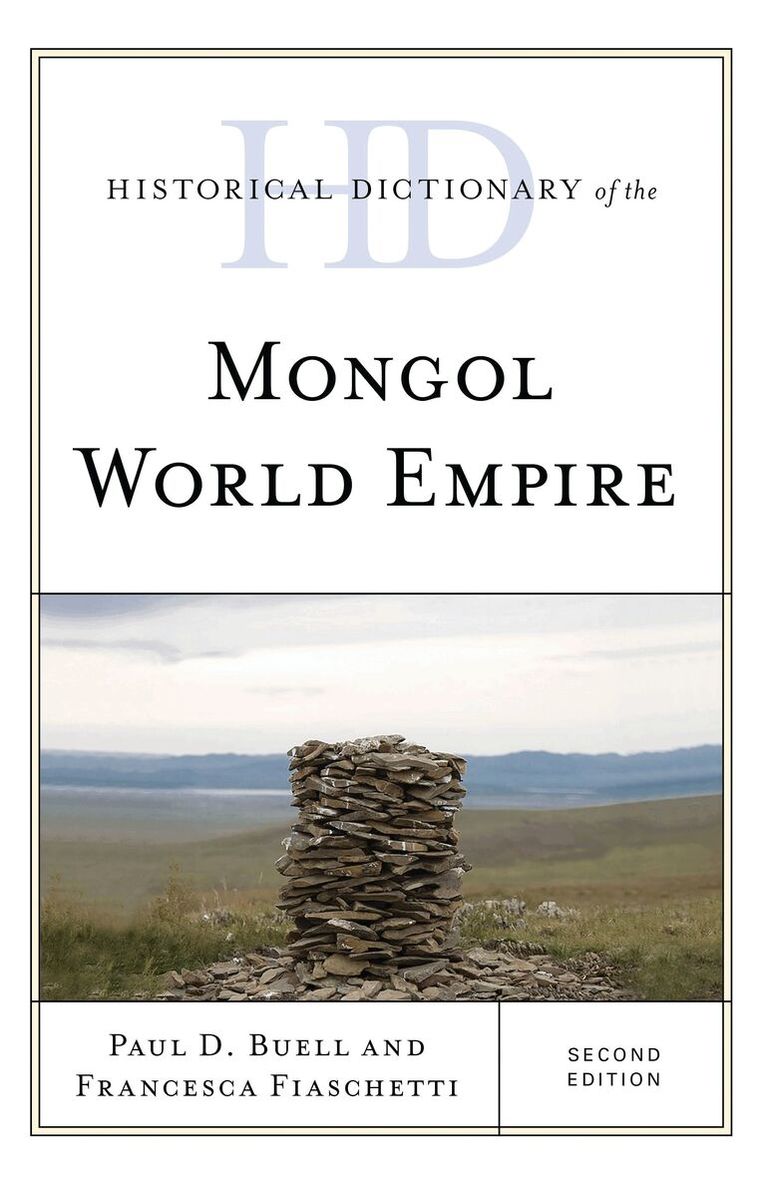
Historical Dictionary of the Mongol World Empire
Av Paul D. Buell, Francesca Fiaschetti
Inbunden, 2018
1385 kr
Lägg i varukorg
The Historical Dictionary of the Mongol World Empire examines the history of the Mongol Empire, the pre-imperial era of Mongolian history that preceded it, and the various Mongol successor states that continued to dominate Eurasia long after the breakdown of Mongol unity.This second edition …
Historical Dictionary of the Mongol World Empire
Av Paul D. Buell, Francesca Fiaschetti
E-bok, 2018
1481 kr
Lägg i varukorg
The Historical Dictionary of the Mongol World Empire examines the history of the Mongol Empire, the pre-imperial era of Mongolian history that preceded it, and the various Mongol successor states that continued to dominate Eurasia long after the breakdown of Mongol unity. This second edition …
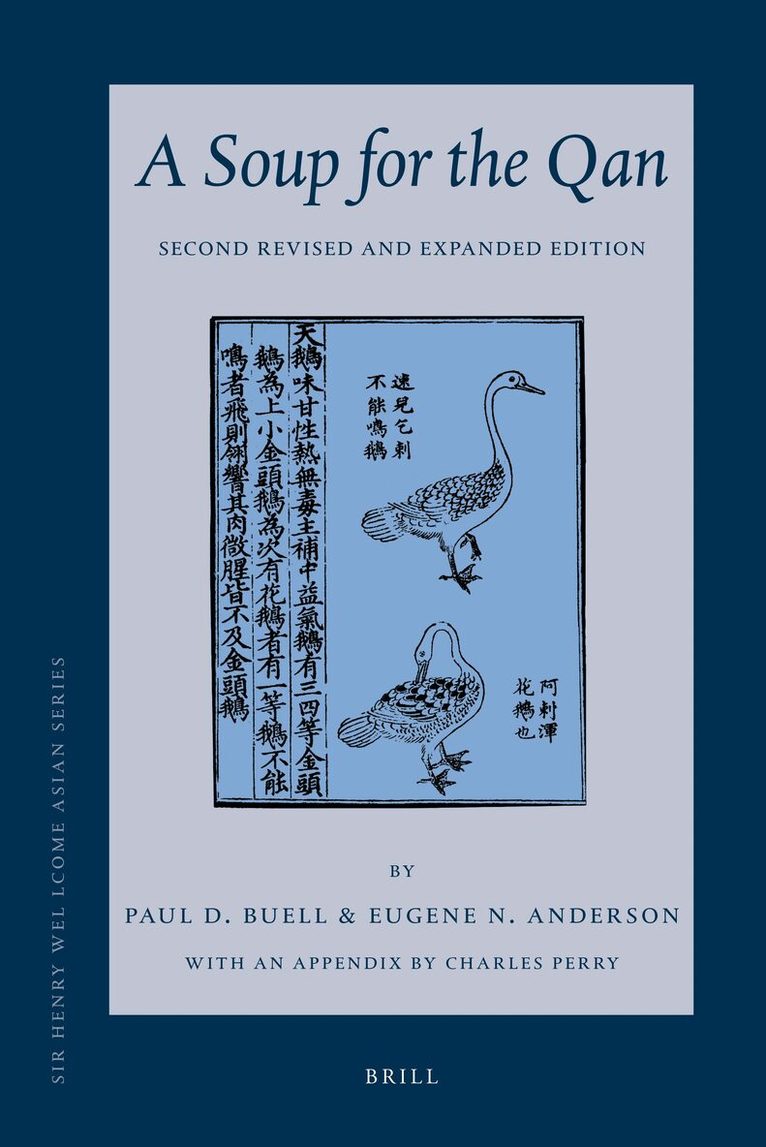
Soup for the Qan: Chinese Dietary Medicine of the Mongol Era As Seen in Hu Sihui's Yinshan Zhengyao
Introduction, Translation, Commentary, and Chinese Text. Second Revised and Expanded Edition
Av Paul D. Buell, Eugene N. Anderson
Inbunden, 2010
2524 kr
Lägg i varukorg
In the early 14th century, a court nutritionist called Hu Sihui wrote his Yinshan Zhengyao, a dietary and nutritional manual for the Chinese Mongol Empire. Hu Sihui, a man apparently with a Turkic linguistic background, included recipes, descriptions of food items, and dietary medical lore …