Paul D. Halliday - Böcker
Visar alla böcker från författaren Paul D. Halliday. Handla med fri frakt och snabb leverans.
4 produkter
4 produkter
577 kr
Skickas inom 7-10 vardagar
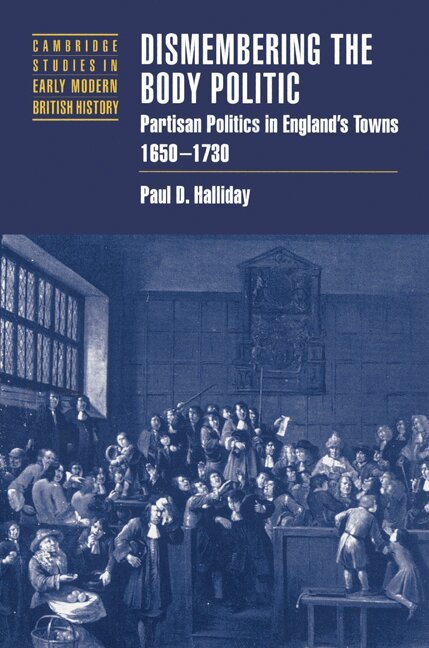
This is a major survey of how towns were governed in late Stuart and early Hanoverian England. A new kind of politics emerged out of England's Civil War: partisan politics. This happened first in the corporations governing the towns, and not at Parliament as is usually argued. Based on an examination of the records of scores of corporations, this book explains how war unleashed a cycle of purge and counter-purge which continued for decades. It also explains how a society that feared a system of politics based on division found the means to absorb it peacefully. As conflict sharpened in communities everywhere, local competitors turned to the court of King's Bench to resolve their differences. In doing so, they prompted the court to develop a new body of law that protected local governments from the divisive impulses within them.
Dismembering the Body Politic
Partisan Politics in England's Towns, 1650-1730
Inbunden, Engelska, 1998
1 621 kr
Skickas inom 7-10 vardagar
This is a major survey of how towns were governed in late Stuart and early Hanoverian England. A new kind of politics emerged out of England's Civil War: partisan politics. This happened first in the corporations governing the towns, and not at Parliament as is usually argued. Based on an examination of the records of scores of corporations, this book explains how war unleashed a cycle of purge and counter-purge which continued for decades. It also explains how a society that feared a system of politics based on division found the means to absorb it peacefully. As conflict sharpened in communities everywhere, local competitors turned to the court of King's Bench to resolve their differences. In doing so, they prompted the court to develop a new body of law that protected local governments from the divisive impulses within them.
239 kr
Skickas inom 7-10 vardagar
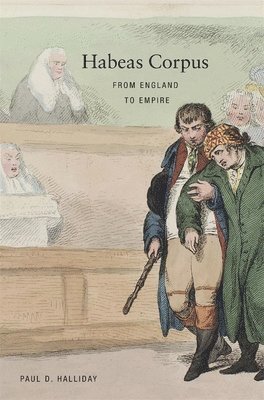
We call habeas corpus the Great Writ of Liberty. But it was actually a writ of power. In a work based on an unprecedented study of thousands of cases across more than five hundred years, Paul Halliday provides a sweeping revisionist account of the world’s most revered legal device.In the decades around 1600, English judges used ideas about royal power to empower themselves to protect the king’s subjects. The key was not the prisoner’s “right” to “liberty”—these are modern idioms—but the possible wrongs committed by a jailer or anyone who ordered a prisoner detained. This focus on wrongs gave the writ the force necessary to protect ideas about rights as they developed outside of law. This judicial power carried the writ across the world, from Quebec to Bengal. Paradoxically, the representative impulse, most often expressed through legislative action, did more to undermine the writ than anything else. And the need to control imperial subjects would increasingly constrain judges. The imperial experience is thus crucial for making sense of the broader sweep of the writ’s history and of English law.Halliday’s work informed the 2008 U.S. Supreme Court ruling in Boumediene v. Bush on prisoners in the Guantánamo detention camps. His eagerly anticipated book is certain to be acclaimed the definitive history of habeas corpus.
1 202 kr
Skickas inom 5-8 vardagar
In this fascinating collection, twelve colleagues of the late Mark Kishlansky come together to reconsider the meanings of England’s mid-seventeenth-century revolution. Their chapters range widely: from shipboard to urban conflicts; from court sermons to local finances; from debates over hairstyles to debates over the meanings of regicide; from courtrooms to pamphlet wars; and from religious rights to human rights. Taken together, they indicate how we might improve our understanding of a turbulent epoch in political history by approaching it more modestly and quietly than historians of recent decades have often done.Revolutionising politics will appeal to professional historians and their students interested in the social, cultural, religious and legal history of seventeenth-century English politics. Specific chapters will interest scholars in book history, the cultural history of politics and the history of political, civil and human rights.