Paul De Grauwe – författare
Visar alla böcker från författaren Paul De Grauwe. Handla med fri frakt och snabb leverans.
22 produkter
Limits of the Market
The Pendulum Between Government and Market
E-bok, 2016
252 kr
Lägg i varukorg
The old discussion of ''Market or State'' is obsolete. There will always have to be a mix of market and state. The only relevant question is what that mix should look like. How far do we have to let the market go its own way in order to create as much welfare as possible for everyone? What is the …
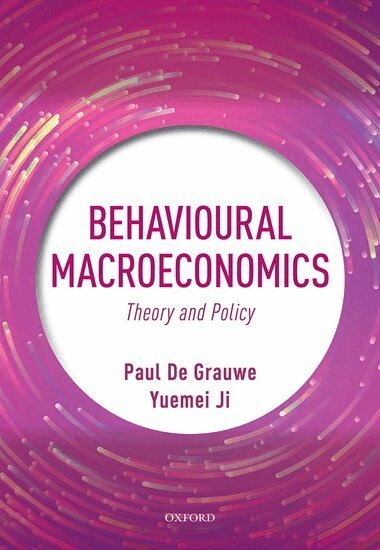
Behavioural Macroeconomics
Theory and Policy
E-bok, 2019
755 kr
Lägg i varukorg
Modern macroeconomics has been based on the paradigm of the rational individual capable of understanding the complexity of the world. This has created a very shallow theory of the business cycle in which nothing happens in the macroeconomy unless shocks occur from outside. Behavioural …
The Political Economy of Structural Reforms in Europe
Av Nauro F. Campos, Nauro F. Campos m. fl.
Inbunden, 2018
1682 kr
Lägg i varukorg
Reforms in labour and product markets play a central role in government policies. The Political Economy of Structural Reforms in Europe takes stock of current frontier work. It brings together leading contributions from academia, the central banks in Europe, and the OECD to argue that structural …
The Limits of the Market
The Pendulum Between Government and Market
Häftad, 2019
389 kr
Lägg i varukorg
The old discussion of 'Market or State' is obsolete. There will always have to be a mix of market and state. The only relevant question is what that mix should look like. How far do we have to let the market go its own way in order to create as much welfare as possible for everyone? What is the …
Economic Growth and Structural Reforms in Europe
Av Nauro F. Campos, Paul De Grauwe m. fl.
Inbunden, 2020
2281 kr
Lägg i varukorg
In contrast to the USA, Europe has struggled to return to the growth path it was on prior to the financial crisis of 2007-11. Not only has the recovery been slow, it has also been variable with Europe's core countries recovering more quickly than those on the periphery. It is widely believed that …
Political Economy of Monetary Union
Inbunden, 2001
4932 kr
Lägg i varukorg
The Political Economy of Monetary Union presents an important collection of the most influential articles covering different areas in this expanding field.The volume brings together both the classical articles which have laid the foundations for the theory of optimum currency and the resulting …
EXCHANGE RATES AND GLOBAL FINANCIAL POLICIES
Inbunden, 2014
2948 kr
Lägg i varukorg
Exchange Rates and Global Financial Policies brings together research and work done by world-class economist Paul De Grauwe over the past two decades. Drawing inspiration from behavioural finance literature, De Grauwe covers topics such as exchange rate economics, monetary integration (with …
Limits of the Market
The Pendulum Between Government and Market
E-bok, 2016
252 kr
Lägg i varukorg
The old discussion of ''Market or State'' is obsolete. There will always have to be a mix of market and state. The only relevant question is what that mix should look like. How far do we have to let the market go its own way in order to create as much welfare as possible for everyone? What is the …
Political Economy of Structural Reforms in Europe
Av Yuemei Ji, Paul De Grauwe m. fl.
E-bok, 2018
1027 kr
Lägg i varukorg
Reforms in labour and product markets play a central role in government policies. The Political Economy of Structural Reforms in Europe takes stock of current frontier work. It brings together leading contributions from academia, the central banks in Europe, and the OECD to argue that structural …
Political Economy of Structural Reforms in Europe
Av Yuemei Ji, Paul De Grauwe m. fl.
E-bok, 2018
1027 kr
Lägg i varukorg
Reforms in labour and product markets play a central role in government policies. The Political Economy of Structural Reforms in Europe takes stock of current frontier work. It brings together leading contributions from academia, the central banks in Europe, and the OECD to argue that structural …
Behavioural Macroeconomics
Theory and Policy
E-bok, 2019
755 kr
Lägg i varukorg
Modern macroeconomics has been based on the paradigm of the rational individual capable of understanding the complexity of the world. This has created a very shallow theory of the business cycle in which nothing happens in the macroeconomy unless shocks occur from outside. Behavioural …
International Money
Postwar Trends and Theories
Häftad, 1996
1252 kr
Lägg i varukorg
The period since the Second World war has been an eventful and often disturbing one in the international monetary field. Economic theories have been propounded and modified both to explain these events and to influence future choices made by economic actors.This history of international monetary …
The Limits of the Market
The Pendulum Between Government and Market
Inbunden, 2017
699 kr
Lägg i varukorg
The old discussion of 'Market or State' is obsolete. There will always have to be a mix of market and state. The only relevant question is what that mix should look like. How far do we have to let the market go its own way in order to create as much welfare as possible for everyone? What is the …
Behavioural Macroeconomics
Theory and Policy
Inbunden, 2019
844 kr
Lägg i varukorg
Modern macroeconomics has been based on the paradigm of the rational individual capable of understanding the complexity of the world. This has created a very shallow theory of the business cycle in which nothing happens in the macroeconomy unless shocks occur from outside. Behavioural …
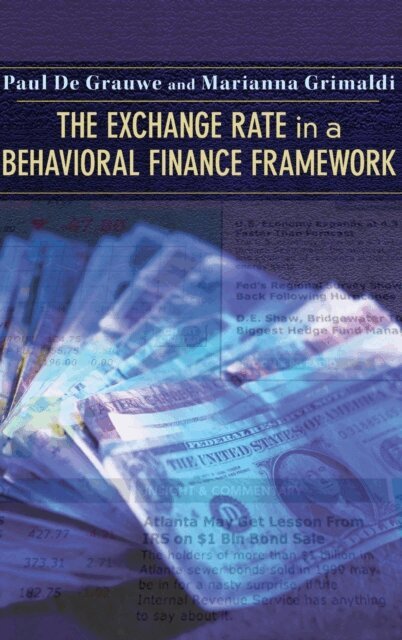
Exchange Rate in a Behavioral Finance Framework
Av Paul De Grauwe, Marianna Grimaldi
Inbunden, 2006
1174 kr
Lägg i varukorg
This book provides an alternative view of the workings of foreign exchange markets. The authors' modeling approach is based on the idea that agents use simple forecasting rules and switch to those rules that have been shown to be the most profitable in the past. This selection mechanism is based on …
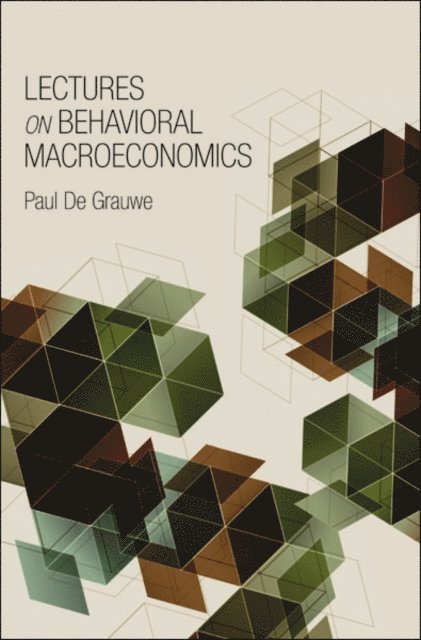
Lectures on Behavioral Macroeconomics
Inbunden, 2012
547 kr
Lägg i varukorg
In mainstream economics, and particularly in New Keynesian macroeconomics, the booms and busts that characterize capitalism arise because of large external shocks. The combination of these shocks and the slow adjustments of wages and prices by rational agents leads to cyclical movements. In this …
Exchange Rate in a Behavioral Finance Framework
Av Marianna Grimaldi, Paul De Grauwe
E-bok, 2018
1616 kr
Lägg i varukorg
This book provides an alternative view of the workings of foreign exchange markets. The authors' modeling approach is based on the idea that agents use simple forecasting rules and switch to those rules that have been shown to be the most profitable in the past. This selection mechanism is based on …
Economic Growth and Structural Reforms in Europe
Av Yuemei Ji, Paul De Grauwe m. fl.
E-bok, 2020
2266 kr
Lägg i varukorg
In contrast to the USA, Europe has struggled to return to the growth path it was on prior to the financial crisis of 2007–11. Not only has the recovery been slow, it has also been variable with Europe''s core countries recovering more quickly than those on the periphery. It is widely believed that …
Economic Growth and Structural Reforms in Europe
Av Yuemei Ji, Paul De Grauwe m. fl.
E-bok, 2020
2266 kr
Lägg i varukorg
In contrast to the USA, Europe has struggled to return to the growth path it was on prior to the financial crisis of 2007–11. Not only has the recovery been slow, it has also been variable with Europe''s core countries recovering more quickly than those on the periphery. It is widely believed that …
Lectures on Behavioral Macroeconomics
E-bok, 2012
735 kr
Lägg i varukorg
In mainstream economics, and particularly in New Keynesian macroeconomics, the booms and busts that characterize capitalism arise because of large external shocks. The combination of these shocks and the slow adjustments of wages and prices by rational agents leads to cyclical movements. In this …
Illicit Trade and the Global Economy
Av Cláudia Costa Storti, Paul De Grauwe
Inbunden, 2011
187 kr
Tillfälligt slut