Paul Dobraszczyk - Böcker
Visar alla böcker från författaren Paul Dobraszczyk. Handla med fri frakt och snabb leverans.
12 produkter
12 produkter
107 kr
Skickas inom 7-10 vardagar
London’s sewers could be called the city’s forgotten underground: mostly unseen subterranean spaces that are of absolutely vital importance, the capital’s sewers nonetheless rarely get the same degree of attention as the Tube. Paul Dobraszczyk here outlines the fascinating history of London’s sewers from the nineteenth century onwards, using a rich variety of colour illustrations, photographs and newspaper engravings to show their development from medieval spaces to the complex, citywide network, largely constructed in the 1860s, that is still in place today. This book explores London’s sewers in history, fiction and film, including how they entice intrepid explorers into their depths, from the Victorian period to the present day.
Iron, Ornament and Architecture in Victorian Britain
Myth and Modernity, Excess and Enchantment
Häftad, Engelska, 2017
747 kr
Skickas inom 10-15 vardagar
Vilified by leading architectural modernists and Victorian critics alike, mass-produced architectural ornament in iron has received little sustained study since the 1960s; yet it proliferated in Britain in the half century after the building of the Crystal Palace in 1851 - a time when some architects, engineers, manufacturers, and theorists believed that the fusion of iron and ornament would reconcile art and technology and create a new, modern architectural language. Comprehensively illustrated and richly researched, Iron, Ornament and Architecture in Victorian Britain presents the most sustained study to date of the development of mechanised architectural ornament in iron in nineteenth-century architecture, its reception and theorisation by architects, critics and engineers, and the contexts in which it flourished, including industrial buildings, retail and seaside architecture, railway stations, buildings for export and exhibition, and street furniture. Appealing to architects, conservationists, historians and students of nineteenth-century visual culture and the built environment, this book offers new ways of understanding the notion of modernity in Victorian architecture by questioning and re-evaluating both Victorian and modernist understandings of the ideological split between historicism and functionalism, and ornament and structure.
747 kr
Skickas inom 10-15 vardagar
The introduction of iron – and later steel – construction and decoration transformed architecture in the nineteenth century. While the structural employment of iron has been a frequent subject of study, this book re-directs scholarly scrutiny on its place in the aesthetics of architecture in the long nineteenth century. Together, its eleven unique and original chapters chart – for the first time – the global reach of iron’s architectural reception, from the first debates on how iron could be incorporated into architecture’s traditional aesthetics to the modernist cleaving of its structural and ornamental roles.The book is divided into three sections. Formations considers the rising tension between the desire to translate traditional architectural motifs into iron and the nascent feeling that iron buildings were themselves creating an entirely new field of aesthetic expression. Exchanges charts the commercial and cultural interactions that took place between British iron foundries and clients in far-flung locations such as Argentina, Jamaica, Nigeria and Australia. Expressing colonial control as well as local agency, iron buildings struck a balance between pre-fabricated functionalism and a desire to convey beauty, value and often exoticism through ornament. Transformations looks at the place of the aesthetics of iron architecture in the late nineteenth and early twentieth centuries, a period in which iron ornament sought to harmonize wide social ambitions while offering the tantalizing possibility that iron architecture as a whole could transform the fundamental meanings of ornament.Taken together, these chapters call for a re-evaluation of modernism’s supposedly rationalist interest in nineteenth-century iron structures, one that has potentially radical implications for the recent ornamental turn in contemporary architecture.
Iron, Ornament and Architecture in Victorian Britain
Myth and Modernity, Excess and Enchantment
Inbunden, Engelska, 2014
2 151 kr
Skickas inom 10-15 vardagar
Vilified by leading architectural modernists and Victorian critics alike, mass-produced architectural ornament in iron has received little sustained study since the 1960s; yet it proliferated in Britain in the half century after the building of the Crystal Palace in 1851 - a time when some architects, engineers, manufacturers, and theorists believed that the fusion of iron and ornament would reconcile art and technology and create a new, modern architectural language. Comprehensively illustrated and richly researched, Iron, Ornament and Architecture in Victorian Britain presents the most sustained study to date of the development of mechanised architectural ornament in iron in nineteenth-century architecture, its reception and theorisation by architects, critics and engineers, and the contexts in which it flourished, including industrial buildings, retail and seaside architecture, railway stations, buildings for export and exhibition, and street furniture. Appealing to architects, conservationists, historians and students of nineteenth-century visual culture and the built environment, this book offers new ways of understanding the notion of modernity in Victorian architecture by questioning and re-evaluating both Victorian and modernist understandings of the ideological split between historicism and functionalism, and ornament and structure.
2 358 kr
Skickas inom 10-15 vardagar
The introduction of iron – and later steel – construction and decoration transformed architecture in the nineteenth century. While the structural employment of iron has been a frequent subject of study, this book re-directs scholarly scrutiny on its place in the aesthetics of architecture in the long nineteenth century. Together, its eleven unique and original chapters chart – for the first time – the global reach of iron’s architectural reception, from the first debates on how iron could be incorporated into architecture’s traditional aesthetics to the modernist cleaving of its structural and ornamental roles.The book is divided into three sections. Formations considers the rising tension between the desire to translate traditional architectural motifs into iron and the nascent feeling that iron buildings were themselves creating an entirely new field of aesthetic expression. Exchanges charts the commercial and cultural interactions that took place between British iron foundries and clients in far-flung locations such as Argentina, Jamaica, Nigeria and Australia. Expressing colonial control as well as local agency, iron buildings struck a balance between pre-fabricated functionalism and a desire to convey beauty, value and often exoticism through ornament. Transformations looks at the place of the aesthetics of iron architecture in the late nineteenth and early twentieth centuries, a period in which iron ornament sought to harmonize wide social ambitions while offering the tantalizing possibility that iron architecture as a whole could transform the fundamental meanings of ornament.Taken together, these chapters call for a re-evaluation of modernism’s supposedly rationalist interest in nineteenth-century iron structures, one that has potentially radical implications for the recent ornamental turn in contemporary architecture.
189 kr
Skickas
What is Manchester? Moving far from the glitzy shopping districts and architectural showpieces, away from cool city-centre living and modish cultural centres, this book shows us the unheralded, under-appreciated and overlooked parts of Greater Manchester in which the majority of Mancunians live, work and play. It tells the story of the city thematically, using concepts such a ‘material’, ‘atmosphere’, ‘waste’, ‘movement’ and ‘underworld’ to challenge our understanding of the quintessential post-industrial metropolis. Bringing together contributions from twenty-five poets, academics, writers, novelists, historians, architects and artists from across the region alongside a range of captivating photographs, this book explores the history of Manchester through its chimneys, cobblestones, ginnels and graves. This wide-ranging and inclusive approach reveals a host of idiosyncrasies, hidden spaces and stories that have until now been neglected.
1 754 kr
Skickas inom 10-15 vardagar
The Dead City unearths meanings from such depictions of ruination and decay, looking at representations of both thriving cities and ones which are struggling, abandoned or simply in transition. It reveals that ruination presents a complex opportunity to envision new futures for a city, whether that is by rewriting its past or throwing off old assumptions and proposing radical change. Seen in a certain light, for example, urban ruin and decay are a challenge to capitalist narratives of unbounded progress. They can equally imply that power structures thought to be deeply ingrained are temporary, contingent and even fragile. Examining ruins in Chernobyl, Detroit, London, Manchester and Varosha, this book demonstrates that how we discuss and depict urban decline is intimately connected to the histories, economic forces, power structures and communities of a given city, as well as to conflicting visions for its future.
300 kr
Skickas inom 7-10 vardagar
The spider spinning its web in a dark corner; wasps building a nest under a roof: there is hardly any part of the built environment that can’t be inhabited by nonhumans, and yet we are extremely selective as to which animals we allow in or keep out. This book considers many different animals, opening up new ways of thinking about architecture and the more-than-human. Looking closely at how animals produce spaces for themselves, Paul Dobraszczyk asks what we might require in order to design with animals and become more attuned to the other lifeforms that already use our structures. Animal Architecture is a provocative exploration of building in a world where humans and other animals are already entangled, whether we acknowledge it or not.
278 kr
Skickas inom 7-10 vardagar
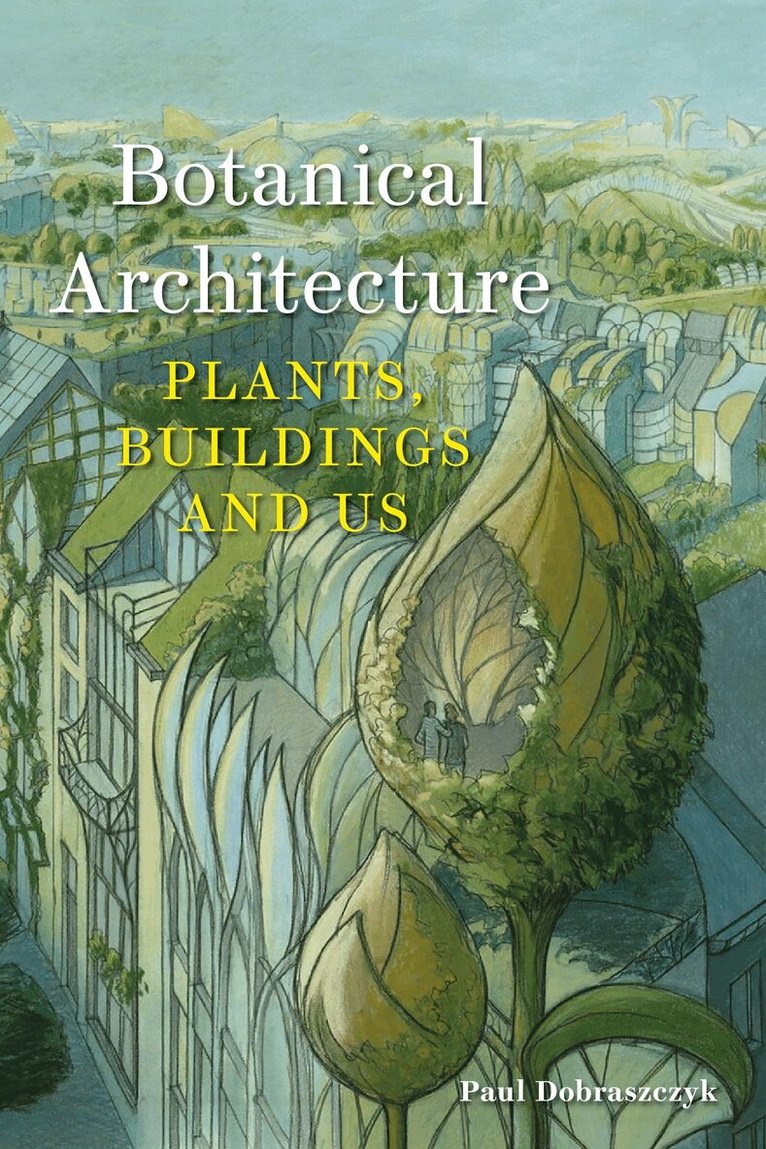
When we look at trees, we see a form of natural architecture, and yet we have seemingly always exploited trees to make new buildings of our own. While a tree creates its own structure, we generally destroy other things to build, with increasingly disastrous consequences.Looking closely at how elements of plants – seeds, roots, trunks, branches, leaves, flowers and canopies – relate to buildings, this book asks what might be required to design with plants and become more attuned to vegetal life in our structures. It also proposes that we build as much for plants as for ourselves, understanding that our lives are always totally dependent on theirs. Botanical Architecture offers a provocative and original take on the relationship between ecology and architecture.
194 kr
Skickas
Exploring a breathtaking range of imagined cities – submerged, floating, flying, vertical, underground, ruined and salvaged – this book teases out the links between speculation and reality, arguing that there is no clear separation between the two. In the Netherlands, floating cities are already being built; Dubai’s recent skyscrapers resemble those of science-fiction cities of the past; while makeshift settlements built by the urban poor in the developing world are already like the dystopian cities of cyberpunk. Bringing together architecture, fiction, film and art, Future Cities re-connects the imaginary city with the real – proposing a future for humanity that is already grounded in the present and in the creative practices of many kinds.
214 kr
Kommande
Geology is the architecture of our planet and what we build has always been dependent on what the earth has already made. Yet in recent decades we, rather than the planet, have produced the geology of the future: millions of tonnes of concrete, plastic, brick, metal and other fabricated materials are quickly piling up to eventually become new strata. Can we recover a more equitable relationship to the earth? Providing a provocative and original take on the relationship between ecology and architecture, this book asks what architects do with, and what they might learn from, what the earth creates. From caves and crystals to volcanoes and earthquakes, The Matter of Architecture delves deep to mine a different way of building.
292 kr
Skickas inom 7-10 vardagar
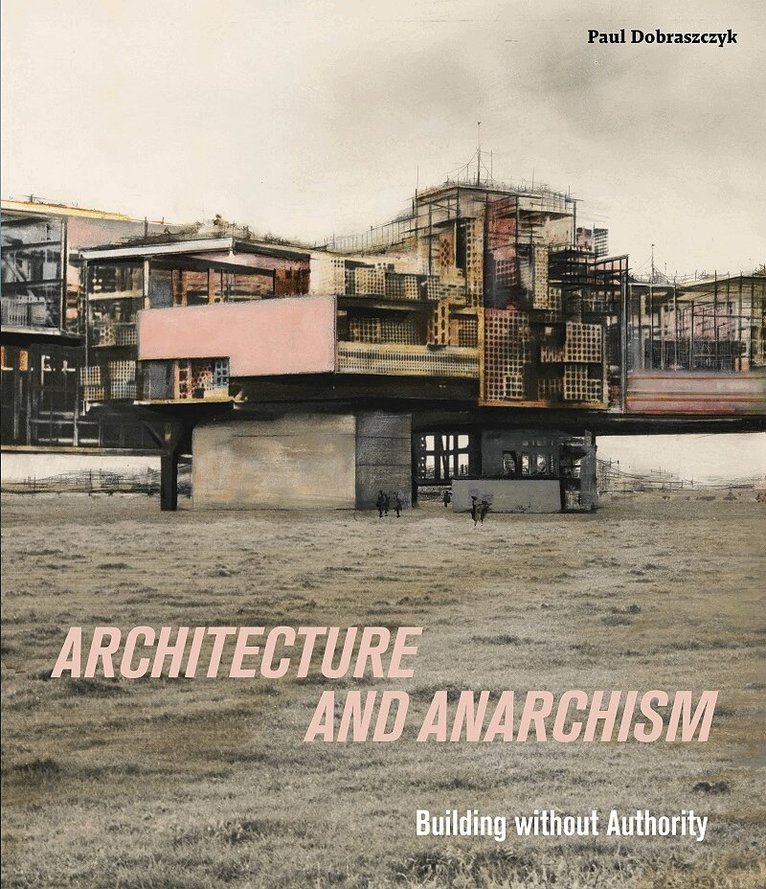
A groundbreaking look at sixty works of anarchist architecture. This book documents and illustrates sixty projects, past and present, that key into a libertarian ethos and desire for diverse self-organized ways of building. They are what this book calls "anarchist" architecture, that is, forms of design and building that embrace the core values of traditional anarchist political theory since its divergence from the mainstream of socialist politics in the nineteenth century. As Architecture and Anarchism shows, a vast range of architectural projects reflects some or all of these values, whether they are acknowledged as specifically anarchist or not. From junk playgrounds to Freetown Christiania, Slab City to the Calais Jungle, isolated cabins to intentional communities—all are motivated by core values of autonomy, voluntary association, mutual aid, and self-organization. Taken as a whole, they are meant as an inspiration to build less uniformly, more inclusively, and more freely. This book broadens existing ideas about what constitutes anarchism in architecture and argues for its nurturing in the built environment. Understood in this way, anarchism offers a powerful way of reconceptualizing architecture as an emancipatory, inclusive, ecological, and egalitarian practice.