Paul Dumouchel – författare
Visar alla böcker från författaren Paul Dumouchel. Handla med fri frakt och snabb leverans.
11 produkter
Against Injustice
The New Economics of Amartya Sen
Av Reiko Gotoh, Paul Dumouchel
Häftad, 2010
754 kr
Lägg i varukorg
Traditional theories of justice as formulated by political philosophers, jurists and economists have all tended to see injustice as simply a breach of justice, a breakdown of the normal order. Amartya Sen's work acts as a corrective to this tradition by arguing that we can recognise patent …
Against Injustice
The New Economics of Amartya Sen
Av Reiko Gotoh, Paul Dumouchel
Inbunden, 2009
1844 kr
Lägg i varukorg
Traditional theories of justice as formulated by political philosophers, jurists and economists have all tended to see injustice as simply a breach of justice, a breakdown of the normal order. Amartya Sen's work acts as a corrective to this tradition by arguing that we can recognise patent …
Living with Robots
Av Paul Dumouchel, Luisa Damiano
Inbunden, 2017
5,0 utav 5 stjärnor. Totalt antal röster: (1)
417 kr
Lägg i varukorg
Living with Robots recounts a foundational shift in the field of robotics, from artificial intelligence to artificial empathy, and foreshadows an inflection point in human evolution. Today’s robots engage with human beings in socially meaningful ways, as therapists, trainers, mediators, caregivers, …
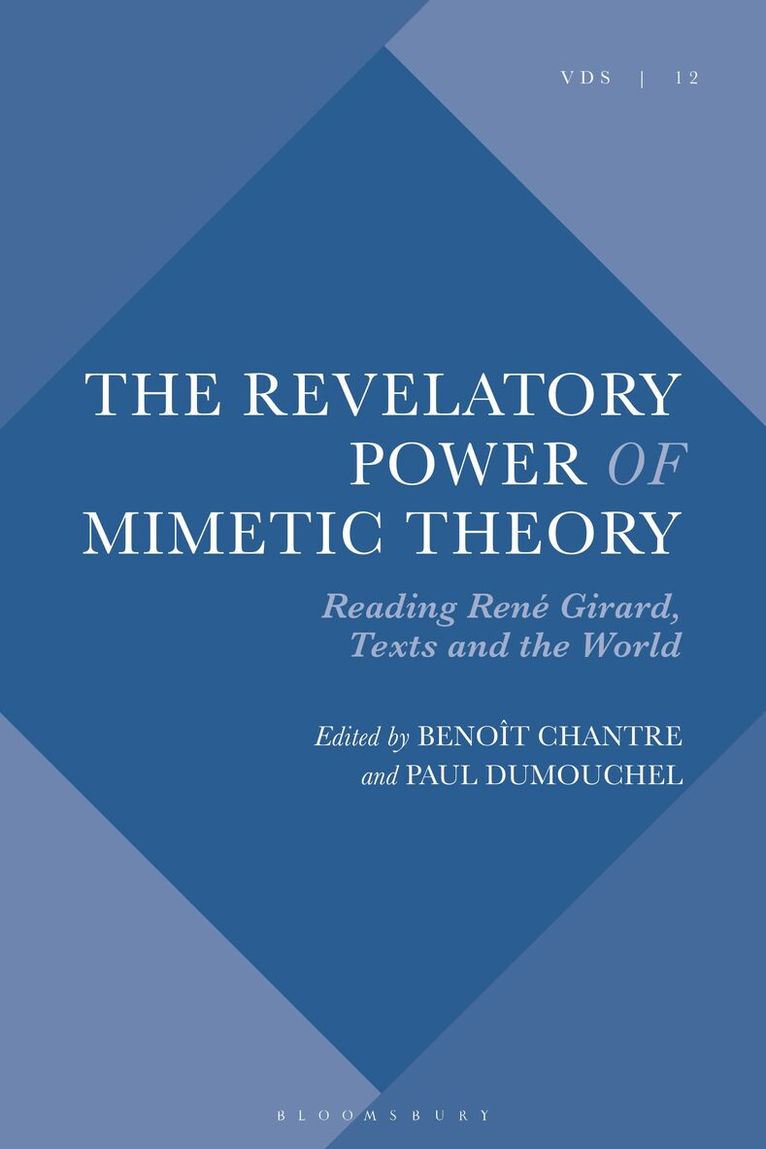
Revelatory Power of Mimetic Theory
Reading René Girard, Texts and the World
Av Benoît Chantre, Paul Dumouchel
Inbunden, 2026
1388 kr
Lägg i varukorg
A one-of-a-kind overview of the lasting impact of mimetic theory and the extent of its interdisciplinary applications, a century after René Girard's birth.Bringing together a team of established scholars from different disciplines, this collection assesses how much the theory has developed over …
Revelatory Power of Mimetic Theory
Reading René Girard, Texts and the World
Av Benoît Chantre, Paul Dumouchel
E-bok, 2025
1524 kr
Lägg i varukorg
A one-of-a-kind overview of the lasting impact of mimetic theory and the extent of its interdisciplinary applications, a century after Ren Girard's birth.Bringing together a team of established scholars from different disciplines, this collection assesses how much the theory has developed over …
Revelatory Power of Mimetic Theory
Reading René Girard, Texts and the World
Av Benoît Chantre, Paul Dumouchel
E-bok, 2025
1524 kr
Lägg i varukorg
A one-of-a-kind overview of the lasting impact of mimetic theory and the extent of its interdisciplinary applications, a century after Ren Girard's birth.Bringing together a team of established scholars from different disciplines, this collection assesses how much the theory has developed over …
Revelatory Power of Mimetic Theory
Reading René Girard, Texts and the World
Av Benoît Chantre, Scott Cowdell m. fl.
Häftad, 2027
474 kr
Kommande
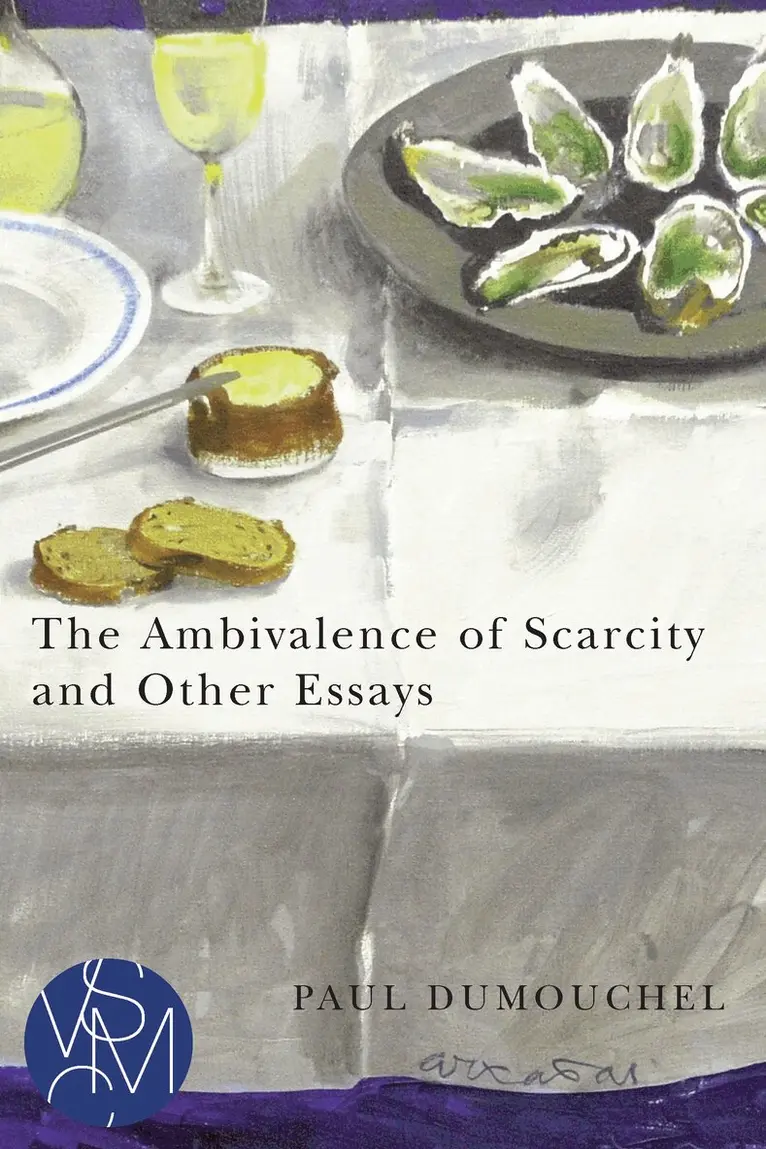
Ambivalence of Scarcity and Other Essays
Häftad, 2014
1031 kr
Lägg i varukorg
First published in French in 1979, “The Ambivalence of Scarcity” was a groundbreaking work on mimetic theory. Now expanded upon with new, specially written, and never-before-published conference texts and essays, this revised edition explores René Girard’s philosophy in three sections: economy and …
Barren Sacrifice
An Essay on Political Violence
Häftad, 2015
659 kr
Lägg i varukorg
According to political theory, the primary function of the modern state is to protect its citizens—both from each other and from external enemies. Yet it is the states that essentially commit major forms of violence, such as genocides, ethnic cleansings, and large-scale massacres, against their own …
Social Bonds as Freedom
Revisiting the Dichotomy of the Universal and the Particular
Av Paul Dumouchel, Reiko Gotoh
Inbunden, 2015
1921 kr
Lägg i varukorg
Central to discussions of multiculturalism and minority rights in modern liberal societies is the idea that the particular demands of minority groups contradict the requirements of equality, anonymity, and universality for citizenship and belonging. The contributors to this volume question the …
Social Bonds as Freedom
Revisiting the Dichotomy of the Universal and the Particular
Av Reiko Gotoh, Paul Dumouchel
E-bok, 2015
326 kr
Lägg i varukorg
Central to discussions of multiculturalism and minority rights in modern liberal societies is the idea that the particular demands of minority groups contradict the requirements of equality, anonymity, and universality for citizenship and belonging. The contributors to this volume question the …