Paul E. Stepansky - Böcker
Visar alla böcker från författaren Paul E. Stepansky. Handla med fri frakt och snabb leverans.
9 produkter
9 produkter
469 kr
Skickas inom 10-15 vardagar
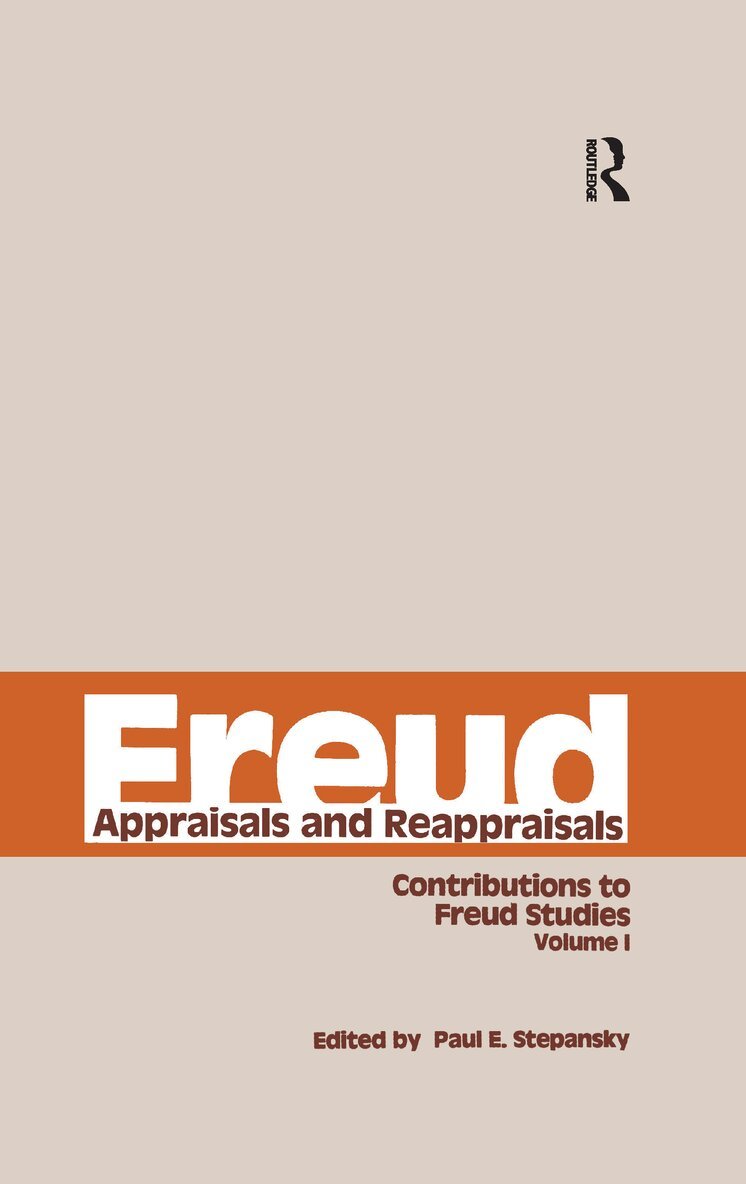
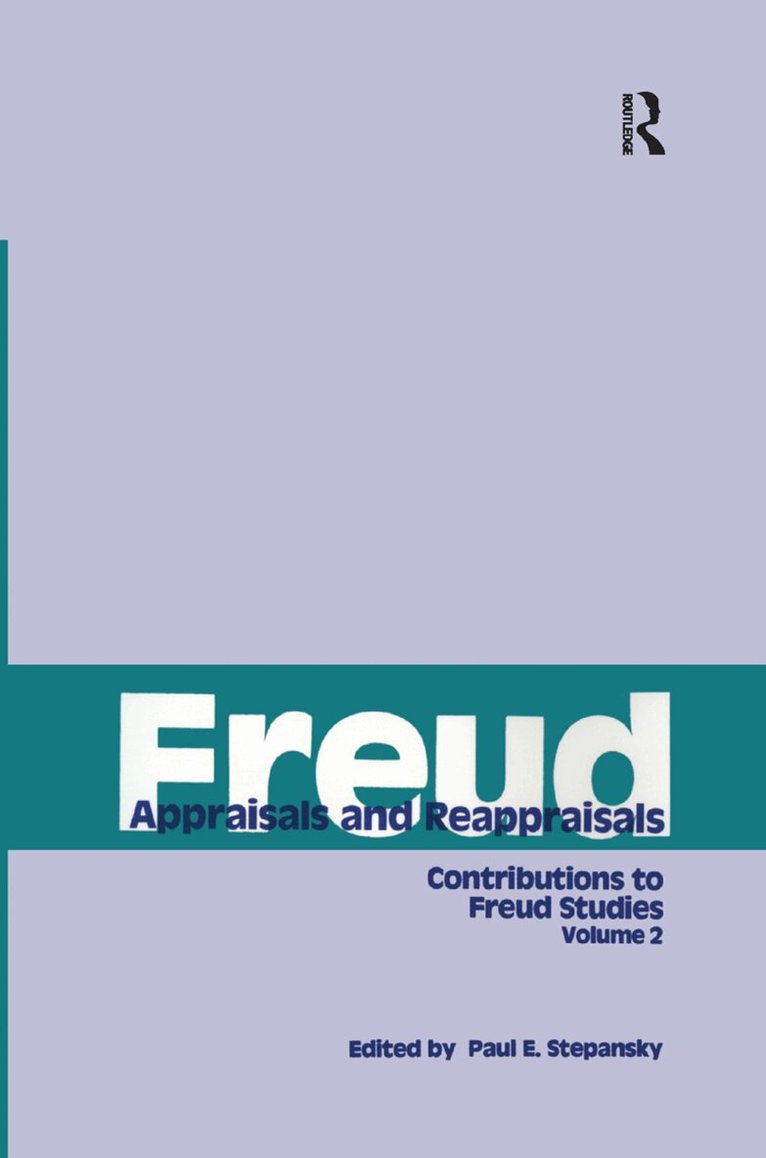
A response to the veritable renaissance in Freud studies, Freud: Appraisals and Reappraisals presents the readers with the fruits of recent scholarship on Freud, the man and scientist, and the origins and development of the psychoanalytic movement spawned by his work. The premier volume of this series offers three major essays embodying different tributaries of contemporary Freud research. Peter Swales, drawing on extensive archival research, reveals the identity and explores the life and times of the woman Freud terms his first "teacher," but presented to his readers only as the "Frau Caecilie M" of the Studies on Hysteria. Barry Silverstein brings together complementary strands of textual analysis and psychobiographical reconstruction in his provocative reconsideration of the circumstances surrounding Freud's lost papers on metapsychology. Finally, Edwin Wallace's integrative review of Freud's scattered remarks on ethics and morality, combined with his appraisal of Freud's personal ethics, yield a measured and scholarly account of Freud as "ethicist." Briefer essays on Freud and the oral tradition (Patrick Mahony), Freud's psychology of religion (Paul Stepansky), and recent assessments of Freud's character (John Gedo) round out a volume that is destined for a place of distinction in the secondary literature on Freud. Collectively, these essays represent a most auspicious debut for the new series; they admirably bear out Paul Stepansky's intent of "presenting readers with original articles that embody high scholarship an a thought-provoking and imaginative use of the fruits of this scholarship."
707 kr
Skickas inom 10-15 vardagar
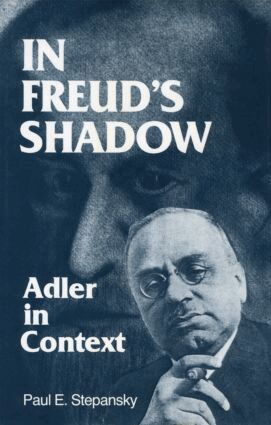
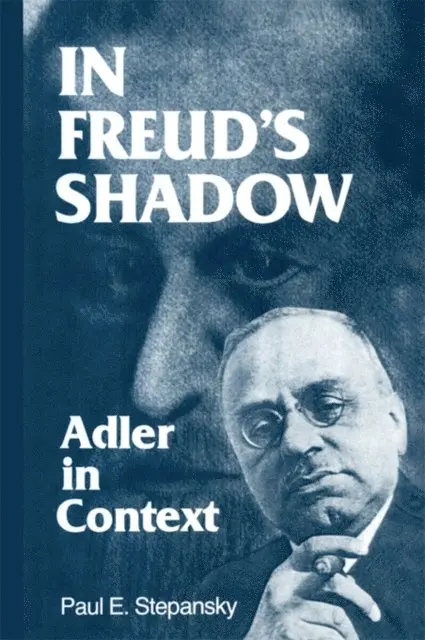
In its detailed, interpretive reconsideration of Adler's involvement with Freud and psychoanalysis, In Freud's Shadow constitutes a seminal contribution to our historical understanding of the early psychoanalytic movement. Making extensive use of the Minutes of the Vienna Psycho-Analytic Society, Freud's correspondence, and the diaries of Lou Andreas-Salome, Stepansky reconstructs the ambience and reanalyzes the substance of the ongoing debates about Adler's work within the psychoanalytic discussion group. One valuable by-product of his undertaking, then, is a compelling portrait of the early Vienna Psycho-Analytic Society from the standpoint of the sociology of small groups and, more especially, of Freud's status as the "group leader" of the Society.Thoroughly researched, meticulously documented, and brilliantly written, In Freud's Shadow: Adler in Context represents a watershed in the literature on Adler, Frued, and the history of psychoanalysis. It will be of major interest not only to psychoanalysts, psychiatrists, and psychologists, but to social scientists, historians, and lay readers interested in the politics of scientific controversy, the sociology of small groups, and the relationship of psychology to contemporary systems of belief.
773 kr
Skickas inom 10-15 vardagar
A response to the veritable renaissance in Freud studies, Freud: Appraisals and Reappraisals presents the readers with the fruits of recent scholarship on Freud, the man and scientist, and the origins and development of the psychoanalytic movement spawned by his work. The premier volume of this series offers three major essays embodying different tributaries of contemporary Freud research. Peter Swales, drawing on extensive archival research, reveals the identity and explores the life and times of the woman Freud terms his first "teacher," but presented to his readers only as the "Frau Caecilie M" of the Studies on Hysteria. Barry Silverstein brings together complementary strands of textual analysis and psychobiographical reconstruction in his provocative reconsideration of the circumstances surrounding Freud's lost papers on metapsychology. Finally, Edwin Wallace's integrative review of Freud's scattered remarks on ethics and morality, combined with his appraisal of Freud's personal ethics, yield a measured and scholarly account of Freud as "ethicist." Briefer essays on Freud and the oral tradition (Patrick Mahony), Freud's psychology of religion (Paul Stepansky), and recent assessments of Freud's character (John Gedo) round out a volume that is destined for a place of distinction in the secondary literature on Freud. Collectively, these essays represent a most auspicious debut for the new series; they admirably bear out Paul Stepansky's intent of "presenting readers with original articles that embody high scholarship an a thought-provoking and imaginative use of the fruits of this scholarship."
601 kr
Skickas inom 10-15 vardagar
Volume 2 of the Freud: Appraisals and Reappraisals series bears out the promise of the acclaimed premier volume, a volume whose essays "breathe new life into the study of Freud," embodying research that "appears to be impeccable in every case" (International Review of Psychoanalysis). It begins with Peter Homan's detailed reeexamination of the period 1906-1914 in Freud's life. Looking to Freud's relationahips with Jung as the central event of the period, he finds in Freud's idealization and subsequent de-idealization of Jung a psychological motif that gains recurrent expression in Freud's later writings and personal relationships. Richard Geha offers a provocative protrait of Freud as a "fictionalist." Anchoring his exegesis in Freud's famous case of the Wolf Man, he argues that the yield of Freud's clinical inquiries, epistemologically, is a species of the fictionalism of Friedrich Nietzsche and Hans Vaihinger. But, pursuing the argument, Geha goes on to advance little-noted biographical evidence that Freud understood himself to be an artist whose clinical productions were ultimately artistic. Finally, Patricia Herzog organizes and interprets Freud's seemingly conflicting remarks about philosophy and philosophers en route to the claim that the long-held belief that Freud was an "anti-philosopher" is a myth. In fact, she claims, "Freud was in no doubt as to the philosophical nature of his goal." In an introductory essay titled "Pathways to Freud's Identity," editor Paul E. Stepansky brings together the essays of Homans, Geha, and Herzog as complementary inquiries into Freud's putative self-understanding and, to that extent, as reconstructive, historical continuations of the self-analysis methodically begun by Freud in the late 1890s. "Each contributor," writes Stepansky, "in his or her own way, seeks to understand Freud better in the spirit in which Freud might have better understood himself. Together, the contributors offer vistas to an enlarged self-analytic sensibility."
550 kr
Skickas inom 3-6 vardagar
392 kr
Skickas inom 5-8 vardagar
416 kr
Skickas inom 10-15 vardagar
Volume 2 of the Freud: Appraisals and Reappraisals series bears out the promise of the acclaimed premier volume, a volume whose essays "breathe new life into the study of Freud," embodying research that "appears to be impeccable in every case" (International Review of Psychoanalysis). It begins with Peter Homan's detailed reeexamination of the period 1906-1914 in Freud's life. Looking to Freud's relationahips with Jung as the central event of the period, he finds in Freud's idealization and subsequent de-idealization of Jung a psychological motif that gains recurrent expression in Freud's later writings and personal relationships. Richard Geha offers a provocative protrait of Freud as a "fictionalist." Anchoring his exegesis in Freud's famous case of the Wolf Man, he argues that the yield of Freud's clinical inquiries, epistemologically, is a species of the fictionalism of Friedrich Nietzsche and Hans Vaihinger. But, pursuing the argument, Geha goes on to advance little-noted biographical evidence that Freud understood himself to be an artist whose clinical productions were ultimately artistic. Finally, Patricia Herzog organizes and interprets Freud's seemingly conflicting remarks about philosophy and philosophers en route to the claim that the long-held belief that Freud was an "anti-philosopher" is a myth. In fact, she claims, "Freud was in no doubt as to the philosophical nature of his goal." In an introductory essay titled "Pathways to Freud's Identity," editor Paul E. Stepansky brings together the essays of Homans, Geha, and Herzog as complementary inquiries into Freud's putative self-understanding and, to that extent, as reconstructive, historical continuations of the self-analysis methodically begun by Freud in the late 1890s. "Each contributor," writes Stepansky, "in his or her own way, seeks to understand Freud better in the spirit in which Freud might have better understood himself. Together, the contributors offer vistas to an enlarged self-analytic sensibility."
641 kr
Skickas inom 10-15 vardagar
In its detailed, interpretive reconsideration of Adler's involvement with Freud and psychoanalysis, In Freud's Shadow constitutes a seminal contribution to our historical understanding of the early psychoanalytic movement. Making extensive use of the Minutes of the Vienna Psycho-Analytic Society, Freud's correspondence, and the diaries of Lou Andreas-Salome, Stepansky reconstructs the ambience and reanalyzes the substance of the ongoing debates about Adler's work within the psychoanalytic discussion group. One valuable by-product of his undertaking, then, is a compelling portrait of the early Vienna Psycho-Analytic Society from the standpoint of the sociology of small groups and, more especially, of Freud's status as the "group leader" of the Society.Thoroughly researched, meticulously documented, and brilliantly written, In Freud's Shadow: Adler in Context represents a watershed in the literature on Adler, Frued, and the history of psychoanalysis. It will be of major interest not only to psychoanalysts, psychiatrists, and psychologists, but to social scientists, historians, and lay readers interested in the politics of scientific controversy, the sociology of small groups, and the relationship of psychology to contemporary systems of belief.
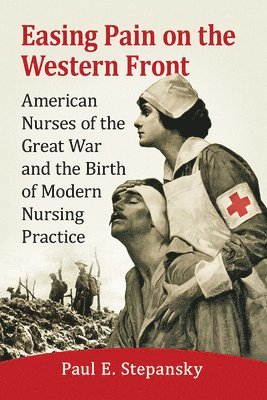
Easing Pain on the Western Front
American Nurses of the Great War and the Birth of Modern Nursing Practice
Häftad, Engelska, 2019
478 kr
Skickas inom 5-8 vardagar
World War I is regarded as the first modern war, driven by fearful new technologies of mechanized combat. The unprecedented carnage rapidly advanced military medicine, transforming the nature of wartime caregiving and paving the way for modern nursing practice. Drawing on firsthand accounts of American nurses, as well as their Canadian and British counterparts, historian Paul E. Stepansky describes nurses' encounters with devastating new forms of injury--wounds from high-explosive artillery shells, poison gas burns, "shell shock," the Spanish Flu. Comparing nursing practice on the western front with nursing care during the American Civil War, the Spanish-American War, and the Anglo-Boer War, the author is especially attentive to the emergent technologies employed by nurses of the Great War.