Paul F. Grendler - Böcker
Visar alla böcker från författaren Paul F. Grendler. Handla med fri frakt och snabb leverans.
10 produkter
10 produkter
695 kr
Skickas inom 10-15 vardagar
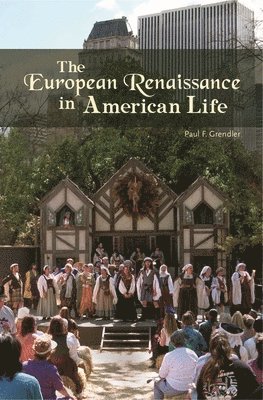
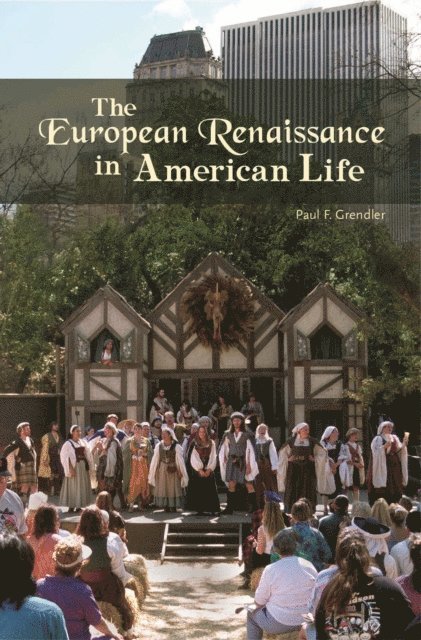
An informative but light-hearted look at the popularity of the Renaissance today, this book was written by a Renaissance scholar intrigued with the way his subject continues to resonate outside the scholarly community. His purpose is to uncover and describe the many manifestations of America's love of the Renaissance. Why do millions don costumes to attend Renaissance Faires? Why do novels and films about the period enjoy continued popularity, as do Renaissance icons such as Elizabeth I, Michelangelo, Shakespeare and the Mona Lisa? How is it that American politicians and business leaders still look to Machiavelli as a symbol of wisdom-or of evil? Grendler posits that Americans embrace the Renaissance as a model of culture and sophistication, seeing it as confirmation that the individual can achieve greatness against long odds, a belief at the core of our own society.After an examination of The Real Renaissance (1400-1620), the book looks at ways in which Americans relive the experience (including Faires and Living Last Suppers), ways in which we re-create the Renaissance in our own world, and finally, ways in which the Renaissance is portrayed, for better or worse, in fiction and film.
540 kr
Skickas inom 7-10 vardagar
One of the great European publishing centers, Venice produced half or more of all books printed in Italy during the sixteenth-century. Drawing on the records of the Venetian Inquisition, which survive almost complete, Paul F. Grendler considers the effectiveness of censorship imposed on the Venetian press by the Index of Prohibited Books and enforced by the Inquisition. Using Venetian governmental records, papal documents in the Vatican Archive and Library, and the books themselves, Professor Grendler traces the controversies as the patriciate debated whether to enforce the Index or to support the disobedient members of the book trade. He investigates the practical consequences of the Index to printer and reader, noble and prelate. Heretics, clergymen, smugglers, nobles, and printers recognized the importance of the press and pursued their own goals for it. The Venetian leaders carefully weighed the conflicting interests, altering their stance to accommodate constantly shifting religious, political, and economic situations. The author shows how disputes over censorship and other press matters contributed to the tension between the papacy and the Republic.He draws on Venetian governmental records, papal documents in the Vatican Library, and the books themselves. Originally published in 1977. The Princeton Legacy Library uses the latest print-on-demand technology to again make available previously out-of-print books from the distinguished backlist of Princeton University Press. These editions preserve the original texts of these important books while presenting them in durable paperback and hardcover editions. The goal of the Princeton Legacy Library is to vastly increase access to the rich scholarly heritage found in the thousands of books published by Princeton University Press since its founding in 1905.
2 636 kr
Skickas inom 3-6 vardagar
One of the great European publishing centers, Venice produced half or more of all books printed in Italy during the sixteenth-century. Drawing on the records of the Venetian Inquisition, which survive almost complete, Paul F. Grendler considers the effectiveness of censorship imposed on the Venetian press by the Index of Prohibited Books and enforced by the Inquisition. Using Venetian governmental records, papal documents in the Vatican Archive and Library, and the books themselves, Professor Grendler traces the controversies as the patriciate debated whether to enforce the Index or to support the disobedient members of the book trade. He investigates the practical consequences of the Index to printer and reader, noble and prelate. Heretics, clergymen, smugglers, nobles, and printers recognized the importance of the press and pursued their own goals for it. The Venetian leaders carefully weighed the conflicting interests, altering their stance to accommodate constantly shifting religious, political, and economic situations. The author shows how disputes over censorship and other press matters contributed to the tension between the papacy and the Republic.He draws on Venetian governmental records, papal documents in the Vatican Library, and the books themselves. Originally published in 1977. The Princeton Legacy Library uses the latest print-on-demand technology to again make available previously out-of-print books from the distinguished backlist of Princeton University Press. These editions preserve the original texts of these important books while presenting them in durable paperback and hardcover editions. The goal of the Princeton Legacy Library is to vastly increase access to the rich scholarly heritage found in the thousands of books published by Princeton University Press since its founding in 1905.
Del 107 - Johns Hopkins University Studies in Historical and Political Science
Schooling in Renaissance Italy
Literacy and Learning, 1300-1600
Häftad, Engelska, 1991
405 kr
Skickas inom 7-10 vardagar
'
413 kr
Skickas inom 7-10 vardagar
The Italian university has been credited with the rebirth of humanism and thus the flourishing of the Renaissance as we have come to understand it. Scholars of Italian humanism acknowledge the importance of the legal curriculum at universities in Pisa and Bologna for the rediscovery and renewed appreciation of classical texts. Few, however, have examined what life or the curriculum were like at Italian universities in general, in both major and minor city-states. This study, covering the period from 1400-1600, offers historians in the field not only an overview but also detailed information on the life of these Renaissance universities. According to the author, this book addresses Italian universities of the Renaissance in two complementary ways. It follows in broad lines the changes in various academic disciplines, as new issues and themes appeared and older ones waned. It also notes changes in the organization of the university, such as the creation of professorships in new subjects and their elimination in older ones.The impact of scholars in their disciplines in many cases depended on the structural changes their university was willing to make to accommodate new lines of inquiry. The book studies all sixteen of the leading Italian universities. Part I charts the rise and flourishing of Italian universities as institutions. Part II looks at their curricula, teaching methods, and research conducted by university professors. Part III explains the decline of the Renaissance university.
853 kr
Skickas inom 5-8 vardagar
Universities were driving forces of change in late Renaissance Italy. The Gonzaga, the ruling family of Mantua, had long supported scholarship and dreamed of founding an institution of higher learning within the city. In the early seventeenth century they joined forces with the Jesuits, a powerful intellectual and religious force, to found one of the most innovative universities of the time. Paul F. Grendler provides the first book in any language about the Peaceful University of Mantua, its official name. He traces the efforts of Duke Ferdinando Gonzaga, a prince savant who debated Galileo, as he made his family's dream a reality. Ferdinando negotiated with the Jesuits, recruited professors, and financed the school. Grendler examines the motivations of the Gonzaga and the Jesuits in the establishment of a joint civic and Jesuit university. The University of Mantua lasted only six years, lost during the brutal sack of the city by German troops in 1630. Despite its short life, the university offered original scholarship and teaching. It had the first professorship of chemistry more than 100 years before any other Italian university.The leading professor of medicine identified the symptoms of angina pectoris 140 years before an English scholar named the disease. The star law professor advanced new legal theories while secretly spying for James I of England. The Jesuits taught humanities, philosophy, and theology in ways both similar to and different from lay professors. A superlative study of education, politics, and culture in seventeenth-century Italy, this book reconsiders a period in Italy's history often characterized as one of feckless rulers and stagnant learning. Thanks to extensive archival research and a thorough examination of the published works of the university's professors, Grendler's history tells a new story.
360 kr
Skickas inom 7-10 vardagar
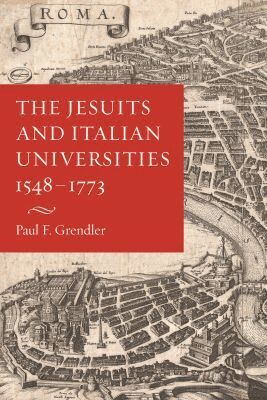
The Society of Jesus arrived in Italy in 1540 brimming with enthusiasm to found new universities. These would be better than Italian universities, which the Jesuits believed were full of professors teaching philosophical atheism to debauched students. The Jesuits also wanted to become professors in existing Italian universities. They would teach Christian philosophy, true theology, sound logic, eloquent humanities, and practical mathematics. They would exert a positive moral influence on students. The Jesuits were rejected. Italy already had fourteen universities famous for their research and teaching. They were ruled by princes and cities who refused to share their universities with a religious order led by Spaniards. Between 1548 and 1773 the Jesuits made sixteen attempts, from Turin in the north to Messina in Sicily, to found new universities or to become professors in existing universities. They had some successes, as they helped found four new universities and became professors of mathematics in three more universities. But they suffered nine total failures. The battles between universities, civil governments, and the Jesuits were memorable. Lay professors accused the Jesuits of teaching philosophy badly. The Jesuits charged that Italian professors delivered few lectures and skipped most of Aristotle. Behind the denunciations were profound differences about what universities should be. Italian universities were dominated by law and the Jesuits emphasized the humanities and theology. Nevertheless, the Society of Jesus had an impact. They added cases of conscience to the training of clergymen. They made four years of study the norm for a degree in theology. They offered a student-centered alternative to Italian universities that focused on research and ignored student misbehavior. Paul Grendler tells a new story based on years of research in a dozen archives. Anyone interested in the volatile mix of universities, religion, and politics will find this book fascinating and instructive, as will anyone who contemplates what it means to be a Catholic university.
570 kr
Skickas inom 7-10 vardagar
Few eras took education so seriously or were so innovative in their approaches to schools and universities as the Renaissance. At the same time, religious and political concerns strongly influenced educational developments. This third volume of articles by Paul F. Grendler explores the close connections between education, religion, and politics at several levels and in different contexts. It combines detailed research into various kinds of schools with broad overviews of European and especially Italian education. The lead article compares Italian and German universities and assesses the impact of the Protestant Reformation on the latter. Even Erasmus, the great critic of university theologians, felt the need to acquire a doctorate in theology and did so. In Italy, the new schools of the Jesuits and the Piarists taught boys and young men gratis, but not without opposition. Two articles deal with students, the consumers of education. While teachers and students were most directly involved in schools and universities, ecclesiastical and political authorities, including the leaders of the Republic of Venice, the subject of the final study, kept a watchful eye on them.
Jesuit Schools and Universities in Europe, 1548–1773
Brill's Research Perspectives in Jesuit Studies
Häftad, Engelska, 2018
1 140 kr
Skickas inom 5-8 vardagar
Paul F. Grendler, noted historian of European education, surveys Jesuit schools and universities throughout Europe from the first school founded in 1548 to the suppression of the Society of Jesus in 1773. The Jesuits were noted educators who founded and operated an international network of schools and universities that enrolled students from the age of ten through doctoral studies. The essay analyzes the organization, curriculum, pedagogy, culture, financing, relations with civil authorities, enrollments, and social composition of students in Jesuit pre-university schools. Grendler then explains Jesuit universities. The Jesuits governed and did all the teaching in small collegiate universities. In large civic-Jesuit universities the Jesuits taught the humanities, philosophy, and theology, while lay professors taught law and medicine. The article provides examples ranging from the first Jesuit school in Messina, Sicily, to universities across Europe. It features a complete list of Jesuit schools in France.
Del 4 - History of Early Modern Educational Thought
Humanism, Universities, and Jesuit Education in Late Renaissance Italy
Inbunden, Engelska, 2022
2 394 kr
Skickas inom 5-8 vardagar
This book contains twenty essays on Italian Renaissance humanism, universities, and Jesuit education by one of its most distinguished living historians, Paul. F. Grendler. The first section of the book opens with defining Renaissance humanism, followed by explorations of biblical humanism and humanistic education in Venice. It concludes with essays on two pioneering historians of humanism, Georg Voigt and Paul Oskar Kristeller. The middle section discusses Italian universities, the sports played by university students, a famous law professor, and the controversy over the immortality of the soul. The last section analyzes Jesuit education: the culture of the Jesuit teacher, the philosophy curriculum, attitudes toward Erasmus and Juan Luis Vives, and the education of a cardinal.This volume collects Paul Grendler's most recent research (published and unpublished), offering to the reader a broad fresco on a complex and crucial age in the history of education.