Paul F. Snowdon - Böcker
Visar alla böcker från författaren Paul F. Snowdon. Handla med fri frakt och snabb leverans.
4 produkter
4 produkter
983 kr
Skickas inom 7-10 vardagar
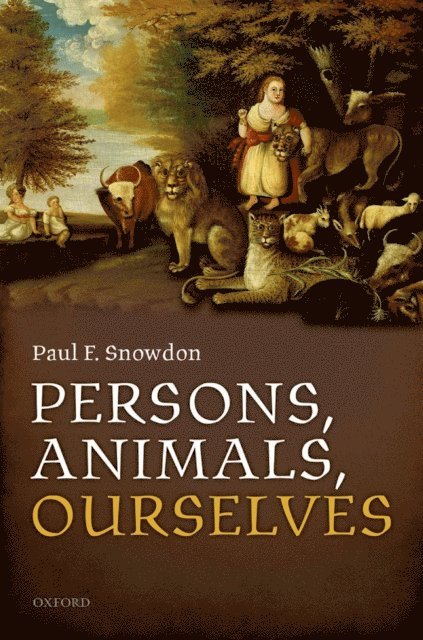
The starting point for this book is a particular answer to a question that grips many of us: what kind of thing are we? The particular answer is that we are animals (of a certain sort)--a view nowadays called 'animalism'. This answer will appear obvious to many but on the whole philosophers have rejected it. Paul F. Snowdon proposes, contrary to that attitude, that there are strong reasons to believe animalism and that when properly analysed the objections against it that philosophers have given are not convincing. One way to put the idea is that we should not think of ourselves as things that need psychological states or capacities to exist, any more that other animals do. The initial chapters analyse the content and general philosophical implications of animalism--including the so-called problem of personal identity, and that of the unity of consciousness--and they provide a framework which categorises the standard philosophical objections. Snowdon then argues that animalism is consistent with a perfectly plausible account of the central notion of a 'person', and he criticises the accounts offered by John Locke and by David Wiggins of that notion. In the two next chapters Snowdon argues that there are very strong reasons to think animalism is true, and proposes some central claims about animal which are relevant to the argument. In the rest of the book the task is to formulate and to persuade the reader of the lack of cogency of the standard philosophical objections, including the conviction that it is possible for the animal that I would be if animalism were true to continue in existence after I have ceased to exist, and the argument that it is possible for us to remain in existence even when the animal has ceased to exist. In considering these types of objections the views of various philosophers, including Nagel, Shoemaker, Johnston, Wilkes, and Olson, are also explored. Snowdon concludes that animalism represents a highly commonsensical and defensible way of thinking about ourselves, and that its rejection by philosophers rests on the tendency when doing philosophy to mistake fantasy for reality.
583 kr
Skickas
The starting point for this book is a particular answer to a question that grips many of us: what kind of thing are we? The particular answer is that we are animals (of a certain sort)--a view nowadays called 'animalism'. This answer will appear obvious to many but on the whole philosophers have rejected it. Paul F. Snowdon proposes, contrary to that attitude, that there are strong reasons to believe animalism and that when properly analysed the objections against it that philosophers have given are not convincing. One way to put the idea is that we should not think of ourselves as things that need psychological states or capacities to exist, any more that other animals do. The initial chapters analyse the content and general philosophical implications of animalism--including the so-called problem of personal identity, and that of the unity of consciousness--and they provide a framework which categorises the standard philosophical objections. Snowdon then argues that animalism is consistent with a perfectly plausible account of the central notion of a 'person', and he criticises the accounts offered by John Locke and by David Wiggins of that notion. In the two next chapters Snowdon argues that there are very strong reasons to think animalism is true, and proposes some central claims about animal which are relevant to the argument. In the rest of the book the task is to formulate and to persuade the reader of the lack of cogency of the standard philosophical objections, including the conviction that it is possible for the animal that I would be if animalism were true to continue in existence after I have ceased to exist, and the argument that it is possible for us to remain in existence even when the animal has ceased to exist. In considering these types of objections the views of various philosophers, including Nagel, Shoemaker, Johnston, Wilkes, and Olson, are also explored. Snowdon concludes that animalism represents a highly commonsensical and defensible way of thinking about ourselves, and that its rejection by philosophers rests on the tendency when doing philosophy to mistake fantasy for reality.
1 268 kr
Skickas inom 5-8 vardagar
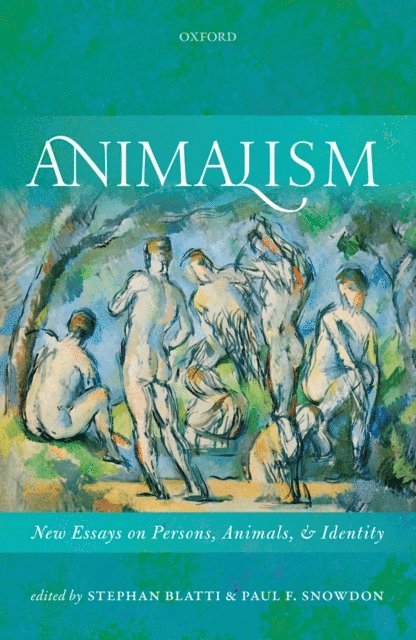
What are we? What is the nature of the human person? Animalism has a straightforward answer to these long-standing philosophical questions: we are animals. After being ignored for a long time in philosophical discussions of our nature, this idea has recently gained considerable support in metaphysics and philosophy of mind. It has also, amongst philosophers, occasioned strong opposition, even though it might be said to be the view assumed by much of the scientific community. Essays on Animalism is the first volume to be devoted to this important topic and promises to set the agenda for the next stage in the debate. Containing mainly new papers as well as two highly important articles that were recently published elsewhere, this volume's contributors include both emerging voices in the debate and many of those who have been instrumental in shaping it. Some of their contributions defend animalism, others criticize it, still others explore its more general implications. The book also contains a substantial introduction by the editors explaining what animalism is, identifying leading issues that merit attention, and highlighting many of the issues that the contributors have raised.
1 403 kr
Skickas inom 5-8 vardagar
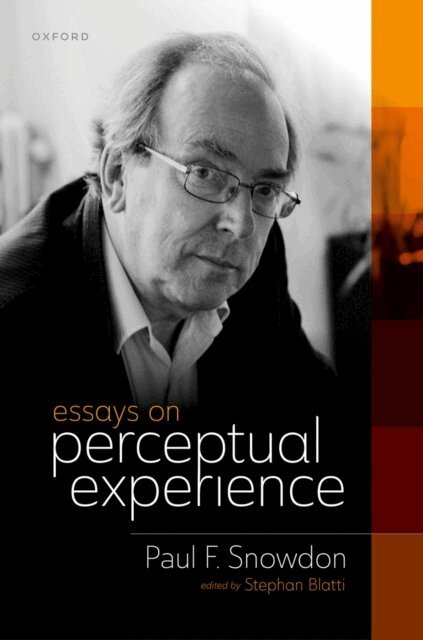
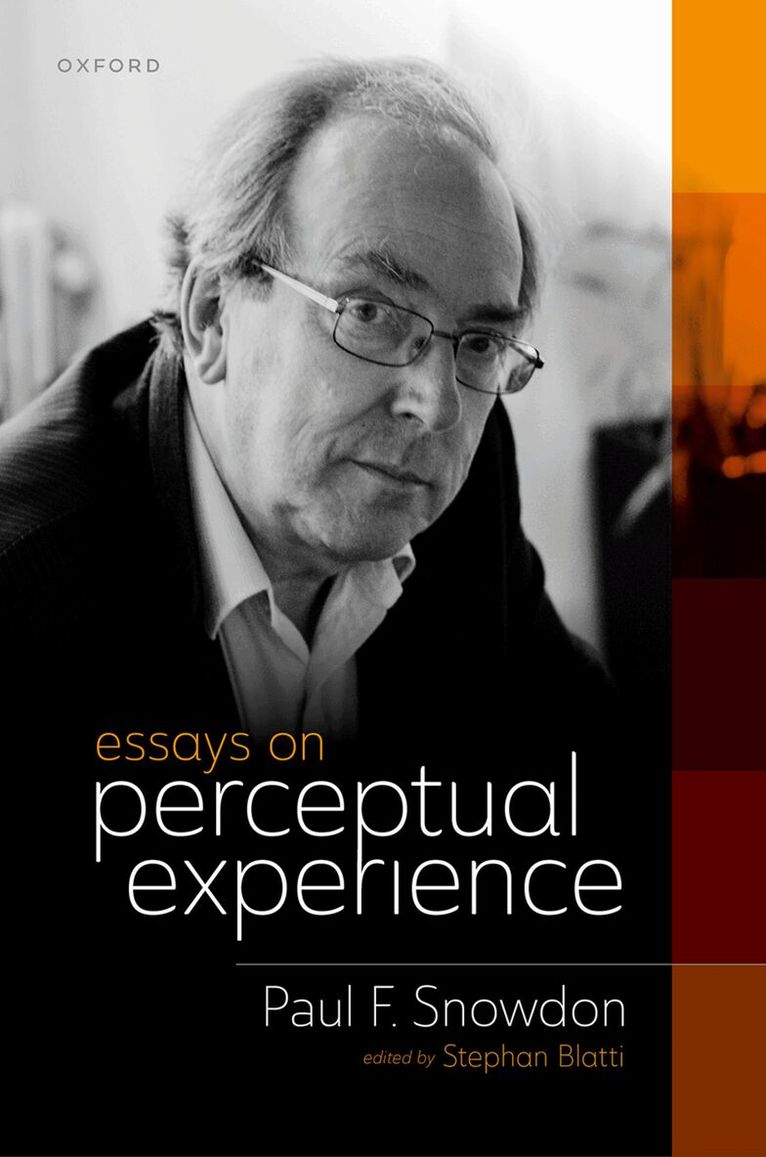
A central figure in Anglo-American philosophy for over four decades, Paul F. Snowdon made seminal contributions to the fields of metaphysics, philosophy of mind, and the history of twentieth-century philosophy. Snowdon's work on perception and perceptual experience--much of which is collected in this volume for the first time--was particularly influential and firmly established 'disjunctivism' as a view with which any theorist working in the field must reckon. In the essays collected in the first part of this volume, Snowdon traces the contours of the concept of perception, refining his formulation of the disjunctivist position, determining the degree of involvement of the concept of causation, and engaging critically with arguments which aim to support sense-data theories. The second part contains critical examinations of the views propounded by several influential philosophers, amounting to a partial sketch of the history of twentieth-century philosophy of perception. Among the figures whose work Snowdon engages are J. L. Austin, A. J. Ayer, Michael Ayers, Michael Hinton, John McDowell, G. E. Moore, H. H. Price, Wilfrid Sellars, P. F. Strawson, and Ludwig Wittgenstein. The volume opens with a robust and intellectually generous introduction in which Snowdon describes the theoretical challenges, approaches, and themes that animate the set of interrelated problems addressed across all sixteen essays. Sprinkled throughout are an array of candid reflections that serve to illuminate both the substantive connections between the essays as well as the historical and circumstantial contexts that occasioned their writing.