Paul-Gerhard Reinhard – författare
Visar alla böcker från författaren Paul-Gerhard Reinhard. Handla med fri frakt och snabb leverans.
12 produkter
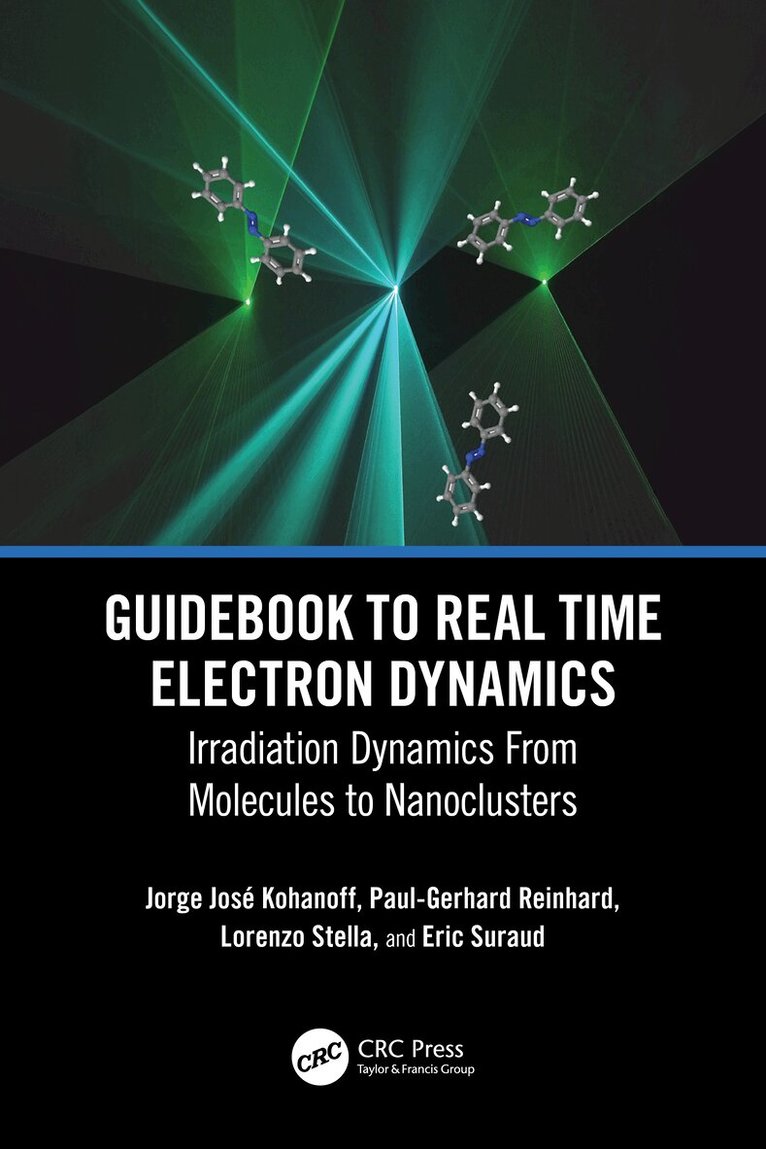
Guidebook to Real Time Electron Dynamics
Irradiation Dynamics From Molecules to Nanoclusters
Av Jorge Kohanoff, Paul-Gerhard Reinhard m. fl.
Häftad, 2025
822 kr
Lägg i varukorg
This practical book presents an overview of the various approaches developed to understand the dynamics of electronic systems in physics and chemistry. It also illustrates typical application examples, namely atoms, molecules, and clusters such as nano objects. For each system, the book reviews its …
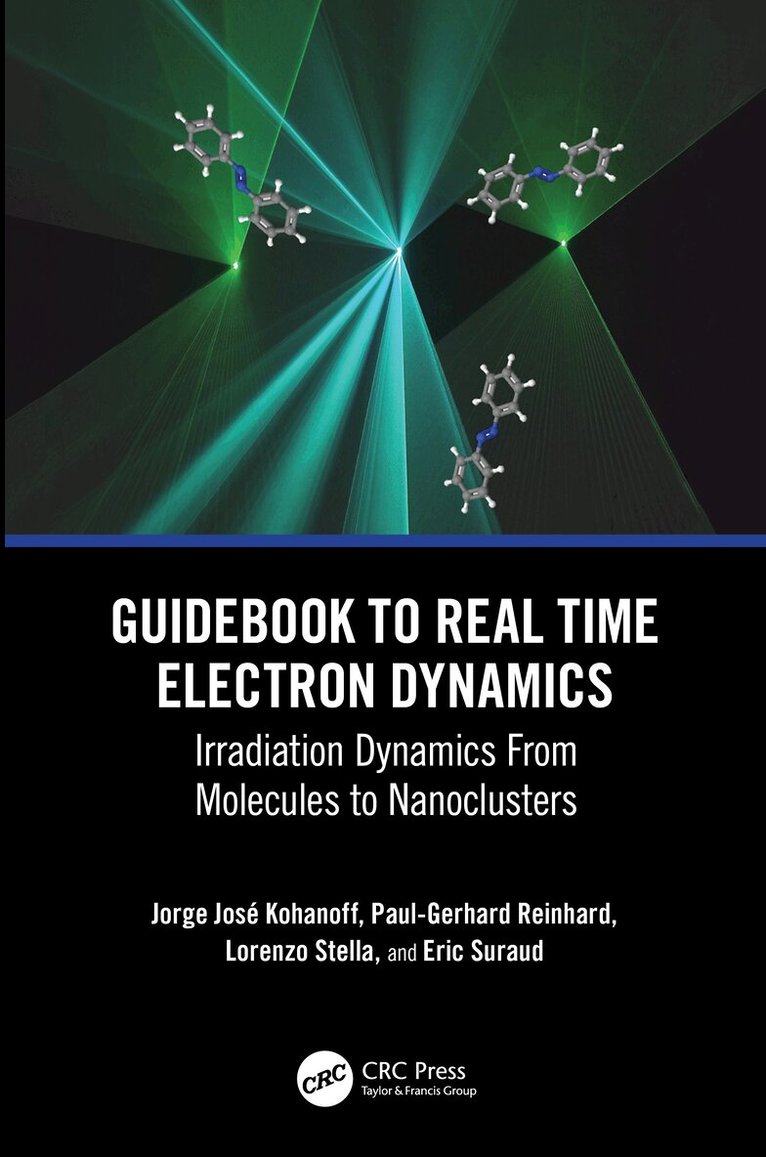
Guidebook to Real Time Electron Dynamics
Irradiation Dynamics From Molecules to Nanoclusters
Av Jorge Kohanoff, Paul-Gerhard Reinhard m. fl.
Inbunden, 2024
2131 kr
Lägg i varukorg
This practical book presents an overview of the various approaches developed to understand the dynamics of electronic systems in physics and chemistry. It also illustrates typical application examples, namely atoms, molecules, and clusters such as nano objects. For each system, the book reviews its …
Guidebook to Real Time Electron Dynamics
Irradiation Dynamics From Molecules to Nanoclusters
Av Eric Suraud, Lorenzo Stella m. fl.
E-bok, 2024
949 kr
Lägg i varukorg
This practical book presents an overview of the various approaches developed to understand the dynamics of electronic systems in physics and chemistry. It also illustrates typical application examples, namely atoms, molecules, and clusters such as nano objects. For each system, the book reviews its …
Guidebook to Real Time Electron Dynamics
Irradiation Dynamics From Molecules to Nanoclusters
Av Eric Suraud, Lorenzo Stella m. fl.
E-bok, 2024
949 kr
Lägg i varukorg
This practical book presents an overview of the various approaches developed to understand the dynamics of electronic systems in physics and chemistry. It also illustrates typical application examples, namely atoms, molecules, and clusters such as nano objects. For each system, the book reviews its …
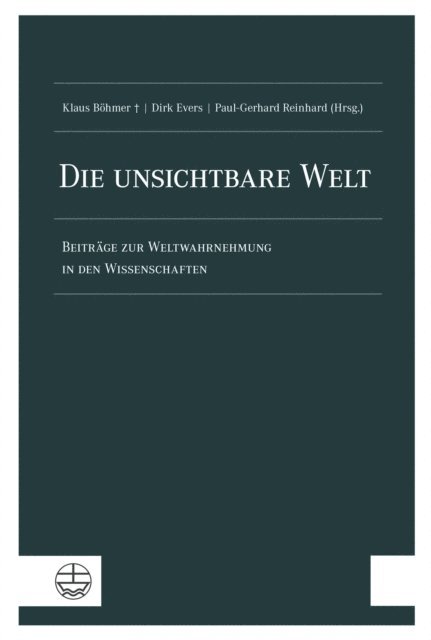
Die unsichtbare Welt
Beiträge zur Weltwahrnehmung in den Wissenschaften
Av Paul-Gerhard Reinhard, Dirk Evers m. fl.
E-bok, 2025
419 kr
Lägg i varukorg
Die in diesem Band versammelten zwölf Beiträge aus der Theologie, der Mathematik, den Naturwissenschaften und der historischen Forschung beschäftigen sich mit der Frage nach dem Verhältnis zwischen der sinnlich erfahrbaren und wissenschaftlich erfassbaren Wirklichkeit und dem, was diese …
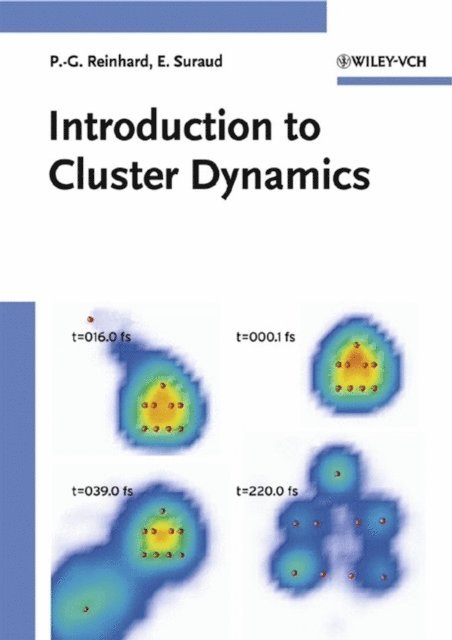
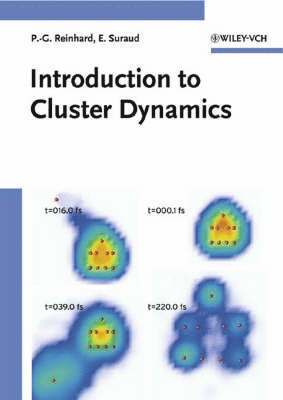
Introduction to Cluster Dynamics
Av Eric Suraud, Paul-Gerhard Reinhard
E-bok, 2008
2558 kr
Lägg i varukorg
Clusters as mesoscopic particles represent an intermediate state of matter between single atoms and solid material. The tendency to miniaturise technical objects requires knowledge about systems which contain a "small" number of atoms or molecules only. This is all the more true for dynamical …
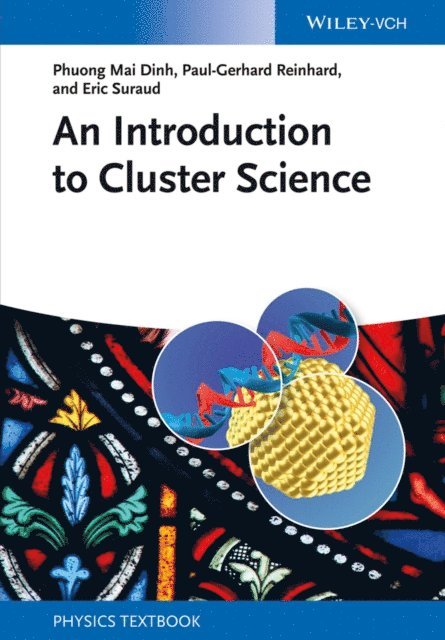
Introduction to Cluster Science
Av Eric Suraud, Paul-Gerhard Reinhard m. fl.
E-bok, 2013
619 kr
Lägg i varukorg
Filling the need for a solid textbook, this short primer in cluster science is ideal for a one-semester lecture for advanced undergraduate students. It is based on a series of lectures given by the well-established and recognized authors for the past ten years. The book covers both the basics of …
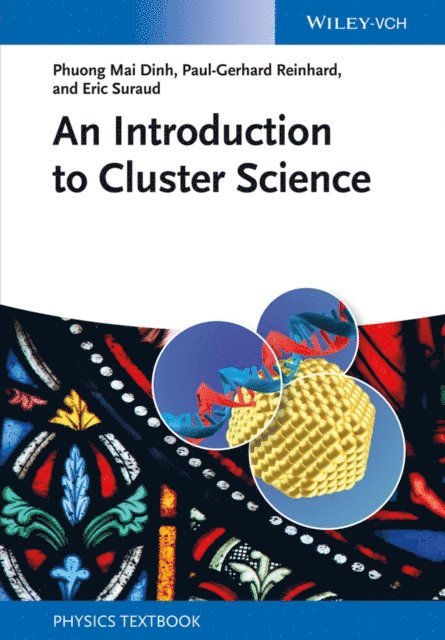
Introduction to Cluster Science
Av Eric Suraud, Paul-Gerhard Reinhard m. fl.
E-bok, 2013
619 kr
Lägg i varukorg
Filling the need for a solid textbook, this short primer in cluster science is ideal for a one-semester lecture for advanced undergraduate students. It is based on a series of lectures given by the well-established and recognized authors for the past ten years. The book covers both the basics of …
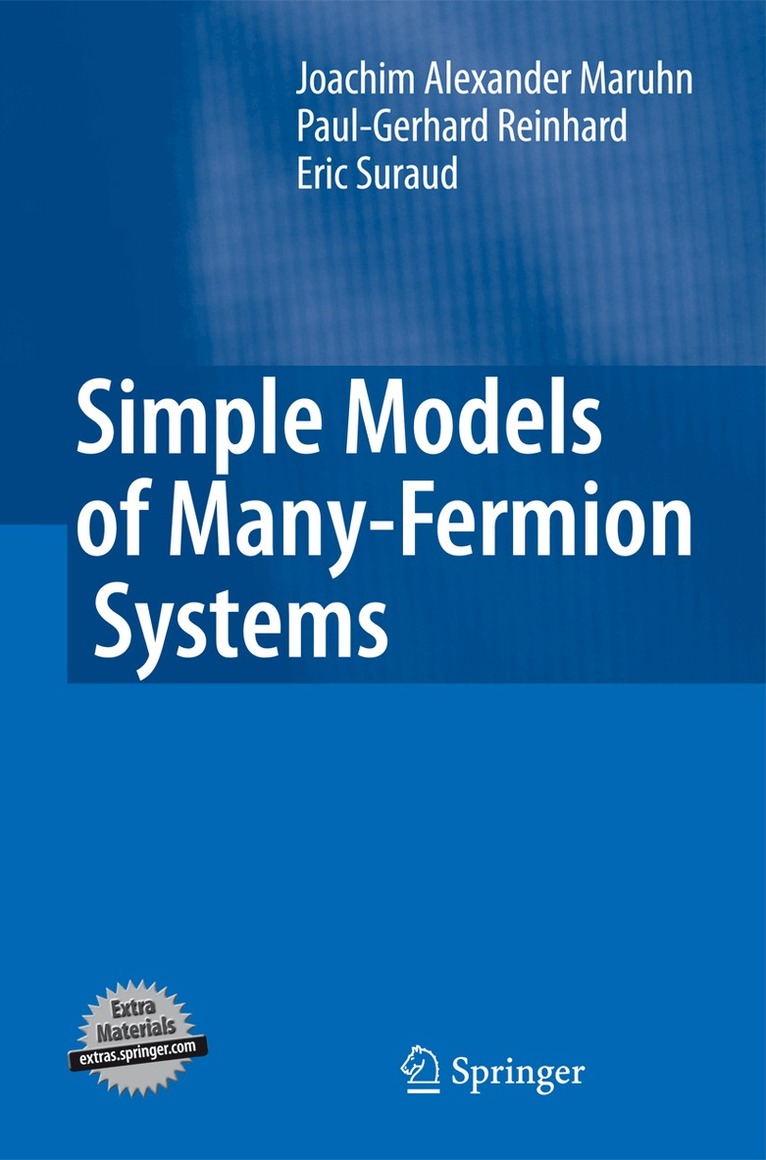
Simple Models of Many-Fermion Systems
Av Joachim Alexander Maruhn, Paul-Gerhard Reinhard m. fl.
Inbunden, 2010
1093 kr
Lägg i varukorg
The term “ nite Fermi systems” usually refers to systems where the fermionic nature of the constituents is of dominating importance but the nite spatial extent also cannot be ignored. Historically the prominent examples were atoms, molecules, and nuclei. These should be seen in contrast to …
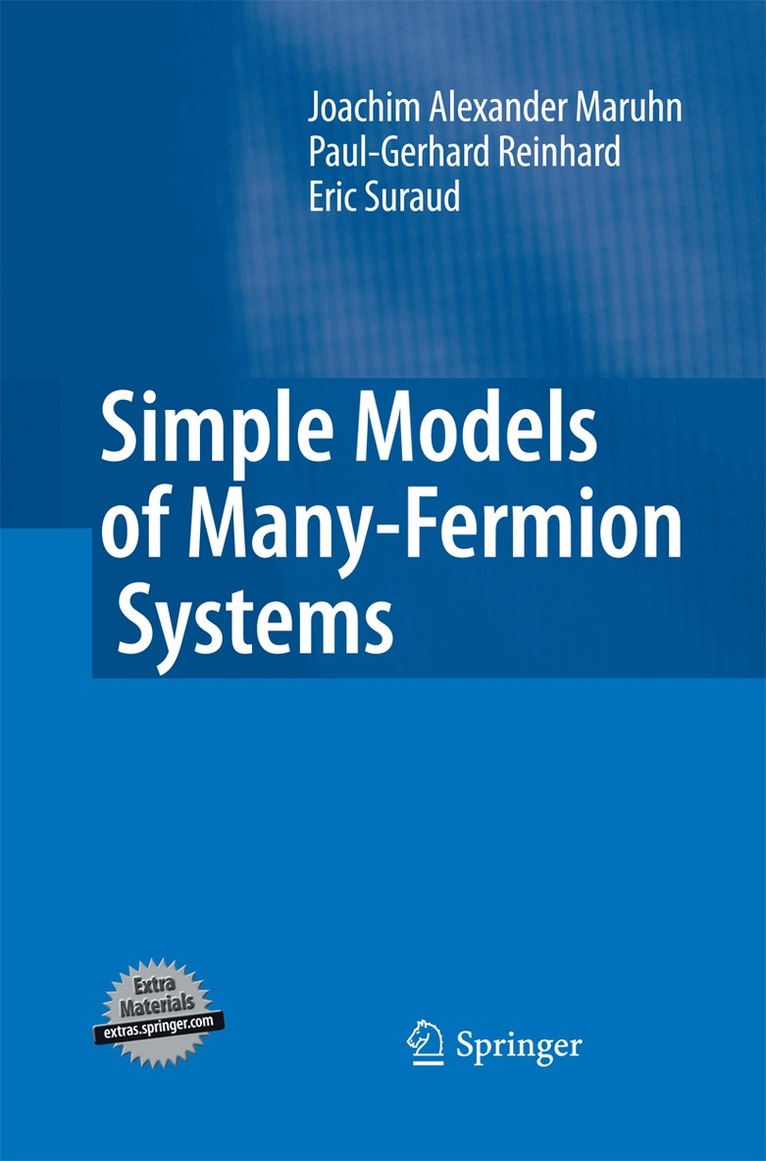
Simple Models of Many-Fermion Systems
Av Eric Suraud, Paul-Gerhard Reinhard m. fl.
E-bok, 2010
1416 kr
Lägg i varukorg
The term “ nite Fermi systems” usually refers to systems where the fermionic nature of the constituents is of dominating importance but the nite spatial extent also cannot be ignored. Historically the prominent examples were atoms, molecules, and nuclei. These should be seen in contrast to …
Simple Models of Many-Fermion Systems
Av Joachim Alexander Maruhn, Paul-Gerhard Reinhard m. fl.
Häftad, 2014
1093 kr
Lägg i varukorg
The term “ nite Fermi systems” usually refers to systems where the fermionic nature of the constituents is of dominating importance but the nite spatial extent also cannot be ignored. Historically the prominent examples were atoms, molecules, and nuclei. These should be seen in contrast to …