Paul Hindle - Böcker
Visar alla böcker från författaren Paul Hindle. Handla med fri frakt och snabb leverans.
9 produkter
9 produkter
108 kr
Skickas inom 10-15 vardagar
106 kr
Skickas inom 7-10 vardagar
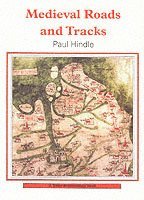
Starting with the basic concept of a 'road' in medieval times, and discussing the increasing need to travel, this book explores the evidence from documents and maps that provide clues as to where the roads of medieval Britain led, connecting the study of individual roads together to paint an image of the broader road network.
169 kr
Tillfälligt slut
Old maps provide a rich source of information for all those interested in their local history and they are also a popular field for collectors. Dr. Hindle’s describes the different types of map produced, explains what they were intended to show and where to find them.
178 kr
Skickas inom 11-20 vardagar
The canal received its Act of Parliament in 1791, and was opened from Bolton and Bury to Salford in 1797. The canal never reached Manchester. It was connected to the River Irwell in 1808 and to the rest of the canal system in 1838. The canal is just over 15 miles long, and has three arms radiating out from Nob End in Little Lever; all seventeen locks are on the Salford arm. The canal principally carried coal, and there were over 6 miles of tramways linked to it. As the collieries closed, the canal followed between 1924 and 1966, though the massive breach near Nob End in 1936 cut off the Bury arm. A canal society was formed in 1987 to restore the canal, and the first length was reopened in Salford in 2008. The society built a unique Meccanostyle bridge at Little Lever in 2012.
178 kr
Skickas inom 11-20 vardagar
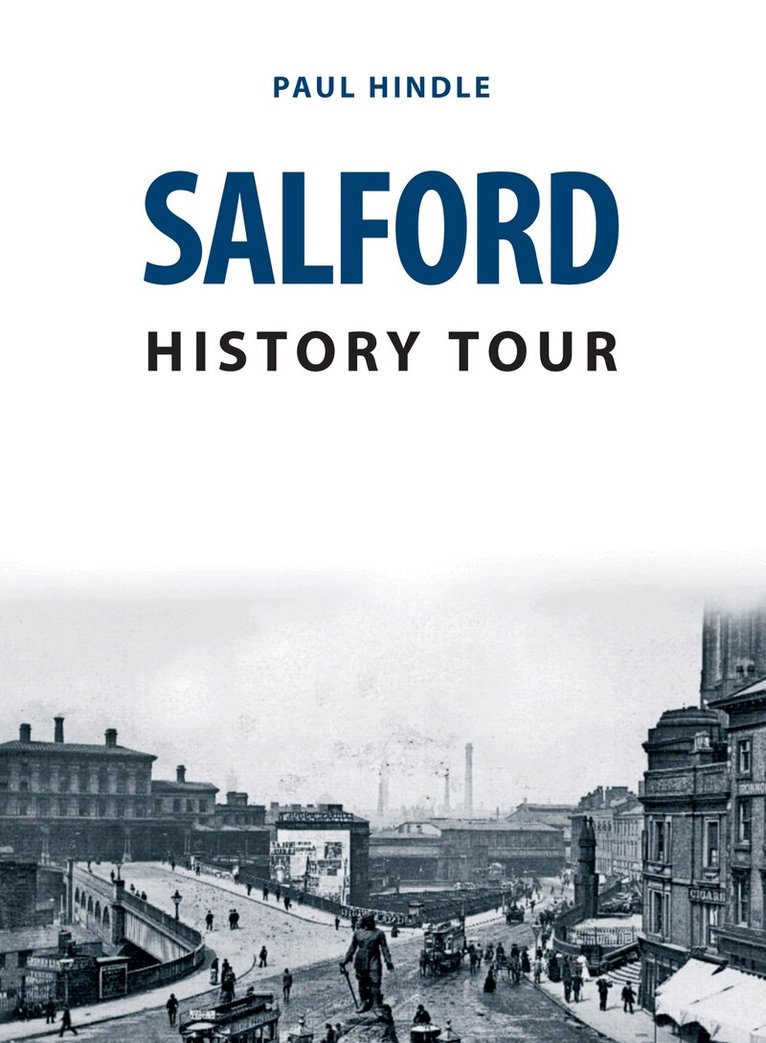
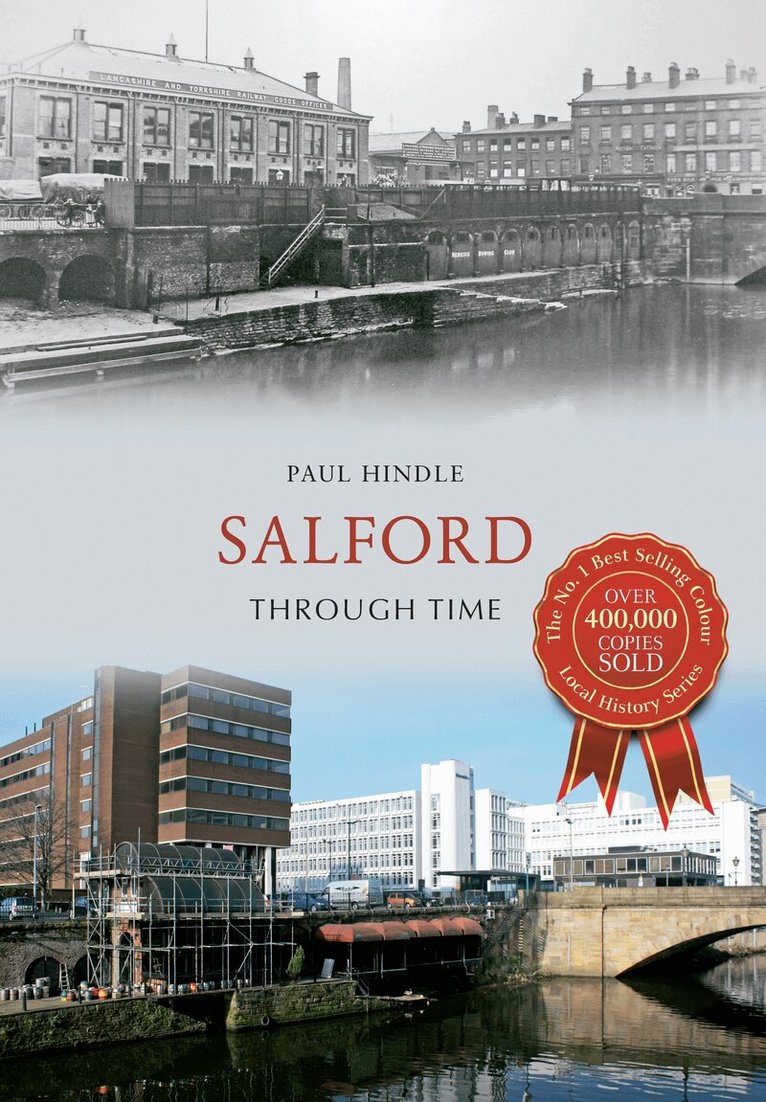
Salford is often seen as the smaller twin of Manchester, its neighbour across the River Irwell. In fact, Salford was a borough long before Manchester achieved that status, but even in the 1530s John Leland described it as 'a large suburb to Manchester'. However, during the Industrial Revolution, Manchester grew more rapidly than Salford, although together they were the first 'shock city' of the industrial age, described in graphic detail by writers such as de Tocqueville and Engels. While Manchester city centre became the area's commercial heart, Salford was relegated to the periphery. It certainly had its grim areas, described by Ewan McColl: 'I met my love by the gas works wall, dreamed a dream by the old canal/I kissed my girl by the factory wall, dirty old town, dirty old town.' However, today's Salford is an up and- coming area, home to Media City. This book presents a photographic tour through central Salford, ending up on the 'old canal'.
111 kr
Skickas
Salford is often seen as the smaller twin of Manchester, its neighbour across the River Irwell. In fact, Salford was a borough long before Manchester achieved that status, but during the Industrial Revolution Manchester grew more rapidly. In the eighteenth and nineteenth centuries, the local economy was driven by the textiles industry and the town’s location as a port on the Manchester Ship Canal. Although it entered a period of industrial decline in the twentieth century, Salford today is an up-and-coming area, home to Media City.Join local author Paul Hindle in as he guides readers on a fascinating walk through the town and its history. Along the route readers will be able to see how Salford has changed through the nineteenth and twentieth centuries. With the help of a handy location map, this pocket-sized guide explores some of the streets, buildings and landmarks, and discovers the well-known and hidden aspects of Salford’s heritage.
178 kr
Skickas
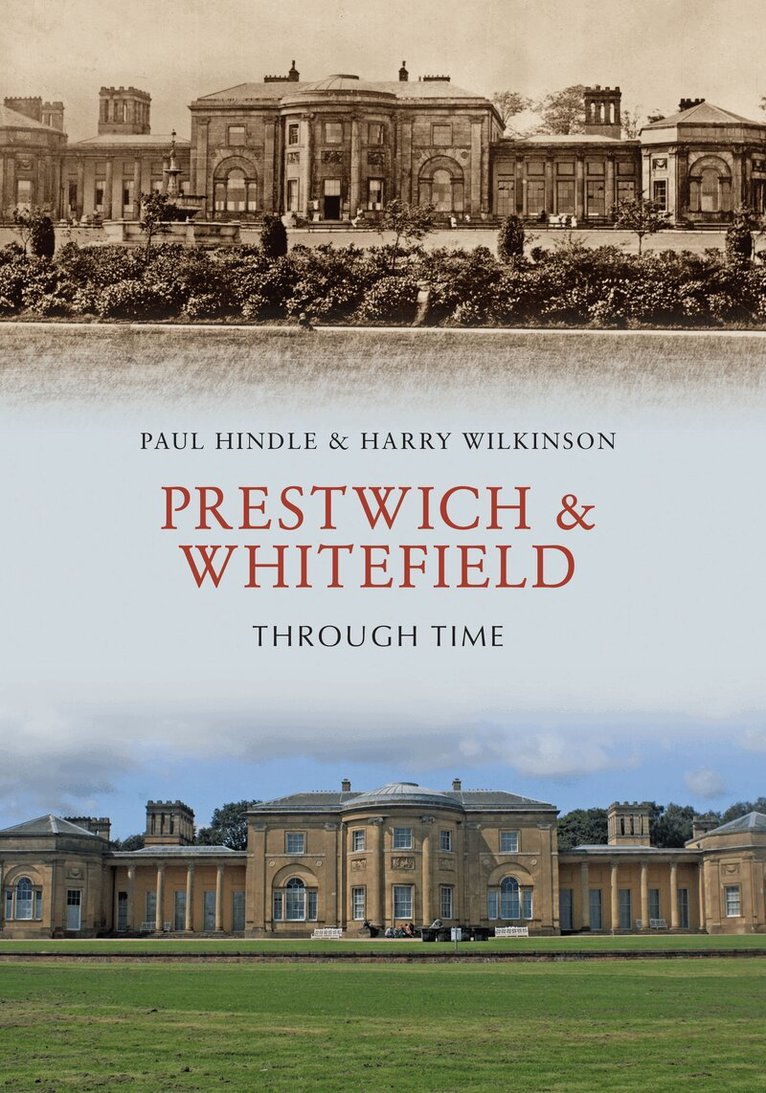
Prestwich and Whitefield are closely linked townships that have been separated by the construction of the M60. With a combined population of around 55,000, they are considered to be prestigious suburbs of north Manchester. They are now part of Bury Metropolitan Borough Council. In this book, authors Paul Hindle and Harry Wilkinson offer a nostalgic visual chronicle of Prestwich and Whitefield through the decades.Prestwich is the older of the townships and its parish church, St Mary’s, dates back to Norman times, though the present church was begun in the fifteenth century. Much of Whitefield was part of the medieval Pilkington Park, and Clive of India attended Stand Grammar School there. Whitefield became a separate local government area in 1886, but it boasts one of the churches funded after the Napoleonic Wars. Between the two areas is the famous Besses o’ th’ Barn, named after a former local innkeeper. To the west is the Irwell Valley and Philips Park, while to the east is Heaton Park, once the seat of the Earls of Wilton. Prestwich & Whitefield Through Time will be of interest to local people and anyone with links to the area.
55 kr
Tillfälligt slut
175 kr
Tillfälligt slut
Major features of the landscape, roads and tracks are often ignored by those who use them. Yet they can tell us much about a locality and the social and economic life of the past. The earliest trade routes date back far into pre-history, long before the Romans imposed their military network. This book provides penetrating new insight into our network of ancient, old and new roads and tracks.