Paul Kahan - Böcker
Visar alla böcker från författaren Paul Kahan. Handla med fri frakt och snabb leverans.
12 produkter
12 produkter
400 kr
Skickas inom 3-6 vardagar
2 166 kr
Skickas inom 10-15 vardagar
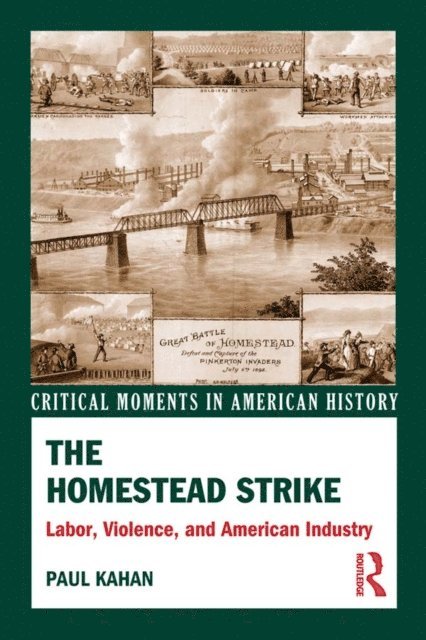
On July 6, 1892, three hundred armed Pinkerton agents arrived in Homestead, Pennsylvania to retake the Carnegie Steelworks from the company's striking workers. As the agents tried to leave their boats, shots rang out and a violent skirmish began. The confrontation at Homestead was a turning point in the history of American unionism, beginning a rapid process of decline for America’s steel unions that lasted until the Great Depression. Examining the strike’s origins, events, and legacy, The Homestead Strike illuminates the tense relationship between labor, capital, and government in the pivotal moment between Reconstruction and the Progressive Era. In a concise narrative, bolstered by statements from steelworkers, court testimony, and excerpts from Carnegie's writings, Paul Kahan introduces students to one of the most dramatic and influential episodes in the history of American labor.
578 kr
Skickas inom 10-15 vardagar
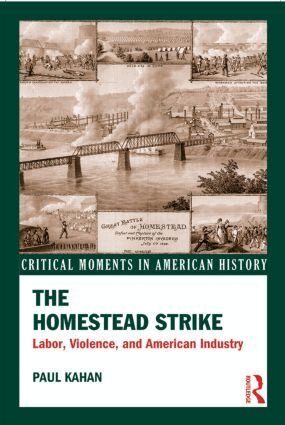
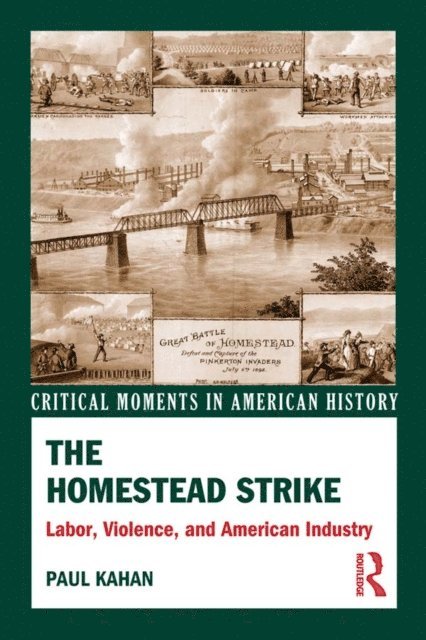
On July 6, 1892, three hundred armed Pinkerton agents arrived in Homestead, Pennsylvania to retake the Carnegie Steelworks from the company's striking workers. As the agents tried to leave their boats, shots rang out and a violent skirmish began. The confrontation at Homestead was a turning point in the history of American unionism, beginning a rapid process of decline for America’s steel unions that lasted until the Great Depression. Examining the strike’s origins, events, and legacy, The Homestead Strike illuminates the tense relationship between labor, capital, and government in the pivotal moment between Reconstruction and the Progressive Era. In a concise narrative, bolstered by statements from steelworkers, court testimony, and excerpts from Carnegie's writings, Paul Kahan introduces students to one of the most dramatic and influential episodes in the history of American labor.
146 kr
Skickas
This informative reference meets tasting journal teaches spirit enthusiasts how to deeply appreciate drinking tequila of all kinds.From classic to new-generation and small-batch tequilas, this book gives you the information you need to enjoy this widely popular drink with knowledge. Whether you are a straight-up sipper, a with or without salt, or a frozen-with-an-umbrella-drink type, Enjoying Tequila offers a hands-on guide and reference to this unique spirit and its many varieties and tastes.With the growth of artisan distilling, this spirit is surpassing its reputation as just a spirit to mix in a Margarita cocktail. The days of Jose Cuervo being the only option are long gone and savvy spirit aficionados are developing a newfound respect and love for this revered Mexican spirit. There are now subtle and distinct flavor variations and nuances in tequila options.Enjoying Tequila offers insight into the growing world of this versatile liquor—with its complex flavors and classic cocktails that are synonymous with relaxation. With this book in hand, you may be inclined to make tequila your spirit of choice as you: Discover tequila’s spicy, sweet, rich, and mellow variationsChoose from a collection of classic cocktail recipesFollow tasting notes on a full range of tequilasOffers an interactive format for recording your experiencesEnjoying Tequila is the perfect gift for your fun-loving friends (or just for yourself!)—no matter what flavor path they choose.
167 kr
Skickas inom 7-10 vardagar
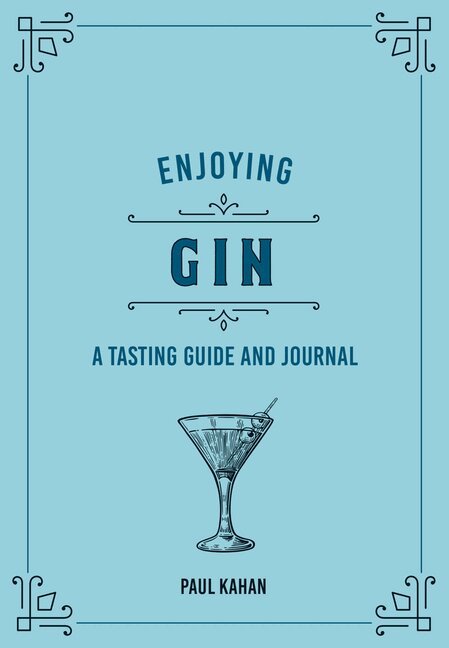
This informative reference meets tasting journal is your essential guide to the pleasure and versatility of this well-loved, globally sought-after spirit.Whether you are a novice or savvy enthusiast, Enjoying Gin teaches you the fascinating history of the world’s most well-known spirit as well as how to enjoy and evaluate it for a myriad of tastes, textures, and flavor subtleties. It also takes a look at some of the most popular gin brands so you can learn how to cut through the marketing and really understand what you’re getting.The journal section creates an accessible, interactive journey that helps you record your tasting experiences with small-batch to big-brand gins so you can find new favorites based on your flavor preferences. This guide: Takes you through the finer points of tasting gin Offers an interactive format for recording your experiences Includes a collection of gin cocktail recipes that take your experience deeper into the world of gin enjoyment From classic to new-generation gin distilleries hailing from across the the globe, you’ll learn all you need to enjoy gin with the knowledge of a seasoned enthusiast. Whether you choose classic or contemporary, Enjoying Gin offers a hands-on guide to the world of gin and its complexities of flavors.
344 kr
Kommande
James Buchanan was one of the most qualified and accomplished men elected to the presidency, and yet he turned out to be one of the worst. As sectional conflict veered toward civil war, Buchanan and all his preparation proved unequal to the challenges of his times. In this new cradle-to-grave, life-and-times biography, Paul Kahan reconstructs (but does not rehabilitate) the life of James Buchanan and emphasizes why and how such an accomplished individual proved unable to manage the defining crisis of the nation.Drawing on a diverse range of primary sources, Kahan reconstructs the life of James Buchanan: his early legal career in Pennsylvania and his stint in the Pennsylvania House of Representatives; his service in the U.S House, during which time he helped consolidate the Pennsylvania Democratic Party around Andrew Jackson; his time as minister to Russia (which helped him avoid the Bank War); his years in the U.S. Senate; his term as Polk’s Secretary of State (during the Mexican War); and his service as Pierce’s minister to Great Britain (which, important for Buchanan’s career, kept him out of the country, and from taking a position, during the Kansas-Nebraska crisis). By the time he was elected president in 1856, Buchanan had assembled one of the most impressive resumes in American public life. Approximately half the book covers Buchanan’s presidency, a tumultuous four years that left the nation teetering on the precipice of Civil War—and much of the blame can be laid at the feet of James Buchanan, whose southern sympathies led him to make a series of bad decisions that inflamed the North (Republicans in particular) and contributed to splitting the Democratic Party: support for the Dred Scott Supreme Court decision, the strong-arming of Kansas into the United States as a slave state, and an expansionist foreign policy that appeared to match up with southern dreams of expanding slavery beyond the borders of the United States. When southern states started to leave the Union after Lincoln’s election, lame-duck Buchanan—who opposed secession—was too weak, and weakened, to act firmly and in any event not inclined to inflame his friends in the South. It would fall to Lincoln, in many ways Buchanan’s opposite (a Republican, a prairie lawyer with but two years’ experience in the U.S. House), to save the Union, and Buchanan has always suffered—rightly—by the comparison.
Seminary of Virtue
The Ideology and Practice of Inmate Reform at Eastern State Penitentiary, 1829-1971
Häftad, Engelska, 2012
323 kr
Tillfälligt slut
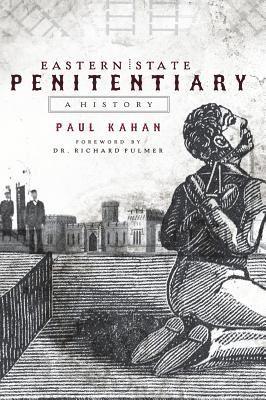
Seminary of Virtue explores the history of penal education programs, demonstrating that America’s prisons have historically been educational (as well as punitive) institutions. This volume argues that Eastern State Penitentiary’s extensive and aggressive educational program reflected a general American belief that correctional institutions should educate inmates as a way of reducing recidivism and thereby «reforming» them. No mere case study, Seminary of Virtue demonstrates that for the last two hundred years penologists have believed that educational programming was one of the keys to lowering recidivism and «reforming» inmates. Seminary of Virtue also reveals the historical amnesia that hindered American penal reform over the same time period as each succeeding generation believed that their particular penal reforms were revolutionary.
446 kr
Skickas inom 10-15 vardagar
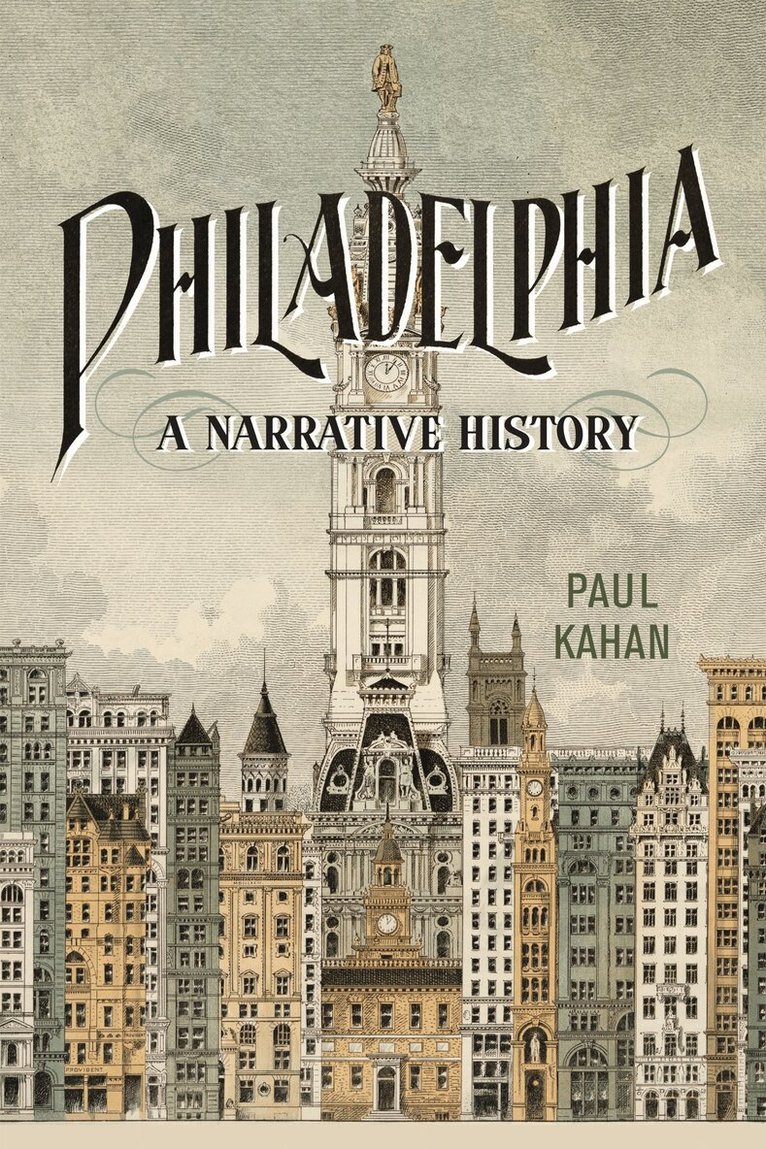
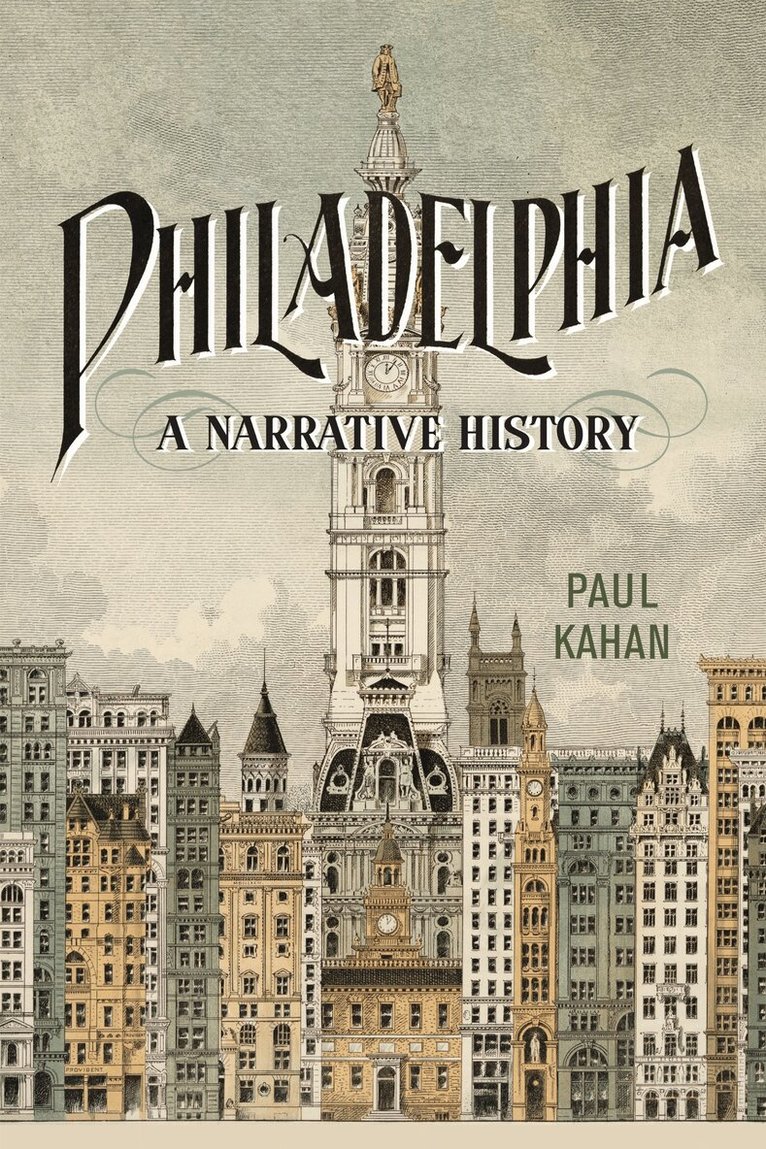
A comprehensive history of Philadelphia from the region's original Lenape inhabitants to the myriad of residents in the twenty-first centuryPhiladelphia is famous for its colonial and revolutionary buildings and artifacts, which draw tourists from far and wide to gain a better understanding of the nation's founding. Philadelphians, too, value these same buildings and artifacts for the stories they tell about their city. But Philadelphia existed long before the Liberty Bell was first rung, and its history extends well beyond the American Revolution.In Philadelphia: A Narrative History, Paul Kahan presents a comprehensive portrait of the city, from the region's original Lenape inhabitants to the myriad of residents in the twenty-first century.As any history of Philadelphia should, this book chronicles the people and places that make the city unique: from Independence Hall to Eastern State Penitentiary, Benjamin Franklin and Betsy Ross to Cecil B. Moore and Cherelle Parker. Kahan also shows us how Philadelphia has always been defined by ethnic, religious, and racial diversity—from the seventeenth century, when Dutch, Swedes, and Lenapes lived side by side along the Delaware; to the nineteenth century, when the city was home to a vibrant community of free Black and formerly enslaved people; to the twentieth century, when it attracted immigrants from around the world. This diversity, however, often resulted in conflict, especially over access to public spaces. Those two themes— diversity and conflict— have shaped Philadelphia's development and remain visible in the city's culture, society, and even its geography. Understanding Philadelphia's past, Kahan says, is key to envisioning future possibilities for the City of Brotherly Love.
362 kr
Skickas inom 3-6 vardagar
327 kr
Tillfälligt slut
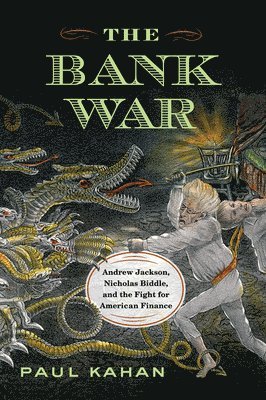
The Bitter Battle over the Charter of the Second Bank of the United States and Its Lasting Impact on the American Economy Late one night in July 1832, Martin Van Buren rushed to the White House where he found an ailing President Andrew Jackson weakened but resolute. Thundering against his political antagonists, Jackson bellowed: The Bank, Mr. Van Buren, is trying to kill me, but I shall kill it! With those famous words, Jackson formally declared war against the Second Bank of the United States and its president Nicholas Biddle. The Bank of the United States, which held the majority of Federal monies, had been established as a means of centralizing and stabilizing American currency and the economy, particularly during the country s vulnerable early years. Jackson and his allies viewed the bank as both elitist and a threat to states rights. Throughout his first term, Jackson had attacked the bank viciously but failed to take action against the institution. Congress decision to recharter the bank forced Jackson to either make good on his rhetoric and veto the recharter or sign the recharter bill and be condemned as a hypocrite.In "The Bank War: Andrew Jackson, Nicholas Biddle, and the Fight for American Finance," historian Paul Kahan explores one of the most important and dramatic events in American political and economic history, from the idea of centralized banking and the First Bank of the United States to Jackson s triumph, the era of free banking, and the creation of the Federal Reserve System. Relying on a range of primary and secondary source material, the book also shows how the Bank War was a manifestation of the debates that were sparked at the Constitutional Convention the role of the executive branch and the role of the federal government in American society debates that endure to this day as philosophical differences that often divide the United States."
226 kr
Skickas inom 7-10 vardagar
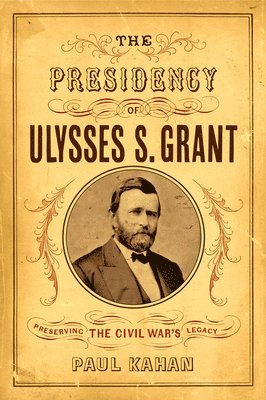
A Short History of the Politics of Reconstruction in a Changing AmericaOn December 5, 1876, President Ulysses S. Grant transmitted his eighth and final message to Congress. In reviewing his tenure as president, Grant proclaimed, “Mistakes have been made,” though he assured Congress, his administration’s “failures have been errors of judgment, not of intent.” Until recently, scholars have portrayed Grant as among the country’s worst chief executives. Though the scholarly consensus about Grant’s presidency is changing, the general public knows little, if anything, about his two terms, other than their outsized reputation for corruption. While scandals are undoubtedly part of the story, there is more to Grant’s presidency: Grant faced the Panic of 1873, the severest economic depression in U.S. history, defeated the powerful Senator Charles Sumner on the annexation of Cuba, and deftly avoided war with Spain while laying the groundwork for the “special relationship” between Great Britain and the United States. Grant’s efforts to ensure justice for African Americans and American Indians, however, were undercut by his own decisions and by the contradictory demands of the various constituencies that made up the Republican Party.In The Presidency of Ulysses S. Grant: Preserving the Civil War’s Legacy, historian Paul Kahan focuses on the unique political, economic, and cultural forces unleashed by the Civil War and how Grant addressed these issues during his tumultuous two terms as chief executive. A timely reassessment, The Presidency of Ulysses S. Grant sheds new light on the business of politics in the decade after the Civil War and portrays an energetic and even progressive executive whose legacy has been overshadowed by both his wartime service and his administration’s many scandals.
411 kr
Skickas inom 7-10 vardagar
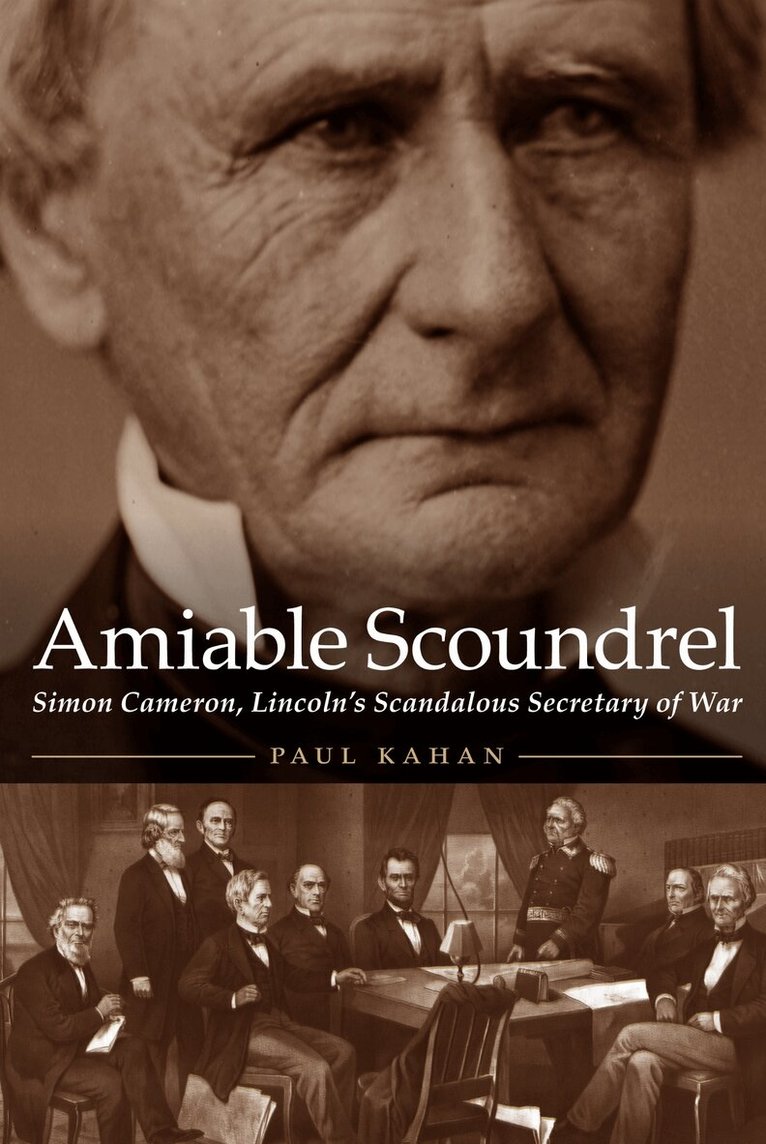
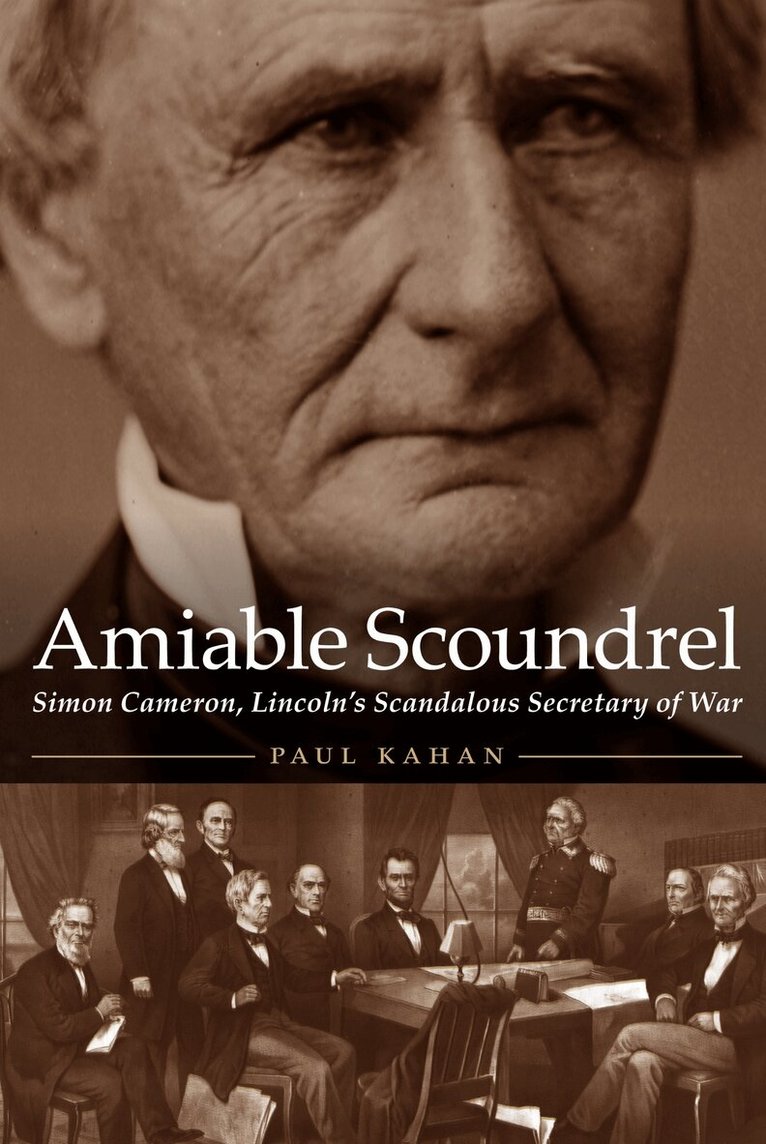
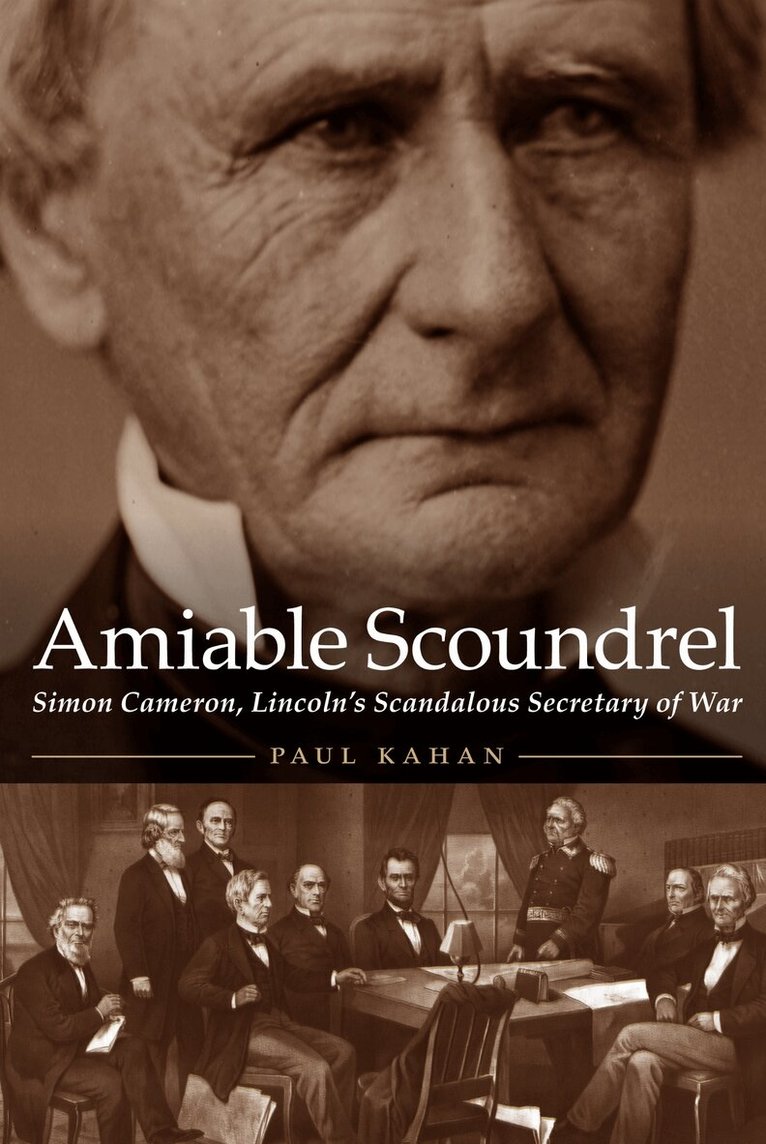
From abject poverty to undisputed political boss of Pennsylvania, Lincoln’s secretary of war, senator, chair of the Senate Foreign Relations Committee, and a founder of the Republican Party, Simon Cameron (1799–1889) was one of the nineteenth century’s most prominent political figures. In his wake, however, he left a series of questionable political and business dealings and, at the age of eighty, even a sex scandal.Far more than a biography of Cameron, Amiable Scoundrel is also a portrait of an era that allowed-indeed, encouraged-a man such as Cameron to seize political control. The political changes of the early nineteenth century enabled him not only to improve his status but also to exert real political authority. The changes caused by the Civil War, in turn, allowed Cameron to consolidate his political authority into a successful, well-oiled political machine. A key figure in designing and implementing the Union’s military strategy during the Civil War’s crucial first year, Cameron played an essential role in pushing Abraham Lincoln to permit the enlistment of African Americans into the U.S. Army, a stance that eventually led to his forced resignation. Yet his legacy has languished, nearly forgotten save for the fact that his name has become shorthand for corruption, even though no evidence has ever been presented to prove that Cameron was corrupt.Amiable Scoundrel puts Cameron’s actions into a larger historical context by demonstrating that many politicians of the time, including Abraham Lincoln, used similar tactics to win elections and advance their careers. This study is the fascinating story of Cameron’s life and an illuminating portrait of his times.