• Fri frakt över 249 kr
  • •
  • Snabba leveranser
  • •
  • Billiga böcker
Kundservice

Du är på sajten för privatpersoner.

Företag, bibliotek eller offentlig verksamhet?

Du handlar på classic.bokus.com, där alla dina funktioner finns intakta.
Till classic.bokus.com
Bokus logotyp. Gå till startsidan.
  • Erbjudanden
  • Nyheter
  • Student
  • Topplistor
  • Barn & ungdom
  • Bokus Play
  • E-böcker
  • Pocketböcker
  • Spel & pussel

10% rabatt på allt med kod: NYSTART10 →

Sidfot

Mina sidor

    Hjälp

    • Kundservice
    • Vanliga frågor och svar
    • Frakt och leverans
    • Retur vid ångerrätt
    • Reklamera vara
    • Betalning
    • Köpvillkor
    • Allmänna villkor
    • Information om webbplatsens tillgänglighet

    Om Bokus

    • Om oss
    • Pressrum
    • För studenter
    • För företag
    • För bibliotek och offentlig verksamhet
    • För leverantörer
    • Hållbarhet

    Populärt

    • Aktuella erbjudanden
    • Presentkort
    • Studentlitteratur
    • Nya böcker
    • Topplistor
    • Signerade böcker
    • Engelska böcker

    Inspiration

    • Boktips
    • BookTok
    • Populära bokserier
    • Barnbokskaraktärer
    • Populära författare
    Logotyp för Bokus
    Följ oss på Facebook (extern länk)Följ oss på Instagram (extern länk)Följ oss på YouTube (extern länk)Följ oss på TikTok (extern länk)
    bokus @ CookiesAnpassa cookiesIntegritetspolicyKöpvillkor
    Till Citymail hemsida (extern länk)Till Budbee hemsida (extern länk)Till Postnord hemsida (extern länk)Till Schenker hemsida (extern länk)Till Early Bird hemsida (extern länk)Till Walleys hemsida (extern länk)
    1. Historia och arkeologi
    2. Historia
    3. Amerikas historia

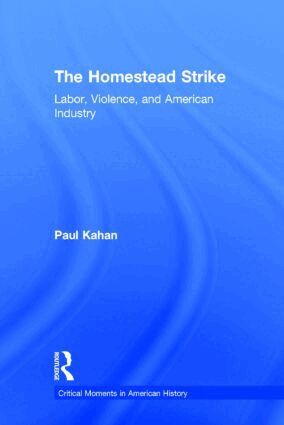
    Homestead Strike

    Labor, Violence, and American Industry

    AvPaul Kahan

    Inbunden, Engelska, 2013

    Del i serien Critical Moments in American History

    2 493 kr

    Beställningsvara. Skickas inom 10-15 vardagar. Fri frakt över 249 kr.

    Fler format och utgåvor

    Häftad

    629 kr

    E-bok

    710 kr

    E-bok

    743 kr

    Beskrivning

    On July 6, 1892, three hundred armed Pinkerton agents arrived in Homestead, Pennsylvania to retake the Carnegie Steelworks from the company's striking workers. As the agents tried to leave their boats, shots rang out and a violent skirmish began. The confrontation at Homestead was a turning point in the history of American unionism, beginning a rapid process of decline for America’s steel unions that lasted until the Great Depression. Examining the strike’s origins, events, and legacy, The Homestead Strike illuminates the tense relationship between labor, capital, and government in the pivotal moment between Reconstruction and the Progressive Era. In a concise narrative, bolstered by statements from steelworkers, court testimony, and excerpts from Carnegie's writings, Paul Kahan introduces students to one of the most dramatic and influential episodes in the history of American labor.

    Produktinformation

    • Utgivningsdatum:2013-12-13
    • Mått:152 x 229 x 14 mm
    • Vikt:385 g
    • Format:Inbunden
    • Språk:Engelska
    • Serie:Critical Moments in American History
    • Antal sidor:174
    • Förlag:Taylor & Francis Ltd
    • ISBN:9780415531931

    Utforska kategorier

    • Amerikas historia inom Historia och arkeologi
    • Industrialismen och industrihistoria inom Historia och arkeologi

    Mer om författaren

    Paul Kahan teaches history at Ohlone College in Fremont, California. For more information, visit his website at www.paulkahan.com.

    Recensioner i media

    1. Anthony DeStefanis, OtterbeinI like that the book promises a narrative on Homestead that connects it to larger issues in the history of the nineteenth century and will also include some primary sources. There are lots of primary source readers that take this approach (the Bedford history and culture series, for instance), but it seems that you are going to spend more time and space on the narrative before you get to the primary sources.I think making the connections between Homestead and what was happening more broadly in the economy, business, and the lives of working-class people will be particularly useful in the classroom. If done right, I think this book could have a very long shelf life and could be very successful. Homestead is an event that many professors touch on in the courses I listed in #1 above. These courses are taught at many colleges and universities, and thus you will have a large built-in audience. You will have a good chance to make this book a mainstay in these courses if it is accessible, readable, and compelling. 2. David Anderson, Louisiana TechI do believe a market exists at the university level for this book if it fits my needs, i.e., it uses a single event to advance broad claims about a particular era or historical development, in this case, the Gilded Age class conflict and the historical development of new technologies, new forms of business organization, and new political ideologies.I would also agree with the author that a market for this book potentially exists at the numerous historical sites and museums that have some connection to the Homestead Strike, although must confess to having no knowledge about the yearly attendance at those sites.What I find most appealing about this proposal is the author’s stated goal of providing college-level history professors with a "concise narrative of the Homestead Strike (with accompanying primary documents)" and one that would serve as a important supplemental text for a variety of U.S. History courses. 3. Paul Krause, University of British ColumbiaApproaching the lockout as a problem in collective and public memory is a way to link it to the present – and to ask all sorts of questions about the corporate order, as it emerged and triumphed in the Gilded Age, and as it has been reconstituted in our own. One question would of course take up labor and unions.

    Innehållsförteckning

    • Introduction. 1. Carnegie and Frick 2. American Labor History, 1600-1892 3. Lead-Up to the Strike 4. The Lockout and Strike 5. Aftermath 6. Legacy and Conclusion. Documents.