Paul Kelton – författare
Visar alla böcker från författaren Paul Kelton. Handla med fri frakt och snabb leverans.
3 produkter
3 produkter
342 kr
Kommande
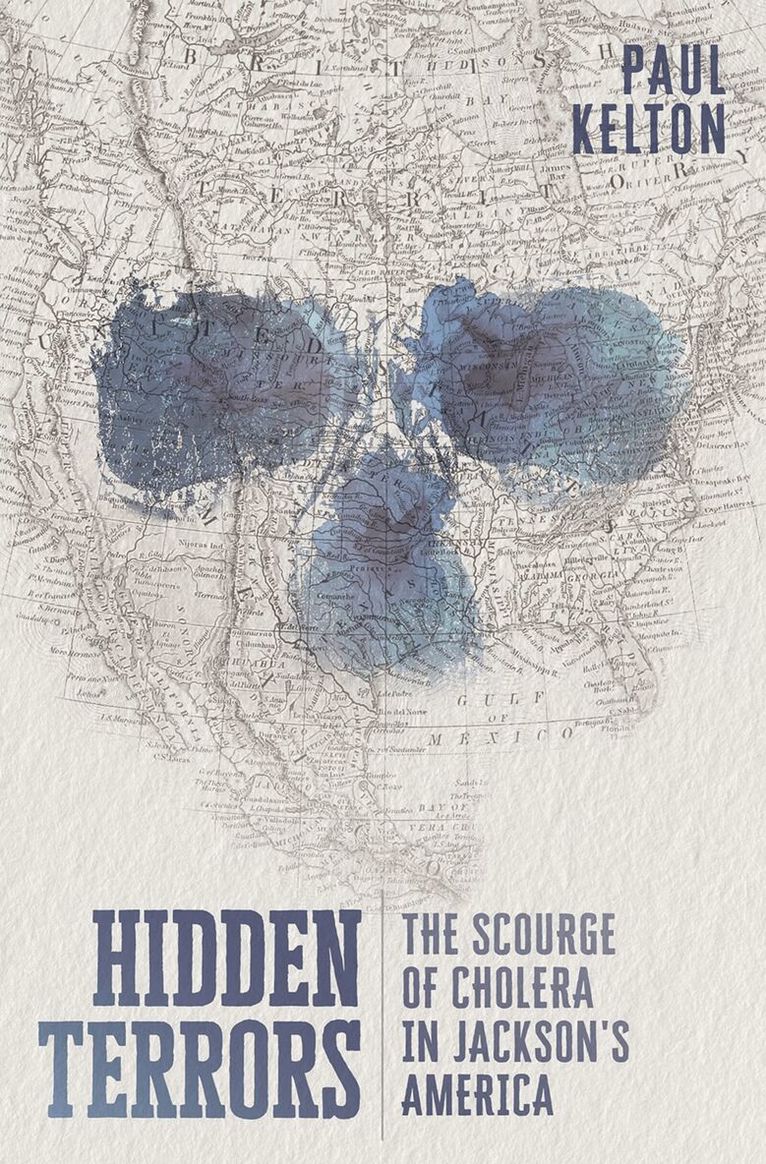
Drawing on accounts of ordinary Americans, Hidden Terrors offers the first comprehensive history of the enigmatic illness behind the 1830s cholera pandemic--and its profound consequences for the nation.From 1832 to 1836, cholera erupted across US cities as well as in small towns, rural farms, prisons, and plantations. Its victims experienced ghastly symptoms--vomiting, explosive diarrhea, painful spasms, turning blue, and collapsing into comas--and often perished within hours of first becoming sick. They frequently woke up healthy, began to feel ill by nightfall, and did not live to see another day. Cholera killed people much more quickly than other diseases with which Americans were familiar, and its causes would not be discovered until the later development of bacteriology. It afflicted rich and poor, people of every race, religion, and region. As Hidden Terrors reveals, many powerful people in the 1830s wanted their contemporaries to understand cholera as anything but a frightful and unknowable predator that took its prey indiscriminately. American moral reformers and medical authorities, among others, attributed the deaths of the impoverished, enslaved, and exploited to individual failings--eating rotten foods, drinking alcohol, neglecting to seek treatment, and living in filth. The experience of these victims, in their view, was a natural consequence of immorality and called for minimal sympathy. Authorities ignored and even covered up the deaths of enslaved African Americans, Indigenous peoples, and Irish immigrants. The disease particularly exploded in crowded housing, work camps, poor houses, hospitals, prisons, along the routes Indigenous people were forced to travel on the Trail of Tears, and within slave coffles. However, the universal nature of the pandemic became more apparent as deaths of supposedly respectable people became shockingly numerous, apparent, and undeniable. It was that terror--the idea of everyone being equally subject to an invisible and mysterious killer--that elites struggled most to keep hidden.Drawing on family papers, letters, and newspaper accounts written during the pandemic, Hidden Terrors tells the comprehensive story of the first cholera pandemic in the United States. Paul Kelton humanely captures the experiences of ordinary Americans living in fear of a mysterious disease and exposes the disastrous consequences of a deadly germ intersecting with the great injustices of Jacksonian America.
Epidemics and Enslavement
Biological Catastrophe in the Native Southeast, 1492-1715
Häftad, Engelska, 2009
272 kr
Skickas inom 10-15 vardagar
Epidemics and Enslavement is a groundbreaking examination of the relationship between the Indian slave trade and the spread of Old World diseases in the colonial southeastern United States. Paul Kelton scrupulously traces the pathology of early European encounters with Native peoples of the Southeast and concludes that, while indigenous peoples suffered from an array of ailments before contact, Natives had their most significant experience with new germs long after initial contacts in the sixteenth century. In fact, Kelton places the first region-wide epidemic of smallpox in the 1690s and attributes its spread to the Indian slave trade. From 1696 to 1700, Native communities from the Atlantic Coast to the Mississippi Valley suffered catastrophic death tolls because of smallpox. The other diseases that then followed in smallpox's wake devastated the indigenous societies. Kelton found, however, that such biological catastrophes did not occur simply because the region's Natives lacked immunity. Over the last half of the seventeenth century, the colonies of Virginia and South Carolina had integrated the Southeast into a larger Atlantic world that carried an unprecedented volume of people, goods, and ultimately germs into indigenous villages. Kelton shows that English commerce in Native slaves in particular facilitated the spread of smallpox and made indigenous peoples especially susceptible to infection and mortality as intense violence forced malnourished refugees to huddle in germ-ridden, compact settlements. By 1715 the Native population had plummeted, causing a collapse in the very trade that had facilitated such massive depopulation.
Cherokee Medicine, Colonial Germs
An Indigenous Nation's Fight Against Smallpox, 1518-1824
Häftad, Engelska, 2018
272 kr
Skickas inom 10-15 vardagar
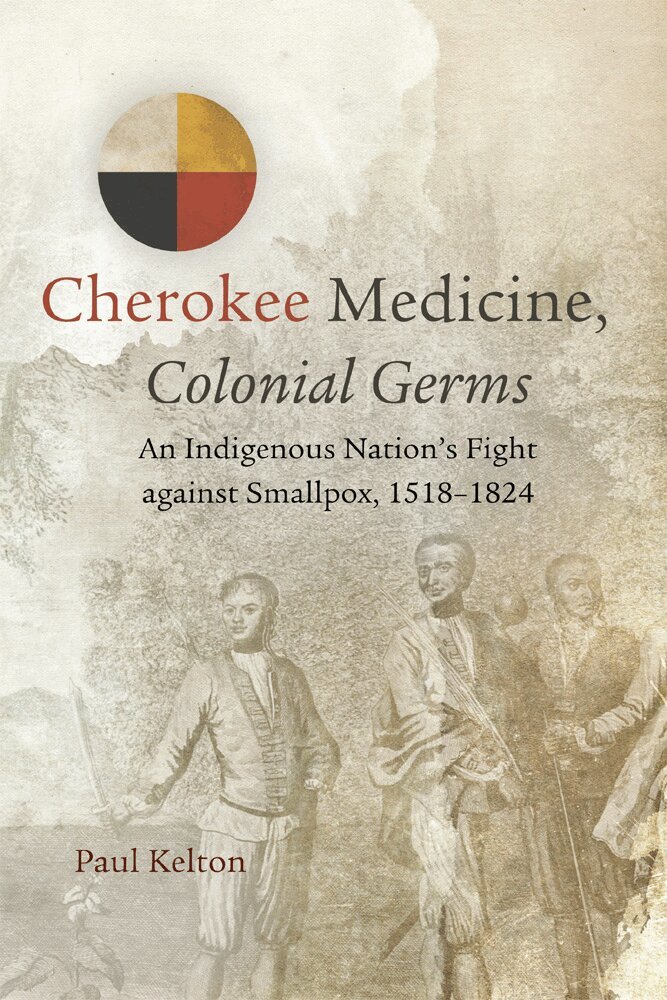
How smallpox, or Variola, caused widespread devastation during the European colonization of the Americas is a well-known story. But as historian Paul Kelton informs us, that's precisely what it is: a convenient story. In Cherokee Medicine, Colonial Germs Kelton challenges the ""virgin soil thesis,"" or the widely held belief that Natives' lack of immunities and their inept healers were responsible for their downfall. Eschewing the metaphors and hyperbole routinely associated with the impact of smallpox, he firmly shifts the focus to the root cause of indigenous suffering and depopulation - colonialism writ large; not disease.Kelton's account begins with the long, false dawn between 1518 and the mid-seventeenth century, when sporadic encounters with Europeans did little to bring Cherokees into the wider circulation of guns, goods, and germs that had begun to transform Native worlds. By the 1690s English-inspired slave raids had triggered a massive smallpox epidemic that struck the Cherokees for the first time. Through the eighteenth century, Cherokees repeatedly responded to real and threatened epidemics - and they did so effectively by drawing on their own medicine. Yet they also faced terribly destructive physical violence from the British during the Anglo-Cherokee War (1759-1761) and from American militias during the Revolutionary War. Having suffered much more from the scourge of war than from smallpox, the Cherokee population rebounded during the nineteenth century and, without abandoning Native medical practices and beliefs, Cherokees took part in the nascent global effort to eradicate Variola by embracing vaccination.A far more complex and nuanced history of Variola among American Indians emerges from these pages, one that privileges the lived experiences of the Cherokees over the story of their supposedly ill-equipped immune systems and counterproductive responses. Cherokee Medicine, Colonial Germs shows us how Europeans and their American descendants have obscured the past with the stories they left behind, and how these stories have perpetuated a simplistic understanding of colonialism.