Paul Kendall - Böcker
Visar alla böcker från författaren Paul Kendall. Handla med fri frakt och snabb leverans.
16 produkter
16 produkter
496 kr
Skickas inom 10-15 vardagar
This is the book you will need if you are considering setting up your own business. It is aimed at the new business owner who has a lot of questions to ask. It has been written by a successful business owner and provides advice on what, and what not, to do.While it is not intended to be a global reference book it does provide the reader with practical answers to the issues they will come across everyday, and includes examples of successes and failures from both the US and U.K. perspectives.
331 kr
Skickas inom 7-10 vardagar
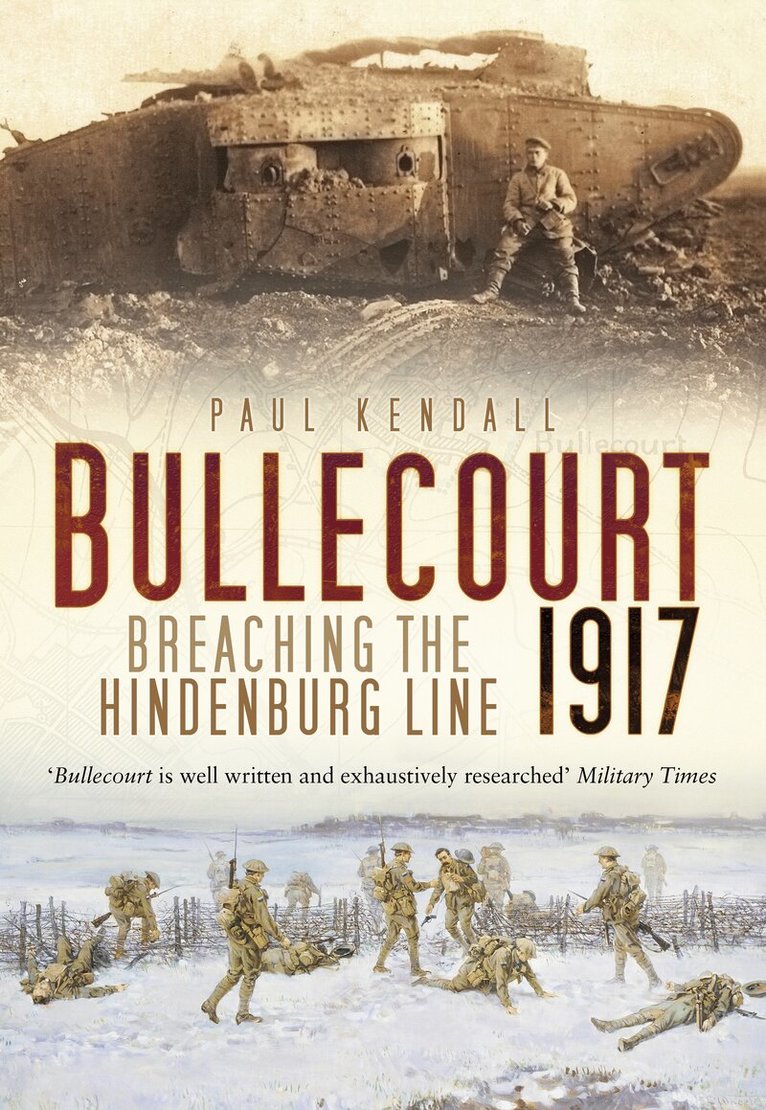
In the spring of 1917 the Arras offensive was begun to break the stalemate of the Western Front by piercing the formidable German defences of the Hindenburg Line. The village of Bullecourt lay at the southern end of the battle front, and the fighting there over a period of six weeks from 11 April until late May 1917, epitomised the awful trench warfare of World War I.In Bullecourt 1917, Paul Kendall tells the stories of the fierce battles fought by three British and three Australian divisions in an attempt to aid Allenby’s Third Army break out from Arras. Approximately 10,000 Australian and 7,000 British soldiers died, many of whom were listed as missing and have no known grave. The battle caused much consternation due to the failure of British tanks in supporting Australian infantry on 11 April, but despite the lack of tank and artillery support the Australian infantry valiantly fought their way into the German trenches. It took a further six weeks for British and Australian infantry to capture the village. This book tells the story of this bitter battle and pays tribute to the men who took part. Crucially, Paul Kendall has contacted as many of the surviving relatives of the combatants as he could, to gain new insight into those terrible events on the Hindenburg Line.
266 kr
Skickas inom 11-20 vardagar
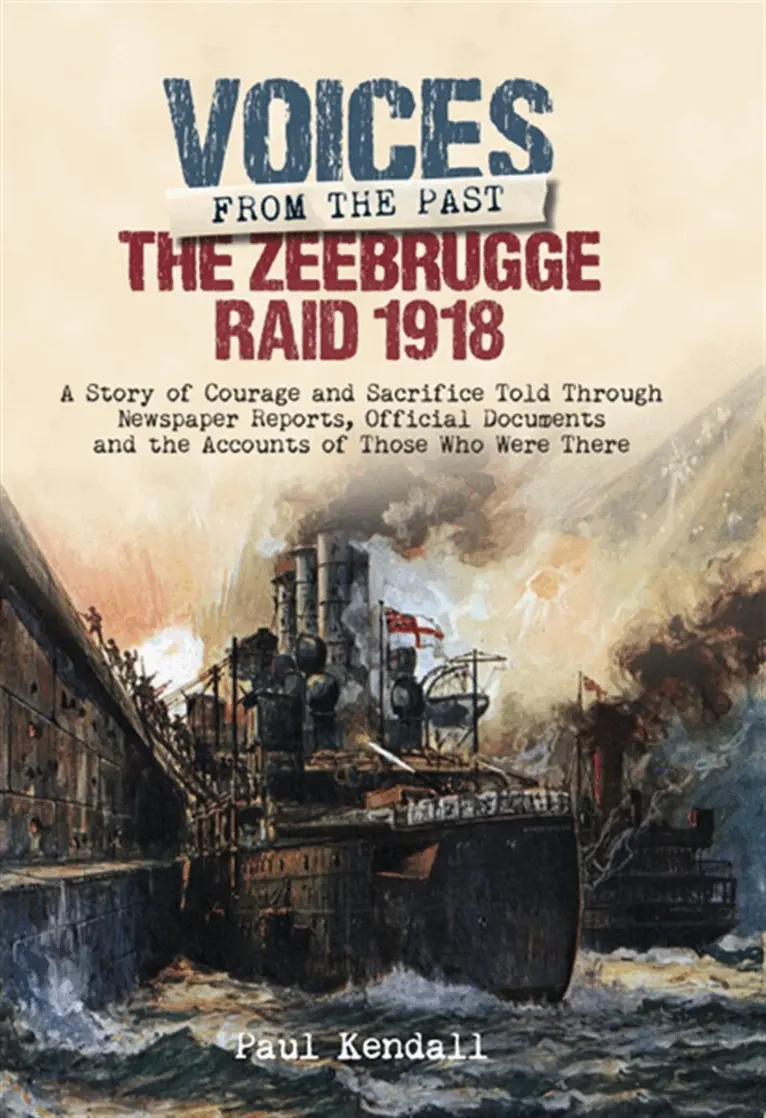
The Zeebrugge Raid was a daring mission to attempt to block the German submarines at Bruges. These submarines were responsible for sinking a third of all Allied merchant shipping during the First World War and in early 1918 there was a danger that the German submarine campaign could have starved Britain into submission.The book explores how Haig's plan to break out from the Ypres Salient and capture Bruges and the German Naval Base there was thwarted in the hellish quagmire at Passchendaele during November 1917. The Allied forces were exhausted were in no fit state to carry out a further campaign. The only hope was to block the entrance at Zeebrugge. It was therefore left to the Royal Navy and Royal Marines Light Infantry in 1918 to stop the Flanders-based submarines. The raid was a suicide mission with a remote chance of surviving or returning home. With this knowledge the men who took part demonstrated great courage and fortitude, at night, challenged by the tide and the German gun batteries.This book features personal accounts of those men from the Royal Navy and Royal Marines Light Infantry who took part in the raid. They were ordinary men who performed extraordinary, heroic deeds.
291 kr
Skickas inom 7-10 vardagar
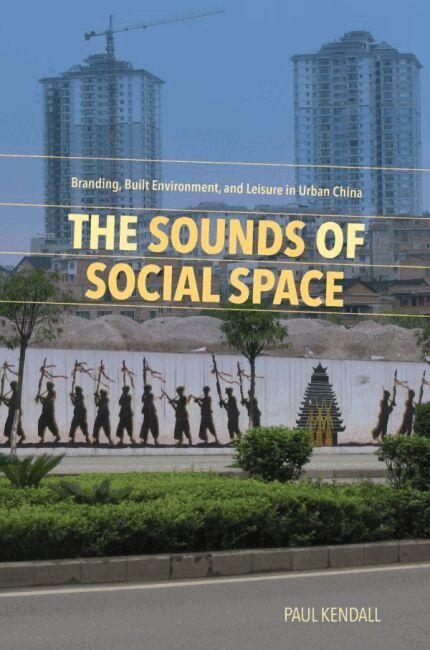
A giant statue of a six-pipe musical instrument stands in the heart of Kaili city. Yet despite its prominent placement, intended to convey the essence of the city, residents hold extremely low opinions of music-making in Kaili, particularly when compared to the "authentic" music found in surrounding ethnic minority villages. In this engaging, accessible work, author Paul Kendall investigates this conundrum and comes to terms with conflicting representations of a small southwestern Chinese city branded "the homeland of one hundred festivals".Drawing on Henri Lefebvre's triad of social space, the book explores the relationship between Kaili's branding, built environment, and everyday life: how China's post-Mao built environment hinders and hides everyday music-making, even in a tourist destination for ethnic music; how residents themselves deny or downplay the existence of ethnic music in the city, despite the government's efforts to promote it; how amateur musicians have constructed generational hierarchies of musical practice within a shifting cityscape. Kendall argues that increased focus on the small city helps counter a tendency to conceive China as either timeless village or futuristic metropolis and enables a more comprehensive understanding of the urban experience, both in China and beyond. He shows that many Kaili inhabitants recognize not only a rural-urban divide-long a dominant geographical notion of China - but also a more complex conceptualization of village, small city, and big city.By interweaving theories of authenticity with an innovative interpretation of space, Kendall shows how the category of "fake" minority emerged from this small city as a surprisingly positive form of self-identification, suggesting that there are ways of not being ethnic, even in often-exoticized southwest China. The Sounds of Social Space makes a distinctive contribution across a range of disciplinary interests, including Chinese studies, urban studies, anthropology, and ethnomusicology.
496 kr
Skickas inom 10-15 vardagar
This is the book you will need if you are considering setting up your own business. It is aimed at the new business owner who has a lot of questions to ask. It has been written by a successful business owner and provides advice on what, and what not, to do.While it is not intended to be a global reference book it does provide the reader with practical answers to the issues they will come across everyday, and includes examples of successes and failures from both the US and U.K. perspectives.
173 kr
Skickas
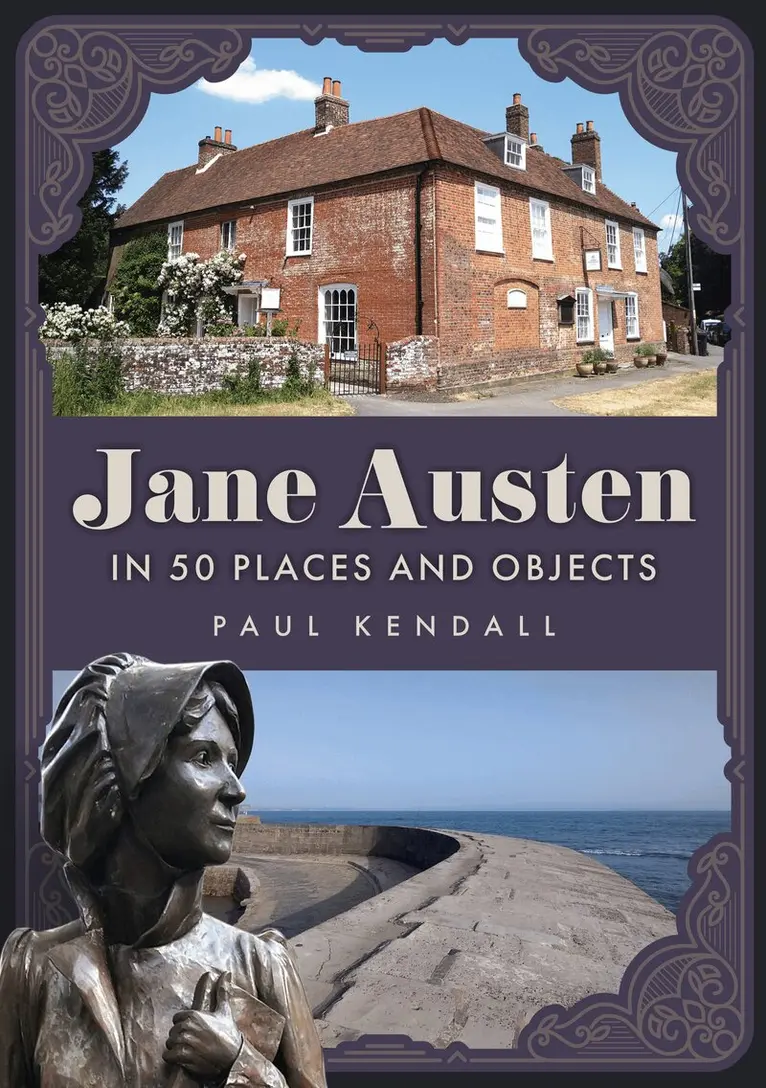
The author of six novels, Jane Austen continues to enamour her readers more than two-hundred years after she wrote them. Now a global phenomenon, her books have sold millions of copies and sparked countless film and tv-drama adaptations in a multitude of languages. This book takes you on a tour of the many places associated with Jane Austen, from the homes she lived in Steventon, Bath and Chawton to the school she was educated at in Reading. Follow in her footsteps where she socialised, such as Sydney Gardens and the Assembly Rooms and Pump Room, Bath, and explore the myriad locations mentioned in her books. Discover where she spent her holidays in towns such as Lyme Regis and Worthing and where she worshipped at St Nicholas’ Church, Steventon. Personal objects belonging to Jane are detailed here, including her writing desk and table, her donkey cart and her ivory spool case. The memorials to her at Winchester Abbey and in Poets’ Corner, Westminster Abbey, and her statues in Basingstoke and at St Nicholas’ Church, Chawton, are also featured.With beautiful illustrations and packed with fascinating facts and entertaining anecdotes, this book transports you back to the Regency era and celebrates the life of one of England’s most-renowned authors.
167 kr
Kommande
The novels of Thomas Hardy continue to enamour his readers over a century after he wrote them. His beautifully observed tales of rural life in his native Dorset, which became his mythical setting of Wessex, have inspired readers and sold millions of copies worldwide and sparked numerous film and television adaptations.Although his novels were published during the Victorian era, he was ahead of his time and his outlook upon society was at odds with the social mores of the time. Demonised for the themes of his final novel, Jude the Obscure, he was dubbed ‘Hardy the Obscene’. He was a complex man and despite showing empathy for his female characters, he treated his two wives poorly and did not endear himself to anyone who worked for him. This book features the places where Hardy lived in Sturminster Newton, Wimborne Minster, Dorchester and London. It also includes places that inspired his writing and were incorporated into Wessex and featured in his poems.Personal objects connected with Hardy are detailed here, such as his writing desk, pens, the locket containing his first wife’s hair and photo, a war memorial tablet he designed, his tombs in Stinsford Church and Poets’ Corner, Westminster Abbey, and his statue in Dorchester.This book transports the reader to Hardy’s rural Dorset through objects and locations that celebrate the life and inspiration of one of England’s most celebrated authors.
173 kr
Kommande
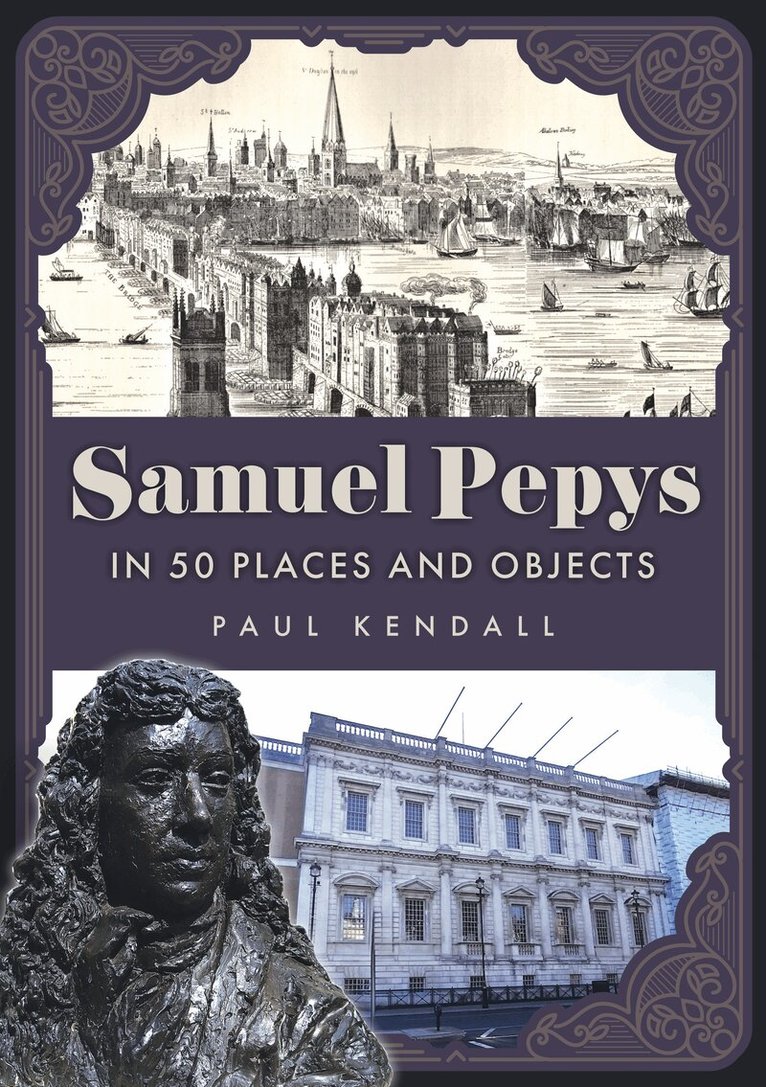
The life of politician and diarist Samuel Pepys spanned seven decades, meaning he bore witness to many groundbreaking events such as the execution of King Charles I in 1649 and the Glorious Revolution in 1688. His famous diary was written between 1660 and 1669 and provides fascinating detail on the world around him, from the Restoration of King Charles II in 1660 to the plague in 1665 and the Great Fire of London in 1666. This invaluable record of life in seventeenth-century England offers an intriguing insight into the politics, court life, defence of the realm and commerce of the period as well as day-to-day living. He describes visits to coffee houses, taverns, theatres, bear pits and, with incredible candour, brothels.Here Pepys’ life and diary is detailed through the places and objects associated with him. Visit the locations where Pepys resided and worked, the dockyards he inspected at Woolwich and Chatham, as well as the churches where he worshipped and the coffee houses and taverns he frequented. Examine items such as the bills of mortality Pepys read during the plague, his wig, the church steeple from which he observed the Great Fire, and his will.Full of quirky facts and fascinating illustrations, this book transports you back to seventeenth-century London through places and objects central to Pepys’ life.
173 kr
Kommande
Britain has a rich musical heritage with many great names having been born here, such as Henry Purcell, Sir Edward Elgar, The Beatles and The Rolling Stones. It has also attracted musicians from across the world, such as George Frederick Handel and Freddie Mercury, and, fleetingly, the likes of Glenn Miller and Bob Marley.Paul Kendall celebrates locations that have been touched by musicians, from Brighton where Abba won the 1974 Eurovision Song Contest, to Wigan, the birthplace of George Formby, and from Rochdale, where Dame Gracie Fields began her musical career, to Dorking, where Ralph Vaughan Williams regularly premiered his work at the Leith Music Festival. Also featured are sites where artists composed well-known pieces or studios where they recorded their work, including Craeg Lea, Malvern, where Sir Edward Elgar composed ‘Pomp and Circumstance March No. 1’ which featured in 'Land of Hope and Glory', and Trident Studios, where David Bowie recorded 'Space Oddity'. In dark times music has played an important role in raising the nation’s morale, another theme explored with, for example, the White Cliffs of Dover, the inspiration for Dame Vera Lynn’s ‘(There’ll be Blue Birds Over) The White Cliffs of Dover’.This book not only transports you to locations associated with music and musicians but is a celebration of those who through their music have brought joy and pleasure to so many people across the centuries.
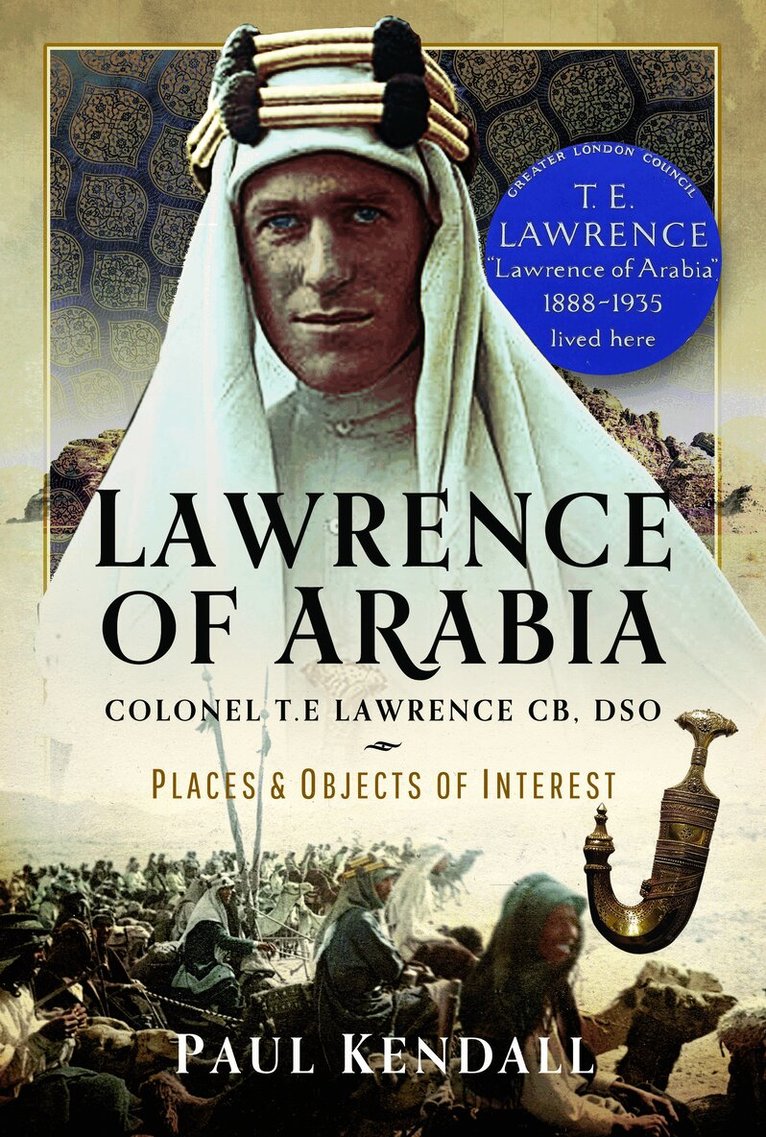
Lawrence of Arabia
Colonel T.E Lawrence CB, DSO – Places and Objects of Interest
Inbunden, Engelska, 2024
306 kr
Skickas
A twentieth century icon, Lawrence of Arabia, as Thomas Edward Lawrence is more commonly known, spent thirteen out of his forty-six years in the region from which he drew his name. This was as a scholar researching his university thesis, a spy surveying Sinai for the British Army before the First World War, an intelligence officer in Cairo, a liaison officer to the Arabs, and as a diplomat who galvanised and united the Arab tribes into an effective fighting force. He became an explosives expert and a guerrilla fighter who influenced Arab leaders in defeating their Ottoman occupiers.The story of his achievements in Arabia, derailing Turkish trains and attacking enemy strongholds, has become the stuff of legend. But his life after the disappointment of witnessing the Arabs being denied independence at the end of the First World War is as intriguing as his more famous escapades in the desert.Uncomfortable with the fame and celebrity status that Lowell Thomas’s lectures brought upon him, after a brief tenure as a civil servant working for Winston Churchill in an attempt to address the failure of achieving Arab independence at the Cairo Conference, Lawrence, the former Lieutenant-Colonel, remarkably sought a life in obscurity. In the years after the war, for example, he served in the Royal Air Force as an aircraftsman and spent a brief period as a private in the Royal Tank Corps under the alias John Hume Ross or Thomas Edward Shaw. He became a competent marine motor mechanic, and was personally involved in the development of the fast RAF 200 Seaplane tender and an armoured target boat. He also became a renowned author and could claim literary giants such as Thomas Hardy, E.M. Forster and George Bernhard Shaw as his friends.In this highly illustrated book, the story of Lawrence’s fascinating life is explored through many of the places and objects associated with him, from his birthplace in Wales through to his grave at Moreton in Dorset. _Lawrence of Arabia_ features his places of education in Oxford, sites where he served as a British Army intelligence officer in Cairo, as liaison officer and adviser to the Arabs, even where he fought alongside his Arab brothers against the Ottomans.It also follows his life in the years after Arabia. Some of the fascinating locations Paul Kendall visits include RAF stations at Calshot and Bridlington, or the Tank Depot at Bovington Camp where he served in the ranks, his cottage at Clouds Hill and the homes of his famous friends that he frequently visited. The objects examined include Arab robes that he wore, his Khanjar, his service rifle, and even the Brough motorcycle which he enjoyed and valued.This book is not just a journey across Arabia, Britain and Europe, but also a journey back in time through objects and locations into the life of one of Britain’s most enigmatic and celebrated individuals.
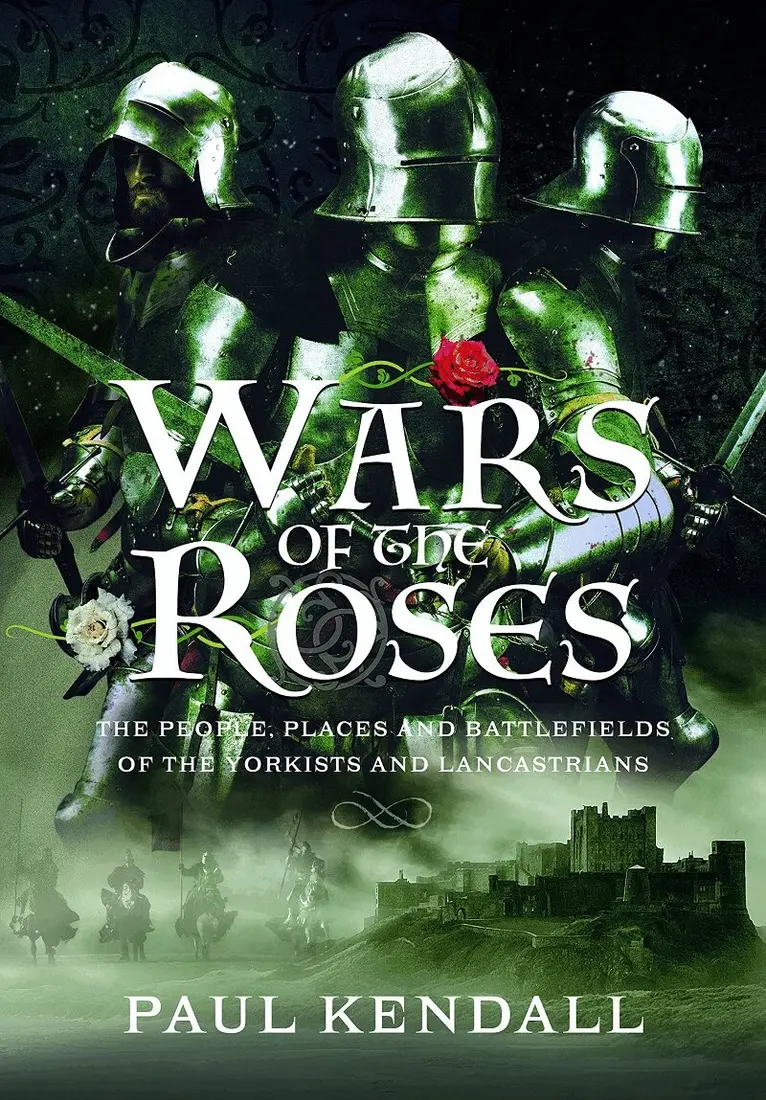
Wars of the Roses
The People, Places and Battlefields of the Yorkists and Lancastrians
Inbunden, Engelska, 2023
266 kr
Skickas
The Wars of the Roses, which saw England and Wales ravaged by warfare for three decades and dynasties rise and fall, decimated the nobility of an entire generation, and saw the rise of the merchant class, the decline of medieval feudalism and opened the country to the enlightened ideals of the Renaissance. Such has been its lasting effects the red and white rose of the Tudors is still a national symbol.This book is an exploration of the buildings, monuments, towns and battlefields of that turbulent era across both England and Wales - places that can still be visited and experienced today. The stories of the great battles of St Albans, Stoke Field, Wakefield, Townton, Barnet, Tewksbury and, of course, Bosworth, are told along with beautiful photographs to help guide the reader round these important sites, as well as the dozens of smaller engagements where the supporters of the Houses of York and Lancaster fought and died.Here are castles and manor houses galore, all of which played their part in this protracted struggle for the throne of England, such as Richard of York's imposing powerbase of Lulow Castle and the magnificent Tudor stronghold of Bamburg. These are compared with the scant remains of Fotheringhay Castle, the birthplace of Richard III - the man whose remains were so dramatically uncovered in Leicester - and Micklegate Bar, York, was where Richard's head was placed on a spike.We see the Clocktower of St Albans and Gabriel' the bell that was rung in 1455 alerting of the Yorkist advance, as well as the Tower of London where Henry VI met his death and the possible burial place of the two princes.These, and scores of other places, monuments, plaques, buildings and battlegrounds, represent not only a journey across England and Wales, but a journey back in time to the bloody conflict that was the War of the Roses.
266 kr
Kommande
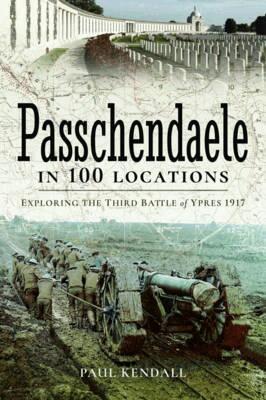
Encouraged by the success of an attack on Messines Ridge on 7 June 1917, Field Marshal Haig ordered that his generals should continue their preparations for the Third Battle of Ypres. Delayed due to a number of reasons, one of which was poor weather, the offensive began on 31 July 1917. Fought around the little Belgium village of Passchendaele, the battle would come to epitomise not just the futility of offensive tactics against well-prepared defences, but of the terrible conditions the men had to endure in the Flanders mud, the images of which are forever synonymous with the trench warfare of the First World War. Over the weeks and months that followed the fighting rumbled. The last stage of the struggle for Passchendaele took place on 6 November. In just three hours the village of Passchendaele was in the hands of the Allied troops. It had taken ninety-seven days since the opening attack on 31 July to get there. The end of the offensive came after a small action by the Canadians on 10 November to seize a section of tactically important ground. The losses, on both sides, ran in to the hundreds of thousands.According to Lloyd George, writing in 1938, Passchendaele was indeed one of the greatest disasters of the war ...No soldier of any intelligence now defends this senseless campaign . In this highly illustrated publication, the author details 100 locations relating to the Battle of Passchendaele from the headquarters where it was directed from through to sites of specific actions or where Victoria Crosses were won. In doing so, he links moving human stories with the very ground over which the visitor can tread today.
318 kr
Skickas
Henry VIII is one of history's most memorable monarchs. Popularly known for his six wives, and the unfortunate fate which befell Anne Boleyn and Catherine Howard, Henry initiated many reforms and changes which still affect our lives today.The annulment of his marriage to Catherine of Aragon set in motion the separation of the English church from Rome and the establishment of the Church of England, which in turn led to the dissolution of the monasteries, the hauntingly evocative remains of which can be seen across the United Kingdom. Henry also oversaw the legal union between England and Wales, and he is also known as the father of the Royal Navy', with one of his great warships, the Mary Rose, lost in 1545 and recovered in 1982, becoming one of the most famous wrecks in maritime history.In addition to the monasteries, other buildings around the UK continue to remind us of the times of the Tudors - there is the site of Greenwich Palace at the Royal Naval College Greenwich, where Henry was born; his great palace at Hampton Court; Lambeth Palace where Thomas More refused to sign the oath to make Henry the Head of the Church, and the Bell Tower in the Tower of London where More was imprisoned before he was beheaded.Henry's breach with the Pope led to the threat of war with Catholic France and Spain, which prompted Henry to construct a series of powerful forts around the English and Welsh coasts. These elegant and symmetrical defensive structures are still awe-inspiring.In this engaging and hugely informative book, the author takes us on a journey across the country, from Deal Castle on the south coast, to Tower Green where Anne Boleyn and Catherine Howard lost their heads, and far north to Rievaulx Abbey in Yorkshire. Along the way we see places where Henry stayed, where the Mary Rose was recovered, the homes of his consorts and Smithfield where prominent individuals convicted of heresy were burned at the stake. Travel, then, not just across the country, but also back in time through 100 objects from the days of the second Tudor monarch - Henry VIII.
733 kr
Skickas inom 10-15 vardagar
Finance has become a key issue in dentistry following major recent changes in legislation that allow dentists to conduct business as a corporate body. However, many dentists receive little formal training in finance and can often miss out on extra profits and tax savings, or become reliant upon accountants and financial advisers who may lack dental expertise. This book aims to equip dentists with the knowledge needed to take an active role in their own finances - including taxes, income and expenditure, property matters and retirement - and provide an insight into what they should expect from a specialist financial adviser to the dental profession. Finance for Dentists has been written primarily for dentists and orthodontists currently in or planning to set up in practice, but will also be of interest to dentists employed in hospitals and other organisations within the NHS.
356 kr
Skickas inom 11-20 vardagar
At 11.00 hours on 11 November 1918, the guns fell silent across the battlefields of Europe. After the deadliest conflict the world had ever seen, peace had finally arrived. Since the withdrawal from the Somme and the repulse at Verdun, the Germans knew they could not win the war and had sought a negotiated end to the fighting. This was rejected by the Allies and the fighting continued until, almost two years later, with its economy on the verge of collapse, Germany had no choice but to accept defeat and seek terms for an armistice. The story of the efforts to bring the war to a conclusion, and those final days and hours of the First World War, are told in the words of the politicians, soldiers and newspaper columnists who were there at the time. From the nervous anxiety of the men on the front line counting down the last few, and in some cases still deadly, minutes, through to the wild celebrations around the world on Armistice Day, renowned historian Paul Kendall relives some of the most emotional scenes ever witnessed through the eyes of those men and women that were there, and had lived, to see the end of the First World War.
289 kr
Tillfälligt slut
The purpose of this raid was to attempt to block the submarines at Bruges. These submarines were responsible for sinking a third of all Allied merchant shipping during the First World War and in early 1918 there was a danger that the German submarine campaign could have starved Britain into submission. The book explores the role of the German Flanders Flotilla based at Bruges and the submarines that passed through the canal entrance. Haig’s plan to break out from the Ypres Salient and capture Bruges and the German Naval Base was thwarted in the hellish quagmire at Passchendaele during November 1917.The Allied forces were exhausted and were in no fit state to carry out a further campaign to capture these objectives. It therefore fell to the Royal Navy and Royal Marines Light infantry to block the entrance at Zeebrugge. The raid was practically a suicide mission with a remote chance of surviving or returning home. With this knowledge the men who took part demonstrated great courage and fortitude under cover of darkness, challenged by the tide and the German gun batteries. This book features biographical tributes to accompany photos of 133 of those men from the Royal Navy and Royal Marines Light Infantry who took part in the raid. They were ordinary men who performed extraordinary, heroic deeds.