Paul L. Nichols – författare
Visar alla böcker från författaren Paul L. Nichols. Handla med fri frakt och snabb leverans.
11 produkter
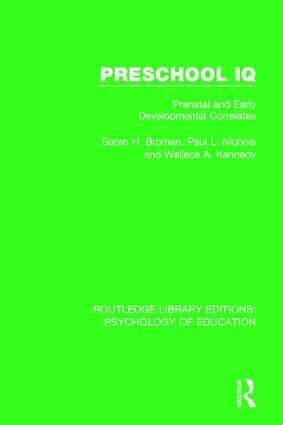
Preschool IQ
Prenatal and Early Developmental Correlates
Av Sarah H. Broman, Paul L. Nichols m. fl.
Inbunden, 2017
2066 kr
Lägg i varukorg
Originally published in 1975, this volume reports a multidisciplinary, longitudinal study of the precursors of intelligence, as measured by Stanford-Binet IQ scores, of 4-year-old children. Over 26, 000 children (more than 12, 000 whites and 14,000 blacks) were followed from the prenatal period, …
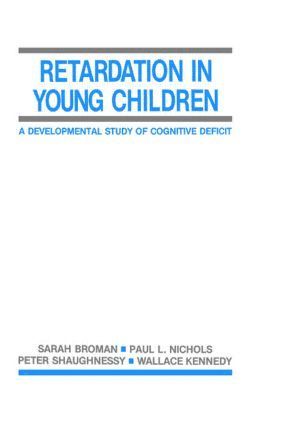
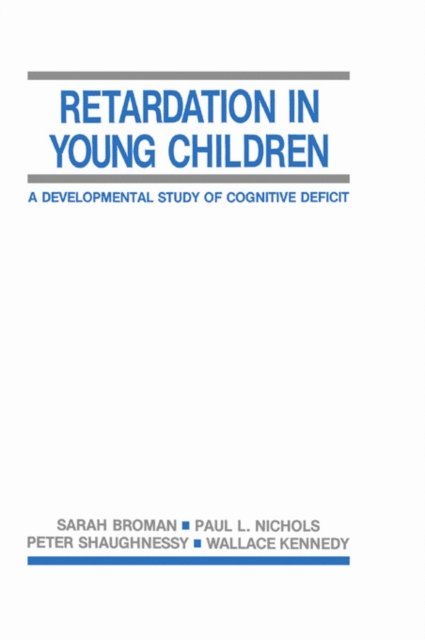
Retardation in Young Children
A Developmental Study of Cognitive Deficit
Av Sarah H. Broman, Paul L. Nichols m. fl.
Inbunden, 1987
2190 kr
Lägg i varukorg
Results of the Collaborative Perinatal Project report disclose the risk factors for mental retardation found in children examined from the prenatal period to age seven. Both biological and social risk factors are analyzed for both severe and mild cognitive deficits. The authors of this volume …
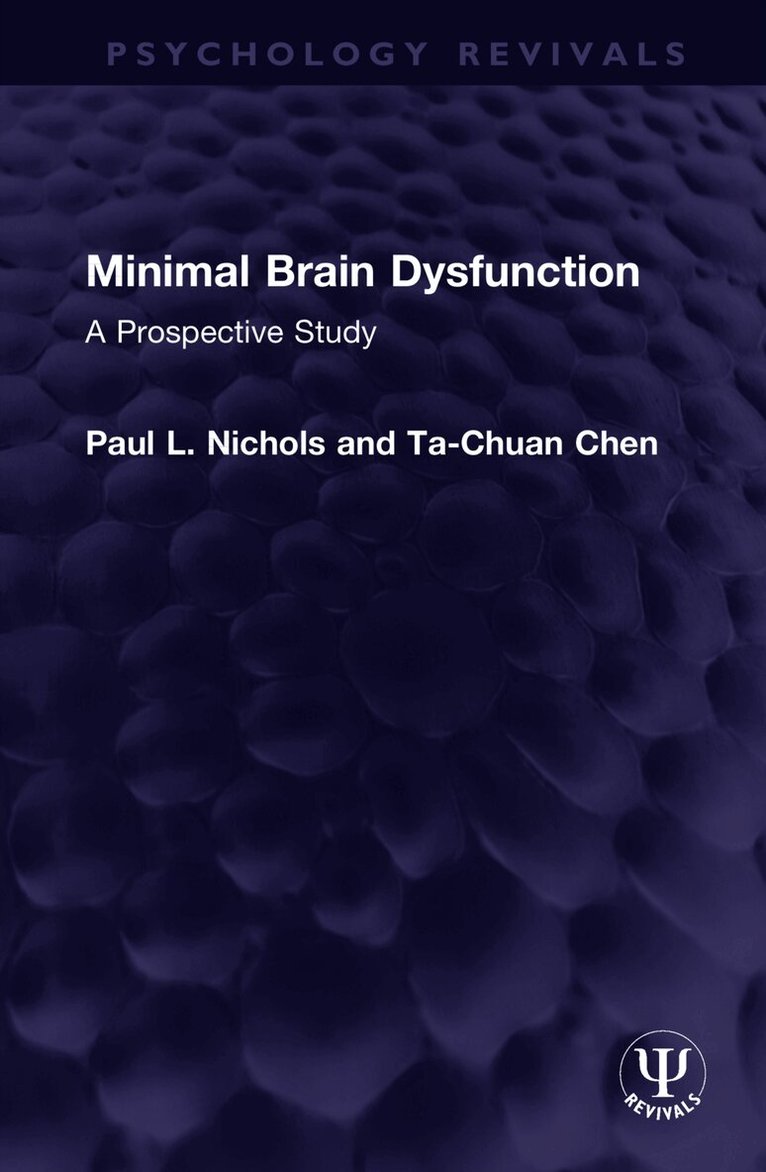
Minimal Brain Dysfunction
A Prospective Study
Av Ta-Chuan Chen, Paul L. Nichols
E-bok, 2023
593 kr
Lägg i varukorg
The concept of Minimal Brain Dysfunction (a previous term for ADHD) has had a tumultuous, and some would say, checkered history. Originally published in 1981, this title was one of a series of volumes dealing with specific developmental problems in children whose mothers registered for prenatal …
Minimal Brain Dysfunction
A Prospective Study
Av Ta-Chuan Chen, Paul L. Nichols
E-bok, 2023
607 kr
Lägg i varukorg
The concept of Minimal Brain Dysfunction (a previous term for ADHD) has had a tumultuous, and some would say, checkered history. Originally published in 1981, this title was one of a series of volumes dealing with specific developmental problems in children whose mothers registered for prenatal …
Minimal Brain Dysfunction
A Prospective Study
Av Paul L. Nichols, Ta-Chuan Chen
Inbunden, 2023
2190 kr
Lägg i varukorg
The concept of Minimal Brain Dysfunction (a previous term for ADHD) has had a tumultuous, and some would say, checkered history. Originally published in 1981, this title was one of a series of volumes dealing with specific developmental problems in children whose mothers registered for prenatal …
Minimal Brain Dysfunction
A Prospective Study
Av Paul L. Nichols, Ta-Chuan Chen
Häftad, 2025
515 kr
Lägg i varukorg
The concept of Minimal Brain Dysfunction (a previous term for ADHD) has had a tumultuous, and some would say, checkered history. Originally published in 1981, this title was one of a series of volumes dealing with specific developmental problems in children whose mothers registered for prenatal …
Retardation in Young Children
A Developmental Study of Cognitive Deficit
Av Wallace Kennedy, Peter Shaughnessy m. fl.
E-bok, 2013
1019 kr
Lägg i varukorg
Results of the Collaborative Perinatal Project report disclose the risk factors for mental retardation found in children examined from the prenatal period to age seven. Both biological and social risk factors are analyzed for both severe and mild cognitive deficits. The authors of this volume …
Retardation in Young Children
A Developmental Study of Cognitive Deficit
Av Wallace Kennedy, Peter Shaughnessy m. fl.
E-bok, 2013
1052 kr
Lägg i varukorg
Results of the Collaborative Perinatal Project report disclose the risk factors for mental retardation found in children examined from the prenatal period to age seven. Both biological and social risk factors are analyzed for both severe and mild cognitive deficits. The authors of this volume …
Preschool IQ
Prenatal and Early Developmental Correlates
Av Sarah H. Broman, Paul L. Nichols m. fl.
Häftad, 2019
627 kr
Lägg i varukorg
Originally published in 1975, this volume reports a multidisciplinary, longitudinal study of the precursors of intelligence, as measured by Stanford-Binet IQ scores, of 4-year-old children. Over 26, 000 children (more than 12, 000 whites and 14,000 blacks) were followed from the prenatal period, …
Preschool IQ
Prenatal and Early Developmental Correlates
Av Wallace A. Kennedy, Paul L. Nichols m. fl.
E-bok, 2017
785 kr
Lägg i varukorg
Originally published in 1975, this volume reports a multidisciplinary, longitudinal study of the precursors of intelligence, as measured by Stanford-Binet IQ scores, of 4-year-old children. Over 26, 000 children (more than 12, 000 whites and 14,000 blacks) were followed from the prenatal period, …
Preschool IQ
Prenatal and Early Developmental Correlates
Av Wallace A. Kennedy, Paul L. Nichols m. fl.
E-bok, 2017
785 kr
Lägg i varukorg
Originally published in 1975, this volume reports a multidisciplinary, longitudinal study of the precursors of intelligence, as measured by Stanford-Binet IQ scores, of 4-year-old children. Over 26, 000 children (more than 12, 000 whites and 14,000 blacks) were followed from the prenatal period, …