Paul L. Nunez – författare
Visar alla böcker från författaren Paul L. Nunez. Handla med fri frakt och snabb leverans.
4 produkter
4 produkter
1 899 kr
Skickas inom 5-8 vardagar
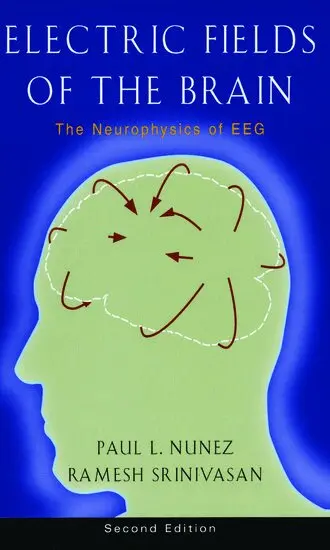
Electroencephalography (EEG) is practiced by neurologists, cognitive neuroscientists, and others interested in functional brain imaging. Whether for clinical or experimental purposes, all studies share a common purpose-to relate scalp potentials to the underlying neurophysiology. Electrical potentials on the scalp exhibit spatial and temporal patterns that depend on the nature and location of the sources and the way that currents and fields spread through tissue. Because these dynamic patterns are correlated with behavior and cognition, EEG provides a "window on the mind," correlating physiology and psychology. This classic and widely acclaimed text, originally published in 1981, filled the large gap between EEG and the physical sciences. It has now been brought completely up to date and will again serve as an invaluable resource for understanding the principles of electric fields in living tissue and for using hard science to study human consciousness and cognition. No comparable volume exists for it is no easy task to explain the problems of EEG in clear language, with mathematics presented mainly in appendices. Among the many topics covered by the Second Edition are micro and meso (intermediate scale) synaptic sources, electrode placement, choice of reference, volume conduction, power and coherence measures, projection of scalp potentials to dura surface, dynamic signatures of conscious experience, neural networks immersed in global fields of synaptic action, and physiological bases for brain source dynamics. The Second Edition is an invaluable resource for neurologists, neuroscientists (especially cognitive neuroscientists), biomedical engineers, and their students and trainees. It will also appeal to physicists, mathematicians, computer scientists, psychiatrists, and industrial engineers interested in EEG.
529 kr
Skickas inom 5-8 vardagar
Does the brain create the mind, or is some external entity involved? In addressing this "hard problem" of consciousness, we face a central human challenge: what do we really know and how do we know it? Tentative answers in this book follow from a synthesis of profound ideas, borrowed from philosophy, religion, politics, economics, neuroscience, physics, mathematics, and cosmology, the knowledge structures supporting our meager grasps of reality. This search for new links in the web of human knowledge extends in many directions: the "shadows" of our thought processes revealed by brain imagining, brains treated as complex adaptive systems that reveal fractal-like behavior in the brain's nested hierarchy, resonant interactions facilitating functional connections in brain tissue, probability and entropy as measures of human ignorance, fundamental limits on human knowledge, and the central role played by information in both brains and physical systems. In Brain, Mind, and the Structure of Reality, Paul Nunez discusses the possibility of deep connections between relativity, quantum mechanics, thermodynamics, and consciousness: all entities involved with fundamental information barriers. Dr. Nunez elaborates on possible new links in this nested web of human knowledge that may tell us something new about the nature and origins of consciousness. In the end, does the brain create the mind? Or is the Mind already out there? You decide.
New Science of Consciousness
Exploring the Complexity of Brain, Mind, and Self
Inbunden, Engelska, 2016
290 kr
Tillfälligt slut
This book explains in layperson's terms a new approach to studying consciousness based on a partnership between neuroscientists and complexity scientists. The author, a physicist turned neuroscientist, outlines essential features of this partnership. The new science goes well beyond traditional cognitive science and simple neural networks, which are often the focus in artificial intelligence research. It involves many fields including neuroscience, artificial intelligence, physics, cognitive science, and psychiatry. What causes autism, schizophrenia, and Alzheimer's disease? How does our unconscious influence our actions? As the author shows, these important questions can be viewed in a new light when neuroscientists and complexity scientists work together. This cross-disciplinary approach also offers fresh insights into the major unsolved challenge of our age: the origin of self-awareness. Do minds emerge from brains? Or is something more involved? Using human social networks as a metaphor, the author explains how brain behavior can be compared with the collective behavior of large-scale global systems. Emergent global systems that interact and form relationships with lower levels of organization and the surrounding environment provide useful models for complex brain functions.By blending lucid explanations with illuminating analogies, this book offers the general reader a window into the latest exciting developments in brain research.
221 kr
Skickas inom 7-10 vardagar
This book explains in layperson's terms a new approach to studying consciousness based on a partnership between neuroscientists and complexity scientists. The author, a physicist turned neuroscientist, outlines essential features of this partnership. The new science goes well beyond traditional cognitive science and simple neural networks, which are often the focus in artificial intelligence research. It involves many fields including neuroscience, artificial intelligence, physics, cognitive science, and psychiatry. What causes autism, schizophrenia, and Alzheimer's disease? How does our unconscious influence our actions? As the author shows, these important questions can be viewed in a new light when neuroscientists and complexity scientists work together. This cross-disciplinary approach also offers fresh insights into the major unsolved challenge of our age: the origin of self-awareness. Do minds emerge from brains? Or is something more involved? Using human social networks as a metaphor, the author explains how brain behavior can be compared with the collective behavior of large-scale global systems. Emergent global systems that interact and form relationships with lower levels of organization and the surrounding environment provide useful models for complex brain functions.By blending lucid explanations with illuminating analogies, this book offers the general reader a window into the latest exciting developments in brain research.