Paul O. Carrese - Böcker
Visar alla böcker från författaren Paul O. Carrese. Handla med fri frakt och snabb leverans.
8 produkter
8 produkter
474 kr
Tillfälligt slut
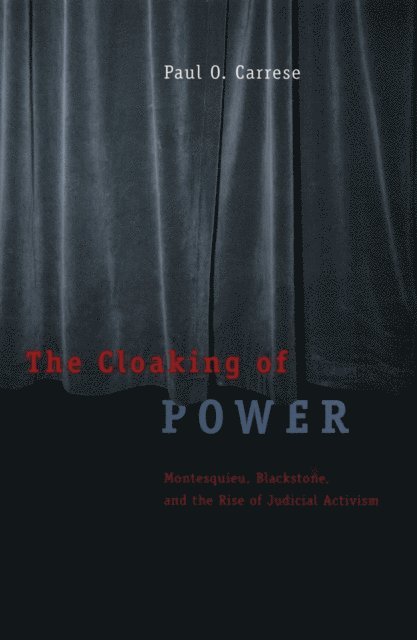
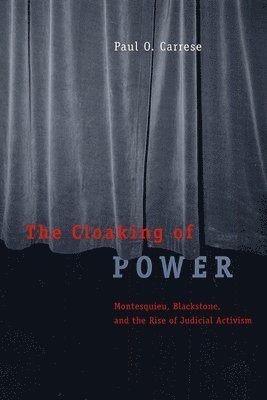
How did the United States judiciary become so powerful - powerful enough that state and federal judges decided the 2000 presidential election? What consequences does this have for the law, constitutionalism and liberal democracy both in America and internationally. In "The Cloaking of Power", Paul O. Carrese provides a provocative and original analysis of the intellectual sources of today's most powerful judiciary. Carrese argues that Montesquieu, in his "Spirit of the Laws" was the first to articulate a new conception of the separation of powers and the need for a strong and active judiciary. He instructed statesmen and judges to "cloak power" by placing the robed power at the centre of politics, while concealing judges behind citizen juries and subtle reforms. Tracing Montesquieu's conception of judicial power through Blackstone, Hamilton and Tocqueville, Carrese shows how it led to the prominence of judges, courts and lawyers in America today. But he places the blame for contemporary judicial activism squarely at the feet of Oliver Wendell Holmes Jr., and his jurisprudential revolution.
252 kr
Skickas inom 7-10 vardagar
How did the US judiciary become so powerful-powerful enough that state and federal judges once vied to decide a presidential election? What does this prominence mean for the law, constitutionalism, and liberal democracy? In The Cloaking of Power, Paul O. Carrese provides a provocative analysis of the intellectual sources of today's powerful judiciary, arguing that Montesquieu, in his Spirit of the Laws, first articulated a new conception of the separation of powers and strong but subtle courts. Montesquieu instructed statesmen to "cloak power" by placing judges at the center of politics, while concealing them behind juries and subtle reforms. Tracing this conception through Blackstone, Hamilton, and Tocqueville, Carrese shows how it led to the prominence of judges, courts, and lawyers in America today. But he places the blame for contemporary judicial activism squarely at the feet of Oliver Wendell Holmes Jr. and his jurisprudential revolution, which he believes to be the source of the now - prevalent view that judging is merely political.To address this crisis, Carrese argues for a rediscovery of an independent judiciary - one that blends prudence and natural law with common law and that observes the moderate jurisprudence of Montesquieu and Blackstone, balancing abstract principles with realistic views of human nature and institutions. He also advocates for a return to the complex constitutionalism of the American founders and Tocqueville and for judges who understand their responsibility to elevate citizens above individualism, instructing them in law and right.
1 060 kr
Kommande
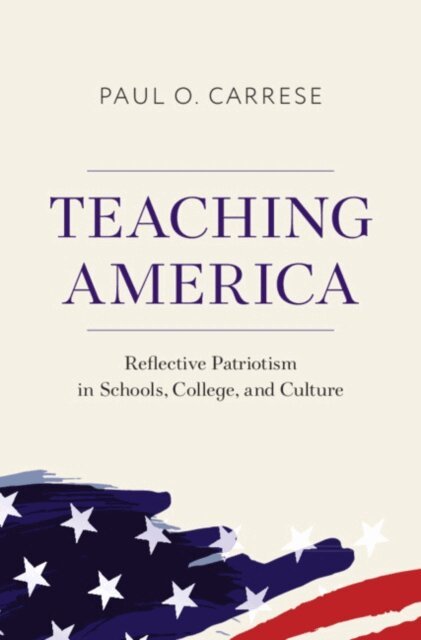
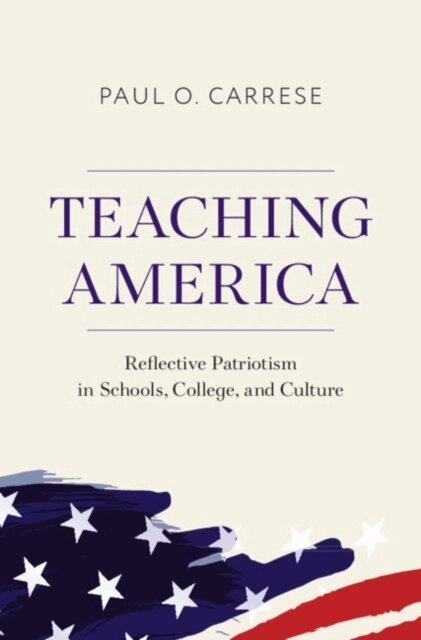
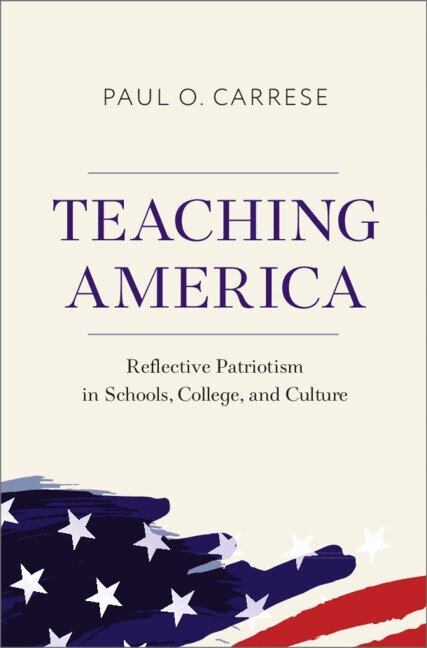
In Teaching America, Paul Carrese offers an intellectual justification for reviving a reflective and discursive approach to civic education. He explores why civic education is crucial for sustaining our democratic republic and explains how a sober, yet hopeful, civics is vital to both civic learning and perpetuating the American experiment. Blending gratitude for America with civil argument about what America means, Carrese implores educators to explore civics informed by rational patriotism. In this Tocquevillean approach, civil disagreement is a feature, not a failing, of our constitutional democracy. He argues that schools, colleges, and culture must develop citizens with the knowledge and virtues to operate our civic order, seeing self-government as crucial for pursuit of happiness. Using a portrait of jazz as an American e pluribus unum this compelling case provides a hopeful renewal of civics and civic friendship needed across formal learning and civic culture.
322 kr
Kommande
In Teaching America, Paul Carrese offers an intellectual justification for reviving a reflective and discursive approach to civic education. He explores why civic education is crucial for sustaining our democratic republic and explains how a sober, yet hopeful, civics is vital to both civic learning and perpetuating the American experiment. Blending gratitude for America with civil argument about what America means, Carrese implores educators to explore civics informed by rational patriotism. In this Tocquevillean approach, civil disagreement is a feature, not a failing, of our constitutional democracy. He argues that schools, colleges, and culture must develop citizens with the knowledge and virtues to operate our civic order, seeing self-government as crucial for pursuit of happiness. Using a portrait of jazz as an American e pluribus unum this compelling case provides a hopeful renewal of civics and civic friendship needed across formal learning and civic culture.
1 192 kr
Skickas inom 7-10 vardagar
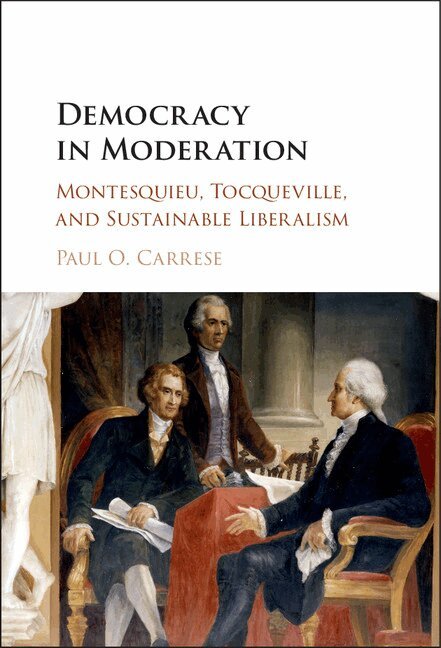
Democracy in Moderation views constitutional liberal democracy as grounded in a principle of avoiding extremes and striking the right balance among its defining principles of liberty, equality, religion, and sustainable order, thus tempering tendencies toward sectarian excess. Such moderation originally informed liberal democracy, but now is neglected. Moderation can guide us intellectually and practically about domestic and foreign policy debates, but also serve the sustainability of the constitutional, liberal republic as a whole. Our recent theory thus doesn't help our practice, given our concerns about polarization and sectarianism in ideas, policy, and politics. A rediscovery of Montesquieu and his legacy in shaping America's complex political order, including influence on Washington's practical moderation and Tocqueville's philosophical moderation, addresses these enduring theoretical and practical problems. Moderation also offers a deeper theory of leadership or statesmanship, particularly regarding religion and politics, and of foreign policy and strategy rooted in liberal democracy's first principles.
428 kr
Skickas inom 7-10 vardagar
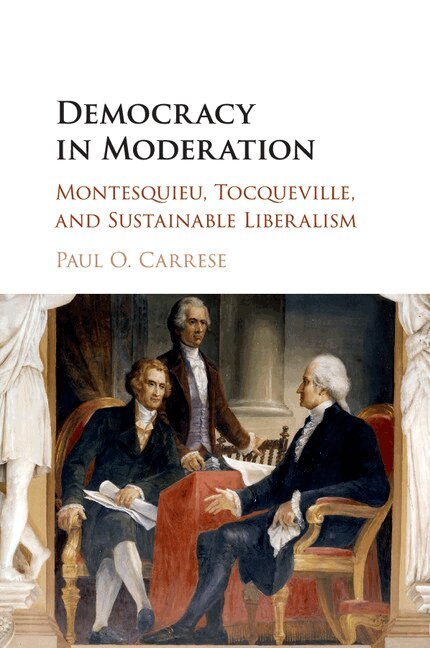
Democracy in Moderation views constitutional liberal democracy as grounded in a principle of avoiding extremes and striking the right balance among its defining principles of liberty, equality, religion, and sustainable order, thus tempering tendencies toward sectarian excess. Such moderation originally informed liberal democracy, but now is neglected. Moderation can guide us intellectually and practically about domestic and foreign policy debates, but also serve the sustainability of the constitutional, liberal republic as a whole. Our recent theory thus doesn't help our practice, given our concerns about polarization and sectarianism in ideas, policy, and politics. A rediscovery of Montesquieu and his legacy in shaping America's complex political order, including influence on Washington's practical moderation and Tocqueville's philosophical moderation, addresses these enduring theoretical and practical problems. Moderation also offers a deeper theory of leadership or statesmanship, particularly regarding religion and politics, and of foreign policy and strategy rooted in liberal democracy's first principles.
Constitutionalism, Executive Power, and the Spirit of Moderation
Murray P. Dry and the Nexus of Liberal Education and Politics
Inbunden, Engelska, 2016
972 kr
Skickas inom 5-8 vardagar
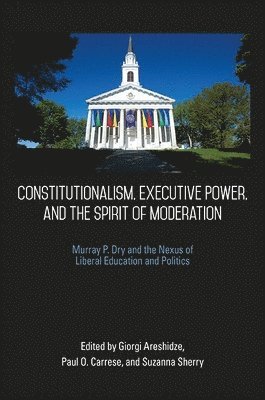
Leading scholars and legal practitioners explore constitutional, legal, and philosophical topics.In Constitutionalism, Executive Power, and the Spirit of Moderation, contributors ranging from scholars to practitioners in the federal executive and judicial branches blend philosophical and political modes of analysis to examine a variety of constitutional, legal, and philosophical topics. Part 1, "The Role of Courts in Constitutional Democracy," analyzes the proper functions and limits of the judiciary and judicial decision making in constitutional government. Part 2, "Law and Executive Authority," reflects on the tensions between constitutionalism and presidential leadership in both domestic and international arenas. Part 3, "Liberal Education, Constitutionalism, and Philosophic Moderation," shifts the focus to the relationship between constitutionalism and political philosophy, and especially to the modern modes of philosophy that most directly influenced the American Founders. A valuable resource for specialists, the book also will be of use in political science and law school classes.
Constitutionalism, Executive Power, and the Spirit of Moderation
Murray P. Dry and the Nexus of Liberal Education and Politics
Häftad, Engelska, 2017
382 kr
Tillfälligt slut
Leading scholars and legal practitioners explore constitutional, legal, and philosophical topics.In Constitutionalism, Executive Power, and the Spirit of Moderation, contributors ranging from scholars to practitioners in the federal executive and judicial branches blend philosophical and political modes of analysis to examine a variety of constitutional, legal, and philosophical topics. Part 1, "The Role of Courts in Constitutional Democracy," analyzes the proper functions and limits of the judiciary and judicial decision making in constitutional government. Part 2, "Law and Executive Authority," reflects on the tensions between constitutionalism and presidential leadership in both domestic and international arenas. Part 3, "Liberal Education, Constitutionalism, and Philosophic Moderation," shifts the focus to the relationship between constitutionalism and political philosophy, and especially to the modern modes of philosophy that most directly influenced the American Founders. A valuable resource for specialists, the book also will be of use in political science and law school classes.