Giorgi Areshidze – författare
Visar alla böcker från författaren Giorgi Areshidze. Handla med fri frakt och snabb leverans.
3 produkter
3 produkter
E-bok
Engelska, 2016471 kr
Läs direkt efter köp
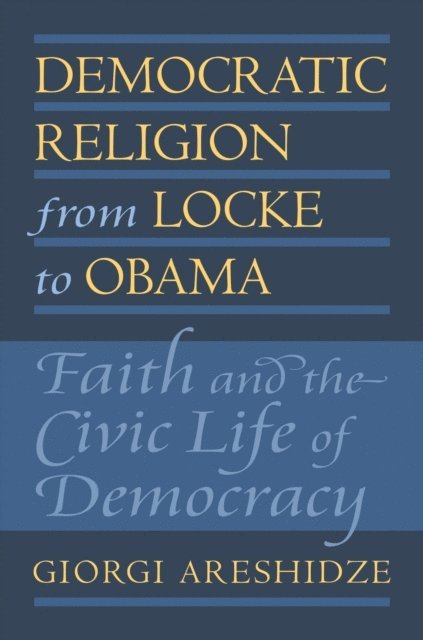
Debating or making speeches, American politicians invariably cite tenets of Christian faitheven as they unfailingly defend the liberal principles of tolerance and religious neutrality that underpin a pluralistic democracy. How these seemingly contradictory impulses can coexistand whether this undermines the religious tradition that makes a liberal democracy possibleare the pressing questions that Giorgi Areshidze grapples with in this exploration of the civic role of religion in American political life.The early modern Enlightenment political philosophy of John Locke has been deeply influentialif often misunderstood and sometimes contestedin shaping both the theoretical and practical contours of contemporary debates and anxieties about religion in a liberal society. Areshidze demonstrates that Locke anticipated a great theological transformation of Christianity in light of modern rationalism, one that would make Christianity into a tolerant religion compatible with liberal political principles. Locke's experiment, as this book shows, has succeeded in important respects, but at a tremendous costby demanding a certain theological skepticism about revealed religion that could ultimately undermine the public concern for religious or theological truth altogether. Democratic Religion from Locke to Obama evaluates these results in light of the role of religion in American political development, particularly as this role has been further defined in the work of political philosopher John Rawls. In the political theologies of Martin Luther King, Jr., Abraham Lincoln, and Barack Obama, Areshidze shows how, while working under Lockes influence, all of these thinkers draw upon religion, including traditional revealed Christian ideas, in their efforts to reshape Americas moral consciousnessespecially on the question of racial equalityin ways that might have surprised Locke. Finally, drawing on Alexis de Tocquevilles encounter with the Lockean experiment in America, this book suggests that the dissonance between how tolerant we want religion to be and what we expect it to accomplish in our civic life is a consequence of the liberal transformation of religion. By reminding us of this religious transformation, Tocquevilles political science may explain some of the deepest spiritual and civic anxieties that continue to beset American democracy.
Inbunden, Engelska, 2016
959 kr
Skickas inom 5-8 vardagar
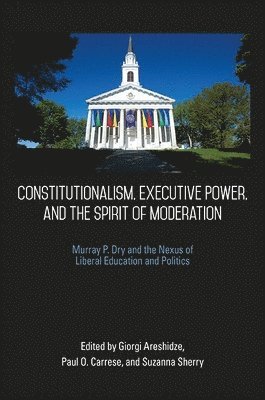
Leading scholars and legal practitioners explore constitutional, legal, and philosophical topics.In Constitutionalism, Executive Power, and the Spirit of Moderation, contributors ranging from scholars to practitioners in the federal executive and judicial branches blend philosophical and political modes of analysis to examine a variety of constitutional, legal, and philosophical topics. Part 1, "The Role of Courts in Constitutional Democracy," analyzes the proper functions and limits of the judiciary and judicial decision making in constitutional government. Part 2, "Law and Executive Authority," reflects on the tensions between constitutionalism and presidential leadership in both domestic and international arenas. Part 3, "Liberal Education, Constitutionalism, and Philosophic Moderation," shifts the focus to the relationship between constitutionalism and political philosophy, and especially to the modern modes of philosophy that most directly influenced the American Founders. A valuable resource for specialists, the book also will be of use in political science and law school classes.
Häftad, Engelska, 2017
377 kr
Tillfälligt slut
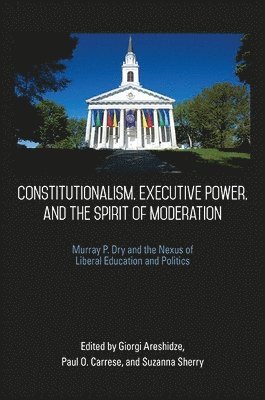
Leading scholars and legal practitioners explore constitutional, legal, and philosophical topics.In Constitutionalism, Executive Power, and the Spirit of Moderation, contributors ranging from scholars to practitioners in the federal executive and judicial branches blend philosophical and political modes of analysis to examine a variety of constitutional, legal, and philosophical topics. Part 1, "The Role of Courts in Constitutional Democracy," analyzes the proper functions and limits of the judiciary and judicial decision making in constitutional government. Part 2, "Law and Executive Authority," reflects on the tensions between constitutionalism and presidential leadership in both domestic and international arenas. Part 3, "Liberal Education, Constitutionalism, and Philosophic Moderation," shifts the focus to the relationship between constitutionalism and political philosophy, and especially to the modern modes of philosophy that most directly influenced the American Founders. A valuable resource for specialists, the book also will be of use in political science and law school classes.