Paul O'Keeffe – författare
Visar alla böcker från författaren . Handla med fri frakt och snabb leverans.
10 produkter
10 produkter
Inbunden, Engelska, 2026
272 kr
Skickas
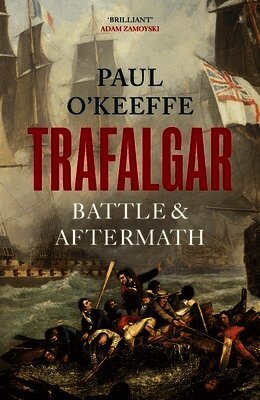
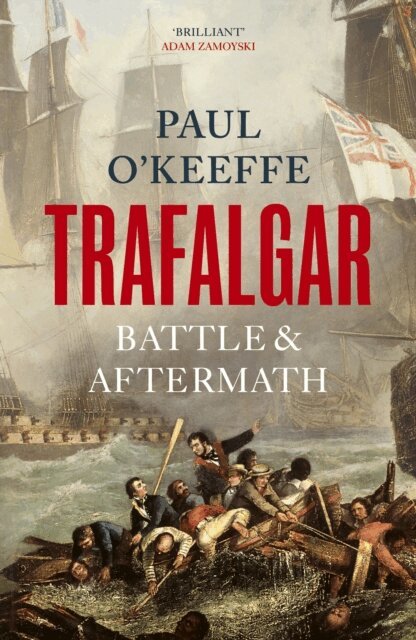
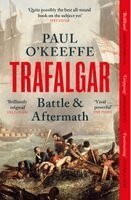
A vivid and visceral portrayal of the most famous naval battle in history, focusing on the human cost of war, by a brilliant military historian'A striking success' The Times'Fresh, original and brilliantly vivid' Telegraph'The best all-round book on the subject yet' SpectatorAt about 1.15 in the afternoon of 21 October 1805, Vice Admiral Horatio Nelson was struck by a 15-millimetre French musket round fired from of the Redoutable, a distance of some 70 feet to HMS Victory’s quarter deck. It fractured his left shoulder, pierced his lung and emerged to sever the spine.In this fresh and vibrant retelling of the battle of Trafalgar, Paul O’Keeffe traces the course of events both prior and subsequent to that fatal shot: from 6.30 in the morning, as the British ships began their approach towards the enemy fleet, until the cessation of firing that followed the apocalyptic destruction of the French 74-gun Achille at 5.45 in the afternoon.We also learn about the battle’s dramatic aftermath: how a violent storm destroyed the surviving French and Spanish ships; how news of victory travelled and was celebrated in London; how Nelson’s body was brought home and given a spectacular funeral.Paying meticulous attention to little explored details, O’Keeffe gives us a front-row view of events. Gripping and immersive, this is a unique account of Trafalgar for a new generation of readers.‘A gripping read, full of fascinating insights … deeply moving … Brilliant’ Adam Zamoyski‘If you think you know it all about the battle of Trafalgar, think again. Paul O’Keeffe’s new book is full of fascinating information … His book is a must’ Nicholas Best
E-bok
Engelska, 2011166 kr
Läs direkt efter köp
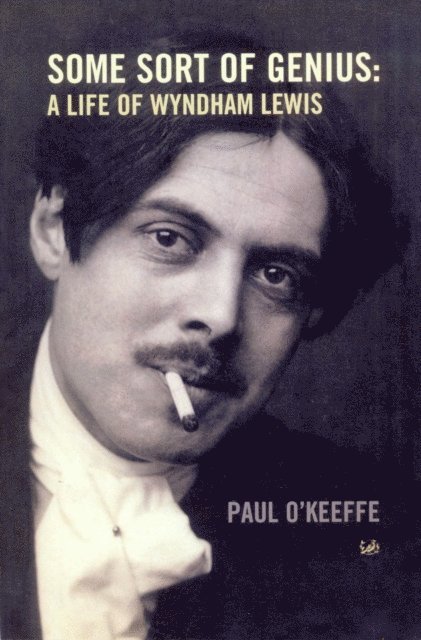
Painter and draughtsman, novelist, satirist, pamphleteer and critic, Lewis's multifarious activities defy easy categorisation. He launched the only twentieth-century English avant garde movement, Vorticism, in 1914. His first novel, Tarr, was published in 1918. During the intervening World War, as an artillery officer at the third battle of Ypres, he gained his 'political education under fire'. Anti-war books of the 1930s argued against what he regarded as a war-mongering left-wing orthodoxy, and presented the case for the right. This placed him in the position somewhere between an advocate of appeasement and what looked uncomfortably like a Nazi sympathizer. Despite an admission, in 1939, that he had been wrong about Hitler, his reputation never recovered from the stigma of Fascism.After the Second World War, spent in penniless and bitter exile in Canada, he returned to London and, in the last decade of his life, received some measure of the success and recognition he had been denied for so long. It coincided, tragically, with the realisation that he was going blind. Visual expression denied him, he devoted all his remaining energies to writing. Seven books in as many years, written in laborious longhand when he was unable to see the
E-bok
Engelska, 2011166 kr
Läs direkt efter köp
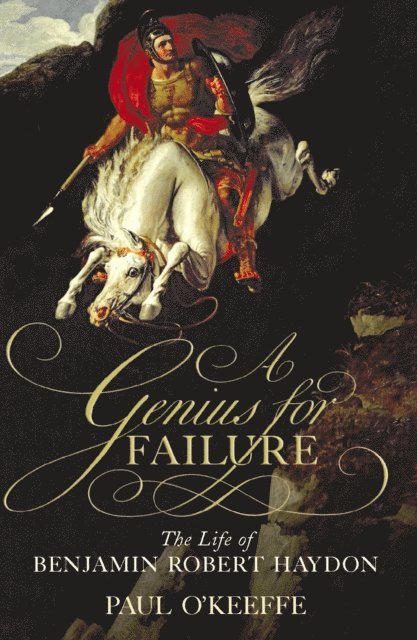
* Haydon's first attempt at suicide ended when the low calibre bullet fired from his pistol fractured his skull but failed to penetrate his brain. * His second attempt also failed: a deep slash across his throat left a large pool of blood at the entrance to his studio, but he was still able to reach his easel on the opposite side of the room. *Only his third attempt, another cut to the throat which sprayed blood across his unfinished canvas, was successful. He died face-down before the bespattered 'Alfred and the First British Jury', his final bid 'to improve the taste of the English people' through the High Art of historical painting.* Such intensity, struggle and near-comic inability to succeed encapsulate Haydon's career. Thirty years before his death his huge, iconic paintings had made him the toast of early 19th-century London, drawing paying crowds to the Egyptian Hall in Piccadilly for months and leading to nationwide tours. * However, his attempt to repeat such success three months before his death was to destroy him: barely a soul turned up, leaving the desperate painter alone, humiliated, and facing financial ruin. * In A Genius for Failure Paul O'Keeffe makes clear that the real tragedy of Haydon lay in the extent to which his failures were unwittingly engineered by his own actions - his refusal to resort to the painting of fashionable portraits, for example, and his self-destructively acrimonious relationship with the RA.* The company he kept - Keats, Shelley, Wordsworth, Sir Robert Peel and the Duke of Wellington, among many others - and the momentous events he lived through - The Battle of Waterloo, the Coronation of George IV, and the passing of the first Parliamentary Reform Bill - make A Genius for Failure not only the definitive biography of this fascinating and tragic painter, but a stirring portrayal of an age.
E-bok
Engelska, 2014144 kr
Läs direkt efter köp
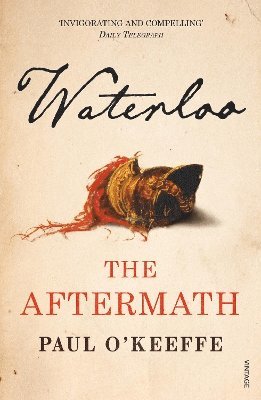
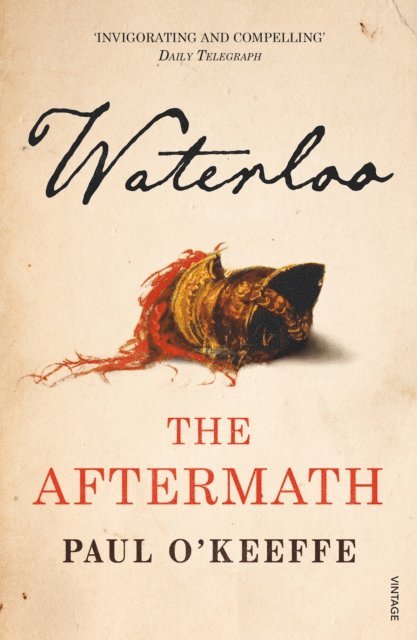
After midnight, 19 June 1815...On the battlefield more than 50,000 men and 7,000 horses lie dead and wounded; the wreckage of a once proud French Grande Armée struggles in abject disorder to the Belgian frontier pursued by murderous Prussian lancers; and Napoleon Bonaparte, exhausted and stunned at the scale of his defeat, rode through the darkness towards Paris, abdication and captivity.In the days, weeks and months that followed, news of the battle shaped the consciousness of an age. Drawing on a multiplicity of contemporary voices and viewpoints, Paul O’Keeffe brings into focus as never before the sights, sounds and smells of the battlefield, of conquest and defeat, of celebration and riot.
E-bok
Engelska, 2015144 kr
Läs direkt efter köp
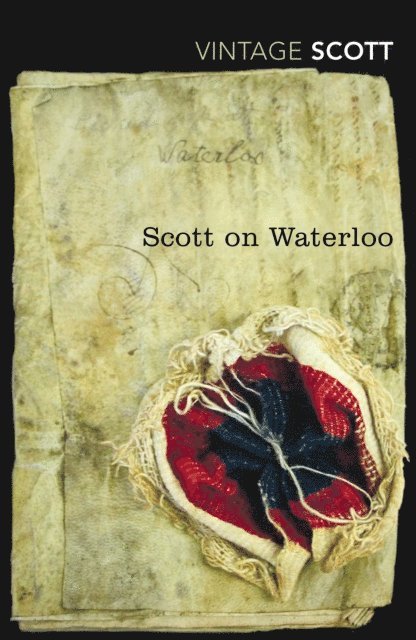
On the 200th anniversary of the Battle of Waterloo discover a fascinating primary source: Walter Scott's accounts of his journey to the battlefieldIn the immediate aftermath of the Battle of Waterloo tourists flocked from Britain to witness the scene of the most important conflict of their generation. Walter Scott was among them, and with a commission from his publisher for a travel book and a long poem. These prose and verse accounts bring to vivid life the carnage, spectacle and excitement of a fascinating period of European history.Brilliantly introduced and annotated by Paul O'Keeffe, this edition elucidates and contextualises Scott's first-hand account of his travels, his dashing epic, ‘The Field of Waterloo’ and the eerily chilling 'Dance of Death'.
E-bok
Engelska, 2021122 kr
Läs direkt efter köp
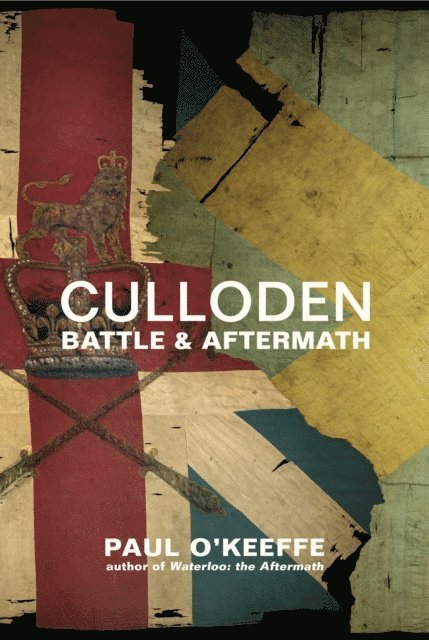
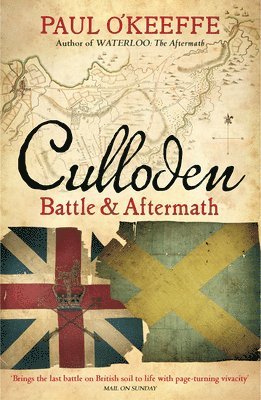
'Excellent... It is a tremendous tale - one of the most dramatic in our island's history - and O'Keeffe tells it beautifully' The TimesCharles Edward Stuart's campaign to seize the British throne ended with one of the quickest defeats in history: on 16 April 1746, at Culloden, his Jacobite army was overpowered in under forty minutes. Its brutal repercussions, however, endured for years, its legacy for centuries.Paul O'Keeffe follows the Jacobite army from initial victories to calamitous defeat. Exploring the battle's aftermath, he chronicles the Jacobite prisoners paying for their treason on block and gibbet while those granted 'the King's mercy' suffered the fate of forced labour on plantations in the colonies. While Stuart's cause eventually acquired an aura of romanticism, the Jacobite Rising remains one of the most bloody and divisive conflicts in British domestic history, which resonates to this day.'Detailed, vivid - and not for the faint-hearted' Financial Times'Fascinating, meticulously researched... tremendous' Daily Mail'Intensely readable... and vividly written' Neal Ascherson, London Review of Books
E-bok
Engelska, 2026382 kr
Läs direkt efter köp
A vivid and visceral portrayal of the most famous naval battle in history, focusing on the human cost of war, by a brilliant military historian'A striking success' The Times'Fresh, original and brilliantly vivid' Telegraph'The best all-round book on the subject yet' SpectatorAt about 1.15 in the afternoon of 21 October 1805, Vice Admiral Horatio Nelson was struck by a 15-millimetre French musket round fired from of the Redoutable, a distance of some 70 feet to HMS Victory’s quarter deck. It fractured his left shoulder, pierced his lung and emerged to sever the spine.In this fresh and vibrant retelling of the battle of Trafalgar, Paul O’Keeffe traces the course of events both prior and subsequent to that fatal shot: from 6.30 in the morning, as the British ships began their approach towards the enemy fleet, until the cessation of firing that followed the apocalyptic destruction of the French 74-gun Achille at 5.45 in the afternoon.We also learn about the battle’s dramatic aftermath: how a violent storm destroyed the surviving French and Spanish ships; how news of victory travelled and was celebrated in London; how Nelson’s body was brought home and given a spectacular funeral.Paying meticulous attention to little explored details, O’Keeffe gives us a front-row view of events. Gripping and immersive, this is a unique account of Trafalgar for a new generation of readers.‘A gripping read, full of fascinating insights … deeply moving … Brilliant’ Adam Zamoyski‘If you think you know it all about the battle of Trafalgar, think again. Paul O’Keeffe’s new book is full of fascinating information … His book is a must’ Nicholas Best
Häftad, Engelska, 2027
156 kr
Kommande
Häftad, Engelska, 2023
156 kr
Skickas
'Excellent... It is a tremendous tale - one of the most dramatic in our island's history - and O'Keeffe tells it beautifully' The TimesCharles Edward Stuart's campaign to seize the British throne ended with one of the quickest defeats in history: on 16 April 1746, at Culloden, his Jacobite army was overpowered in under forty minutes. Its brutal repercussions, however, endured for years, its legacy for centuries.Paul O'Keeffe follows the Jacobite army from initial victories to calamitous defeat. Exploring the battle's aftermath, he chronicles the Jacobite prisoners paying for their treason on block and gibbet while those granted 'the King's mercy' suffered the fate of forced labour on plantations in the colonies. While Stuart's cause eventually acquired an aura of romanticism, the Jacobite Rising remains one of the most bloody and divisive conflicts in British domestic history, which resonates to this day.'Detailed, vivid - and not for the faint-hearted' Financial Times'Fascinating, meticulously researched... tremendous' Daily Mail'Intensely readable... and vividly written' Neal Ascherson, London Review of Books
Häftad, Engelska, 2015
209 kr
Skickas
On the 200th anniversary of the Battle of Waterloo discover a fascinating primary source: Walter Scott's accounts of his journey to the battlefieldIn the immediate aftermath of the Battle of Waterloo tourists flocked from Britain to witness the scene of the most important conflict of their generation. Walter Scott was among them, and with a commission from his publisher for a travel book and a long poem. These prose and verse accounts bring to vivid life the carnage, spectacle and excitement of a fascinating period of European history.Brilliantly introduced and annotated by Paul O'Keeffe, this edition elucidates and contextualises Scott's first-hand account of his travels, his dashing epic, ‘The Field of Waterloo’ and the eerily chilling 'Dance of Death'.