Paul Rabbitts – författare
Visar alla böcker från författaren Paul Rabbitts. Handla med fri frakt och snabb leverans.
26 produkter
26 produkter
124 kr
Skickas inom 10-15 vardagar
London’s royal parks are among its most beautiful and beloved spaces: just as much as the Houses of Parliament, Buckingham Palace or St Pancras Station, the mere mention of Hyde or Regent’s Park is enough to evoke the capital in all its glory for residents and tourists alike. They have a grand history – some were royally owned as far back as the Norman conquest, others were acquired by Henry VIII during the Reformation – and since being opened to the public during the eighteenth century, they have hosted some of London’s great events, including the Great Exhibition and innumerable jubilees and celebrations. This book tells the story of all eight of the parks from the point when they were acquired by the monarchy until the present day, including the major historic moments and events with which they are associated.
180 kr
Skickas
There are nearly 80 million visits to the Royal Parks every year, making them the most popular destinations in the capital. In 1956, author, poet and critic, Richard Thomas Church (1893-1972) wrote The Royal Parks of London, which was published by The Ministry of Public Building and Works as a guidebook at a cost of 3s 6d net. Many years has passed, and these parks continue to thrive, with new additions, events and celebrations. However, any visitor today will be overwhelmed by the beauty of these historic spaces that boast royal palaces, boathouses, bandstands, lodges, gatehouses, ornamental gardens, sculpture, public art, memorials, places for repose and refreshments. Today the Royal Parks as a charitable organisation is responsible for the care and maintenance of a large collection of historical built assets, comprising primarily of monuments, structures and buildings within the parks, and associated boundaries.This book will take you on a journey from Greenwich Park, the oldest of the Royal Parks, via Hyde Park, St James’s Park, Green Park, Regent’s Park, Bushy Park, Kensington Gardens to the largest of the royal parks – Richmond Park. It is hoped that the reader will gain a greater understanding of how these parks came about, but also to widen the visitor’s knowledge of some of the more unusual aspects of London’s Royal Parks, and to simply encourage the visitor to meander at will among them – the best way to discover the many pleasures within London’s Royal Parks.
316 kr
Skickas
London’s Royal Parks are among its most beautiful and beloved spaces: just as much as the Houses of Parliament, Buckingham Palace or St Pancras Station, the mere mention of Hyde Park or Greenwich Park is enough to evoke the capital in all its glory for residents and tourists alike. They have a magnificent history – some were royally owned as far back as the Norman conquest, others were acquired by Henry VIII during the Reformation and were great hunting grounds for successive monarchs – and since being opened to the public, they have hosted some of London’s great events, including the Great Exhibition in Hyde Park and innumerable jubilees, international games and competitions and celebrations. Today, the Royal Parks are visited by over 77 million visitors. But what are the ingredients of these magnificent green spaces? We often think of wider landscapes of trees, grass, lakes, meandering footways, bedding displays and herbaceous borders. But the Royal Parks are much more than this. Defined as ‘parkitecture’, we find royal palaces, stately homes, villas, monuments, memorials, statues of national figures and war heroes, public art, often controversial yet inspiring, sculpture, bandstands, gates and railings of exquisite designs, fountains, refreshments rooms, lodges and pavilions, bridges and boathouses. Each of the Royal Parks is defined by its ‘parkitecture’, from the formality of Regent’s and St James’s Parks to the rurality of Bushy and Richmond Parks. This new book is a long overdue complete celebration of the many buildings and monuments of London’s Royal Parks with over 250 beautiful illustrations.
172 kr
Skickas
The River Lea and its crossing at Hertford lie at the heart of the town's history. Before the Norman Conquest the river formed a natural boundary between the Danelaw to the north and Saxon Wessex to the south. Saxon villages already existed at Bengeo and Hertingfordbury and, in 911 and 912, Edward the Elder, son of Alfred the Great, founded two fortified burhs, north and south of the Lea crossing. Following the Norman Conquest a castle was established at Hertford, together with a priory and a new mill. For the next 300 years the castle was a royal residence. With the patronage of kings and queens, together with the town's agricultural base, Hertford prospered. This continued throughout the centuries, most notably in the Victorian era, which saw increased building as transport links to London improved and industry grew. Today Hertford is a thriving and rapidly expanding town, with a wealth of history that is demonstrated through its rich architectural heritage.In this book, Paul Rabbitts and Peter Jeffree present a well-illustrated and accessible perspective highlighting fifty of Hertford’s significant buildings and landmarks. Each one has its place in the history of the county town and the lives of its people. From pubs to churches and the Corn Exchange, the buildings featured were used for a variety of purposes and designed in many contrasting styles. This engaging architectural tour is a fascinating exploration of a significant aspect of the town’s history and reveals its changing face across the centuries. This book will appeal to residents, visitors, local historians and all those with links to the town.
172 kr
Skickas
The Bedfordshire town of Dunstable can trace its origins back to Roman times and the building of Watling Street, which crossed the ancient Icknield Way at the point where Dunstable stands today. The Romans also constructed a posting station where travellers could change their horses, and a market town called Durocobrivis developed at the crossroads. When the Romans left Britain, Durocobrivis was abandoned and it wasn’t until 1109 that Henry I created a new town here and subsequently added a royal residence and a priory. Although wool cloth was once Dunstable’s main industry, it was later replaced by strawhat manufacturing, brewing and lace-making. Despite its small size it was also an important stage-coaching town. At the end of the nineteenth century, new industries arrived including printing and engineering, and when the railway reached the town in 1848 the population and building development increased. The twentieth century brought further expansion and growth with industries such as Vauxhall Motors.In Dunstable in 50 Buildings, author Paul Rabbitts focuses on the architectural heritage of the town from across the centuries. From almshouse to windmill and ancient road to shopping centre, a fascinating variety of structures and landmarks are featured, each one revealing the history and development of the town and the changing way of life for local people. Illustrated throughout, this engaging and accessible portrait of Dunstable’s architectural history will be of interest to residents, visitors and local historians alike.
172 kr
Kommande
Situated between Bournemouth and the New Forest National Park, the Dorset coastal town of Christchurch has a distinctive historic character reflecting both its origins as a Saxon burh and its maritime associations. The earliest settlement was around the Saxon Minster church, on the site of the present Priory Church, and the town developed slowly northwards. Despite the rapid proliferation of housing estates from the late-nineteenth century onwards, the centre retains the character and charm of a historic town. This is further distinguished by its maritime connections, with the harbour, salt marshes and sandy beaches of Christchurch Bay still dominated by the Priory.In ‘Christchurch in 50 Buildings’, authors Paul Rabbitts and Liz Gordon take readers on an engaging and informative tour of the town highlighting a selection of its architectural gems and landmarks old and new. They feature a wide range of architectural styles and diverse selection of buildings and structures ranging from the Priory to pubs, castle to cottages and bridges to beach huts. Tracing the development of Christchurch through the centuries, this book celebrates the town’s ancient history and its many historic buildings, as well as its role as a popular tourist destination in Dorset.Illustrated throughout, this accessible and well-presented guide will appeal to residents and visitors alike.
177 kr
Skickas inom 11-20 vardagar
Cotherstone village in County Durham is set on the River Tees, 4 miles from Barnard Castle.Today a large and pretty village, its history goes back to the Domesday Book and it has remains of a motte-and-bailey castle dating from the 1200s. In more recent times it became a well-known destination for holidaymakers from the growing urban centres nearby, and at one time was known as ‘Little Sunderland’ because of its popularity in that city. Cotherstone has connections with Hannah Hauxwell, who became famous through the television documentary series about her harsh life as a farmer on the Pennines above the village, and through the locally produced Cotherstone cheese.This fascinating history of the village of Cotherstone in Teesdale will be of interest to all those who have lived in the village or know it well.
172 kr
Skickas
Berkhamsted is a lively town in the Chiltern Hills with a history stretching back to before the Anglo-Saxons. Substantial ruins of the Norman castle remain, later associated with the Black Prince and Geoffrey Chaucer. Berkhamsted School was founded in 1541 and the High Street and the medieval core of the town contain numerous ancient and listed buildings, many of which are timber framed. In later years Berkhamsted’s prosperity was aided by connections with London and the Midlands through turnpike roads, the Grand Junction Canal and the railways. The Victorian Town Hall still stands, saved from demolition in the 1980s, as does writer Graham Greene’s birthplace, and more modern buildings include the popular art deco Rex cinema.Berkhamsted in 50 Buildings explores the history of this town in Hertfordshire through a selection of its most interesting buildings and structures, showing the changes that have taken place over the years. The book will appeal to all those who live in Berkhamsted or who have an interest in the area.
172 kr
Kommande
Hitchin is one of the oldest towns in Hertfordshire, with origins in the Saxon period. Mediaeval Hitchin grew wealthy on grain, sheep, cattle, cloth-making, brewing, tanning and associated trades and the wealth can be seen in the fabric of St Mary’s Church. In the 16th century, new prosperity came with malting and brewing and by 1700 it was second in size in the county only to St Albans. Many timber-framed buildings acquired classical brick fronts in the Georgian period, the first steps towards a local hospital were taken and new schools built. By the nineteenth century the railway brought new business to Hitchin and the town was grossly overcrowded but slum clearance began while the town retained its character as a market town, with its fine Market Square. Today many industries have moved away but Hitchin is fortunate in having retained a large number of fine buildings across a range of architectural styles and eras.Hitchin in 50 Buildings explores the history of this town in Hertfordshire through a selection of its most interesting buildings and structures, showing the changes that have taken place over the years. The book will appeal to all those who live in Hitchin or who have an interest in the area.
177 kr
Kommande
Although Hemel Hempstead is a New Town, the first recorded mention of the town is in the Anglo-Saxon period. The Old Town saw planned development along the High Street in mediaeval times and the early 16th-century a borough charter was granted, with the right to hold a weekly market and yearly fair. After the Second World War Hemel Hempstead was chosen as one of the sites of the government’s new towns. The architect Geoffrey Jellicoe’s initial plans were rejected as too expensive and impractical, but the structure of Jellicoe’s town centre was largely retained. Starting in 1952, a new town centre was built at Marlowes, beside the Water Gardens diverted from the River Gade. This building phase was finished in 1962 and later in the decade West Herts College, a library, police station and cinema were added, with new housing and commercial developments added up to the present-day, as well as the Forum council offices.Hemel Hempstead in 50 Buildings explores the history of this town in Hertfordshire through a selection of its most interesting buildings and structures, showing the changes that have taken place over the years. The book will appeal to all those who live in Hemel Hempstead or who have an interest in the area.
192 kr
Tillfälligt slut
Hyde Park is a London favourite. You can walk, lie in the grass, play games, take exercise and engage in sport. It has been a venue for mass celebrations since VE Day and for public events including Proms in the Park, the Olympics and countless music festivals. There is a truly fascinating history behind the park we know today and the neighbouring Kensington Gardens.On 1 July 1536, Henry VIII compelled the Convent of Westminster to hand over land that he then enclosed for hunting purposes – and so Hyde Park began. However, it was not until the reign of Charles I that the people of London were allowed access to the park. Sold by Parliament in 1652; beset by highwaymen when the village of Kensington became home to much of the aristocracy; partially appropriated by George II to make Kensington Gardens – Hyde Park has a dramatic past. It was, however, the Great Exhibition that was to have the greatest impact on its history. The world came to Hyde Park, with as many as 100,000 visitors occupying the exhibition at a time. It became London’s central attraction and remains the city’s greatest open space. It is truly the people’s park and, without a doubt, one of the greatest places to visit in London.
114 kr
Tillfälligt slut
The Regent’s Park has a history stretching back through seven centuries, well before the designer and architectural genius John Nash and his patron the Prince Regent laid it out at the beginning of the nineteenth century as the first of the improvements they had planned for London.Rabbitts recounts the story of the park from its origins as a tiny part of the Middlesex Forest to its role as Henry VIII’s hunting ground at the time of the Dissolution of the Monasteries, to its subsequent development in the nineteenth century as London’s new West End.This comprehensive history of one of the United Kingdom’s most popular outdoor spaces also takes into account the wider history of Britain and its public parks.
121 kr
Skickas
Richmond Park is the largest Royal Park in London, covering an area of 2,500 acres. From its heights there is an uninterrupted view of St Paul’s Cathedral, 12 miles away.The royal connections to this park probably go back further than any of the others, beginning with Edward I in the thirteenth century, when the area was known as the Manor of Sheen. The name was changed to Richmond during Henry VII’s reign. In 1625 Charles I brought his court to Richmond Palace to escape the plague in London and turned it into a park for red and fallow deer. His decision, in 1637, to enclose the land was not popular with the local residents, but he did allow pedestrians the right of way. To this day the walls remain. In 1847 Pembroke Lodge became the home of the then Prime Minister, Lord John Russell, and was later the childhood home of his grandson, Bertrand Russell.However, Richmond Park emerges from its historical record as a place that has seen many changes in fabric and detail and yet remains the embodiment of a medieval deer park. It is a palimpsest, retaining subtle clues to each period in its history.
266 kr
Tillfälligt slut
Our great British parks are one of the finest legacies of the Victorian age. Designed and bequeathed to the masses as part of a movement encouraging green spaces and recreation, the public park came to symbolise one of the greatest contributions of the era.Opened in increasing numbers in the industrious nineteenth century, by the end of the twentieth century many of our parks had become sadly neglected. With the collaboration of organisations including Keep Britain Tidy and the Heritage Lottery Fund, a vast project of regeneration was initiated. Today they remain outdoor places for everyone to enjoy, acting as children’s play areas, sports grounds and even concert venues.Great British Parks explores some of these outstanding public spaces, of interest to anyone who uses and appreciates them. It pays tribute to the many park teams, local authorities, grant-giving bodies and individuals who have managed, maintained, restored and looked after our public parks – yesterday, today and tomorrow.
172 kr
Skickas
From its status as the world's first industrialised city, through late twentieth-century decline and subsequent regeneration and rebirth as the 'Second City of the UK', Manchester has a proud and distinctive identity. This extraordinary history is embodied in the buildings that have shaped the city. Manchester in 50 Buildings explores the history of this rich and vibrant urban centre through a selection of its greatest architectural treasures. From Victorian classics such as the neo-Gothic Town Hall to the striking new additions to the city's skyline, such as Beetham Tower, this unique study celebrates the city's architectural heritage in a new and accessible way. Authors Deborah Woodman and Paul Rabbitts guide the reader on a tour of the city’s historic buildings and modern architectural marvels.
162 kr
Skickas inom 11-20 vardagar
What are the ingredients of our great British public parks? We often think of the wider landscape of trees, grass, lakes, meandering footways, bedding displays and herbaceous borders. But they are much more than this. Among the parkitecture featured here are bowling greens; bandstands; gates, railings and boundaries; fountains; glass houses, palm houses, winter gardens and conservatories; refreshments rooms; lodges and pavilions; bridges and boathouses; aviaries; children’s play areas, and statues, memorials and monuments.This book acts as a long overdue celebration of the buildings and monuments of our public parks.
193 kr
Skickas inom 11-20 vardagar
One of the remnants of the great lost estates of the United Kingdom, Cassiobury Park is now the largest park in Hertfordshire, and the principal park of its primary town, Watford, covering an area twice the size of Hyde Park in London. But this is no ordinary town park.In 1661, Arthur, the 2nd Baron Capel, was made the Earl of Essex and, by 1668/69, he had moved to Cassiobury permanently. By 1707, Cassiobury was a significant estate, and Charles Bridgeman was employed at Cassiobury in the 1720s. In 1800, the 5th Earl of Essex employed James Wyatt to rebuild the house. Humphry Repton was employed at Cassiobury, and the landscape was captured by J. M. W. Turner in a number of paintings. By 1881, there were many deer in the park, often traded with the royal deer parks at Richmond, Bushy and Windsor Great Park.By the beginning of the twentieth century, large areas of the park had been sold off to Watford Borough Council for public parkland. By 1921, the lease was surrendered and, in 1927, Cassiobury House was demolished. Much of the remaining land was bought by the council becoming further parkland for the expanding Borough of Watford. This book tells the significant story of a remarkable estate, family and parkland that has never been told before.
162 kr
Skickas inom 11-20 vardagar
Much has been written about the history of Victorian life, the Industrial Revolution and the improvements brought about by the great reformers, including the many improvements to recreation and leisure. Public parks were one such introduction and many were laid out from the 1850s onwards and up until the beginning of the Second World War. Joseph Paxton is the most famous of our park designers, along with J. C. Loudon, James Pennethorne, and Thomas Mawson. We know very little of many of these great park designers, and especially the most notable municipal and borough designers such as Sexby, Sandys-Winsch and Pettigrew. These individuals designed some of our greatest parks, in our greatest cities – from Victoria Park and Battersea Park in London, to our much admired royal parks, to Philips Park in Manchester, and the wonderful parks of Norwich, Liverpool, Cardiff and beyond.This book fills in the gaps surrounding these great servants of the public. Included are biographies and histories of Joseph Paxton, James Pennethorne, Edward Milner, John Nash, Decimus Burton, Robert Marnock, William Barron, J. C. Loudon, J. J. Sexby, William Pettigrew, Captain Sandys-Winsch, John Gibson and Thomas H. Mawson. This is an essential read for anybody interested in the great designers of our greatest parks.
177 kr
Skickas inom 11-20 vardagar
The royal parks of London are lands originally owned by the monarchy of the United Kingdom for the recreation (mostly hunting) of the royal family. They are part of the hereditary possessions of the Crown. With the increasing urbanisation of London, some of these were preserved as freely accessible open spaces and became public parks with the introduction of the Crown Lands Act 1851. Today there are eight parks formally described by this name and they cover almost 2,000 hectares of land in Greater London. Hyde Park, Kensington Gardens, Green Park, Regent’s Park and St James’s Park are the largest green spaces in central London; Bushy Park, Greenwich Park and Richmond Park are in the suburbs.London’s Royal Parks: The Postcard Collection takes the reader on an evocative journey into the past of these much-loved green spaces through a selection of old postcards that offer a fascinating window into their history and continuing development.
172 kr
Skickas inom 11-20 vardagar
Close to the Chiltern Hills lies the Bedfordshire market town of Leighton Buzzard. Dominating the town is the 190-foot spire of the thirteenth-century All Saints’ Church, which has been described as ‘the cathedral of South Bedfordshire’. The area’s main industry has been sand quarrying, and the coming of the Grand Union Canal and railway in the early 1800s established the town further and led to an increase in its population, industry and commerce. This growth has continued across the decades as Leighton Buzzard’s proximity and direct transport links to London have placed it in prime commuter territory.Today, Leighton Buzzard is linked to the town of Linslade by a bridge over the River Ouzel. The two communities were unified as a civil parish in 1965 and are commonly referred to as Leighton-Linslade. Looking back through the centuries, there is evidence that people have been living in and around the area since Saxon times. In the Domesday Book Leighton Buzzard was called Lestone and there was reference to its market which still takes place to this day.In this book author Paul Rabbitts explores fifty of the town’s most interesting, important and intriguing buildings and structures, from inns to churches and schools to houses. The town boasts many old buildings, each with their own story to tell that, together, make up the fascinating history of Leighton Buzzard.
172 kr
Skickas inom 11-20 vardagar
Today, millions of tourists from around the world are drawn to Windsor by its magnificent castle, dating from the eleventh century, and its wealth of royal history. Although the castle is at the heart of the town, this book reveals there are many more notable architectural gems – both ancient and modern – to be discovered there. For the visitors who come to Windsor, many will venture across its nineteenth-century bridge to explore its smaller neighbouring town of Eton, famous for its college, on the opposite side of the River Thames.In Windsor & Eton in 50 Buildings, authors Paul Rabbitts and Rob Ickinger takes readers on an engaging tour to discover fifty buildings and landmarks that capture the immense heritage of the towns, and to show how they have developed across the centuries. Among the places featured are Windsor’s Guildhall and the charming seventeenth-century Crooked House.
172 kr
Skickas inom 11-20 vardagar
Although little is recorded of its earlier history, Salford is a city of great antiquity. In 1228, Henry III granted the Lancashire town the right to hold a market and an annual fair. Centuries later, it was the Industrial Revolution that had a phenomenal impact, with Salford becoming one of the greatest cotton towns. With the opening of the Manchester Ship Canal in 1894, the newly built docks in Salford became another major factor shaping the local economy. Today the city is made up of five districts: Salford, Eccles, Worsley, Irlam and Cadishead, and Swinton and Pendlebury. Home to 220,000 people, Salford is constantly changing and moving into an exciting future as a thriving cultural, economic and residential location.In Salford in 50 Buildings, authors Carole O’Reilly and Paul Rabbitts uncover fifty of the city’s architectural treasures and landmarks from across the centuries. These are the places that reflect the city’s history and tell the stories of its people and their way of life. Among those featured are university buildings, the cathedral, Irlam railway station, Worsley Old Hall, Ordsall Hall, together with schools, shops, pubs and churches. Each one chronicles a fascinating aspect of the city’s cultural, social and industrial heritage.From urban buzz to greenbelt tranquillity, Salford is building on the mixture of its waterfront, urban and countryside environments to create places where people want to live, work, invest and visit. Its modern structures reflect this change including iconic buildings such as the Lowry Theatre and Salford Quays. The city celebrates its Victorian heritage as well as embracing the future with stunning new architecture.
799 kr
Skickas inom 5-8 vardagar
People's Parks - The Design and Development of Public Parks in Britain' identifies the principal national and international influences on park development from the nineteenth century until the present, including their historical and cultural significance. Municipal parks made an important contribution to our urban environment, and they developed within a social, economic and political context which affected people's attitudes to recreation - what became known as 'rational recreation'. The promoters of parks wanted to encourage education and particular forms of recreation, and parks reflected this in their design, buildings, statues, bandstands and planting. This book is a thorough update and re-evaluation on Hazel Conway's influential book, published in 1991, adding and evaluating an extra 100 years of history, through the Victorian era, to the war years, the impact of the Garden Cities movement, and the great decline of parks from the 1970s onwards. The impact of the Heritage Lottery Fund's urban parks programme from the 1990s is covered, along with that of austerity and the Covid pandemic. The book concludes by evaluating the role of parks today and potential for the future.
122 kr
Skickas inom 5-8 vardagar
Sir Christopher Wren (1632–1723) is now mostly remembered as a genius of architecture – but he was also an accomplished polymath, who only came to architecture quite late in life. Most famous as the mastermind behind the rebuilding of St Paul’s Cathedral and more than fifty parish churches after the Great Fire of London, among his countless other projects Wren also designed the Royal Hospital at Chelsea, the Royal Naval Hospital at Greenwich, and much of Hampton Court Palace. Replete with colourful images of his buildings, this concise biography tells the story of a man whose creations are still popular tourist attractions to this day, but also casts light on Wren’s credentials as an intellectual and a founding member of the Royal Society.
107 kr
Skickas inom 5-8 vardagar
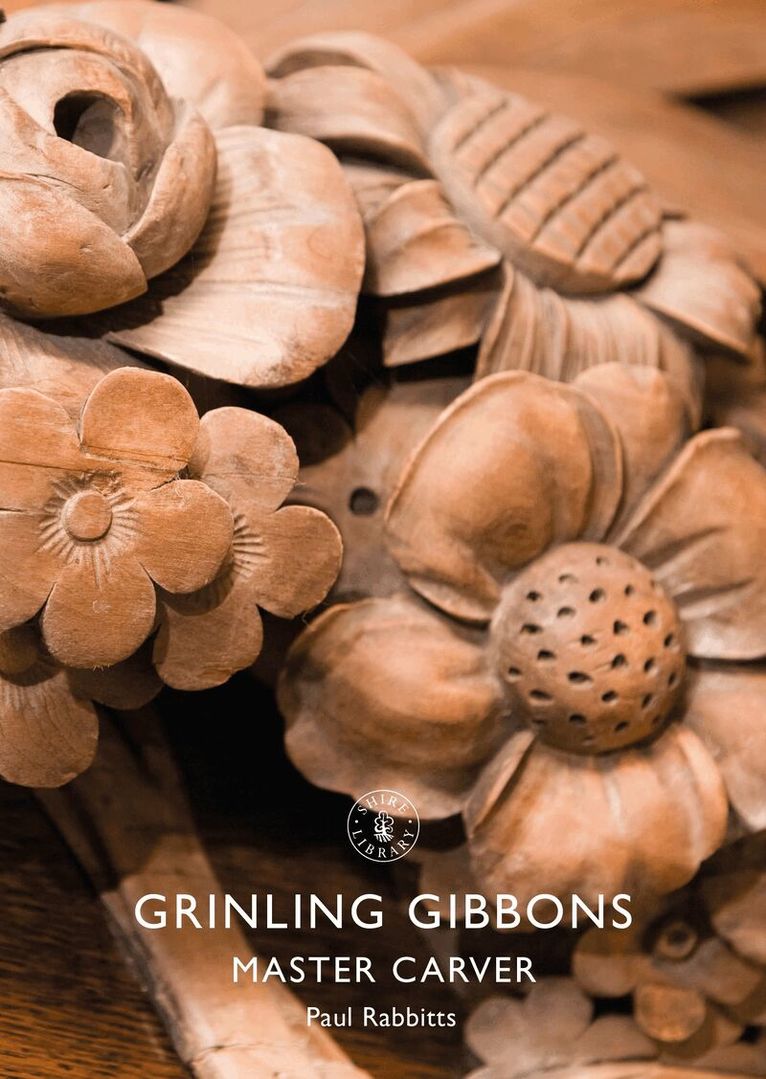
Master Carver Grinling Gibbons (1648–1721) is famous for his breathtakingly delicate, intricate and realistic carvings, both in wood and stone. Tantalising cascades of fruit and flowers, puffy-cheeked cherubs, crowds of figures and flourishes of architecture are all trademark features of his energetic, animated carvings that grace stately homes, palaces, churches and colleges across the country. His work can be found in some of Britain’s most beloved buildings, including St Paul’s Cathedral and Hampton Court Palace. From his early work in the Low Countries to his ‘discovery’ by the diarist John Evelyn in London, and his appointment as the king’s Master Carver, this book celebrates Grinling Gibbons’ unequalled talent, his visionary genius, and his ability to transform humble pieces of wood into some of the most exquisite artworks of his day.
404 kr
Skickas inom 5-8 vardagar
In 1833, the Select Committee for Public Walks was introduced so that ‘the provision of parks would lead to a better use of Sundays and the replacement of the debasing pleasures.’ Music was seen as an important moral influence and ‘musical cultivation … the safest and surest method of popular culture’, and it was the eventual introduction of the bandstand which became a significant aspect of the reforming potential of public parks. However, the move from the bull baiting of ‘Merrie England’ to the ordered recreation provided by bandstands has never been fully comprehended. Likewise, the extent of changes in leisure and public entertainment and the impact of music at seaside resorts often revolved around the use of seaside bandstands, with the subsequent growth of coastal resorts. Music in public spaces, and the history and heritage of the bandstand has largely been ignored. Yet in their heyday, there were over 1,500 bandstands in the country, in public parks, on piers and seaside promenades attracting the likes of crowds of over 10,000 in the Arboretum in Lincoln, to regular weekday and weekend concerts in most of London’s parks up until the beginning of the Second World War. Little is really known about them, from their evolution as ‘orchestras’ in the early Pleasure Gardens, the music played within them, to their intricate and ornate ironwork or art deco designs and the impact of the great foundries, their worldwide influence, to the great decline post Second World War and subsequent revival in the late 1990s. This book tells the story of these pavilions made for music, and their history, decline and revival.