Paul Rorem – författare
Visar alla böcker från författaren Paul Rorem. Handla med fri frakt och snabb leverans.
13 produkter
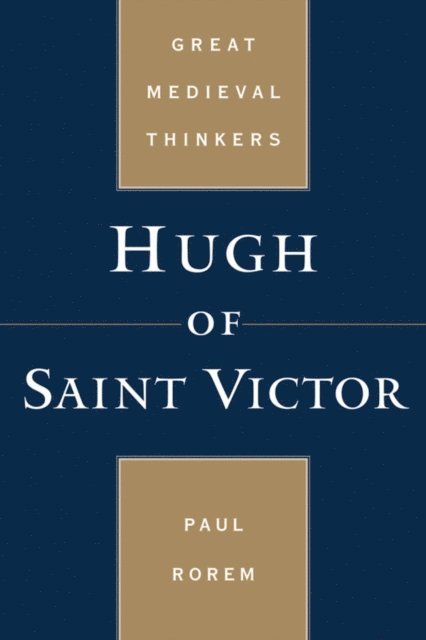
Hugh of Saint Victor
Av Paul Rorem
E-bok, 2009
477 kr
Lägg i varukorg
Born in Saxony in 1096, Hugh became an Augustinian monk and in 1115 moved to the monastery of Saint Victor, Paris, where he spent the remainder of his life, eventually becoming the head of the school there. His writings cover the whole range of arts and sacred science taught in his day. Paul Rorem …
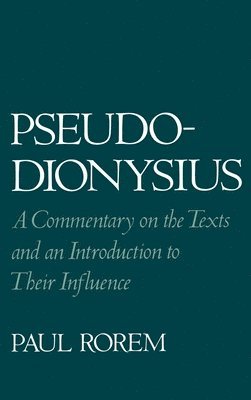
Pseudo-Dionysius
A Commentary on the Texts and an Introduction to Their Influence
Av Paul Rorem
Inbunden, 1993
3153 kr
Lägg i varukorg
Dionysius the Areopagite is the peudonymous author of an influential body of early (about 500 AD) Christian theological texts. The Pseudo-Dionysian writings offer a synthesis of Christian dogma and Neo-platonic thought. Their leading idea which has made them the charter of Christian mysticism, is …
Pseudo-Dionysius
A Commentary on the Texts and an Introduction to Their Influence
Av Paul Rorem
E-bok, 1993
2072 kr
Lägg i varukorg
"Dionysius the Areopagite" is the biblical name chosen by the pseudonymous author of an influential body of Christian theological texts, dating from around 500 C.E. The Celestial Hierarchy , The Ecclesiastical Hierarchy , The Divine Names , and The Mystical Theology offer a synthesis of biblical …
Hugh of Saint Victor
Av Paul Rorem
Inbunden, 2009
1537 kr
Lägg i varukorg
Born in Saxony in 1096, Hugh became an Augustinian monk and in 1115 moved to the monastery of Saint Victor, Paris, where he spent the remainder of his life, eventually becoming the head of the school there. His writings cover the whole range of arts and sacred science taught in his day. Paul Rorem …
Hugh of Saint Victor
Av Paul Rorem
Häftad, 2009
700 kr
Lägg i varukorg
Born in Saxony in 1096, Hugh became an Augustinian monk and in 1115 moved to the monastery of Saint Victor, Paris, where he spent the remainder of his life, eventually becoming the head of the school there. His writings cover the whole range of arts and sacred science taught in his day. Paul Rorem …
John of Scythopolis and the Dionysian Corpus
Annotating the Areopagite
Av Paul Rorem, John C. Lamoreaux
Inbunden, 1998
5239 kr
Lägg i varukorg
John, the sixth-century orthodox bishop of Scythopolis in Palestine, was the first of many authors to comment upon the highly influentional Pseudo-Dionysian writings (such as The Mystical Theology). Here translated and interpreted, John's Prologue and Scholia (marginalia) have only recently been …
Hugh of Saint Victor
Av Paul Rorem
E-bok, 2009
477 kr
Lägg i varukorg
Born in Saxony in 1096, Hugh became an Augustinian monk and in 1115 moved to the monastery of Saint Victor, Paris, where he spent the remainder of his life, eventually becoming the head of the school there. His writings cover the whole range of arts and sacred science taught in his day. Paul Rorem …
Calvin and Bullinger on the Lord's Supper
Av Paul Rorem
E-bok, 2019
1241 kr
Lägg i varukorg
An investigation of sixteenth-century Reformed views on the Lord's Supper from two of the leaders of that tradition. The impasse and resolution between John Calvin and Zwingli's successor Heinrich Bullinger provide the background for this discussion.
Medieval Development of Liturgical Symbolism
Av Paul Rorem
E-bok, 2019
1555 kr
Lägg i varukorg
Liturgical allegory has often flourished in the history of Christianity, despite persistent pruning by sceptical theologians through the ages. The full fruits of this growth ripened during the Middle Ages, as preserved in the pages of Latin and Byzantine liturgical commentaries.
Essential Forde
Distinguishing Law and Gospel
Av Gerhard O., Forde, Nicholas Hopman m. fl.
Häftad, 2019
694 kr
Lägg i varukorg
Singing Church History
Introducing the Christian Story through Hymn Texts
Av Paul Rorem
Häftad, 2024
383 kr
Lägg i varukorg
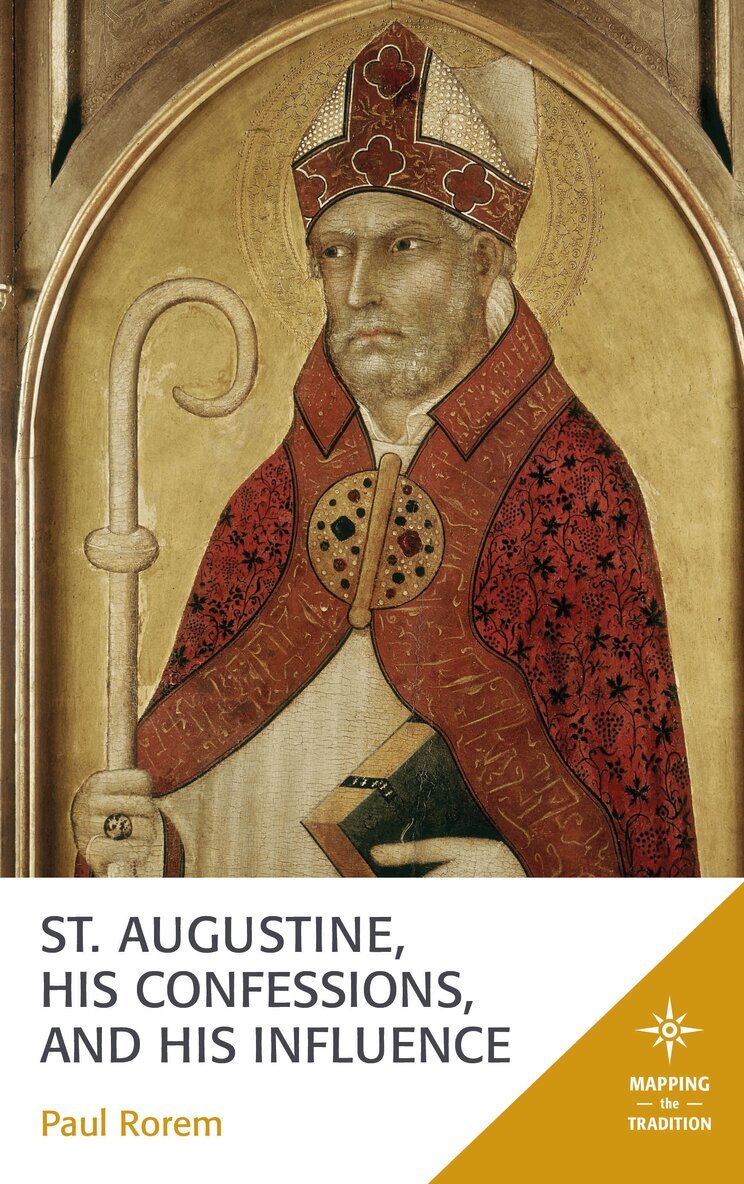
St. Augustine, His Confessions, and His Influence
Av Paul Rorem
Inbunden, 2019
1137 kr
Lägg i varukorg
This book introduces Augustine of Hippo and his influence on Christian theology. Part One works through all thirteen books of the Confessions, introducing the life and thought of the bishop of Hippo with commentary on frequent but brief quotations. The Confessions reveal Augustine’s major doctrinal …