Paul Salem - Böcker
Visar alla böcker från författaren Paul Salem. Handla med fri frakt och snabb leverans.
3 produkter
3 produkter
573 kr
Skickas
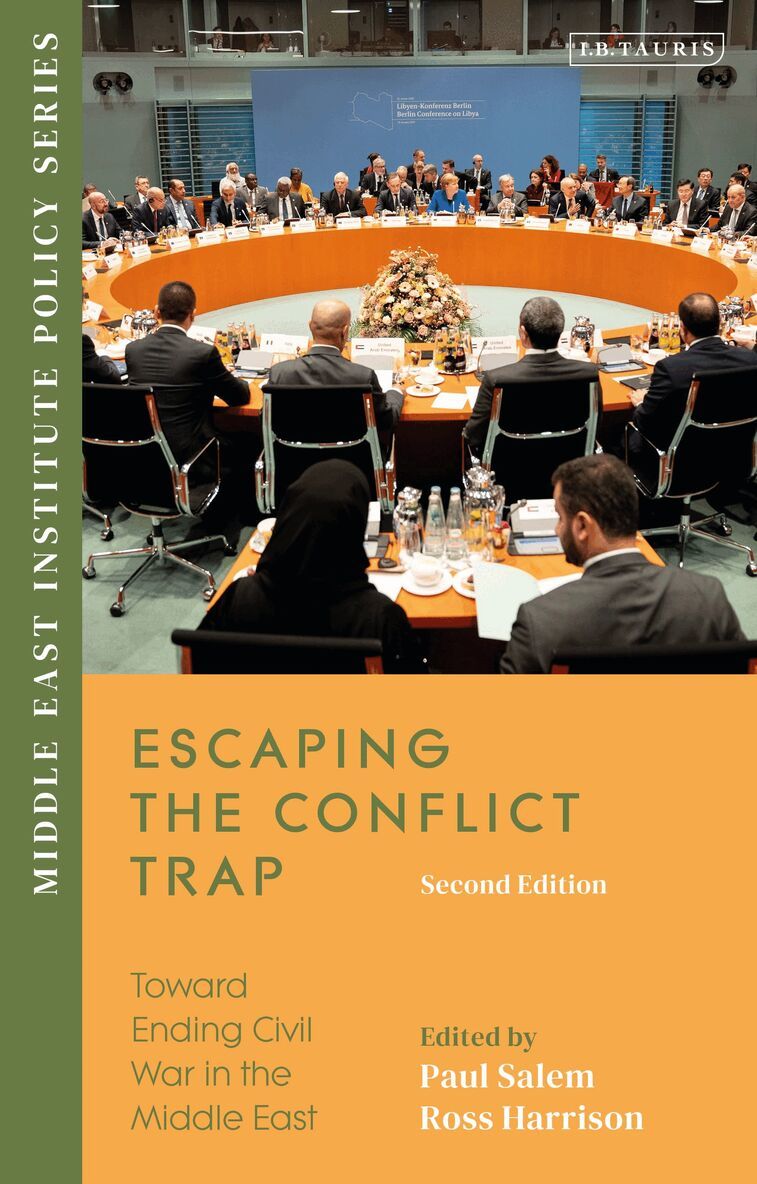
How can the current civil wars in the Middle East be resolved? This volume brings together academics, experts, and practitioners to explore this question. The book covers the history of civil wars in the region during the 20th century, and then examines the specific causes, drivers, and dynamics of the ongoing civil wars in Syria, Yemen, Libya, Afghanistan, and Iraq.Updated for a second edition, the book argues that while these are very different cases of civil war, there are patterns that are important to point out at the outset. First, while each of the conflicts appears to be a relatively recent phenomenon, each has a long historical tail. Second, each of the civil wars had deep and complex domestic drivers and dynamics over issues of governance, political identity, and resources; at the same time, all of the conflicts have had deep regional and international components. Finally, all of these civil wars have been affected by the presence or entrance of armed transnational non-state actors, which have had far greater involvement in the Middle Eastern civil wars compared to other regions. The book concludes that these conflicts will require a mixture of local, regional, and international interventions to bring them to an end, but that none of the conflicts are likely to end cleanly through either a negotiated settlement or a clear victory by one party or the other.Despite this pessimistic overall assessment, the book emphasizes that policymakers should use knowledge of civil wars in the Middle East to develop and pursue specific national, regional and global policies. These should be built around mitigating the worst effects of the conflicts and towards ultimate resolution.
314 kr
Skickas inom 10-15 vardagar
How can the current civil wars in the Middle East be resolved? This volume brings together academics, experts, and practitioners to explore this question. The book covers the history of civil wars in the region during the 20th century, and then examines the specific causes, drivers, and dynamics of the ongoing civil wars in Syria, Yemen, Libya, Afghanistan, and Iraq.Updated for a second edition, the book argues that while these are very different cases of civil war, there are patterns that are important to point out at the outset. First, while each of the conflicts appears to be a relatively recent phenomenon, each has a long historical tail. Second, each of the civil wars had deep and complex domestic drivers and dynamics over issues of governance, political identity, and resources; at the same time, all of the conflicts have had deep regional and international components. Finally, all of these civil wars have been affected by the presence or entrance of armed transnational non-state actors, which have had far greater involvement in the Middle Eastern civil wars compared to other regions. The book concludes that these conflicts will require a mixture of local, regional, and international interventions to bring them to an end, but that none of the conflicts are likely to end cleanly through either a negotiated settlement or a clear victory by one party or the other.Despite this pessimistic overall assessment, the book emphasizes that policymakers should use knowledge of civil wars in the Middle East to develop and pursue specific national, regional and global policies. These should be built around mitigating the worst effects of the conflicts and towards ultimate resolution.
487 kr
Skickas inom 10-15 vardagar
Ideology has been described as the single most powerful force in modern Arab politics. In this analysis, Salem examines 20th-century nationalist, Marxist, and Islamic movements in the Arab world. He uses a multidisciplinary approach and a breadth of theoretical work from the fields of sociology, social psychology, and political science. He also draws on primary Arabic sources, examining the main works of Sati al-Husri, Michel Aflaq, Sayyid Qutb, and Antoun Saadeh. Salem argues that, throughout the 20th-century, ideology has served a crucial political function in integrating the masses into the modern state system and in legitimising new elites. This ideology was stimulated by the rapid pace of social, economic, political, and cultural change that began at the turn of the century and which caused considerable strain within the structure of the existing traditional belief systems. He not only analyses the rise of numerous movements including Arab nationalism, Marxism, and Islamic fundamentalism, but also Egyptian, Syrian, and Lebanese nationalism. Unlike many other studies that often treat ideologies as separate and static phenomena, the author places ideology in a comparative and dialectical framework. He approaches the work from a multidisciplinary perspective to study the movements and how their respective ideologies compete and reinforce one another. By considering religious and cultural variables and by examining a movements's roots, its appeal to different classes and generations, and how it fulfills people's psychological needs, the author provides a fuller understanding of the Arab society as a whole. ""Bitter Legacy"" aims to provide a panoramic review of modern Arab political thought and offers analytical tools for comprehending ideological change.