Paul Webley - Böcker
Visar alla böcker från författaren Paul Webley. Handla med fri frakt och snabb leverans.
5 produkter
5 produkter
429 kr
Tillfälligt slut
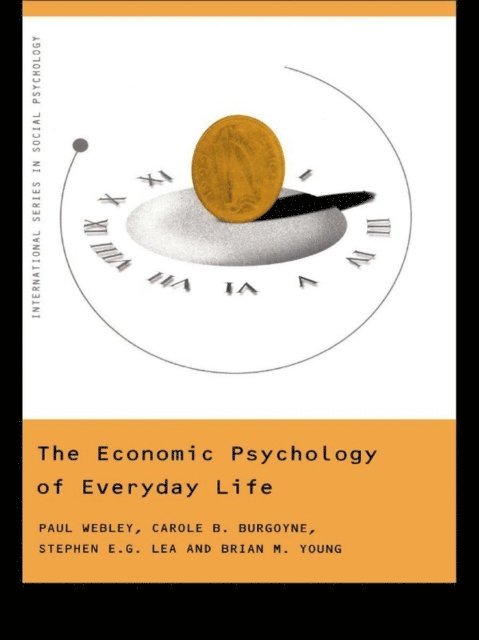
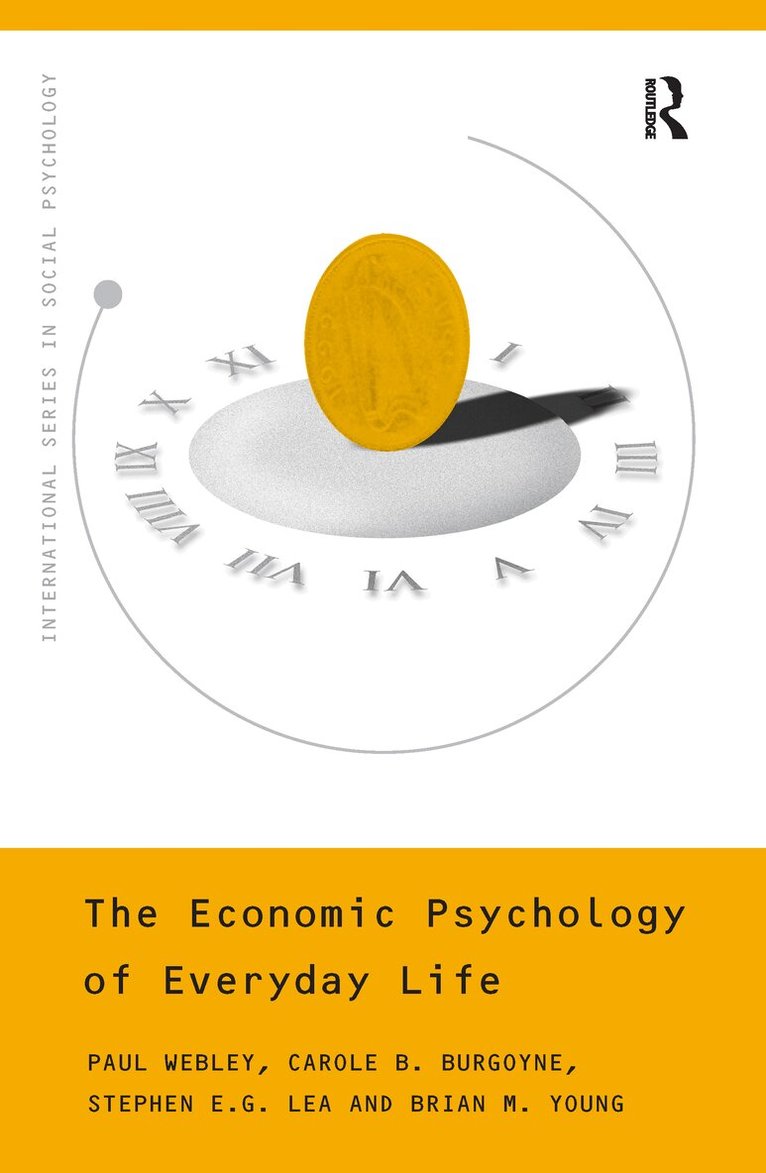
From childhood through to adulthood, retirement and finally death, The Economic Psychology of Everyday Life uniquely explores the economic problems all individuals have to solve across the course of their lives.Webley, Burgoyne, Lea and Young begin by introducing the concept of economic behaviour and its study. They then examine the main economic issues faced at each life stage, including:* the impact of advertising on children* buying a first house and setting up home* changing family roles and gender-linked inequality* redundancy and unemployment* coping on a pension * obituaries, wills and inheritance.Finally they draw together the commonalties of economic problems across the lifespan, discuss generational and cultural changes in economic behaviour, and examine the significance of other, non-economic constraints, upon individuals.The Economic Psychology of Everyday Life provides a much-needed comprehensive and accessible guide to economic psychology which will be of great interest to researchers and students.
394 kr
Skickas inom 7-10 vardagar
The aim of this book, first published in 1991, is not to examine the moral or economic rights and wrongs of the issue, but to introduce a fresh way of exploring this old but growing problem. Research into tax evasion has been bedevilled with measurement problems: the hidden economy has been well named. The key is to design experimental situations that engage the same psychological processes as their real-world counterparts. This has been achieved by embedding the declaration of taxes in simulated business games. A feature of the research is that it is cross-national (carried out in the Netherlands and the UK), which also enhances ecological validity. This work will be of particular interest to applied social psychologists, tax researchers and experimental economists.
981 kr
Skickas inom 10-15 vardagar
Originally published in 1993, this book presents an alternative approach to the study of the emergence of economic awareness during childhood: a new developmental economic psychology!In the past, attempts to study the emergence of children’s economic consciousness have failed to take account of the practical nature of the "economic" in the history of western cultures. Economic socialisation has been seen as the acquisition of abstract knowledge about the institutions of adult economic culture. The child has been seen as a spectator, acquiring knowledge of that culture, but never really a part of it.However, economic actions, in essence, are directed not towards the attainment of knowledge, but rather towards the practical solution of problems of resource allocation imposed by constraint. Children, just like adults, are faced with practical problems of resource allocation. Their response to these problems may be different from those of adults but no less "economic" for that. This realisation forms the heart of this book. In it children are seen as both inhabitants of their own "playground" economic subculture and actors in the wider economic world of adults, solving, or attempting to solve, practical economic problems.In order to highlight this "child-centred" approach, the authors studied the way children tackle the particular problems posed by limitations of income. How do children learn (a) the relationship between choices available in the present and the future, (b) to spread their limited financial resources over time into the future and (c) about the strategies, such as banking, that allow them to protect those resources from threats and temptations? In short, how do children learn to save?This volume goes some way to answering these and related questions and in so doing sets up an alternative framework for the study of the emergence of economic awareness.
349 kr
Skickas inom 10-15 vardagar
Originally published in 1993, this book presents an alternative approach to the study of the emergence of economic awareness during childhood: a new developmental economic psychology!In the past, attempts to study the emergence of children’s economic consciousness have failed to take account of the practical nature of the "economic" in the history of western cultures. Economic socialisation has been seen as the acquisition of abstract knowledge about the institutions of adult economic culture. The child has been seen as a spectator, acquiring knowledge of that culture, but never really a part of it.However, economic actions, in essence, are directed not towards the attainment of knowledge, but rather towards the practical solution of problems of resource allocation imposed by constraint. Children, just like adults, are faced with practical problems of resource allocation. Their response to these problems may be different from those of adults but no less "economic" for that. This realisation forms the heart of this book. In it children are seen as both inhabitants of their own "playground" economic subculture and actors in the wider economic world of adults, solving, or attempting to solve, practical economic problems.In order to highlight this "child-centred" approach, the authors studied the way children tackle the particular problems posed by limitations of income. How do children learn (a) the relationship between choices available in the present and the future, (b) to spread their limited financial resources over time into the future and (c) about the strategies, such as banking, that allow them to protect those resources from threats and temptations? In short, how do children learn to save?This volume goes some way to answering these and related questions and in so doing sets up an alternative framework for the study of the emergence of economic awareness.
1 876 kr
Skickas inom 7-10 vardagar
This unique, up-to-date volume features new essays by prominent economists and psychologists working at the frontiers of the subject. A number of these essays probe beliefs about rationality, consumer behaviour and expectations, while others assess psychological explanations of economic behaviour and the contribution of experimental economics.