Paul Weithman - Böcker
Visar alla böcker från författaren Paul Weithman. Handla med fri frakt och snabb leverans.
11 produkter
11 produkter
1 269 kr
Skickas inom 5-8 vardagar
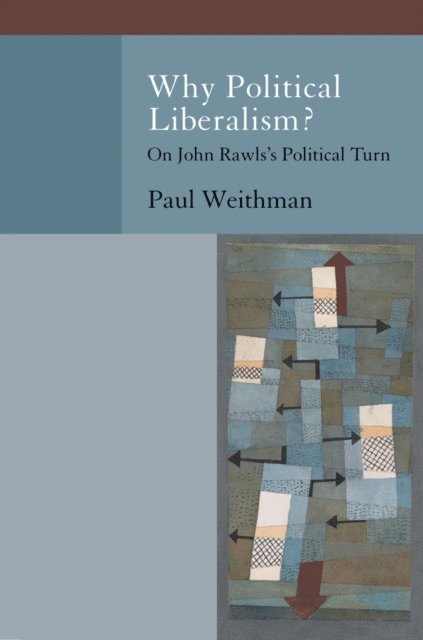
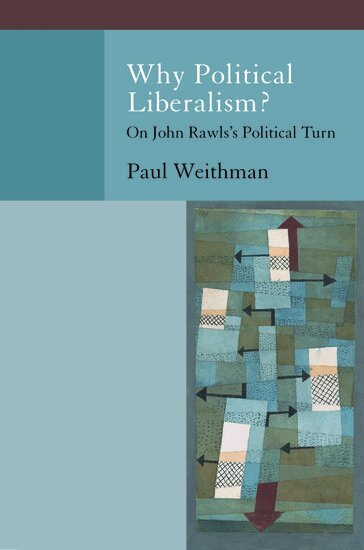
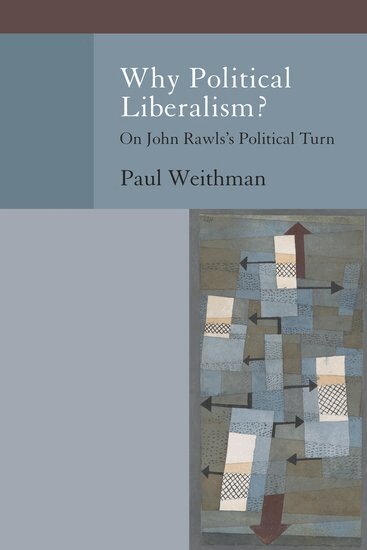
In WHY POLITICAL LIBERALISM?, Paul Weithman offers a fresh, rigorous, and compelling interpretation of John Rawls's reasons for taking his so-called "political turn". Weithman takes Rawls at his word that justice as fairness was recast as a form of political liberalism because of an inconsistency Rawls found in his early treatment of social stability. He argues that the inconsistency is best seen by identifying the threats to stability with which the early Rawls was concerned. One of those threats, often overlooked by Rawls's readers, is the threat that the justice of a well-ordered society would be undermined by a generalized prisoner's dilemma. Showing how the Rawls of "A Theory of Justice" tried to avert that threat shows that the much-neglected third part of that book is of considerably greater philosophical interest, and has considerably more unity of focus, than is generally appreciated. Weithman painstakingly reconstructs Rawls's attempts to show that a just society would be stable, and just as carefully shows why Rawls came to think those arguments were inconsistent with other parts of his theory. Weithman then shows that the changes Rawls introduced into his view between "Theory of Justice" and "Political Liberalism" result from his attempt to remove the inconsistency and show that the hazard of the generalized prisoner's dilemma can be averted after all. Recovering Rawls's two treatments of stability helps to answer contested questions about the role of the original position and the foundations of justice as fairness. The result is a powerful and unified reading of Rawls's work that explains his political turn and shows his enduring engagement with some of the deepest concerns of human life. "Weithman has written a masterful work of Rawls scholarship. This book will deepen our understanding of how and why Rawls restructured his theory, and illuminate this fascinating transition in the history of political philosophy." Leif Wenar, Chair of Ethics, Kings College London"Weithman's reconstruction of Rawls's arguments is masterful, convincing and in many ways revelatory. Readers will find that the text provides compelling answers to a lot of puzzling questions about Rawls's project that have lingered for some time. Perhaps most importantly, Weithman gives the best explanation to date of exactly why Rawls felt compelled to revise his theory as he did." Colin Bird, Department of Politics, University of Virginia
425 kr
Skickas inom 5-8 vardagar
In Why Political Liberalism? Paul Weithman offers a fresh, rigorous, and compelling interpretation of John Rawls's reasons for taking his so-called "political turn." Weithman takes Rawls at his word that justice as fairness was recast as a form of political liberalism because of an inconsistency Rawls found in his early treatment of social stability. He argues that the inconsistency is best seen by identifying the threats to stability with which the early Rawls was concerned. One of those threats, often overlooked by Rawls's readers, is the threat that the justice of a well-ordered society would be undermined by a generalized prisoner's dilemma. Showing how the Rawls of "A Theory of Justice" tried to avert that threat shows that the much-neglected third part of that book is of considerably greater philosophical interest, and has considerably more unity of focus, than is generally appreciated. Weithman painstakingly reconstructs Rawls's attempts to show that a just society would be stable, and just as carefully shows why Rawls came to think those arguments were inconsistent with other parts of his theory. Weithman then shows that the changes Rawls introduced into his view between "Theory of Justice" and "Political Liberalism" result from his attempt to remove the inconsistency and show that the hazard of the generalized prisoner's dilemma can be averted after all. Recovering Rawls's two treatments of stability helps to answer contested questions about the role of the original position and the foundations of justice as fairness. The result is a powerful and unified reading of Rawls's work that explains his political turn and shows his enduring engagement with some of the deepest concerns of human life.
Development and Main Outlines of Rawls's Theory of Justice
Philosophy of Rawls
Inbunden, Engelska, 1999
2 577 kr
Skickas inom 10-15 vardagar
John Rawls is the pre-eminent political philosopher of our time. His 1971 masterpiece, A Theory of Justice, permanently changed the landscape of moral and political theory, revitalizing the normative study of social issues and taking stands about justice, ethics, rationality, and philosophical method that continue to draw followers and critics today. His Political Liberalism (rev. ed., 1996) squarely faced the fundamental challenges posed by cultural, religious, and philosophical pluralism. It should be no surprise, then, that turn-of-the-century searches of the periodical indices in philosophy, economics, law, the humanities, and related fields turn up almost three thousand articles devoted to a critical discussion of Rawls's theory. In these Volumes we reprint a wide-ranging selection of the most influential and insightful articles on Rawls.This Volume presents a selection of the secondary literature most important to understanding the development and the main outlines of the view that Rawls set out in A Theory of Justice [TJ]. The articles reprinted in this Volume provide a window into the evolution of Rawls's views prior to TJ and cover the most controversial aspects of his compelling new articulation of the social-contract tradition.
1 765 kr
Skickas inom 10-15 vardagar
John Rawls is the pre-eminent political philosopher of our time. His 1971 masterpiece, A Theory of Justice, permanently changed the landscape of moral and political theory, revitalizing the normative study of social issues and taking stands about justice, ethics, rationality, and philosophical method that continue to draw followers and critics today. His Political Liberalism (rev. ed., 1996) squarely faced the fundamental challenges posed by cultural, religious, and philosophical pluralism. It should be no surprise, then, that turn-of-the-century searches of the periodical indices in philosophy, economics, law, the humanities, and related fields turn up almost three thousand articles devoted to a critical discussion of Rawls's theory. In these Volumes we reprint a wide-ranging selection of the most influential and insightful articles on Rawls.The articles in the present volume reflect the critical discussion of the two principles of justice as fairness - Rawls's theory - and his most general ideas about their justification, namely Kantian constructivism and reflective equilibrium.
2 577 kr
Skickas inom 10-15 vardagar
John Rawls is the pre-eminent political philosopher of our time. His 1971 masterpiece, A Theory of Justice, permanently changed the landscape of moral and political theory, revitalizing the normative study of social issues and taking stands about justice, ethics, rationality, and philosophical method that continue to draw followers and critics today. His Political Liberalism (rev. ed., 1996) squarely faced the fundamental challenges posed by cultural, religious, and philosophical pluralism. It should be no surprise, then, that turn-of-the-century searches of the periodical indices in philosophy, economics, law, the humanities, and related fields turn up almost three thousand articles devoted to a critical discussion of Rawls's theory. In these Volumes we reprint a wide-ranging selection of the most influential and insightful articles on Rawls.This volume reprints articles representing criticisms of Rawls's justice as fairness, as presented in his 1971 book, A Theory of Justice (TJ], that involve comparing his view to distinctly identifiable opposed points of view, and also covers attempts to extend the principles of justice as fairness, or his style of social contract view, beyond the subjectmatter of the basic structure of society, to which TJ largely confines itself.
2 712 kr
Skickas inom 10-15 vardagar
John Rawls is the pre-eminent political philosopher of our time. His 1971 masterpiece, A Theory of Justice, permanently changed the landscape of moral and political theory, revitalizing the normative study of social issues and taking stands about justice, ethics, rationality, and philosophical method that continue to draw followers and critics today. His Political Liberalism (rev. ed., 1996) squarely faced the fundamental challenges posed by cultural, religious, and philosophical pluralism. It should be no surprise, then, that turn-of-the-century searches of the periodical indices in philosophy, economics, law, the humanities, and related fields turn up almost three thousand articles devoted to a critical discussion of Rawls's theory. In these Volumes we reprint a wide-ranging selection of the most influential and insightful articles on Rawls.The articles in the present volume are among the most probing pieces of critical literature on Rawls's discussions of moral psychology and community. Their content, range and influence demonstrate both how important these topics are to Rawls's work and how far-reaching their implications are taken to be.
751 kr
Skickas inom 10-15 vardagar
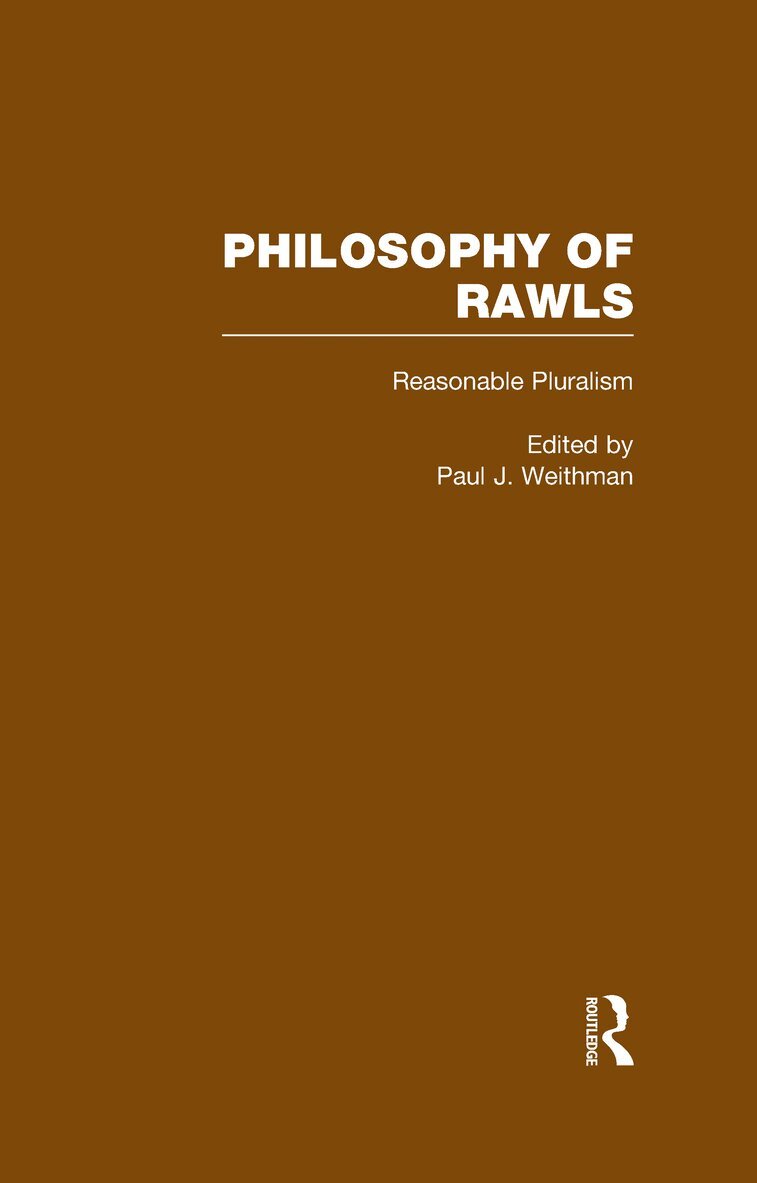
John Rawls is the pre-eminent political philosopher of our time. His 1971 masterpiece, A Theory of Justice, permanently changed the landscape of moral and political theory, revitalizing the normative study of social issues and taking stands about justice, ethics, rationality, and philosophical method that continue to draw followers and critics today. His Political Liberalism (rev. ed., 1996) squarely faced the fundamental challenges posed by cultural, religious, and philosophical pluralism. It should be no surprise, then, that turn-of-the-century searches of the periodical indices in philosophy, economics, law, the humanities, and related fields turn up almost three thousand articles devoted to a critical discussion of Rawls's theory. In these Volumes we reprint a wide-ranging selection of the most influential and insightful articles on Rawls.As is clear from his reliance on ideas found in political culture and his refusal to claim truth, the political turn in Rawls's later work led him to a much more modest conception of political philosophy. The papers in this volume examine the political turn in Rawls's work, its implications for political philosophy, and the ideas in A Theory of Justice which seem to anticipate it.
385 kr
Skickas inom 7-10 vardagar
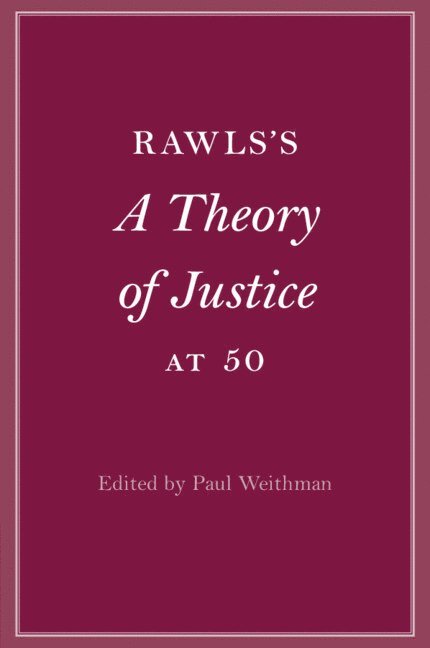
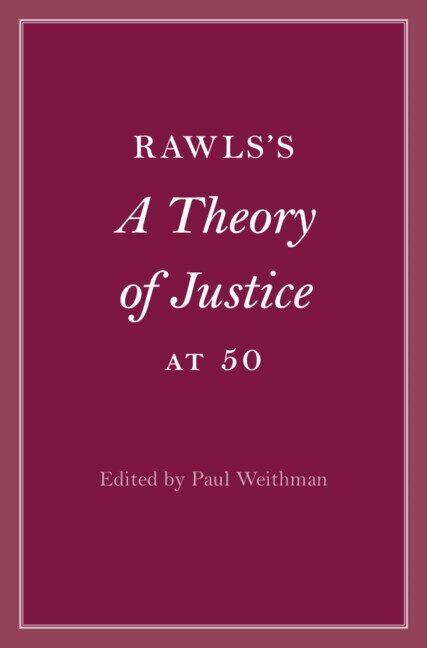
In 1971 John Rawls's A Theory of Justice transformed twentieth-century political philosophy, and it ranks among the most influential works in the history of the subject. This volume of new essays marks the 50th anniversary of its publication with a multi-faceted exploration of Rawls's most important book. A team of distinguished contributors reflects on Rawls's achievement in essays on his relationship to modern political philosophy and 20th-century economic theory, on his Kantianism, on his transition to political liberalism, on his account of public reason and contemporary challenges to it, on his theory's implications for problems of racial justice, on democracy and its fragility, and on Rawls's enduring legacy. The volume will be valuable for students and scholars working in moral and political philosophy, political theory, legal theory, and religious ethics.
1 227 kr
Skickas inom 7-10 vardagar
In 1971 John Rawls's A Theory of Justice transformed twentieth-century political philosophy, and it ranks among the most influential works in the history of the subject. This volume of new essays marks the 50th anniversary of its publication with a multi-faceted exploration of Rawls's most important book. A team of distinguished contributors reflects on Rawls's achievement in essays on his relationship to modern political philosophy and 20th-century economic theory, on his Kantianism, on his transition to political liberalism, on his account of public reason and contemporary challenges to it, on his theory's implications for problems of racial justice, on democracy and its fragility, and on Rawls's enduring legacy. The volume will be valuable for students and scholars working in moral and political philosophy, political theory, legal theory, and religious ethics.
1 192 kr
Skickas inom 7-10 vardagar
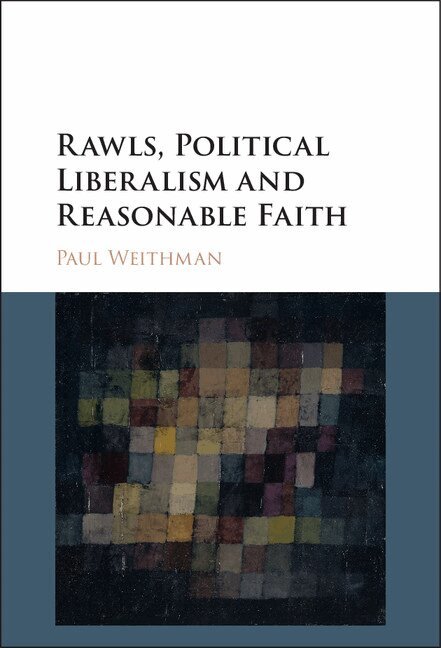
For over twenty years, Paul Weithman has explored the thought of John Rawls to ask how liberalism can secure the principled allegiance of those people whom Rawls called 'citizens of faith'. This volume brings together ten of his major essays (including one new unpublished essay), which reflect on the task and political character of political philosophy, the ways in which liberalism does and does not privatize religion, the role of liberal legitimacy in Rawls's theory, and the requirements of public reason. The essays reveal Rawls as a thinker deeply engaged with political and existential questions that trouble citizens of faith, and explore how - in firm opposition to political realism - he tries to show that the possibility of liberal democracy and the natural goodness of humanity are objects of reasonable faith. The volume will be of interest to political philosophers, political theorists, moral theologians, and religious ethicists.
414 kr
Skickas inom 7-10 vardagar
For over twenty years, Paul Weithman has explored the thought of John Rawls to ask how liberalism can secure the principled allegiance of those people whom Rawls called 'citizens of faith'. This volume brings together ten of his major essays (including one new unpublished essay), which reflect on the task and political character of political philosophy, the ways in which liberalism does and does not privatize religion, the role of liberal legitimacy in Rawls's theory, and the requirements of public reason. The essays reveal Rawls as a thinker deeply engaged with political and existential questions that trouble citizens of faith, and explore how - in firm opposition to political realism - he tries to show that the possibility of liberal democracy and the natural goodness of humanity are objects of reasonable faith. The volume will be of interest to political philosophers, political theorists, moral theologians, and religious ethicists.