Paulina Bren - Böcker
Visar alla böcker från författaren Paulina Bren. Handla med fri frakt och snabb leverans.
11 produkter
11 produkter
1 989 kr
Skickas inom 5-8 vardagar
Communism Unwrapped is a collection of essays that unwraps the complex world of consumption under communism in postwar Eastern Europe, featuring new work by both American and European scholars writing from variety of disciplinary perspectives. The result is a fresh look at everyday life under communism that explores the ways people shopped, ate, drank, smoked, cooked, acquired, exchanged and assessed goods. These phenomena, the editors argue, were central to the way that communism was lived and experienced in its widely varied contexts in the region. Consumption pervaded everyday life far more than most other political and social phenomena. From design, to production, to retail sales and black market exchange, Communism Unwrapped follows communist goods from producer to consumer, tracing their circuitous routes. In the communist world this journey was rife with its own meanings, shaped by the special political and social circumstances of these societies. In examining consumption behind the Iron Curtain, this volume builds on a new field of study. It brings dimension and nuance to our understanding of the communist period and a new perspective to our current analyses of consumerism.
542 kr
Skickas inom 5-8 vardagar
Communism Unwrapped is a collection of essays that unwraps the complex world of consumption under communism in postwar Eastern Europe, featuring new work by both American and European scholars writing from variety of disciplinary perspectives. The result is a fresh look at everyday life under communism that explores the ways people shopped, ate, drank, smoked, cooked, acquired, exchanged and assessed goods. These phenomena, the editors argue, were central to the way that communism was lived and experienced in its widely varied contexts in the region. Consumption pervaded everyday life far more than most other political and social phenomena. From design, to production, to retail sales and black market exchange, Communism Unwrapped follows communist goods from producer to consumer, tracing their circuitous routes. In the communist world this journey was rife with its own meanings, shaped by the special political and social circumstances of these societies. In examining consumption behind the Iron Curtain, this volume builds on a new field of study. It brings dimension and nuance to our understanding of the communist period and a new perspective to our current analyses of consumerism.
941 kr
Skickas inom 10-15 vardagar
The 1968 Soviet invasion of Czechoslovakia brought an end to the Prague Spring and its promise of "socialism with a human face." Before the invasion, Czech reformers had made unexpected use of television to advance political and social change. In its aftermath, Communist Party leaders employed the medium to achieve "normalization," pitching television stars against political dissidents in a televised spectacle that defined the times. The Greengrocer and His TV offers a new cultural history of communism from the Prague Spring to the Velvet Revolution that reveals how state-endorsed ideologies were played out on television, particularly through soap opera-like serials. In focusing on the small screen, Paulina Bren looks to the "normal" of normalization, to the everyday experience of late communism. The figure central to this book is the greengrocer who, in a seminal essay by Václav Havel, symbolized the ordinary citizen who acquiesced to the communist regime out of fear. Bren challenges simplistic dichotomies of fearful acquiescence and courageous dissent to dramatically reconfigure what we know, or think we know, about everyday life under communism in the 1970s and 1980s. Deftly moving between the small screen, the street, and the Central Committee (and imaginatively drawing on a wide range of sources that include television shows, TV viewers' letters, newspapers, radio programs, the underground press, and the Communist Party archives), Bren shows how Havel's greengrocer actually experienced "normalization" and the ways in which popular television serials framed this experience. Now back by popular demand, socialist-era serials, such as The Woman Behind the Counter and The Thirty Adventures of Major Zeman, provide, Bren contends, a way of seeing—literally and figuratively—Czechoslovakia's normalization and Eastern Europe's real socialism.
282 kr
Skickas inom 10-15 vardagar
The 1968 Soviet invasion of Czechoslovakia brought an end to the Prague Spring and its promise of "socialism with a human face." Before the invasion, Czech reformers had made unexpected use of television to advance political and social change. In its aftermath, Communist Party leaders employed the medium to achieve "normalization," pitching television stars against political dissidents in a televised spectacle that defined the times. The Greengrocer and His TV offers a new cultural history of communism from the Prague Spring to the Velvet Revolution that reveals how state-endorsed ideologies were played out on television, particularly through soap opera-like serials. In focusing on the small screen, Paulina Bren looks to the "normal" of normalization, to the everyday experience of late communism. The figure central to this book is the greengrocer who, in a seminal essay by Václav Havel, symbolized the ordinary citizen who acquiesced to the communist regime out of fear. Bren challenges simplistic dichotomies of fearful acquiescence and courageous dissent to dramatically reconfigure what we know, or think we know, about everyday life under communism in the 1970s and 1980s. Deftly moving between the small screen, the street, and the Central Committee (and imaginatively drawing on a wide range of sources that include television shows, TV viewers' letters, newspapers, radio programs, the underground press, and the Communist Party archives), Bren shows how Havel's greengrocer actually experienced "normalization" and the ways in which popular television serials framed this experience. Now back by popular demand, socialist-era serials, such as The Woman Behind the Counter and The Thirty Adventures of Major Zeman, provide, Bren contends, a way of seeing—literally and figuratively—Czechoslovakia's normalization and Eastern Europe's real socialism.
268 kr
Skickas inom 7-10 vardagar
First came the secretaries from Brooklyn and Queens—the “smart cookies” who saw that making money, lots of it, might be within their grasp. Then came the first female Harvard Business School graduates, who were in for a rude awakening because an equal degree did not mean equal opportunity. But by the 1980s, as the market went into turbodrive, women were being plucked from elite campuses to feed the belly of a rapidly expanding beast, playing for high stakes in Wall Street’s bad-boy culture by day and clubbing by night.In She-Wolves, award-winning historian Paulina Bren tells the story of how women infiltrated Wall Street from the swinging sixties to 9/11—starting at a time when “No Ladies” signs hung across the doors of its luncheon clubs and (more discretely) inside its brokerage houses and investment banks. If the wolves of Wall Street made a show of their ferocity, the she-wolves did so with subtlety and finesse. Research analysts signed their reports with genderless initials. Muriel “Mickie” Siebert, the first woman to buy a seat on the NYSE, threatened she’d have port-a-potties delivered if the exchange didn’t finally install a ladies’ room near the dining room. The infamous 1996 Boom-Boom Room class action lawsuit, filed by women at Smith Barney, pulled back the curtain on a bawdy subculture where unapologetic sexism and racism were the norm.As engaging as it is enraging, She-Wolves is an illuminating deep dive into the collision of women, finance, and New York.
168 kr
Skickas
First came the secretaries from Brooklyn and Queens—the “smart cookies” who saw that making money, lots of it, might be within their grasp. Then came the first female Harvard Business School graduates, who were in for a rude awakening because an equal degree did not mean equal opportunity. But by the 1980s, as the market went into turbodrive, women were being plucked from elite campuses to feed the belly of a rapidly expanding beast, playing for high stakes in Wall Street’s bad-boy culture by day and clubbing by night.In She-Wolves, award-winning historian Paulina Bren tells the story of how women infiltrated Wall Street from the swinging sixties to 9/11—starting at a time when “No Ladies” signs hung across the doors of its luncheon clubs and (more discretely) inside its brokerage houses and investment banks. If the wolves of Wall Street made a show of their ferocity, the she-wolves did so with subtlety and finesse. Research analysts signed their reports with genderless initials. Muriel “Mickie” Siebert, the first woman to buy a seat on the NYSE, threatened she’d have port-a-potties delivered if the exchange didn’t finally install a ladies’ room near the dining room. The infamous 1996 Boom-Boom Room class action lawsuit, filed by women at Smith Barney, pulled back the curtain on a bawdy subculture where unapologetic sexism and racism were the norm.As engaging as it is enraging, She-Wolves is an illuminating deep dive into the collision of women, finance, and New York.
208 kr
Skickas inom 7-10 vardagar
They broke down the doors of Wall Street's old boys' club, finding their first foothold in small brokerage houses before making their way into investment banks and exchange floors.With a thick skin and a dash of humour, as needed, they pushed back against those who said they did not belong.Until they finally made it.Introducing the Women of Wall Street . . .First came the secretaries who struggled to get past the typing pool. Then came the first Harvard Business School grads who were laughed out of interviews. But by the 1980s, with markets in turbo-drive, women were playing for high stakes in Wall Street's bad-boy culture by day and clubbing by night.In She Wolves, award-winning historian Paulina Bren tells the inside story of how women infiltrated Wall Street, from the swinging sixties - a time when 'No Ladies' signs hung across the doors of its luncheon clubs and (more discretely) inside its brokerage houses and investment banks - up to 9/11. If the wolves of Wall Street made a show of their ferocity, the she wolves did so with subtlety and finesse, navigating a bawdy subculture where unapologetic sexism and racism were the norm. As engaging as it is enraging, She Wolves is a fascinating behind-the-scenes deep dive into the collision of women, finance and New York.'Vivid . . . Riveting' LIZA MUNDY, author of Code Girls'Fascinating . . . Gorgeous' AMY ODELL, author of AnnaFrom the award-winning author of The Barbizon
178 kr
Skickas inom 7-10 vardagar
They broke down the doors of Wall Street's old boys' club, finding their first foothold in small brokerage houses before making their way into investment banks and exchange floors.With a thick skin and a dash of humour, as needed, they pushed back against those who said they did not belong.Until they finally made it.Introducing the Women of Wall Street . . .First came the secretaries who struggled to get past the typing pool. Then came the first Harvard Business School grads who were laughed out of interviews. But by the 1980s, with markets in turbo-drive, women were playing for high stakes in Wall Street's bad-boy culture by day and clubbing by night.In She Wolves, award-winning historian Paulina Bren tells the inside story of how women infiltrated Wall Street, from the swinging sixties - a time when 'No Ladies' signs hung across the doors of its luncheon clubs and (more discretely) inside its brokerage houses and investment banks - up to 9/11. If the wolves of Wall Street made a show of their ferocity, the she wolves did so with subtlety and finesse, navigating a bawdy subculture where unapologetic sexism and racism were the norm.As engaging as it is enraging, She Wolves is a fascinating behind-the-scenes deep dive into the collision of women, finance and New York.'Vivid . . . Riveting' LIZA MUNDY, author of Code Girls'Fascinating . . . Gorgeous' AMY ODELL, author of AnnaFrom the award-winning author of The Barbizon
118 kr
Skickas inom 7-10 vardagar
They cracked the glass ceiling and changed the face of finance.The untold story of the women who took on Wall Street.Long before gender diversity became a corporate buzzword, a generation of women quietly infiltrated one of the world's most exclusive - and male-dominated - clubs: Wall Street.From the typing pools of the 1960s to the trading floors of the 1980s, these women navigated a brash, bawdy world that was built to exclude them. Along the way, they challenged entrenched sexism and racism, reshaping the financial industry from the inside out.She Wolves is a vivid portrait of the women who dared to dream big, who re-wrote the rules and shook the foundations of power.From the award-winning author of The Barbizon 'Vivid . . . Riveting' LIZA MUNDY, author of Code Girls'Fascinating . . . Gorgeous' AMY ODELL, author of AnnaPraise for The Barbizon 'Captivating . . . a brilliant many-layered social history of women's ambition' Observer'Fascinating . . . a piece of forgotten female history' Sunday Times
146 kr
Skickas inom 7-10 vardagar
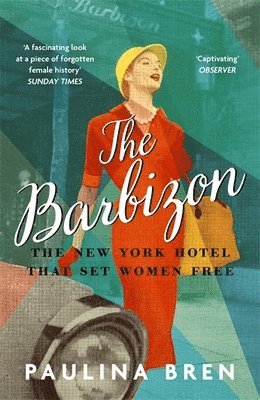
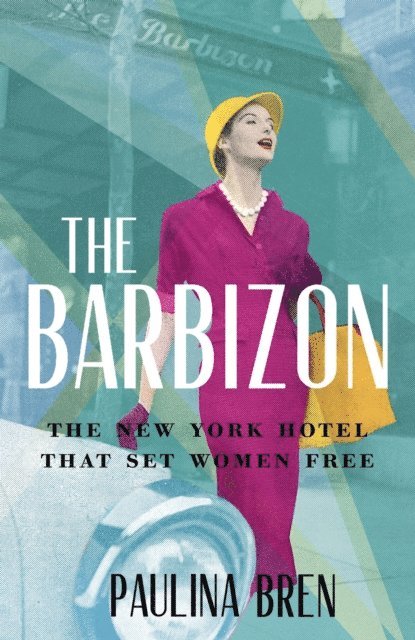
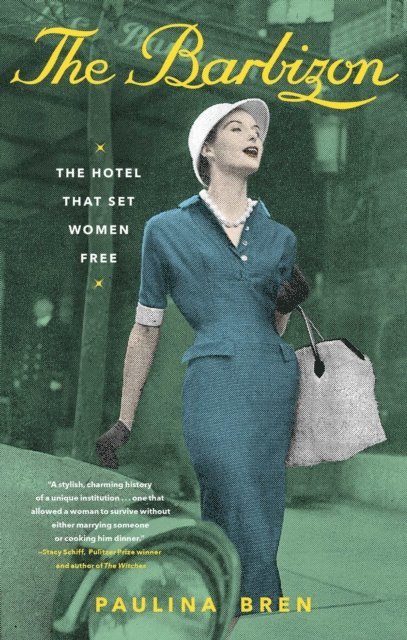
AS HEARD ON RADIO 4 WOMAN'S HOUR'Captivating . . . a brilliant many-layered social history of women's ambition' Observer'Fascinating . . . a piece of forgotten female history' Sunday Times'Deeply researched history, leavened with gossip' TLSWELCOME TO THE BARBIZON, NEW YORK'S PREMIER WOMEN-ONLY HOTELBuilt in 1927 as a home for the 'Modern Woman' seeking a career in the arts, the Barbizon became the place to stay for ambitious, independent women, who were lured by the promise of fame and good fortune. Sylvia Plath fictionalized her time there in The Bell Jar, and over the years, its 688 tiny floral 'highly feminine boudoirs' also housed Joan Crawford, Grace Kelly (notorious for sneaking in men), Joan Didion, Candice Bergen, Charlie's Angel Jaclyn Smith, Ali MacGraw, Cybil Shepherd, Elaine Stritch, Liza Minnelli, Eudora Welty, The Cosby Show's Phylicia Rashad, Grey Gardens's Edith Bouvier Beale, and writers Mona Simpson and Ann Beattie, among many others. Mademoiselle boarded its summer interns there - perfectly turned-out young women, who would never be spotted hatless - as did Katherine Gibbs Secretarial School its students - in their white-gloves and kitten heels - and the Ford Modelling Agency its young models.THE BARBIZON is a colourful, glamorous portrait of the lives of the young women, who -- from the Jazz Age New Women of the 1920s to the Liberated Women of the 1960s -- came to New York looking for something more.'A treat, elegantly spinning a forgotten story of female liberation, ambition and self-invention' Guardian'The story of the Barbizon is in many ways the story of American women in the twentieth century' Economist'Illuminating . . . this vivid, well researched account is testament to its vibrant history and the women who made it such a powerhouse' Daily Express
283 kr
Skickas inom 3-6 vardagar