Pauline Jones Luong - Böcker
Visar alla böcker från författaren Pauline Jones Luong. Handla med fri frakt och snabb leverans.
6 produkter
6 produkter
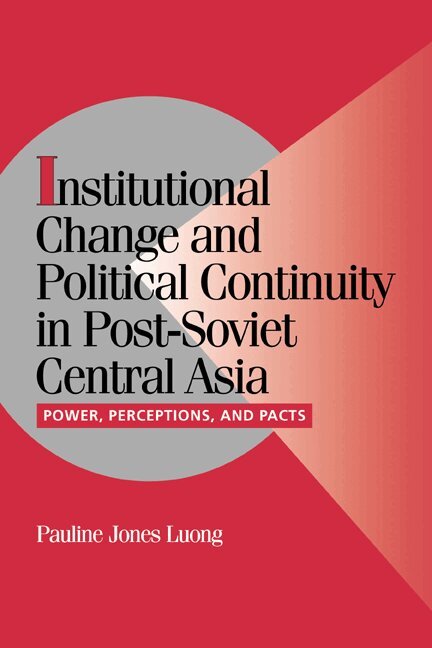
Institutional Change and Political Continuity in Post-Soviet Central Asia
Power, Perceptions, and Pacts
Häftad, Engelska, 2008
441 kr
Skickas inom 7-10 vardagar
The establishment of electoral systems in Kazakhstan, Kyrgyzstan and Uzbekistan presents both a complex set of empirical puzzles and a theoretical challenge. Why did three states with similar cultural, historical, and structural legacies establish such different electoral systems? How did these distinct outcomes result from strikingly similar institutional design processes? Explaining these puzzles requires understanding not only the outcome of institutional design but also the intricacies of the process that led to this outcome. Moreover, the transitional context in which these three states designed new electoral rules necessitates an approach that explicitly links process and outcome in a dynamic setting. This book provides such an approach. Finally, it both builds on the key insights of the dominant approaches to explaining institutional origin and change and transcends these approaches by moving beyond the structure versus agency debate.
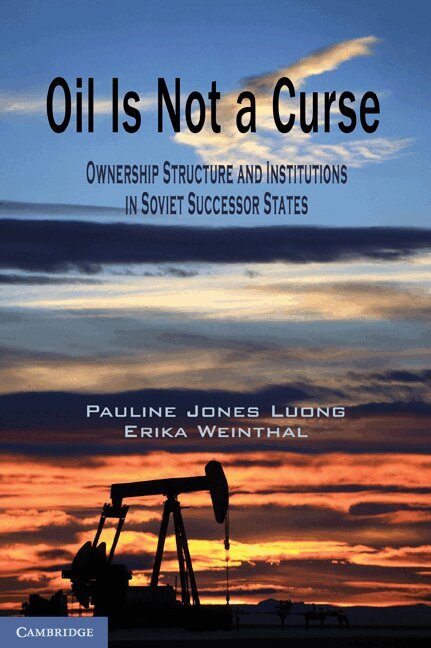
Oil Is Not a Curse
Ownership Structure and Institutions in Soviet Successor States
Häftad, Engelska, 2010
397 kr
Skickas inom 7-10 vardagar
This book makes two central claims: first, that mineral-rich states are cursed not by their wealth but, rather, by the ownership structure they choose to manage their mineral wealth and second, that weak institutions are not inevitable in mineral-rich states. Each represents a significant departure from the conventional resource curse literature, which has treated ownership structure as a constant across time and space and has presumed that mineral-rich countries are incapable of either building or sustaining strong institutions - particularly fiscal regimes. The experience of the five petroleum-rich Soviet successor states (Azerbaijan, Kazakhstan, the Russian Federation, Turkmenistan, and Uzbekistan) provides a clear challenge to both of these assumptions. Their respective developmental trajectories since independence demonstrate not only that ownership structure can vary even across countries that share the same institutional legacy but also that this variation helps to explain the divergence in their subsequent fiscal regimes.
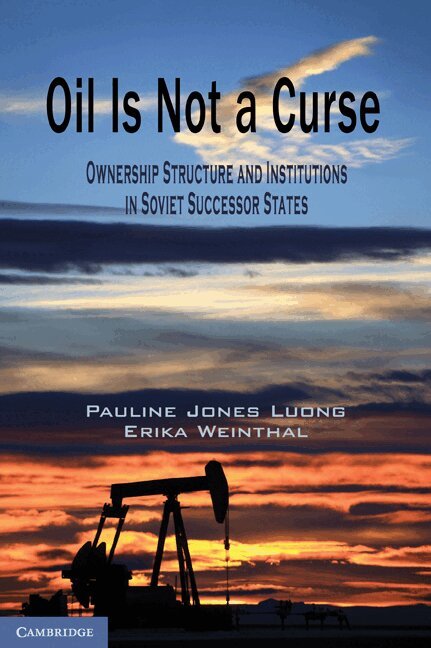
Oil Is Not a Curse
Ownership Structure and Institutions in Soviet Successor States
Inbunden, Engelska, 2010
1 166 kr
Skickas inom 7-10 vardagar
This book makes two central claims: first, that mineral-rich states are cursed not by their wealth but, rather, by the ownership structure they choose to manage their mineral wealth and second, that weak institutions are not inevitable in mineral-rich states. Each represents a significant departure from the conventional resource curse literature, which has treated ownership structure as a constant across time and space and has presumed that mineral-rich countries are incapable of either building or sustaining strong institutions - particularly fiscal regimes. The experience of the five petroleum-rich Soviet successor states (Azerbaijan, Kazakhstan, the Russian Federation, Turkmenistan, and Uzbekistan) provides a clear challenge to both of these assumptions. Their respective developmental trajectories since independence demonstrate not only that ownership structure can vary even across countries that share the same institutional legacy but also that this variation helps to explain the divergence in their subsequent fiscal regimes.
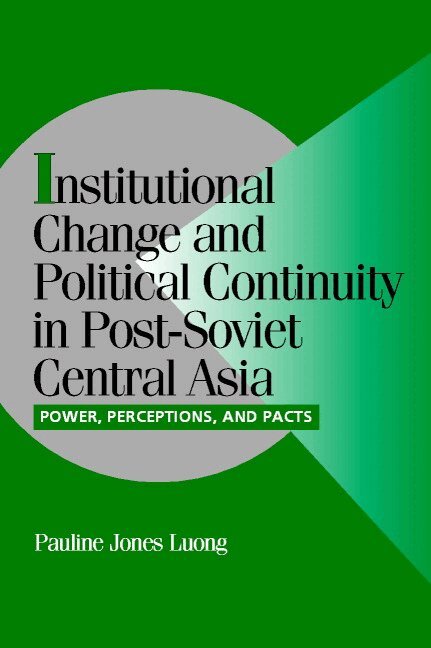
Institutional Change and Political Continuity in Post-Soviet Central Asia
Power, Perceptions, and Pacts
Inbunden, Engelska, 2002
1 282 kr
Skickas inom 7-10 vardagar
The establishment of electoral systems in Kazakhstan, Kyrgyzstan and Uzbekistan presents both a complex set of empirical puzzles and a theoretical challenge. Why did three states with similar cultural, historical, and structural legacies establish such different electoral systems? How did these distinct outcomes result from strikingly similar institutional design processes? Explaining these puzzles requires understanding not only the outcome of institutional design but also the intricacies of the process that led to this outcome. Moreover, the transitional context in which these three states designed new electoral rules necessitates an approach that explicitly links process and outcome in a dynamic setting. This book provides such an approach. Finally, it both builds on the key insights of the dominant approaches to explaining institutional origin and change and transcends these approaches by moving beyond the structure versus agency debate.
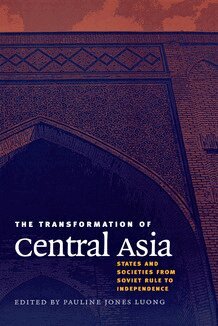
Transformation of Central Asia
States and Societies from Soviet Rule to Independence
Inbunden, Engelska, 2003
1 551 kr
Skickas inom 10-15 vardagar
With the fall of the Soviet Union in 1991, former Communist Party leaders in Central Asia were faced with the daunting task of building states where they previously had not existed: Kazakhstan, Kyrgyzstan, Tajikistan, Turkmenistan, and Uzbekistan. Their task was complicated by the institutional and ideological legacy of the Soviet system as well as by a more actively engaged international community. These nascent states inherited a set of institutions that included bloated bureaucracies, centralized economic planning, and patronage networks. Some of these institutions survived, others have mutated, and new institutions have been created. Experts on Central Asia here examine the emerging relationship between state actors and social forces in the region. Through the prism of local institutions, the authors reassess both our understanding of Central Asia and of the state-building process more broadly. They scrutinize a wide array of institutional actors, ranging from regional governments and neighborhood committees to transnational and non-governmental organizations. With original empirical research and theoretical insight, the volume's contributors illuminate an obscure but resource-rich and strategically significant region.
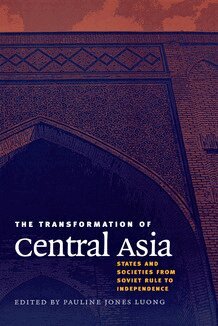
Transformation of Central Asia
States and Societies from Soviet Rule to Independence
Häftad, Engelska, 2003
340 kr
Skickas inom 10-15 vardagar
With the fall of the Soviet Union in 1991, former Communist Party leaders in Central Asia were faced with the daunting task of building states where they previously had not existed: Kazakhstan, Kyrgyzstan, Tajikistan, Turkmenistan, and Uzbekistan. Their task was complicated by the institutional and ideological legacy of the Soviet system as well as by a more actively engaged international community. These nascent states inherited a set of institutions that included bloated bureaucracies, centralized economic planning, and patronage networks. Some of these institutions survived, others have mutated, and new institutions have been created. Experts on Central Asia here examine the emerging relationship between state actors and social forces in the region. Through the prism of local institutions, the authors reassess both our understanding of Central Asia and of the state-building process more broadly. They scrutinize a wide array of institutional actors, ranging from regional governments and neighborhood committees to transnational and non-governmental organizations. With original empirical research and theoretical insight, the volume's contributors illuminate an obscure but resource-rich and strategically significant region.