Pavel Mücke – författare
Visar alla böcker från författaren Pavel Mücke. Handla med fri frakt och snabb leverans.
3 produkter
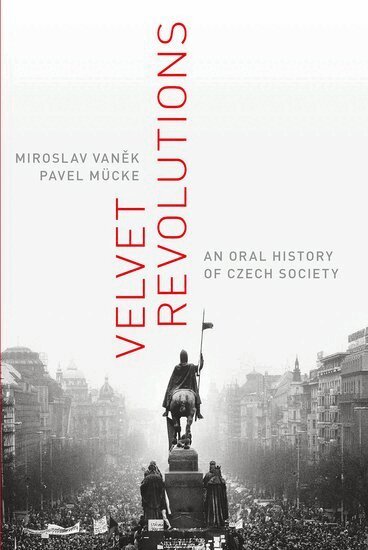
Velvet Revolutions
An Oral History of Czech Society
Av Miroslav Vanek, Pavel Mücke
Häftad, 2021
728 kr
Lägg i varukorg
The Velvet Revolution in November 1989 brought about the collapse of the authoritarian communist regime in what was then Czechoslovakia, marking the beginning of the country's journey towards democracy. Though members of the elite have spoken about the transition to democracy, the experiences of …
Velvet Revolutions
An Oral History of Czech Society
Av Pavel Mucke, Miroslav Vanek
E-bok, 2016
359 kr
Lägg i varukorg
The Velvet Revolution in November 1989 brought about the collapse of the authoritarian communist regime in what was then Czechoslovakia, marking the beginning of the country''s journey towards democracy. Though members of the elite have spoken about the transition to democracy, the experiences of …
Velvet Revolutions
An Oral History of Czech Society
Av Pavel Mucke, Miroslav Vanek
E-bok, 2016
359 kr
Lägg i varukorg
The Velvet Revolution in November 1989 brought about the collapse of the authoritarian communist regime in what was then Czechoslovakia, marking the beginning of the country''s journey towards democracy. Though members of the elite have spoken about the transition to democracy, the experiences of …