Pedro Tabensky – författare
Visar alla böcker från författaren Pedro Tabensky. Handla med fri frakt och snabb leverans.
6 produkter
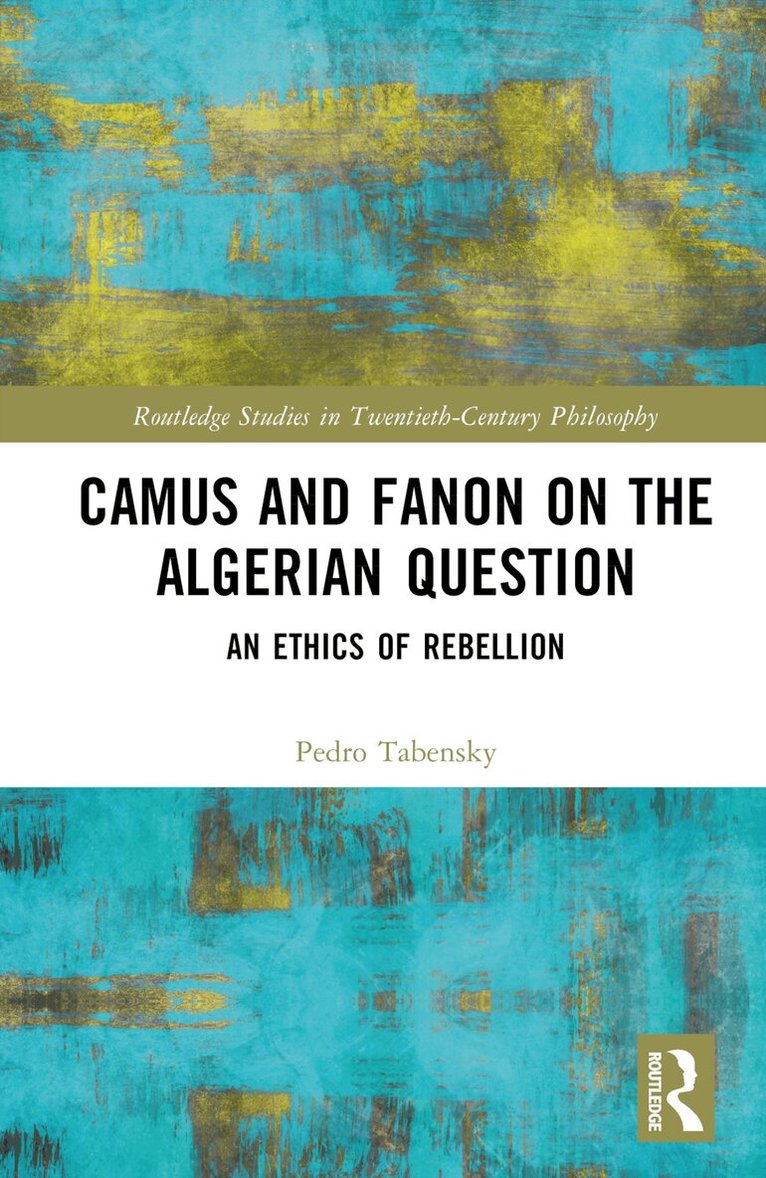
Camus and Fanon on the Algerian Question
An Ethics of Rebellion
Inbunden, 2022
2131 kr
Lägg i varukorg
This is the first book to offer a systematic comparison of the philosophies of Albert Camus and Frantz Fanon. It shows how the ethical, political, and psychological outlooks of these two influential thinkers can further our understandings of how to bring about justice in the face of deep power …
Camus and Fanon on the Algerian Question
An Ethics of Rebellion
Häftad, 2024
647 kr
Lägg i varukorg
This is the first book to offer a systematic comparison of the philosophies of Albert Camus and Frantz Fanon. It shows how the ethical, political, and psychological outlooks of these two influential thinkers can further our understandings of how to bring about justice in the face of deep power …
Camus and Fanon on the Algerian Question
An Ethics of Rebellion
E-bok, 2022
857 kr
Lägg i varukorg
This is the first book to offer a systematic comparison of the philosophies of Albert Camus and Frantz Fanon. It shows how the ethical, political, and psychological outlooks of these two influential thinkers can further our understandings of how to bring about justice in the face of deep power …
Camus and Fanon on the Algerian Question
An Ethics of Rebellion
E-bok, 2022
876 kr
Lägg i varukorg
This is the first book to offer a systematic comparison of the philosophies of Albert Camus and Frantz Fanon. It shows how the ethical, political, and psychological outlooks of these two influential thinkers can further our understandings of how to bring about justice in the face of deep power …
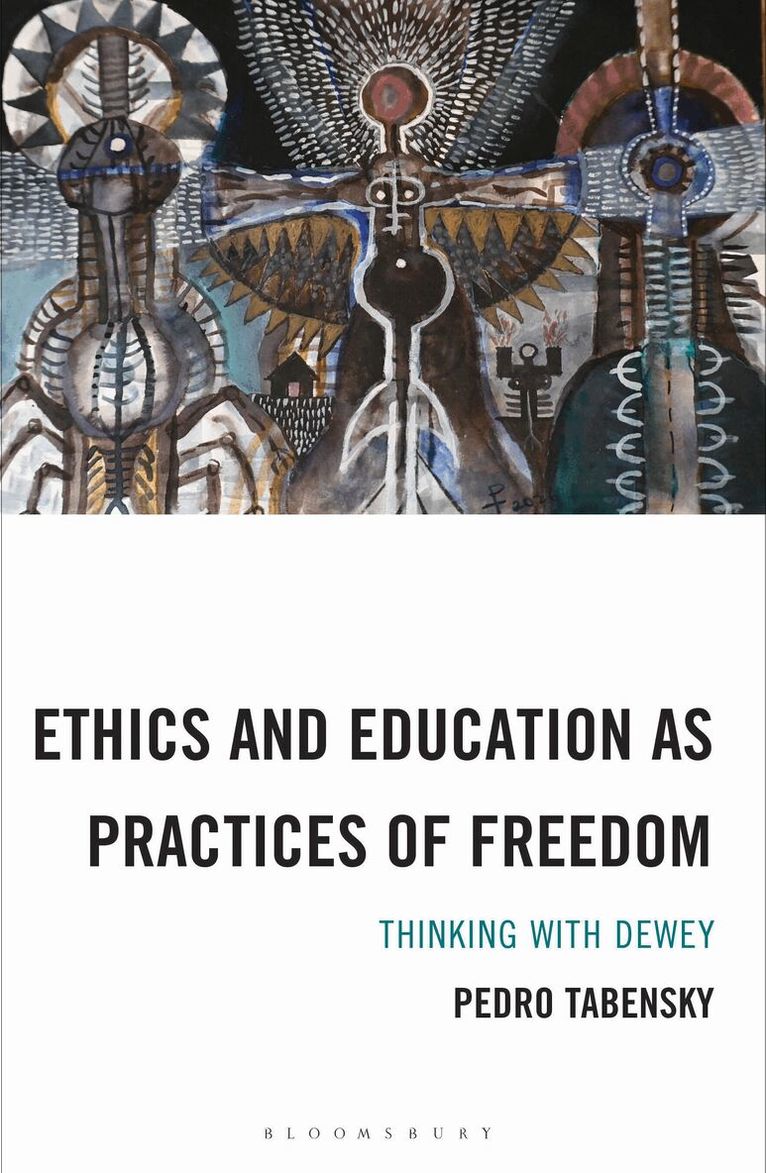
Ethics and Education as Practices of Freedom
Thinking with Dewey
Inbunden, 2027
1196 kr
Kommande
What does it mean to live freely—and how do education and ethics shape that possibility?Bringing together thinkers such as Dewey, Freire, Foucault, Midgley, and Rorty, this book argues that education and ethics are not separate ideas but two inseparable dimensions of what it means to practice …
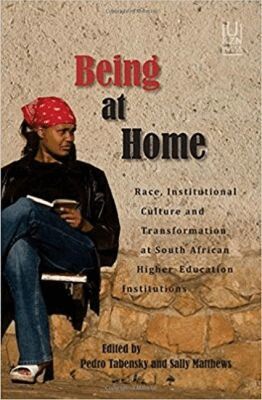
Being at Home
Race, Institutional Culture and Transformation at South African Higher Education Institutions
Av Pedro Tabensky, Sally Matthews
Häftad, 2015
277 kr
Lägg i varukorg
Being at ‘Home’ stimulates careful conversation about some of the most pressing issues facing higher education institutions in South Africa today – race, transformation and institutional culture.While there are many reasons to be despondent about the current state of affairs in the South African …