Peggy L. Maki – författare
Visar alla böcker från författaren Peggy L. Maki. Handla med fri frakt och snabb leverans.
8 produkter
8 produkter
Inbunden, Engelska, 2010
2 073 kr
Skickas inom 10-15 vardagar
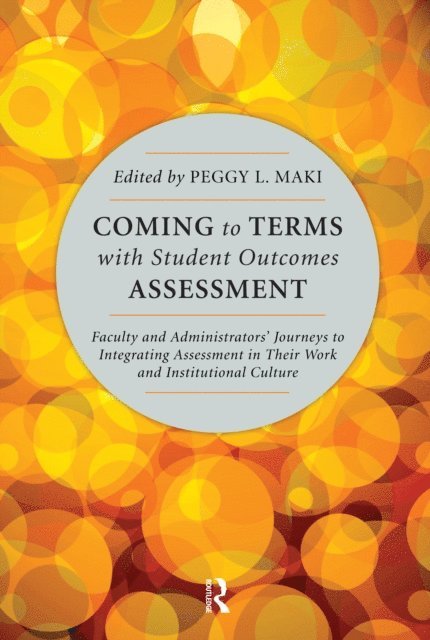
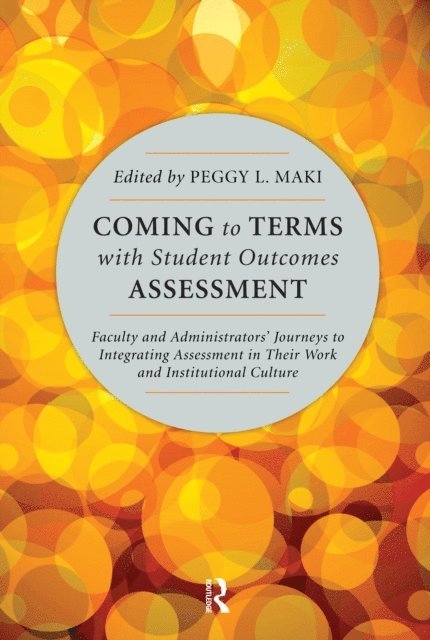
“Assessment on college campuses has a sordid history, and it is fairly simple to find someone with a traumatic tale to tell. It is wise to respect that that reputation is deserved.” “How do you modify the inner workings and culture of a massive institution with minimal resources and even less authority (other than GE course approvals), and thousands and thousands of talented people busy doing other things?”“The road to departmental assessment can seem both dramatic and apocalyptic, especially if one’s departmental ‘centre cannot hold,’ and purpose falls apart. The Department of English and Linguistics is presently on this journey, slouching towards its own revelations of mission and fulfillment of purpose.” “I have become more optimistic about the potential value of the process, even if some of my initial skepticism remains. This skepticism, however, has been valuable, forcing me to think in more concrete ways about what I do in the classroom.”As these excerpts show, this is no conventional book about assessment. It presents the unvarnished first-person accounts of fourteen faculty and administrators about how they grappled, and engaged, with assessment and how – despite misgivings and an often-contentious process – they were able to gain the collaboration of their peers as the benefits for student learning became evident.This is a book for skeptical faculty, for those who have been tasked to spearhead their institution’s call to create a culture of assessment; and, on campuses where assessment has been widely accepted and implemented, for those who now need to ensure this commitment will endure.For all these audiences, this book offers valuable advice, strategies, models and ideas.
Häftad, Engelska, 2010
461 kr
Skickas inom 10-15 vardagar
“Assessment on college campuses has a sordid history, and it is fairly simple to find someone with a traumatic tale to tell. It is wise to respect that that reputation is deserved.” “How do you modify the inner workings and culture of a massive institution with minimal resources and even less authority (other than GE course approvals), and thousands and thousands of talented people busy doing other things?”“The road to departmental assessment can seem both dramatic and apocalyptic, especially if one’s departmental ‘centre cannot hold,’ and purpose falls apart. The Department of English and Linguistics is presently on this journey, slouching towards its own revelations of mission and fulfillment of purpose.” “I have become more optimistic about the potential value of the process, even if some of my initial skepticism remains. This skepticism, however, has been valuable, forcing me to think in more concrete ways about what I do in the classroom.”As these excerpts show, this is no conventional book about assessment. It presents the unvarnished first-person accounts of fourteen faculty and administrators about how they grappled, and engaged, with assessment and how – despite misgivings and an often-contentious process – they were able to gain the collaboration of their peers as the benefits for student learning became evident.This is a book for skeptical faculty, for those who have been tasked to spearhead their institution’s call to create a culture of assessment; and, on campuses where assessment has been widely accepted and implemented, for those who now need to ensure this commitment will endure.For all these audiences, this book offers valuable advice, strategies, models and ideas.
Inbunden, Engelska, 2010
2 073 kr
Skickas inom 10-15 vardagar
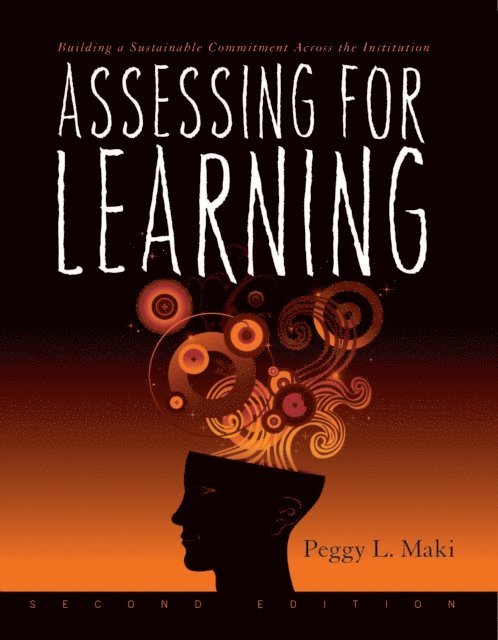
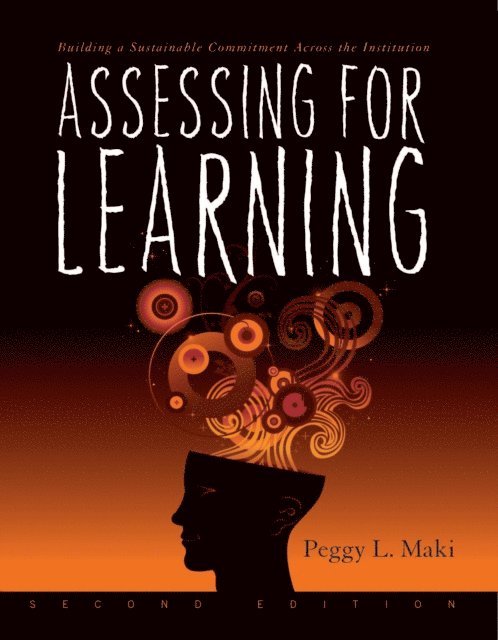
While there is consensus that institutions need to represent their educational effectiveness through documentation of student learning, the higher education community is divided between those who support national standardized tests to compare institutions’ educational effectiveness, and those who believe that valid assessment of student achievement is based on assessing the work that students produce along and at the end of their educational journeys. This book espouses the latter philosophy—what Peggy Maki sees as an integrated and authentic approach to providing evidence of student learning based on the work that students produce along the chronology of their learning. She believes that assessment needs to be humanized, as opposed to standardized, to take into account the demographics of institutions, as students do not all start at the same place in their learning. Students also need the tools to assess their own progress. In addition to updating and expanding the contents of her first edition to reflect changes in assessment practices and developments over the last seven years, such as the development of technology-enabled assessment methods and the national need for institutions to demonstrate that they are using results to improve student learning, Maki focuses on ways to deepen program and institution-level assessment within the context of collective inquiry about student learning. Recognizing that assessment is not initially a linear start-up process or even necessarily sequential, and recognizing that institutions develop processes appropriate for their mission and culture, this book does not take a prescriptive or formulaic approach to building this commitment. What it does present is a framework, with examples of processes and strategies, to assist faculty, staff, administrators, and campus leaders to develop a sustainable and shared core institutional process that deepens inquiry into what and how students learn to identify and improve patterns of weakness that inhibit learning. This book is designed to assist colleges and universities build a sustainable commitment to assessing student learning at both the institution and program levels. It provides the tools for collective inquiry among faculty, staff, administrators and students to develop evidence of students’ abilities to integrate, apply and transfer learning, as well as to construct their own meaning. Each chapter also concludes with (1) an Additional Resources section that includes references to meta-sites with further resources, so users can pursue particular issues in greater depth and detail and (2) worksheets, guides, and exercises designed to build collaborative ownership of assessment.The second edition now covers: * Strategies to connect students to an institution’s or a program’s assessment commitment* Description of the components of a comprehensive institutional commitment that engages the institution, educators, and students--all as learners* Expanded coverage of direct and indirect assessment methods, including technology-enabled methods that engage students in the process* New case studies and campus examples covering undergraduate, graduate education, and the co-curriculum* New chapter with case studies that presents a framework for a backward designed problem-based assessment process, anchored in answering open-ended research or study questions that lead to improving pedagogy and educational practices* Integration of developments across professional, scholarly, and accrediting bodies, and disciplinary organizations* Descriptions and illustrations of assessment management systems* Additional examples, exercises, guides and worksheets that align with new content
Häftad, Engelska, 2010
528 kr
Skickas inom 10-15 vardagar
While there is consensus that institutions need to represent their educational effectiveness through documentation of student learning, the higher education community is divided between those who support national standardized tests to compare institutions’ educational effectiveness, and those who believe that valid assessment of student achievement is based on assessing the work that students produce along and at the end of their educational journeys. This book espouses the latter philosophy—what Peggy Maki sees as an integrated and authentic approach to providing evidence of student learning based on the work that students produce along the chronology of their learning. She believes that assessment needs to be humanized, as opposed to standardized, to take into account the demographics of institutions, as students do not all start at the same place in their learning. Students also need the tools to assess their own progress. In addition to updating and expanding the contents of her first edition to reflect changes in assessment practices and developments over the last seven years, such as the development of technology-enabled assessment methods and the national need for institutions to demonstrate that they are using results to improve student learning, Maki focuses on ways to deepen program and institution-level assessment within the context of collective inquiry about student learning. Recognizing that assessment is not initially a linear start-up process or even necessarily sequential, and recognizing that institutions develop processes appropriate for their mission and culture, this book does not take a prescriptive or formulaic approach to building this commitment. What it does present is a framework, with examples of processes and strategies, to assist faculty, staff, administrators, and campus leaders to develop a sustainable and shared core institutional process that deepens inquiry into what and how students learn to identify and improve patterns of weakness that inhibit learning. This book is designed to assist colleges and universities build a sustainable commitment to assessing student learning at both the institution and program levels. It provides the tools for collective inquiry among faculty, staff, administrators and students to develop evidence of students’ abilities to integrate, apply and transfer learning, as well as to construct their own meaning. Each chapter also concludes with (1) an Additional Resources section that includes references to meta-sites with further resources, so users can pursue particular issues in greater depth and detail and (2) worksheets, guides, and exercises designed to build collaborative ownership of assessment.The second edition now covers: * Strategies to connect students to an institution’s or a program’s assessment commitment* Description of the components of a comprehensive institutional commitment that engages the institution, educators, and students--all as learners* Expanded coverage of direct and indirect assessment methods, including technology-enabled methods that engage students in the process* New case studies and campus examples covering undergraduate, graduate education, and the co-curriculum* New chapter with case studies that presents a framework for a backward designed problem-based assessment process, anchored in answering open-ended research or study questions that lead to improving pedagogy and educational practices* Integration of developments across professional, scholarly, and accrediting bodies, and disciplinary organizations* Descriptions and illustrations of assessment management systems* Additional examples, exercises, guides and worksheets that align with new content
Inbunden, Engelska, 2017
2 073 kr
Skickas inom 10-15 vardagar
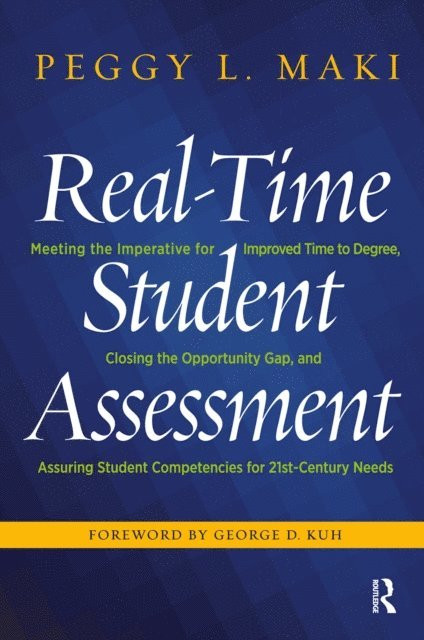
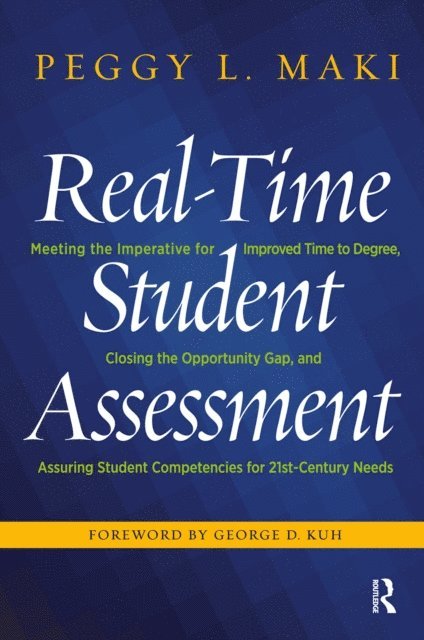
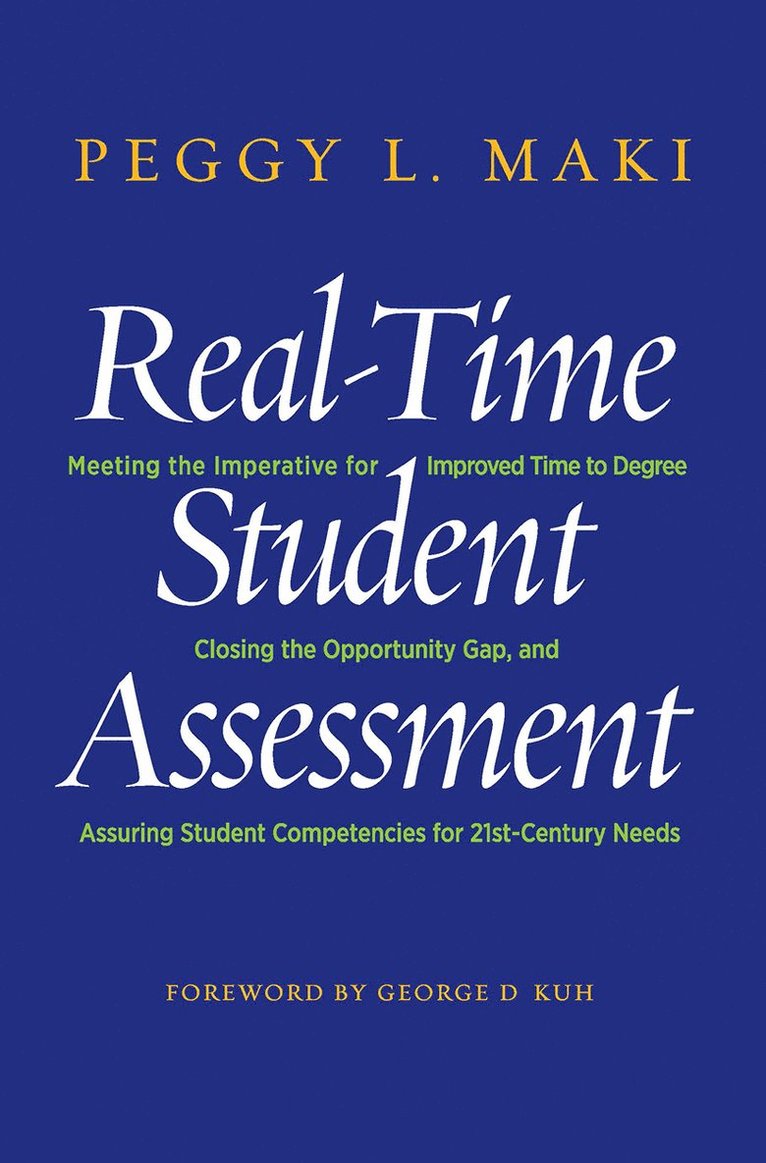
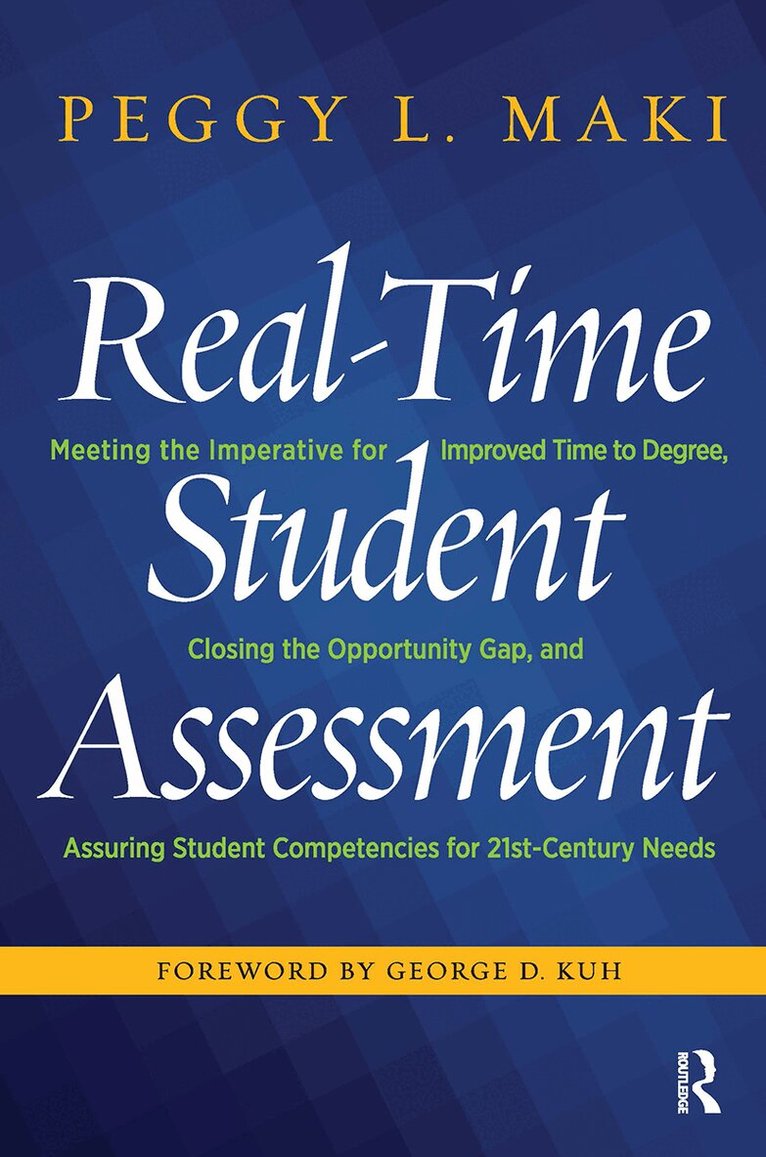
This book challenges institutions and their programs to prioritize the use of chronological assessment results to benefit enrolled students in comparison with the more common practice of prolonged assessment cycles that generally benefit future students. Peggy Maki advocates for real-time assessment processes to identify patterns of underperformance and obstacles that require timely interventions for enrolled students to succeed. In tandem with the sets of educational practices and policies that many institutions have now undertaken to close achievement and graduation rates across our diverse student demographics, such as developing clear degree pathways, she calls on all higher education providers – if they are to remain relevant and meet their social purpose in our complex world – to urgently recalibrate their assessment processes to focus on currently enrolled students’ progress towards achieving a high-quality degree, regardless of when they matriculate or re-enter higher education. She demonstrates that we already have sufficient examples and evidence to implement real-time assessment of students as they progress through their studies. She draws on the practices of specialized accredited programs, such as those in the professions that assess in real time; on the experiences of institutions that have adopted competency-based education; and on the affordances of technologies that now provide faculty and students with up-to-the-minute diagnostics. She identifies the six principles necessary to implement a real-time assessment process, illustrated by case studies of how campuses have operationalized them to advance students’ equitable progress towards achieving a high-quality degree; and demonstrates the benefits of real-time assessment compared to more future-oriented processes, among which is engaging students in reflecting on their own progress along their degree pathways.She advocates for the use of well documented national outcomes-based frameworks such as Liberal Education and America’s Promise (LEAP), its aligned Valid Assessment of Learning in Undergraduate Education scoring rubrics ( VALUE), the Degree Qualifications Profile, and discipline-based outcomes assessments to ensure high-quality degrees that meet well-defined standards and criteria. She also identifies how data systems and technological developments help to monitor closely and respond in time to students’ patterns of underperformance.The book is an urgent call for higher education to achieve the values of equity, transparency and quality it espouses; and ensure that all students graduate in a timely fashion with the competencies they need to be active and productive citizens.
Häftad, Engelska, 2017
461 kr
Skickas inom 10-15 vardagar
This book challenges institutions and their programs to prioritize the use of chronological assessment results to benefit enrolled students in comparison with the more common practice of prolonged assessment cycles that generally benefit future students. Peggy Maki advocates for real-time assessment processes to identify patterns of underperformance and obstacles that require timely interventions for enrolled students to succeed. In tandem with the sets of educational practices and policies that many institutions have now undertaken to close achievement and graduation rates across our diverse student demographics, such as developing clear degree pathways, she calls on all higher education providers – if they are to remain relevant and meet their social purpose in our complex world – to urgently recalibrate their assessment processes to focus on currently enrolled students’ progress towards achieving a high-quality degree, regardless of when they matriculate or re-enter higher education. She demonstrates that we already have sufficient examples and evidence to implement real-time assessment of students as they progress through their studies. She draws on the practices of specialized accredited programs, such as those in the professions that assess in real time; on the experiences of institutions that have adopted competency-based education; and on the affordances of technologies that now provide faculty and students with up-to-the-minute diagnostics. She identifies the six principles necessary to implement a real-time assessment process, illustrated by case studies of how campuses have operationalized them to advance students’ equitable progress towards achieving a high-quality degree; and demonstrates the benefits of real-time assessment compared to more future-oriented processes, among which is engaging students in reflecting on their own progress along their degree pathways.She advocates for the use of well documented national outcomes-based frameworks such as Liberal Education and America’s Promise (LEAP), its aligned Valid Assessment of Learning in Undergraduate Education scoring rubrics ( VALUE), the Degree Qualifications Profile, and discipline-based outcomes assessments to ensure high-quality degrees that meet well-defined standards and criteria. She also identifies how data systems and technological developments help to monitor closely and respond in time to students’ patterns of underperformance.The book is an urgent call for higher education to achieve the values of equity, transparency and quality it espouses; and ensure that all students graduate in a timely fashion with the competencies they need to be active and productive citizens.
Inbunden, Engelska, 2021
2 073 kr
Skickas inom 10-15 vardagar
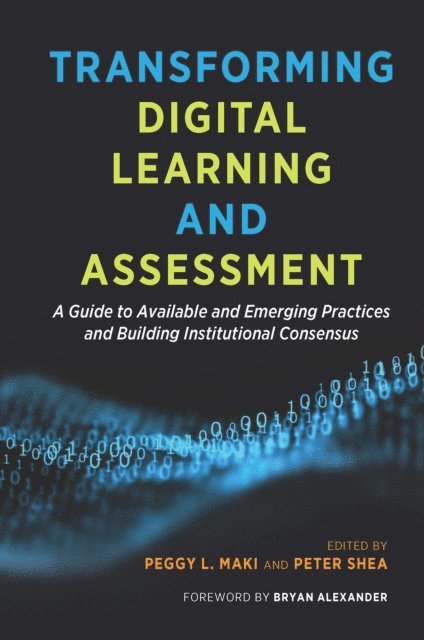
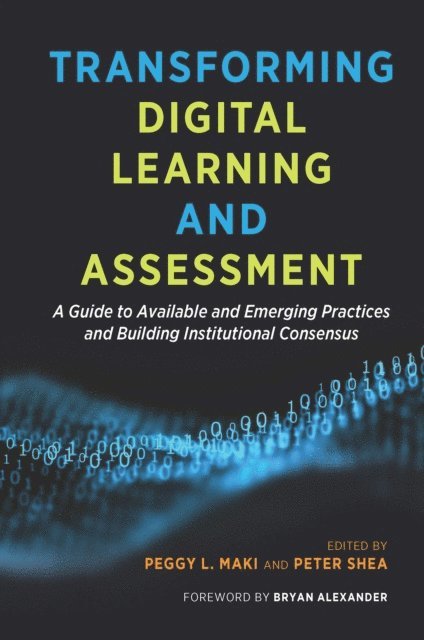
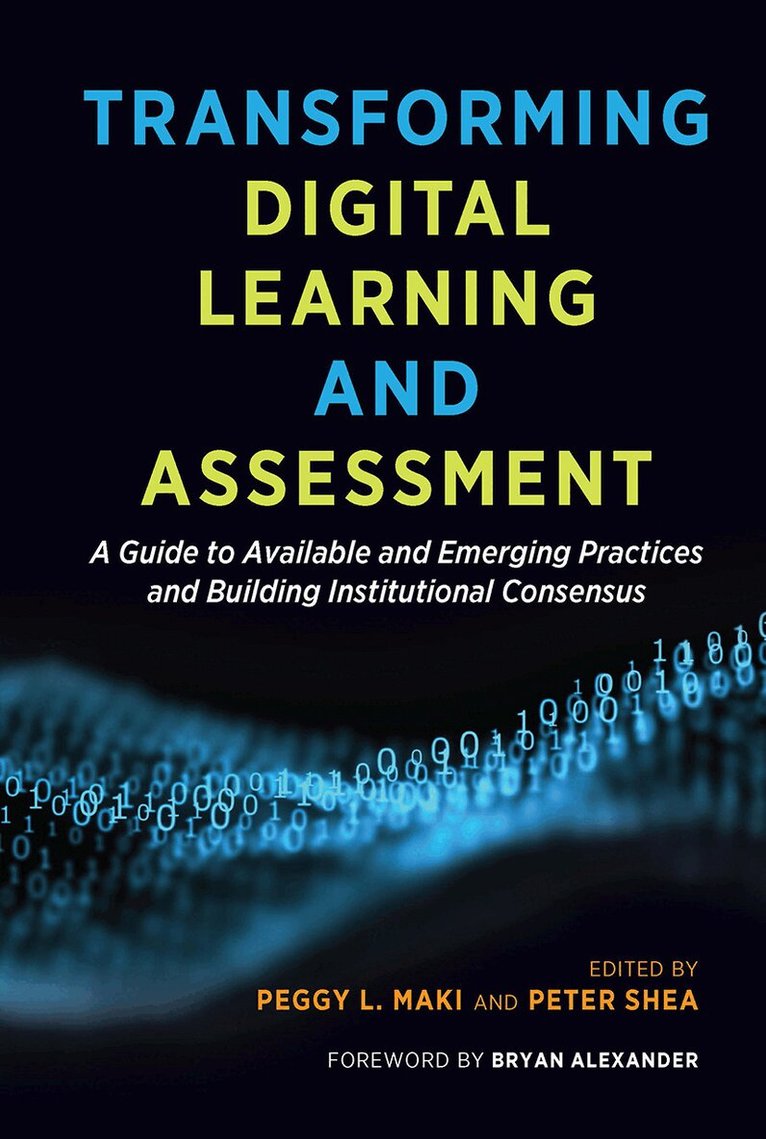
Responding to both the trend towards increasing online enrollments as the demand for face-to-face education declines, and to the immediate surge in remote learning owing to the COVID-19 pandemic, this book provides vital guidance to higher education institutions on how to develop faculty capacity to teach online and to leverage the affordances of an ever-increasing array of new and emerging learning technologies.This book provides higher education leaders with the context they need to position their institutions in the changing online environment, and with guidance to build support in a period of transition.It is intended for campus leaders and administrators who work with campus teams charged with identifying learning technologies to meet an agreed upon program- or institution-level educational needs; for those coordinating across campus to build consensus on implementing online strategies; and for instructional designers, faculty developers and assessment directors who assist departments and faculty effectively integrate learning technologies into their courses and programs. It will also appeal to faculty who take an active interest in improving online teaching.The contributors to this volume describe the potential of artificial intelligence algorithms, such as those that fuel learning analytics software that mines LMS data to enable faculty to quickly and efficiently assess individual students’ progress in real time, prompting either individual attention or the need to more generally clarify concepts for the class as whole. They describe and provide access to a hybrid professional development MOOC and an associated WIKI that curate information about a wide range of learning software solutions currently available; and present case studies that offer guidance on building the buy-in and consensus needed to successfully integrate learning technologies into course, program- and institution-level contexts.In sum, this book provides readers with a comprehensive understanding of the technological capabilities available to them and identifies collaborative processes related to engaging and building institutional support for the changes needed to provide the rapidly growing demand for effective and evidence-based online learning.
Häftad, Engelska, 2021
488 kr
Skickas inom 10-15 vardagar
Responding to both the trend towards increasing online enrollments as the demand for face-to-face education declines, and to the immediate surge in remote learning owing to the COVID-19 pandemic, this book provides vital guidance to higher education institutions on how to develop faculty capacity to teach online and to leverage the affordances of an ever-increasing array of new and emerging learning technologies.This book provides higher education leaders with the context they need to position their institutions in the changing online environment, and with guidance to build support in a period of transition.It is intended for campus leaders and administrators who work with campus teams charged with identifying learning technologies to meet an agreed upon program- or institution-level educational needs; for those coordinating across campus to build consensus on implementing online strategies; and for instructional designers, faculty developers and assessment directors who assist departments and faculty effectively integrate learning technologies into their courses and programs. It will also appeal to faculty who take an active interest in improving online teaching.The contributors to this volume describe the potential of artificial intelligence algorithms, such as those that fuel learning analytics software that mines LMS data to enable faculty to quickly and efficiently assess individual students’ progress in real time, prompting either individual attention or the need to more generally clarify concepts for the class as whole. They describe and provide access to a hybrid professional development MOOC and an associated WIKI that curate information about a wide range of learning software solutions currently available; and present case studies that offer guidance on building the buy-in and consensus needed to successfully integrate learning technologies into course, program- and institution-level contexts.In sum, this book provides readers with a comprehensive understanding of the technological capabilities available to them and identifies collaborative processes related to engaging and building institutional support for the changes needed to provide the rapidly growing demand for effective and evidence-based online learning.