Peggy Reeves Sanday - Böcker
Visar alla böcker från författaren Peggy Reeves Sanday. Handla med fri frakt och snabb leverans.
7 produkter
7 produkter
297 kr
Skickas inom 7-10 vardagar
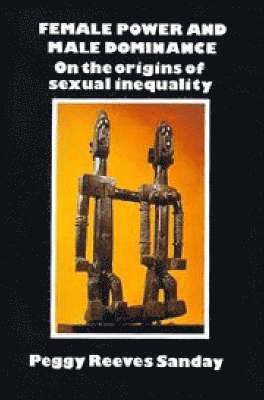
In this book, Professor Peggy Sanday provides a ground-breaking examination of power and dominance in male-female relationships. How does the culturally approved interaction between the sexes originate? Why are women viewed as a necessary part of political, economic, and religious affairs in some societies but not in others? Why do some societies clothe sacred symbols of creative power in the guise of one sex and not of the other? Professor Sanday offers solutions to these cultural puzzles by using cross-cultural research on over 150 tribal societies. She systematically establishes the full range of variation in male and female power roles and then suggests a theoretical framework for explaining this variation. Rejecting the argument of universal female subordination, Professor Sanday argues that male dominance is not inherent in human relations but is a solution to various kinds of cultural strain. Those who are thought to embody, be in touch with, or control the creative forces of nature are perceived as powerful. In isolating the behavioural and symbolic mechanisms which institute male dominance, professor Sanday shows that a people's secular power roles are partly derived from ancient concepts of power, as exemplified by their origin myths. Power and dominance are further determined by a people's adaptation to their environment, social conflict, and emotional stress. This is illustrated through case studies of the effects of European colonialism, migration, and food stress, and supported by numerous statistical associations between sexual inequity and various cultural stresses.
297 kr
Skickas inom 7-10 vardagar
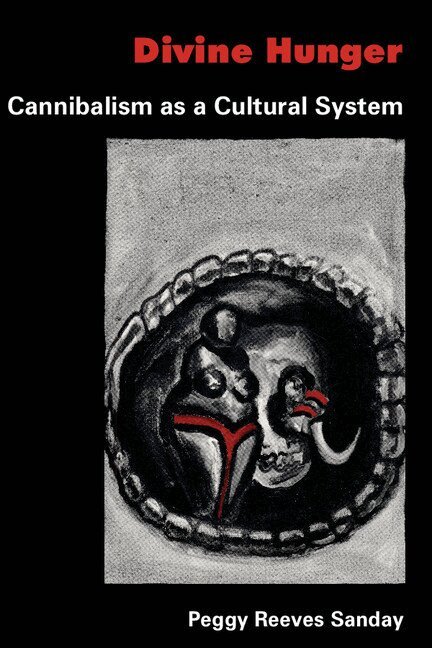
The practice of cannibalism is in certain cultures rejected as evil, while in others it plays a central part in the ritual order. Anthropologists have offered various explanations for the existence of cannibalism, none of which, Peggy Sanday claims, is adequate. In this book she presents a new approach to understanding the phenomenon. Through a detailed examination of ritual cannibalism in selected tribal societies, and a comparison of those cases with others in which the practice is absent, she shows that cannibalism is closely linked to people's orientation to the world, and that it serves as a concrete device for distinguishing the 'cultural self' from the 'natural other'. Combining perspectives drawn from the work of Ricoeur, Freud, Hegel, and Jung and from symbolic anthropology, Sanday argues that ritual cannibalism is intimately connected both with the constructs by which the origin and continuity of life are understood and assured from one generation to the next and with the way in which that understanding is used to control the vital forces considered necessary for the cannibalism in a culture derives from basic human attitudes toward life and death, combined with the realities of the material world. As well as making an original contribution to the understanding of the significant human practice, Sanday also develops a theoretical argument of wider relevance to anthropologists, sociologists, and other readers interested in the function and meaning of cannibalism.
672 kr
Skickas inom 10-15 vardagar
Contrary to the declarations of some anthropologists, matriarchies do exist. Peggy Reeves Sanday first went to West Sumatra in 1981, intrigued by reports that the matrilineal Minangkabau—one of the largest ethnic groups in Indonesia—label their society a matriarchy. Numbering some four million in West Sumatra, the Minangkabau are known in Indonesia for their literary flair, business acumen, and egalitarian, democratic relationships between men and women. Sanday uses her repeated visits to West Sumatra in the closing decades of the twentieth century as the basis for a new definition of matriarchy. From the vantage point of daily life in villages, especially one where she developed close personal ties, Sanday's narrative is centered on how the Minangkabau conceive of their world and think humans should behave, along with the practices and rituals they claim uphold their matriarchate. Women at the Center leaves the reader with a solid sense of the respect for women that permeates Minangkabau culture, and gives new life to the concept of matriarchy.
299 kr
Skickas inom 10-15 vardagar
Contrary to the declarations of some anthropologists, matriarchies do exist. Peggy Reeves Sanday first went to West Sumatra in 1981, intrigued by reports that the matrilineal Minangkabau—one of the largest ethnic groups in Indonesia—label their society a matriarchy. Numbering some four million in West Sumatra, the Minangkabau are known in Indonesia for their literary flair, business acumen, and egalitarian, democratic relationships between men and women. Sanday uses her repeated visits to West Sumatra in the closing decades of the twentieth century as the basis for a new definition of matriarchy. From the vantage point of daily life in villages, especially one where she developed close personal ties, Sanday's narrative is centered on how the Minangkabau conceive of their world and think humans should behave, along with the practices and rituals they claim uphold their matriarchate. Women at the Center leaves the reader with a solid sense of the respect for women that permeates Minangkabau culture, and gives new life to the concept of matriarchy.
366 kr
Skickas inom 10-15 vardagar
Beyond the Second Sex is an innovative work that challenges Simone de Beauvoir's notion that women are "the second" in every society. Anthropological inquiry into male-female relations has evolved around debates concerning sexual inequality. Based on original field research, the essays presented in this volume are not concerned with inequality per se. Rather, the authors pose ethnographic and analytical challenges in the assumptions and definitions that, in the past, have supported judgments about sexual equality and inequality. They move away from broad labels and blanket judgments in favor of addressing the conflict, contradictions, and ambiguities that are so often encountered in field research.These essays maintain that, in discussing the cultural construction and representation of gender, the "culture" that is abstracted from field data cannot be separated from a complex, ongoing, and everchanging local process. From this point of view, the editors conclude, the relationship of the sexes to each other is best discussed in terms of the conflicts, tensions, and paradoxes that are at the heart of daily life in many societies.Beyond the Second Sex will be of interest to students and scholars of anthropology and women's studies.
350 kr
Skickas inom 7-10 vardagar
This widely acclaimed and meticulously documented volume illustrates, in painstaking and disturbing detail, the nature of fraternity gang rape. Drawing on interviews with both victims and fraternity members, Peggy Reeves Sanday reconstructs daily life in the fraternity, highlighting the role played by pornography, male bonding, and degrading, often grotesque, initiation and hazing rituals.In a substantial new introduction and afterword, Sanday updates the incidences of fraternity gang rape on college campuses today, highlighting such recent cases as that of Duke University and others in the headlines. Sanday also explores the nature of hazing at sororities on campus and how Greek life in general contributes to a culture which promotes the exploitation and sexual degradation of women on campus. More broadly, Sanday examines the nature of campus life today and the possibility of creating a rape-free campus culture.
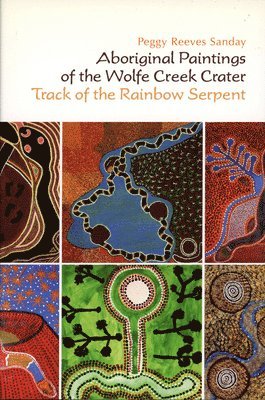
Aboriginal Paintings of the Wolfe Creek Crater – Track of the Rainbow Serpent
Track of the Rainbow Serpent
Inbunden, Engelska, 2007
636 kr
Tillfälligt slut
Told in Aboriginal art and narrative, the Dreamtime story of the creation and meaning of the Wolfe Creek Meteorite Crater in Australia's Western Desert appears here for the first time. Deftly and sensitively Sanday introduces the meaning of the cosmology of the homeland of the Walmajarri and Djaru Aboriginal people. She provides a compelling story of discovery, both that of her geologist father in 1947 and her own decades later. In a vibrant example of public-interest anthropology, an ethnography that evolves from dialogue and collaboration and honors the Aboriginal artists with whom she worked, Sanday enlightens, elucidates, and communicates the aesthetic sensibility of a people on their own terms. Through powerful Aboriginal art, readers become part of an unforgettable cultural experience.