Penelope Gardner-Chloros - Böcker
Visar alla böcker från författaren Penelope Gardner-Chloros. Handla med fri frakt och snabb leverans.
5 produkter
5 produkter
Del 13 - Oxford Studies in Anthropological Linguistics
Vernacular Literacy
A Re-Evaluation
Inbunden, Engelska, 1997
1 608 kr
Skickas inom 3-6 vardagar
Illiteracy problems are worldwide, and growing. Political and economic factors are often in conflict over which language to use for basic education and how it should be taught. There is increasing pressure on the resources available for using literacy in coping with the rapid population increase, the spread of disease, and poor development. The editors and contributors to this volume are members of The International Group for the Study of Language Standardization and the Vernacularization of Literacy (IGLSVL), with unrivalled direct personal experience of literacy and language problems in the second half of the twentieth century. The contributors take the UNESCO publication, The Use of Vernacular Languages in Education, as their starting point. Published in 1953, this work was optimistic about the future of literacy. The contributors assess the nature and significance of the events that have taken place since then, providing a global overview. The discussions are supported by case-studies of campaigns to promote vernacular languages and examples of how people relate to their languages in different cultures. Most importantly, they question traditional notions of, and provide a non-Western perspective on, the uses and value of literacy.
677 kr
Skickas inom 7-10 vardagar
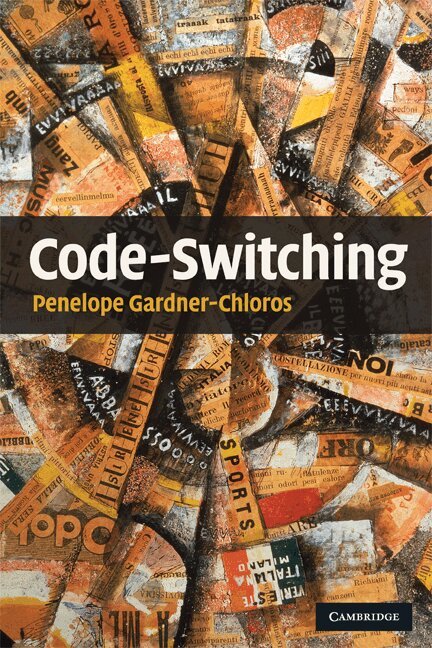
The term `code-switching' is used to describe the mixing of different language varieties which often results from language contact. Penelope Gardner-Chloros presents the first full-length study of code-switching in a European context. Throughout history, Alsace has been a meeting point of the Roman and Germanic worlds. In spite of its marked regional character, it has been alternately claimed by France and Germany, each anxious to assimilate the region to its own national and linguistic identity. Today most of the population still speak a Germanic dialect, alternating with French which is the language of public life, education, and the media.The author lived in Strasbourg from 1981 to 1988. She describes this exemplar of code-switching not only as a linguist, but also as someone attuned to the many layers of significance which this mode of speech has in the Alsatian community.
166 kr
Skickas
500 kr
Skickas inom 7-10 vardagar
It is quite commonplace for bilingual speakers to use two or more languages, dialects or varieties in the same conversation, without any apparent effort. The phenomenon, known as code-switching, has become a major focus of attention in linguistics. This concise and original study explores how, when and where code-switching occurs. Drawing on a diverse range of examples from medieval manuscripts to rap music, novels to advertisements, emails to political speeches, and above all everyday conversation, it argues that code-switching can only be properly understood if we study it from a variety of perspectives. It shows how sociolinguistic, psycholinguistic, grammatical and developmental aspects of code-switching are all interdependent, and findings in each area are crucial to others. Breaking down barriers across the discipline of linguistics, this pioneering book confronts fundamental questions about what a 'native language' is, and whether languages can be meaningfully studied outside of the individuals who use them.
1 377 kr
Skickas inom 7-10 vardagar
It is quite commonplace for bilingual speakers to use two or more languages, dialects or varieties in the same conversation, without any apparent effort. The phenomenon, known as code-switching, has become a major focus of attention in linguistics. This concise and original study explores how, when and where code-switching occurs. Drawing on a diverse range of examples from medieval manuscripts to rap music, novels to advertisements, emails to political speeches, and above all everyday conversation, it argues that code-switching can only be properly understood if we study it from a variety of perspectives. It shows how sociolinguistic, psycholinguistic, grammatical and developmental aspects of code-switching are all interdependent, and findings in each area are crucial to others. Breaking down barriers across the discipline of linguistics, this pioneering book confronts fundamental questions about what a 'native language' is, and whether languages can be meaningfully studied outside of the individuals who use them.