
Penelope Ingram – författare
Visar alla böcker från författaren Penelope Ingram. Handla med fri frakt och snabb leverans.
4 produkter
4 produkter
1 051 kr
Tillfälligt slut
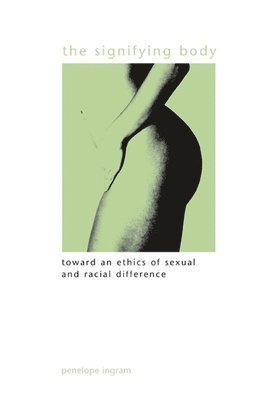
Applies the ideas of Heidegger, Irigaray, and Fanon to literature and film.How do we live ethically? What role do sex and race play in living or being ethically? Can ethics lead to ontology? Can literature play a role in ethical being? Drawing extensively on the work of Luce Irigaray, Frantz Fanon, and Martin Heidegger, Penelope Ingram argues that ethical questions must be understood in light of ontological ones. It is only when sexual and racial difference are viewed at an ontological level that ethics is truly possible. Central to the connection between ontology and ethics is the role of language. Ingram revisits the relationship between representation and matter in order to advance a theory of material signification. She examines a number of twentieth-century film and literary texts, including Neil Jordan's The Crying Game, J. M. Coetzee's Foe, Toni Morrison's Paradise, and Don DeLillo's The Body Artist, to demonstrate that material signification, rather than representation, is crucial to our experience of living authentically and achieving an ethical relation with the Other. By attending closely to Heidegger's, Irigaray's, and Fanon's positions on language, this original work argues that the literary text is indispensable to a "revealing" of the relationship between ontology and ethics, and through it, the reader can experience a state of "authentic Being ethically."
374 kr
Tillfälligt slut
Applies the ideas of Heidegger, Irigaray, and Fanon to literature and film.How do we live ethically? What role do sex and race play in living or being ethically? Can ethics lead to ontology? Can literature play a role in ethical being? Drawing extensively on the work of Luce Irigaray, Frantz Fanon, and Martin Heidegger, Penelope Ingram argues that ethical questions must be understood in light of ontological ones. It is only when sexual and racial difference are viewed at an ontological level that ethics is truly possible. Central to the connection between ontology and ethics is the role of language. Ingram revisits the relationship between representation and matter in order to advance a theory of material signification. She examines a number of twentieth-century film and literary texts, including Neil Jordan's The Crying Game, J. M. Coetzee's Foe, Toni Morrison's Paradise, and Don DeLillo's The Body Artist, to demonstrate that material signification, rather than representation, is crucial to our experience of living authentically and achieving an ethical relation with the Other. By attending closely to Heidegger's, Irigaray's, and Fanon's positions on language, this original work argues that the literary text is indispensable to a "revealing" of the relationship between ontology and ethics, and through it, the reader can experience a state of "authentic Being ethically."
Imperiled Whiteness
How Hollywood and Media Make Race in "Postracial" America
Inbunden, Engelska, 2023
1 293 kr
Skickas inom 10-15 vardagar
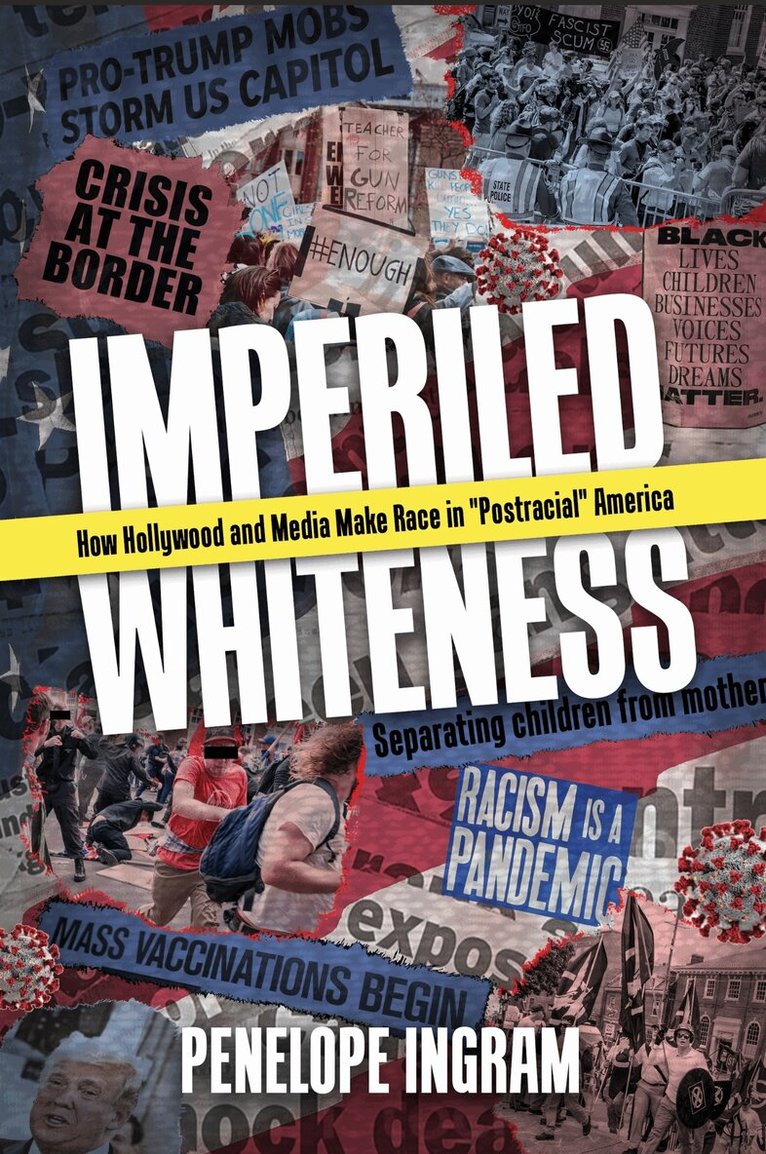
In Imperiled Whiteness: How Hollywood and Media Make Race in "Postracial" America, author Penelope Ingram argues that in the Obama-to-Trump era, a variety of media platforms, including film, television, news, and social media, turned white identity into a commodity that was packaged and disseminated to a white populace. The book emphasizes how media in its myriad forms coopted a postracial narrative, making whiteness a disenfranchised commodity and vivifying white nationalist and neo-Nazi movements on the alt-right. While fully recognizing the covert centrality of whiteness to postracial discourses, Ingram challenges existing scholarship to argue that discourses of the postracial era have enabled the rise of an overt white identity politics, a sense of solidarity among white people, including those who espouse liberal or progressive political views.Ingram explores the convergence of entertainment, news, and social media in a digital networked environment and traces how media’s renewed attention to "mainstream whiteness" has propelled a resurgence of rabid white nationalism. Reading popular film and television franchises (The Walking Dead, The Planet of the Apes reboot, and the Star Trek reboot) through the contemporary political flashpoints of immigration reform, gun control, and Black Lives Matter protests, Ingram demonstrates how media buttressed and exploited an affective experience among white audiences—a feeling or sense of vulnerability and loss. Ingram also explores how contemporary Black filmmakers utilize speculative fiction to intercede in and disrupt this shifting racial landscape, through an examination of Jordan Peele’s films Get Out and Us, and Ryan Coogler’s Black Panther.
363 kr
Skickas inom 5-8 vardagar
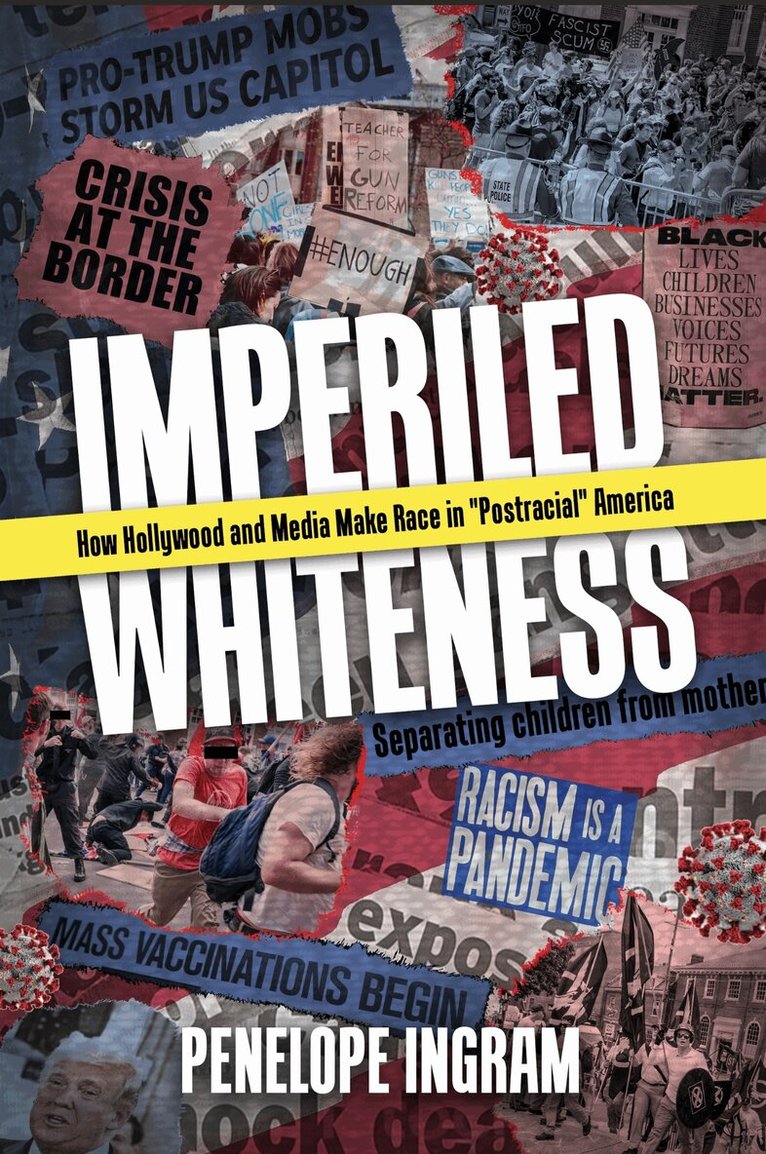
In Imperiled Whiteness: How Hollywood and Media Make Race in "Postracial" America, author Penelope Ingram argues that in the Obama-to-Trump era, a variety of media platforms, including film, television, news, and social media, turned white identity into a commodity that was packaged and disseminated to a white populace. The book emphasizes how media in its myriad forms coopted a postracial narrative, making whiteness a disenfranchised commodity and vivifying white nationalist and neo-Nazi movements on the alt-right. While fully recognizing the covert centrality of whiteness to postracial discourses, Ingram challenges existing scholarship to argue that discourses of the postracial era have enabled the rise of an overt white identity politics, a sense of solidarity among white people, including those who espouse liberal or progressive political views.Ingram explores the convergence of entertainment, news, and social media in a digital networked environment and traces how media’s renewed attention to "mainstream whiteness" has propelled a resurgence of rabid white nationalism. Reading popular film and television franchises (The Walking Dead, The Planet of the Apes reboot, and the Star Trek reboot) through the contemporary political flashpoints of immigration reform, gun control, and Black Lives Matter protests, Ingram demonstrates how media buttressed and exploited an affective experience among white audiences—a feeling or sense of vulnerability and loss. Ingram also explores how contemporary Black filmmakers utilize speculative fiction to intercede in and disrupt this shifting racial landscape, through an examination of Jordan Peele’s films Get Out and Us, and Ryan Coogler’s Black Panther.