Penny Gay – författare
Visar alla böcker från författaren Penny Gay. Handla med fri frakt och snabb leverans.
9 produkter
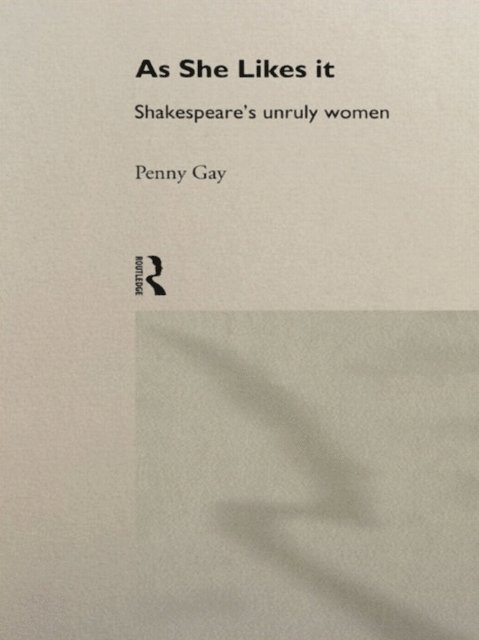
As She Likes It
Shakespeare's Unruly Women
Av Penny Gay
Inbunden, 1994
2879 kr
Lägg i varukorg
As She Likes It is the first attempt to tackle head on the enduring question of how to perform those unruly women at the centre of Shakespeare's comedies.Unique amongst both Shakespearian and feminist studies, As She Likes It asks how gender politics affects the production to the comedies, and how …
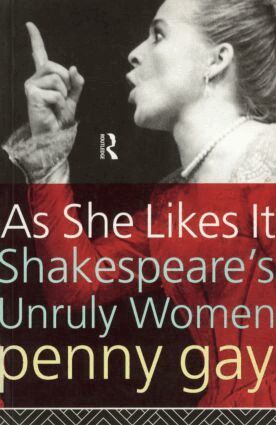
As She Likes It
Shakespeare's Unruly Women
Av Penny Gay
Häftad, 1994
909 kr
Lägg i varukorg
As She Likes It is the first attempt to tackle head on the enduring question of how to perform those unruly women at the centre of Shakespeare's comedies.Unique amongst both Shakespearian and feminist studies, As She Likes It asks how gender politics affects the production to the comedies, and how …
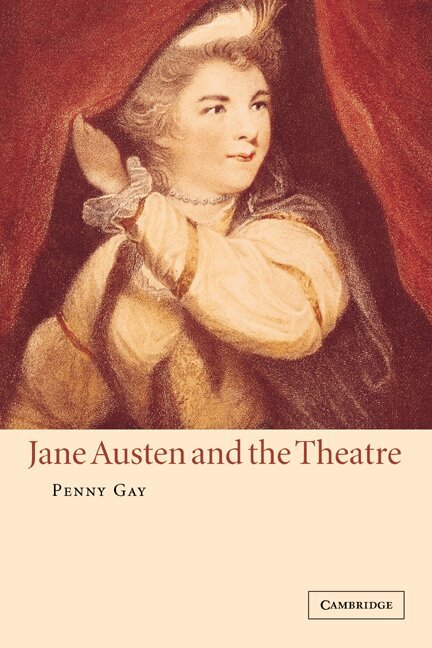
Jane Austen and the Theatre
Av Penny Gay
Häftad, 2006
824 kr
Lägg i varukorg
Jane Austen was fascinated by theatre from her childhood. As an adult she went to the theatre whenever opportunity arose. Scenes in her novels often resemble plays, and recent film and television versions have shown how naturally dramatic her stories are. Yet the myth remains that she was …
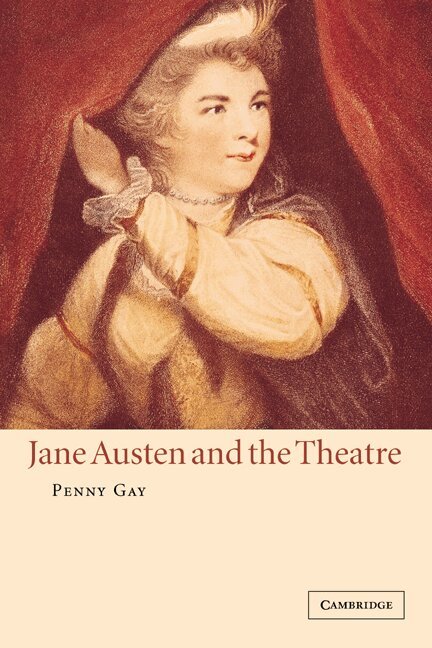
Jane Austen and the Theatre
Av Penny Gay
Inbunden, 2002
1704 kr
Lägg i varukorg
Jane Austen was fascinated by theatre from her childhood. As an adult she went to the theatre whenever opportunity arose. Scenes in her novels often resemble plays, and recent film and television versions have shown how naturally dramatic her stories are. Yet the myth remains that she was …
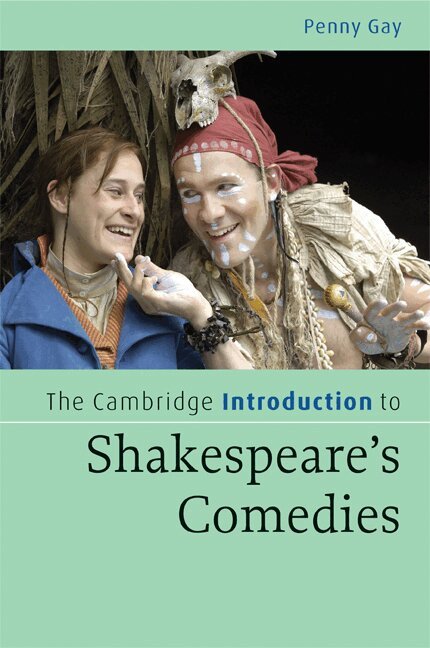
The Cambridge Introduction to Shakespeare's Comedies
Av Penny Gay
Häftad, 2008
429 kr
Lägg i varukorg
Why did theatre audiences laugh in Shakespeare's day? Why do they still laugh now? What did Shakespeare do with the conventions of comedy that he inherited, so that his plays continue to amuse and move audiences? What do his comedies have to say about love, sex, gender, power, family, community, …
The Cambridge Introduction to Shakespeare's Comedies
Av Penny Gay
Inbunden, 2008
1610 kr
Lägg i varukorg
Why did theatre audiences laugh in Shakespeare's day? Why do they still laugh now? What did Shakespeare do with the conventions of comedy that he inherited, so that his plays continue to amuse and move audiences? What do his comedies have to say about love, sex, gender, power, family, community, …
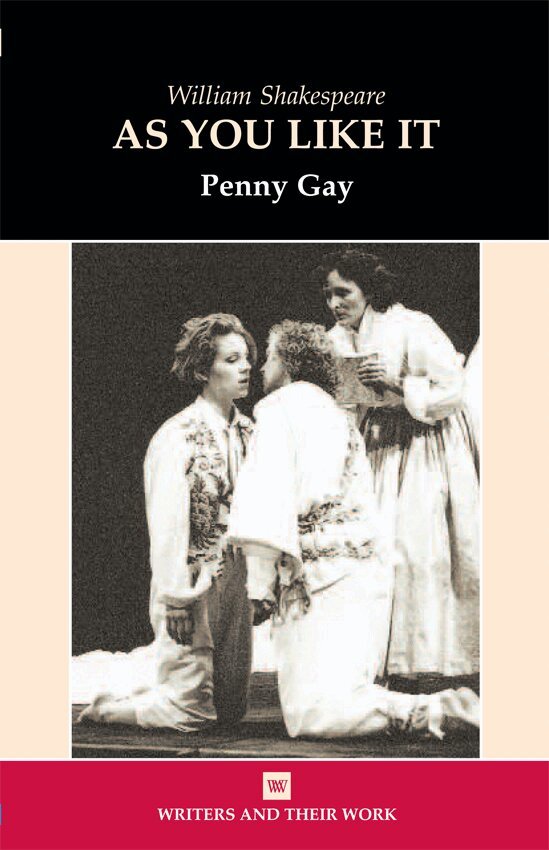
As You Like it
Av Penny Gay
Häftad, 1999
383 kr
Lägg i varukorg
One of the best loved of Shakespeare’s ‘middle comedies’, As You Like It has rarely been out of the theatrical repertoire. Centring on the cross-dressed figure of Rosalind, the play both celebrates and questions the state of being in love. Recent scholarship has, however, located darker currents in …
As She Likes It
Shakespeare''s Unruly Women
Av Penny Gay
E-bok, 2002
1075 kr
Lägg i varukorg
As She Likes It is the first attempt to tackle head on the enduring question of how to perform those unruly women at the centre of Shakespeare''s comedies. Unique amongst both Shakespearian and feminist studies, As She Likes It asks how gender politics affects the production to the comedies, and …
As She Likes It
Shakespeare''s Unruly Women
Av Penny Gay
E-bok, 2002
1075 kr
Lägg i varukorg
As She Likes It is the first attempt to tackle head on the enduring question of how to perform those unruly women at the centre of Shakespeare''s comedies. Unique amongst both Shakespearian and feminist studies, As She Likes It asks how gender politics affects the production to the comedies, and …