Pepijn Corduwener - Böcker
Visar alla böcker från författaren Pepijn Corduwener. Handla med fri frakt och snabb leverans.
5 produkter
5 produkter
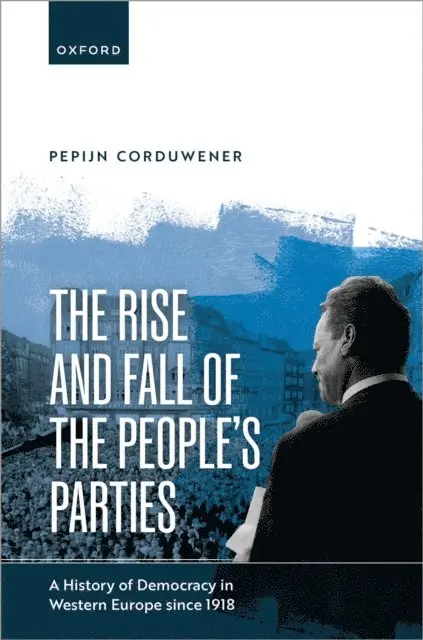
The Rise and Fall of the People's Parties
A History of Democracy in Western Europe since 1918
Inbunden, Engelska, 2023
1 333 kr
Skickas inom 5-8 vardagar
This is an open access title available under the terms of a CC BY-NC-ND 4.0 International licence. It is free to read on Oxford Academic and offered as a free PDF download from OUP and selected open access locations.Across Europe, people are deeply concerned about the state of democracy. The Rise and Fall of the People's Parties shifts the attention away from ever-changing populist politicians that capture newspaper headlines to the centre-left and centre-right people's parties that used to buttress the democratic order over the past decades, but which are now in steep decline. Why does the crisis of these parties contribute so profoundly to today's crisis of democracy? And why were these parties so important for the stabilization and legitimation of democracy in the past century in the first place?By providing a long-term and transnational account of the history of democracy in modern Europe, The Rise and Fall of the People's Parties reveals the striking parallels between the history of democracy and the history of the people's parties since 1918.The first part of the book shows how the failure to turn traditional working-class and confessional mass parties into people's parties played a vital role in the collapse of democracy in the 1920s and 1930s. It also explores the attractiveness of the people's party ideal centred on moderation, compromise and openness to pioneering politicians in the mid-century. The second part of the book then traces the practical application and breakthrough of this ideal in the decades after World War II and shows how this contributed to the stabilization and legitimation of democracy in the postwar decades. In the final part of the book, Corduwener turns to the slow decline of the people's parties since the mid-1970s. It explores how their failure to represent volatile and polarized societies was reflected in their aim to turn into 'open' and 'flexible' parties focused primarily on providing governmental efficiency - and how this eventually turned against them by alienating their members and voters.In so doing, Corduwener offers an original and timely study of twentieth century democracy that transcends traditional party groupings, divisions between eras, and national boundaries. The book will be important reading for all historians of European democracy, as well as journalists, policymakers and practitioners interested in the current state of democracy in and outside the region today.
648 kr
Skickas inom 10-15 vardagar
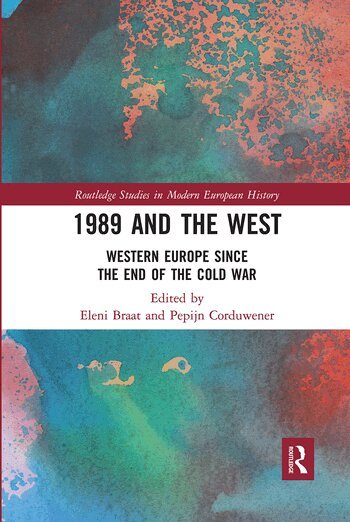
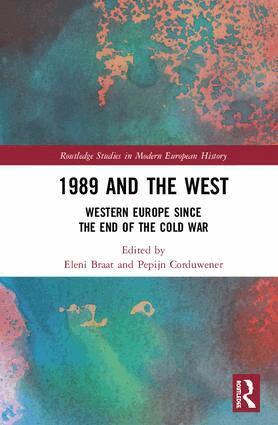
Back in 1989, many anticipated that the end of the Cold War would usher in the ‘end of history’ characterized by the victory of democracy and capitalism. At the thirtieth anniversary of this momentous event, this book challenges this assumption. It studies the most recent era of contemporary European history in order to analyse the impact, consequences and legacy of the end of the Cold War for Western Europe. Bringing together leading scholars on the topic, the volume answers the question of how the end of the Cold War has affected Western Europe and reveals how it accelerated and reinforced processes that shaped the fragile (geo-)political and economic order of the continent today.In four thematic sections, the book analyses the changing position of Germany in Europe; studies the transformation of neoliberal capitalism; answers the question how Western Europe faced the geopolitical challenges after the Berlin Wall came down; and investigates the crisis of representative democracy. As such, the book provides a comprehensive and novel historical perspective on Europe since the late 1980s.
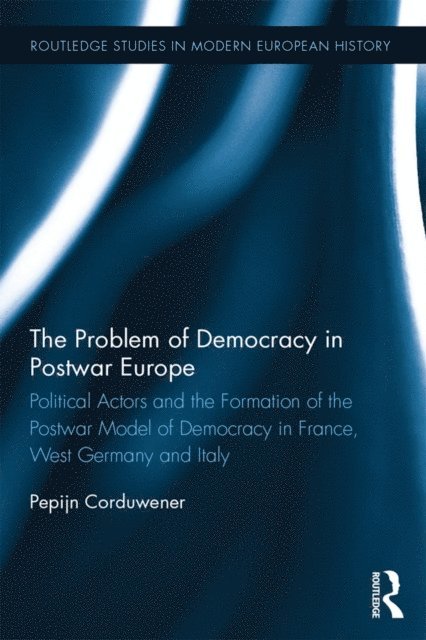
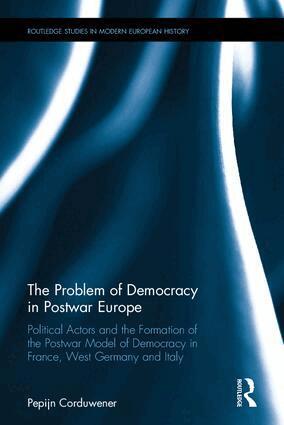
Problem of Democracy in Postwar Europe
Political Actors and the Formation of the Postwar Model of Democracy in France, West Germany and Italy
Häftad, Engelska, 2018
704 kr
Skickas inom 10-15 vardagar
The current perception of democratic crisis in Western Europe gives a renewed urgency to a new perspective on the way democracy was reconstructed after World War II and the principles that underpinned its postwar transformation. This study accounts for the formation of the postwar democratic order in Western Europe by studying how the main political actors in France, West Germany and Italy conceptualized democracy and strove over its meaning. Based upon a wide range of librarian and archival sources from these countries, it tracks changing conceptions of democracy among leading politicians, political parties, and leaders of social movements, and unveils how they were deeply divided over key principles of postwar democracy – such as the political party, the free market economy, representation, and civic participation. By comparing three national debates on the question what democracy meant and how it should be institutionalized and practiced, this study argues that only in the 1970s conceptions of democracy converged and key political actors accepted each other as democrats with similar conceptions of democracy. This study thereby deconstructs the myth of the quick emergence of one consensual Western European model of democracy after 1945, demonstrates that its formation was a long and contentious process in which national differences were often of crucial importance, and contributes to an enhanced understanding of the historical roots of the current sentiment of democratic crisis.
2 166 kr
Skickas inom 10-15 vardagar
Back in 1989, many anticipated that the end of the Cold War would usher in the ‘end of history’ characterized by the victory of democracy and capitalism. At the thirtieth anniversary of this momentous event, this book challenges this assumption. It studies the most recent era of contemporary European history in order to analyse the impact, consequences and legacy of the end of the Cold War for Western Europe. Bringing together leading scholars on the topic, the volume answers the question of how the end of the Cold War has affected Western Europe and reveals how it accelerated and reinforced processes that shaped the fragile (geo-)political and economic order of the continent today.In four thematic sections, the book analyses the changing position of Germany in Europe; studies the transformation of neoliberal capitalism; answers the question how Western Europe faced the geopolitical challenges after the Berlin Wall came down; and investigates the crisis of representative democracy. As such, the book provides a comprehensive and novel historical perspective on Europe since the late 1980s.
Problem of Democracy in Postwar Europe
Political Actors and the Formation of the Postwar Model of Democracy in France, West Germany and Italy
Inbunden, Engelska, 2016
2 375 kr
Skickas inom 10-15 vardagar
The current perception of democratic crisis in Western Europe gives a renewed urgency to a new perspective on the way democracy was reconstructed after World War II and the principles that underpinned its postwar transformation. This study accounts for the formation of the postwar democratic order in Western Europe by studying how the main political actors in France, West Germany and Italy conceptualized democracy and strove over its meaning. Based upon a wide range of librarian and archival sources from these countries, it tracks changing conceptions of democracy among leading politicians, political parties, and leaders of social movements, and unveils how they were deeply divided over key principles of postwar democracy – such as the political party, the free market economy, representation, and civic participation. By comparing three national debates on the question what democracy meant and how it should be institutionalized and practiced, this study argues that only in the 1970s conceptions of democracy converged and key political actors accepted each other as democrats with similar conceptions of democracy. This study thereby deconstructs the myth of the quick emergence of one consensual Western European model of democracy after 1945, demonstrates that its formation was a long and contentious process in which national differences were often of crucial importance, and contributes to an enhanced understanding of the historical roots of the current sentiment of democratic crisis.