Pernille Hviid - Böcker
Visar alla böcker från författaren Pernille Hviid. Handla med fri frakt och snabb leverans.
8 produkter
8 produkter
516 kr
Skickas inom 7-10 vardagar
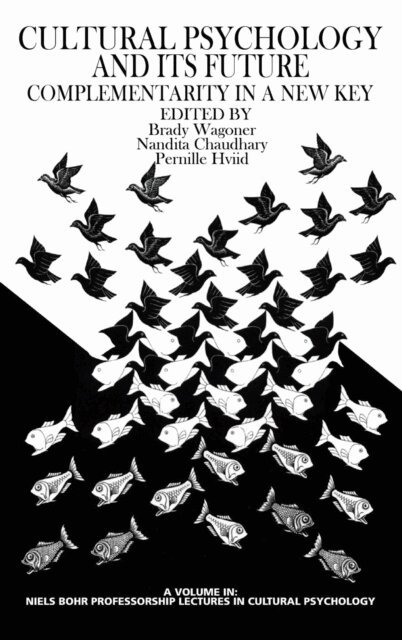
Cultural Psychology is a radical new look in psychology that studies how persons and social-cultural worlds mutually constitute one another. With the increase of globalization and multicultural exchanges, cultural psychology becomes the psychological science for the 21st century. Encounters with others fundamentally transform the way we understand ourselves. No longer can we ignore questions about how our cultural traditions, practices, beliefs, artifacts and other people constitute how we approach, understand, imagine and remember the world. The Niels Bohr Professorship Lectures in Cultural Psychology series aims to highlight and develop new ideas that advance our understanding of these issues.This first volume in the series features an address by Prof. Jaan Valsiner, which is followed by ten commentary chapters and his response to them. In his lecture, Valsiner explores what Niels Bohr’s revolutionary principle of ‘complementarity’ can contribute to the development of a cultural psychology that takes time, semiotics, and human feeling seriously. Commentators further discuss how complementarity can act as an epistemology for psychology; a number of new methodological strategies for incorporating culture and time into investigations; and what cultural psychology can contribute to our understanding of imagination, art, language and self-other relations.
952 kr
Skickas inom 7-10 vardagar
Cultural Psychology is a radical new look in psychology that studies how persons and social-cultural worlds mutually constitute one another. With the increase of globalization and multicultural exchanges, cultural psychology becomes the psychological science for the 21st century. Encounters with others fundamentally transform the way we understand ourselves. No longer can we ignore questions about how our cultural traditions, practices, beliefs, artifacts and other people constitute how we approach, understand, imagine and remember the world. The Niels Bohr Professorship Lectures in Cultural Psychology series aims to highlight and develop new ideas that advance our understanding of these issues.This first volume in the series features an address by Prof. Jaan Valsiner, which is followed by ten commentary chapters and his response to them. In his lecture, Valsiner explores what Niels Bohr’s revolutionary principle of ‘complementarity’ can contribute to the development of a cultural psychology that takes time, semiotics, and human feeling seriously. Commentators further discuss how complementarity can act as an epistemology for psychology; a number of new methodological strategies for incorporating culture and time into investigations; and what cultural psychology can contribute to our understanding of imagination, art, language and self-other relations.
580 kr
Skickas inom 7-10 vardagar
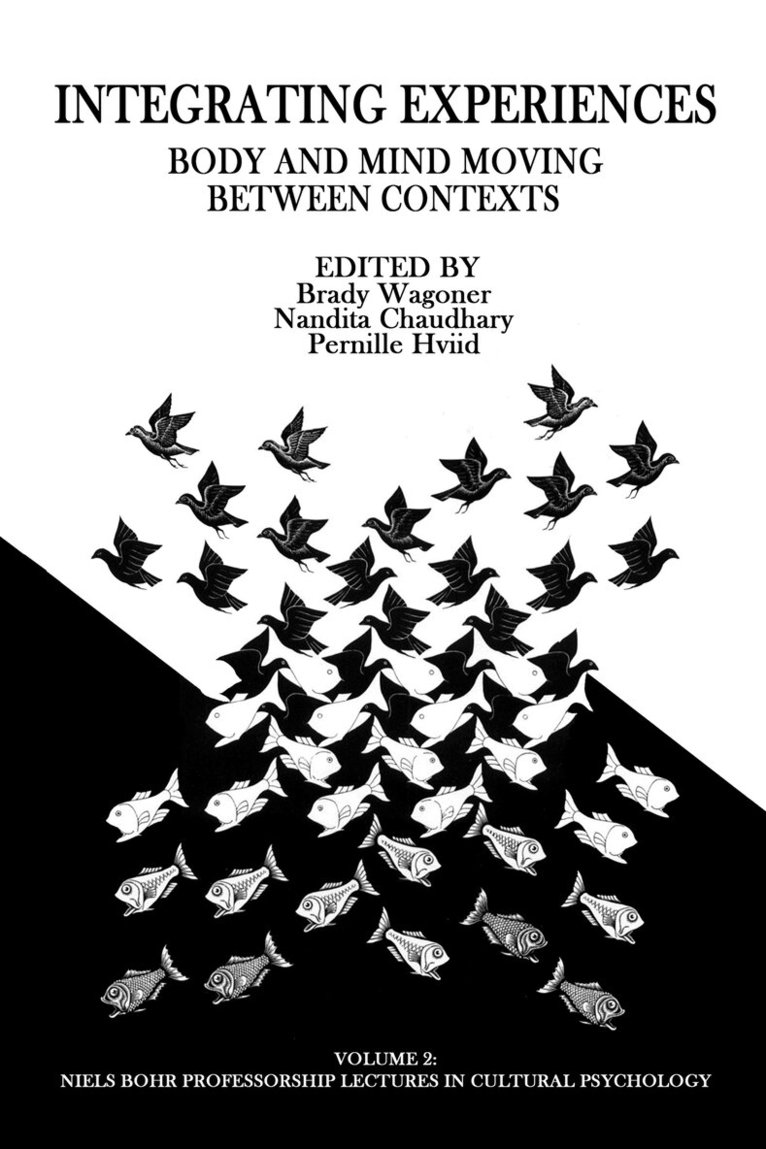
Cultural Psychology studies how persons and social-cultural worlds mutually constitute one another. It is premised on the idea that culture is within us—in every moment in which we live our human lives, in the meaningful worlds we have created ourselves. In this perspective, encounters with others fundamentally transform the way we understand ourselves. With the increase of globalization and multicultural exchanges, cultural psychology becomes the psychological science for the 21st century. No longer can we ignore questions about how our cultural traditions, practices, beliefs, artifacts and other people constitute how we approach, understand, imagine and remember the world. The Niels Bohr Professorship Lectures in Cultural Psychology series aims to highlight and develop new ideas that advance our understanding of these issues.This second volume in the series features an address by Tania Zittoun and Alex Gillespie, which is followed by commentary chapters and their response to them. In their lecture, Zittoun and Gillespie propose a model of the relation between mind and society, specifically the way in which individuals develop and gain agency through society. They theorise and demonstrate a two-way interaction: bodies moving through society accumulate differentiated experiences, which become integrated at the level of mind, enabling psychological movement between experiences, which in turn mediates how people move through society. The model is illustrated with a longitudinal analysis of diaries written by a woman leading up to and through the Second World War. Commentators further elaborate on the issues of (1) context and history, (2) experience, time and movement, and (3) methodologies for cultural psychology.
1 025 kr
Skickas inom 7-10 vardagar
Cultural Psychology studies how persons and social-cultural worlds mutually constitute one another. It is premised on the idea that culture is within us—in every moment in which we live our human lives, in the meaningful worlds we have created ourselves. In this perspective, encounters with others fundamentally transform the way we understand ourselves. With the increase of globalization and multicultural exchanges, cultural psychology becomes the psychological science for the 21st century. No longer can we ignore questions about how our cultural traditions, practices, beliefs, artifacts and other people constitute how we approach, understand, imagine and remember the world. The Niels Bohr Professorship Lectures in Cultural Psychology series aims to highlight and develop new ideas that advance our understanding of these issues.This second volume in the series features an address by Tania Zittoun and Alex Gillespie, which is followed by commentary chapters and their response to them. In their lecture, Zittoun and Gillespie propose a model of the relation between mind and society, specifically the way in which individuals develop and gain agency through society. They theorise and demonstrate a two-way interaction: bodies moving through society accumulate differentiated experiences, which become integrated at the level of mind, enabling psychological movement between experiences, which in turn mediates how people move through society. The model is illustrated with a longitudinal analysis of diaries written by a woman leading up to and through the Second World War. Commentators further elaborate on the issues of (1) context and history, (2) experience, time and movement, and (3) methodologies for cultural psychology.
Del 10 - Cultural Psychology of Education
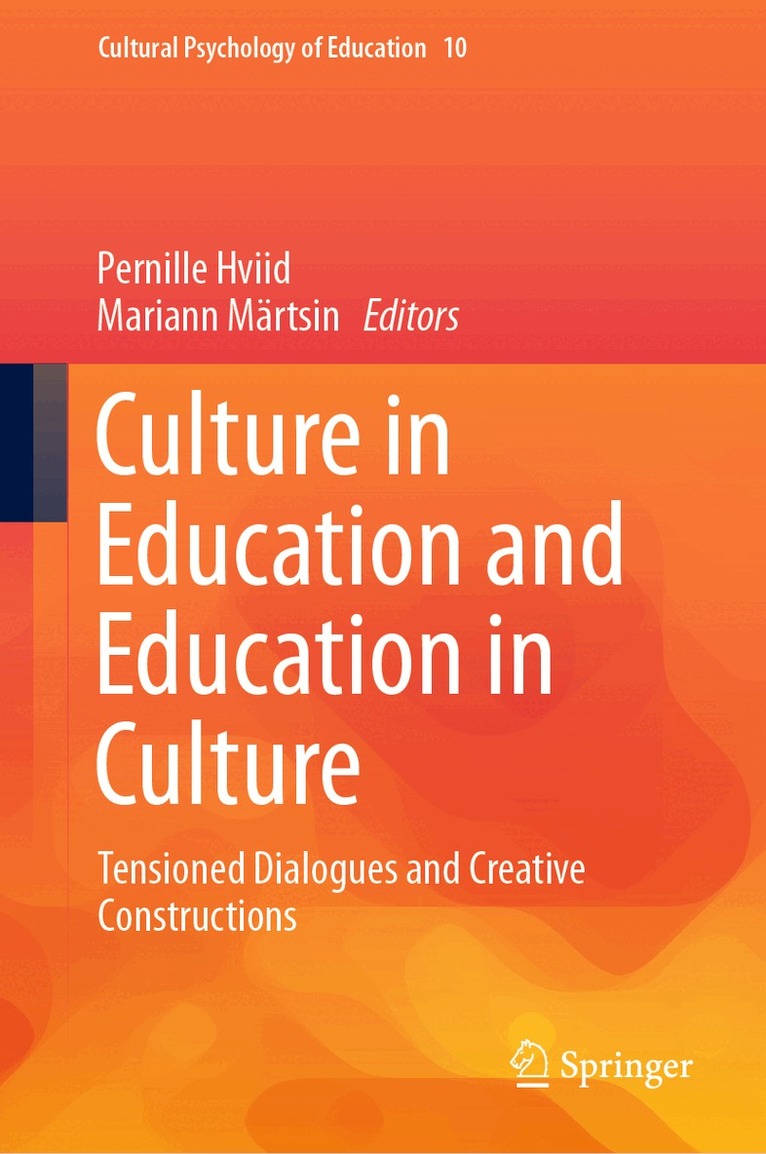
Culture in Education and Education in Culture
Tensioned Dialogues and Creative Constructions
Inbunden, Engelska, 2019
1 031 kr
Skickas inom 10-15 vardagar
In a world where the global engagement and international dialogue intensifies, some areas of cultivated knowledge suffer from this dialogue and this has consequences for people and communities. We propose education to be such a case. The global dialogue in education tends to be restricted to and mediated by standardized measurements. Such standards are meant to measure qualities of education and of student behavior and create the sought for condition for normative comparability and competition. The obvious drawback is that cultural variability – in local living as well as in education – is rendered irrelevant. Are there alternatives? The book insists on maintaining the discussion about education on a global level, but rather than moving towards homogenization and standardization of education, the attention is drawn towards the potential for learning from creative fits - and misfits - between concrete local cultures, institutional practices and global aims and standards of education. This work brings together a group of educational and developmental researchers and scholars grappling to find culturally informed and sensitive modes of educating people and communities. Case studies and examples from four geographical contexts are being discussed: China, Brazil, Australia and Europe. While being embedded in these local cultures, the authors share a conceptual grounding in cultural developmental theorizing and a vision for a culturally informed globalized perspective on education. As the theme of the book is learning from each other, the volume also includes commentaries from leading scholars in the field of cultural psychology and education.
Del 10 - Cultural Psychology of Education
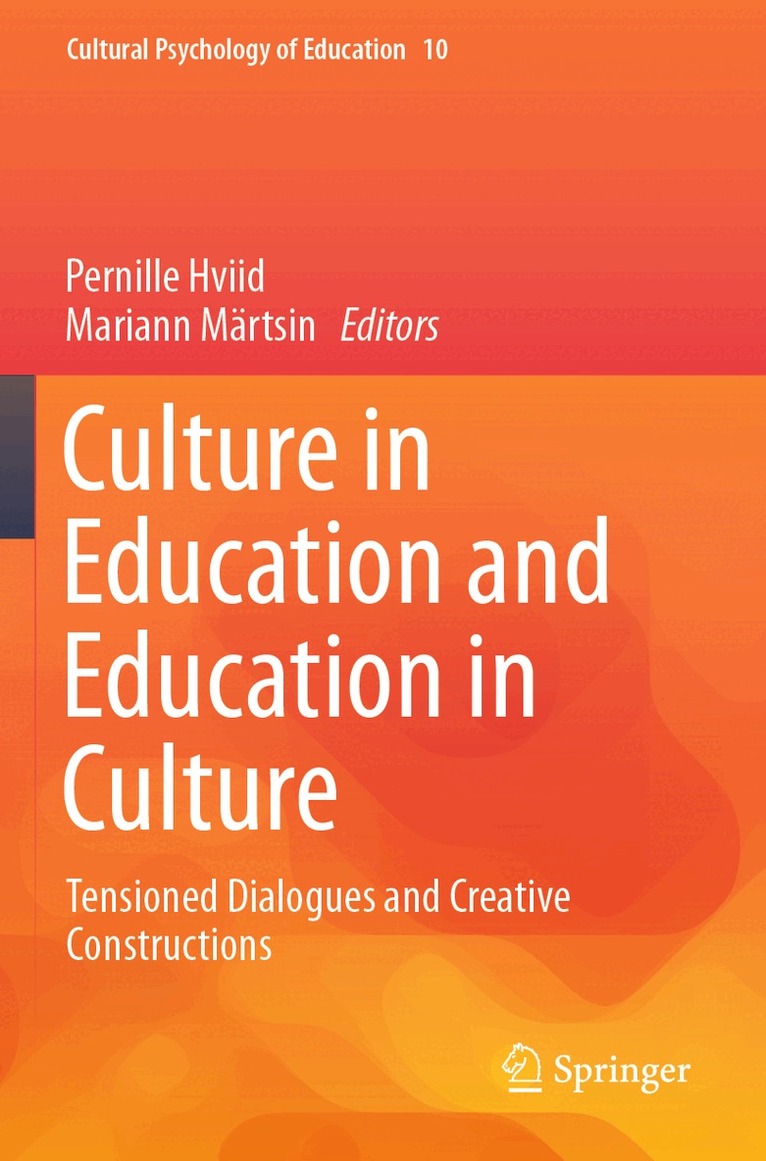
Culture in Education and Education in Culture
Tensioned Dialogues and Creative Constructions
Häftad, Engelska, 2020
1 031 kr
Skickas inom 10-15 vardagar
In a world where the global engagement and international dialogue intensifies, some areas of cultivated knowledge suffer from this dialogue and this has consequences for people and communities. We propose education to be such a case. The global dialogue in education tends to be restricted to and mediated by standardized measurements. Such standards are meant to measure qualities of education and of student behavior and create the sought for condition for normative comparability and competition. The obvious drawback is that cultural variability – in local living as well as in education – is rendered irrelevant. Are there alternatives? The book insists on maintaining the discussion about education on a global level, but rather than moving towards homogenization and standardization of education, the attention is drawn towards the potential for learning from creative fits - and misfits - between concrete local cultures, institutional practices and global aims and standards of education. This work brings together a group of educational and developmental researchers and scholars grappling to find culturally informed and sensitive modes of educating people and communities. Case studies and examples from four geographical contexts are being discussed: China, Brazil, Australia and Europe. While being embedded in these local cultures, the authors share a conceptual grounding in cultural developmental theorizing and a vision for a culturally informed globalized perspective on education. As the theme of the book is learning from each other, the volume also includes commentaries from leading scholars in the field of cultural psychology and education.
1 031 kr
Skickas inom 10-15 vardagar
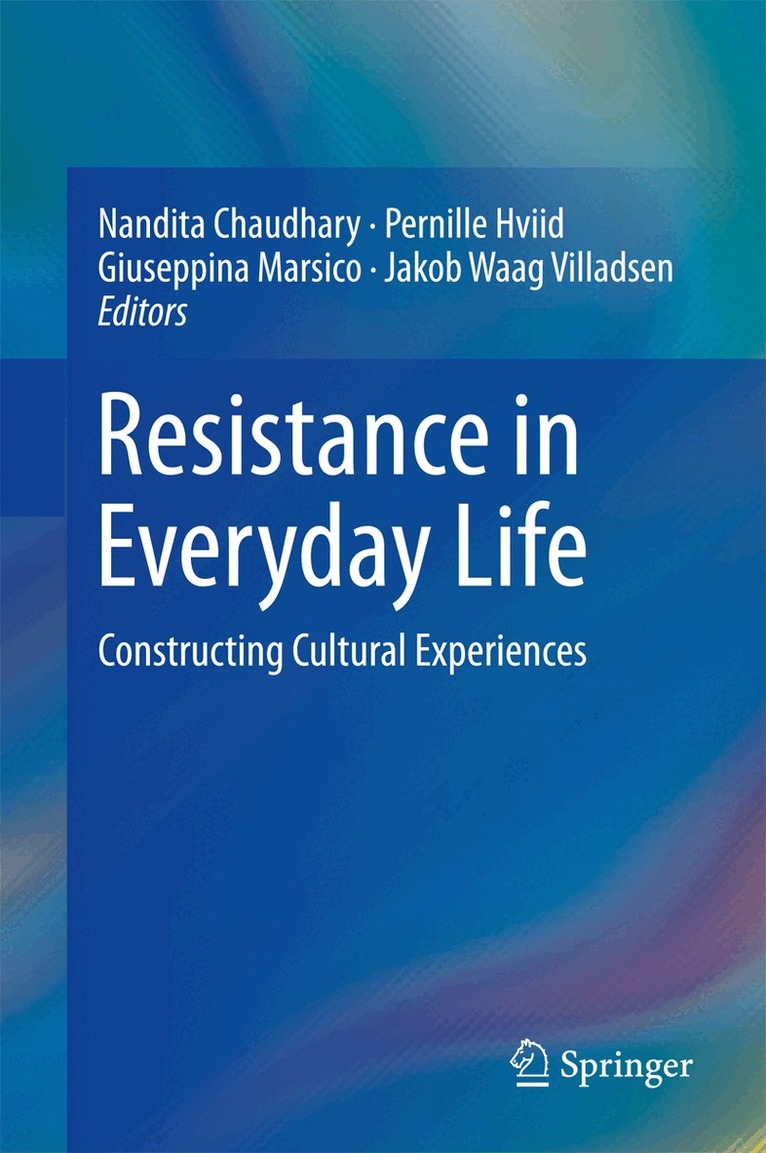
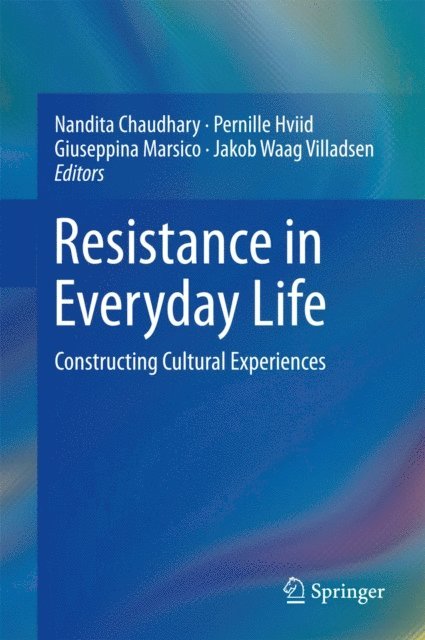
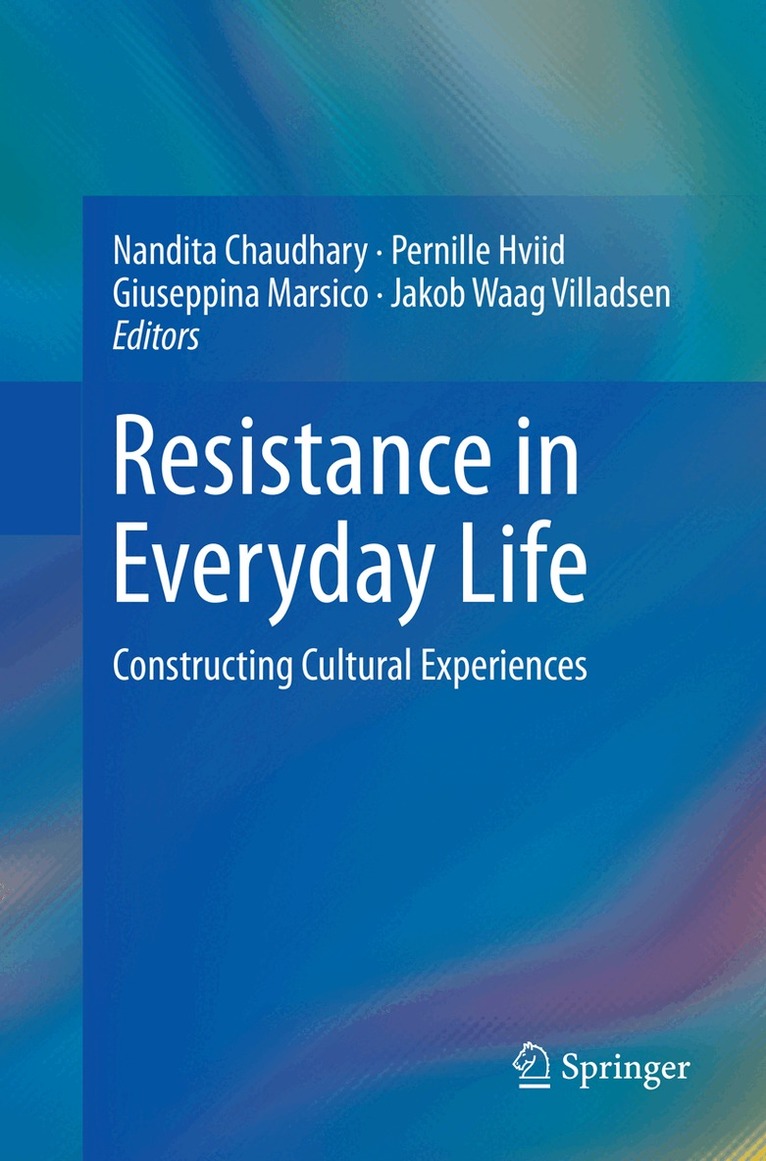
This book is about resistance in everyday life, illustrated through empirical contexts from different parts of the world. Resistance is a widespread phenomenon in biological, social and psychological domains of human cultural development. Yet, it is not well articulated in the academic literature and, when it is, resistance is most often considered counter-productive. Simple evaluations of resistance as positive or negative are avoided in this volume; instead it is conceptualised as a vital process for human development and well-being. While resistance is usually treated as an extraordinary occurrence, the focus here is on everyday resistance as an intentional process where new meaning constructions emerge in thinking, feeling, acting or simply living with others. Resistance is thus conceived as a meaning-making activity that operates at the intersection of personal and collective systems. The contributors deal with strategies for handling dissent by individuals or groups, specifically dissent through resistance. Resistance can be a location of intense personal, interpersonal and cultural negotiation, and that is the primary reason for interest in this phenomenon. Ordinary life events contain innumerable instances of agency and resistance. This volume discusses their manifestations, and it is therefore of interest for academics and researchers of cultural psychology, cultural studies, anthropology, sociology, and human development.
1 031 kr
Skickas inom 10-15 vardagar
This book is about resistance in everyday life, illustrated through empirical contexts from different parts of the world. Resistance is a widespread phenomenon in biological, social and psychological domains of human cultural development. Yet, it is not well articulated in the academic literature and, when it is, resistance is most often considered counter-productive. Simple evaluations of resistance as positive or negative are avoided in this volume; instead it is conceptualised as a vital process for human development and well-being. While resistance is usually treated as an extraordinary occurrence, the focus here is on everyday resistance as an intentional process where new meaning constructions emerge in thinking, feeling, acting or simply living with others. Resistance is thus conceived as a meaning-making activity that operates at the intersection of personal and collective systems. The contributors deal with strategies for handling dissent by individuals or groups, specifically dissent through resistance. Resistance can be a location of intense personal, interpersonal and cultural negotiation, and that is the primary reason for interest in this phenomenon. Ordinary life events contain innumerable instances of agency and resistance. This volume discusses their manifestations, and it is therefore of interest for academics and researchers of cultural psychology, cultural studies, anthropology, sociology, and human development.