Peter A. Parsons - Böcker
Visar alla böcker från författaren Peter A. Parsons. Handla med fri frakt och snabb leverans.
3 produkter
3 produkter
1 099 kr
Skickas inom 10-15 vardagar
The collected papers in this volume cover the effects of environmental stress under a biological and energetic model. Examples are taken from fossil and living animal populations, and from outlier human populations and traditional societies. These examples indicate that stress increases energy demands and so reduces reproductive fitness. A wide range of stressful situations also are analyzed under the less stringent conditions experienced by modern human populations, when cultural factors assume importance. These emphasize the interaction between genetic, physiological, psychological and social factors in everyday life and in clinical settings.
1 850 kr
Skickas inom 7-10 vardagar
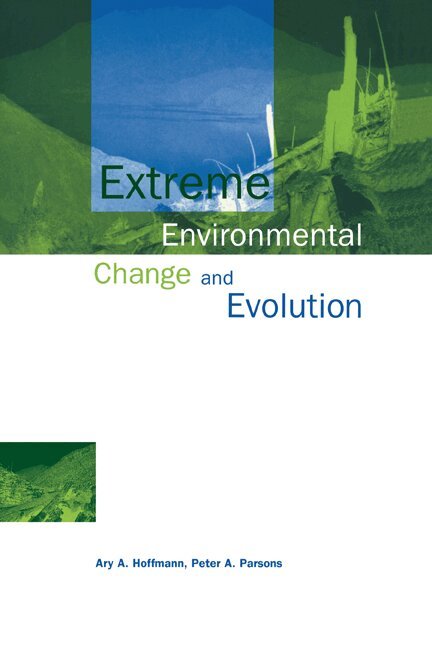
Most natural populations intermittently experience extremely stressful conditions. This book discusses how such conditions can cause periods of intense selection, increasing both phenotypic and genetic variation, and allowing organisms with novel characteristics to be first generated and then established in the population. The authors argue that stressful conditions can have a major impact on the environment, backing up their arguments with evidence from the fossil record. They suggest further that, as a consequence, periods of stress must be taken into consideration when long term conservation strategies are planned, particularly as stressful conditions are becoming increasingly prevalent as a result of human activities. This broad overview will be of great interest to students and researchers in the field of evolutionary biology, genetics, ecology, palaeontology and conservation biology.
699 kr
Skickas inom 7-10 vardagar
Most natural populations intermittently experience extremely stressful conditions. This book discusses how such conditions can cause periods of intense selection, increasing both phenotypic and genetic variation, and allowing organisms with novel characteristics to be first generated and then established in the population. The authors argue that stressful conditions can have a major impact on the environment, backing up their arguments with evidence from the fossil record. They suggest further that, as a consequence, periods of stress must be taken into consideration when long term conservation strategies are planned, particularly as stressful conditions are becoming increasingly prevalent as a result of human activities. This broad overview will be of great interest to students and researchers in the field of evolutionary biology, genetics, ecology, palaeontology and conservation biology.