Peter Aaby - Böcker
Visar alla böcker från författaren Peter Aaby. Handla med fri frakt och snabb leverans.
2 produkter
2 produkter
1 113 kr
Skickas inom 3-6 vardagar
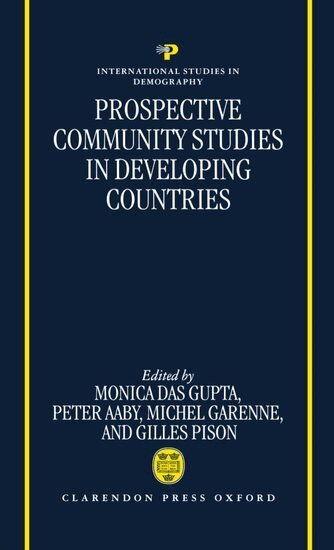
This book presents an overview of the leading prospective studies in developing countries in population and health research. Prospective community studies are concerned with the understanding of the incidence of birth, disease and death. The leading practitioners in this field present the methodologies they have developed and summarize the major findings of their studies. Since many of these methodologies have never been documented and the results are scattered in different publications, the volume provides a great deal of valuable information which is difficult to locate. Thus it will be an indispensable guide to researchers in the field of prospective studies and will also be helpful as a teaching aid. It is a unique compendium of reflective accounts of prospective research, which has been so fundamental to many major innovations regarding the way demographic behaviour is observed, monitored and analysed. It also provides a comprehensive account of the substantive contribution of prospective studies, which include some innovative and seminal findings on community health. The debate on the most efficient kinds of surveys is still ongoing, and some of the surveys are still in progress too. The book will be of great interest for demographers, public health researchers, family planners and survey specialists.
2 672 kr
Skickas inom 5-8 vardagar
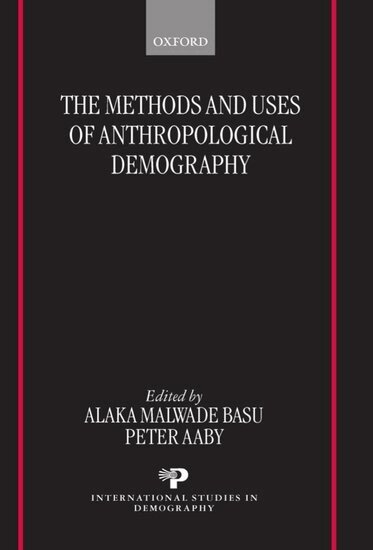
This volume takes stock of the current status of the comparatively new discipline of `Anthropological Demography', and discusses its major methods, its main strengths, and its chief limitations. It includes contributions from both mainstream demographers and foremost anthropologists, all stressing the necessity of a shared agenda for each discipline to progress successfully and avoid marginalization. While the unique research and personal satisfaction afforded by `participant observation' is described, the book also highlights the potential contribution to the understanding of demographic events of much more than the field methods of traditional anthropology. In particular, it stresses the insights possible from qualitative focus group interviews, from longitudinal studies and from a greater interest in `armchair' anthropology, in which demographers complement their quantitative findings with qualitative information and understanding gleaned from a careful reading of the anthropological literature, in the form of both ethnographies and anthropological theories. In addition, it stresses the larger world of the ideal anthropological demographer: a world that includes the cultural context of course, but also takes into account the historical and political forces that condition so much individual behaviour. But the book is also a critical venture. It includes therefore considerable discussion of the common limits of the purely anthropological approach for understanding demographic events and processes, especially from a larger policy perspective, at the same time as it emphasizes the crucial role of the anthropological approach to designing policy that is potentially effective as well as socially and culturally sensitive. It reiterates the often complementary role of anthropological demography and also discusses some specific questions in demographic research which it does not as yet seem to have the capacity to illuminate. The book is aimed primarily at demographers wishing to broaden their research agenda and deepen their understanding of demographic behaviour, but it also hopes to convert mainstream anthropologists to take a more active interest in demographic issues. Both disciplines, after all, have a common intense interest in the kind of life and death issues that they can fruitfully explore together or by using one another's research methods.