• Fri frakt över 249 kr
  • •
  • Snabba leveranser
  • •
  • Billiga böcker
Kundservice

Du är på sajten för privatpersoner.

Företag, bibliotek eller offentlig verksamhet?

Du handlar på classic.bokus.com, där alla dina funktioner finns intakta.
Till classic.bokus.com
Bokus logotyp. Gå till startsidan.
  • Erbjudanden
  • Nyheter
  • Student
  • Topplistor
  • Barn & ungdom
  • Bokus Play
  • E-böcker
  • Pocketböcker
  • Spel & pussel

Må bättre, för mindre! Upp till 50% rabatt på hälsoböcker

Sidfot

Mina sidor

    Hjälp

    • Kundservice
    • Vanliga frågor och svar
    • Frakt och leverans
    • Retur vid ångerrätt
    • Reklamera vara
    • Betalning
    • Köpvillkor
    • Allmänna villkor
    • Information om webbplatsens tillgänglighet

    Om Bokus

    • Om oss
    • Pressrum
    • För studenter
    • För företag
    • För bibliotek och offentlig verksamhet
    • För leverantörer
    • Hållbarhet

    Populärt

    • Aktuella erbjudanden
    • Presentkort
    • Studentlitteratur
    • Nya böcker
    • Topplistor
    • Signerade böcker
    • Engelska böcker

    Inspiration

    • Boktips
    • BookTok
    • Populära bokserier
    • Barnbokskaraktärer
    • Populära författare
    Logotyp för Bokus
    Följ oss på Facebook (extern länk)Följ oss på Instagram (extern länk)Följ oss på YouTube (extern länk)Följ oss på TikTok (extern länk)
    bokus @ CookiesAnpassa cookiesIntegritetspolicyKöpvillkor
    Till Citymail hemsida (extern länk)Till Budbee hemsida (extern länk)Till Postnord hemsida (extern länk)Till Schenker hemsida (extern länk)Till Early Bird hemsida (extern länk)Till Walleys hemsida (extern länk)
    1. Samhälle och politik
    2. Sociologi och antropologi
    3. Antropologi

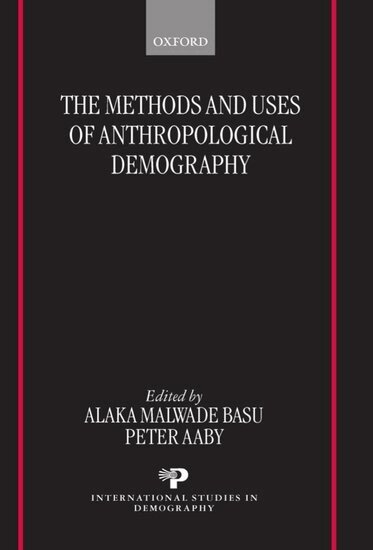
    The Methods and Uses of Anthropological Demography

    AvAlaka Malwade Basu,Peter Aaby

    Inbunden, Engelska, 1998

    Del i serien International Studies in Demography

    3 520 kr

    Beställningsvara. Skickas inom 5-8 vardagar. Fri frakt över 249 kr.

    Beskrivning

    This volume takes stock of the current status of the comparatively new discipline of `Anthropological Demography', and discusses its major methods, its main strengths, and its chief limitations. It includes contributions from both mainstream demographers and foremost anthropologists, all stressing the necessity of a shared agenda for each discipline to progress successfully and avoid marginalization. While the unique research and personal satisfaction afforded by `participant observation' is described, the book also highlights the potential contribution to the understanding of demographic events of much more than the field methods of traditional anthropology. In particular, it stresses the insights possible from qualitative focus group interviews, from longitudinal studies and from a greater interest in `armchair' anthropology, in which demographers complement their quantitative findings with qualitative information and understanding gleaned from a careful reading of the anthropological literature, in the form of both ethnographies and anthropological theories. In addition, it stresses the larger world of the ideal anthropological demographer: a world that includes the cultural context of course, but also takes into account the historical and political forces that condition so much individual behaviour. But the book is also a critical venture. It includes therefore considerable discussion of the common limits of the purely anthropological approach for understanding demographic events and processes, especially from a larger policy perspective, at the same time as it emphasizes the crucial role of the anthropological approach to designing policy that is potentially effective as well as socially and culturally sensitive. It reiterates the often complementary role of anthropological demography and also discusses some specific questions in demographic research which it does not as yet seem to have the capacity to illuminate. The book is aimed primarily at demographers wishing to broaden their research agenda and deepen their understanding of demographic behaviour, but it also hopes to convert mainstream anthropologists to take a more active interest in demographic issues. Both disciplines, after all, have a common intense interest in the kind of life and death issues that they can fruitfully explore together or by using one another's research methods.

    Produktinformation

    • Utgivningsdatum:1998-09-24
    • Mått:162 x 243 x 24 mm
    • Vikt:651 g
    • Format:Inbunden
    • Språk:Engelska
    • Serie:International Studies in Demography
    • Antal sidor:340
    • Förlag:Clarendon Press
    • ISBN:9780198293378

    Utforska kategorier

    • Antropologi inom Samhälle och politik
    • Sociologi inom Samhälle och politik

    Mer om författaren

    Alaka Basu is Senior Research Associate in the Division of Nutritional Sciences at Cornell University. She has previously held positions at the University of Bombay; The Population Foundation of India; the National Council of Applied Economic Research, New Delhi; and the Institute of Economic Growth, New Delhi.Peter Aaby is Research Professor in Health Conditions in Developing Countries in the Department of Epidemiology at the University of Copenhagen. He also works as Senior Researcher and Project leader of the Community Studies of Infectious Diseases and Primary Health Care in Guinea-Bisseau.

    Recensioner i media

    The book is an important contribution to a reconfiguration of demography as a scientific discipline, and the book is an obvious input to university courses within anthropology, sociology and geography on demography and development.

    Innehållsförteckning

    • Introduction: Approaches to Anthropological Demography ; 1. Methodological Advances in Studying the Social Context of AIDS in Africa ; 2. Participant Observation in Demographic Research: Fieldwork Experiences in a Ghanaian Community ; 3. Using Qualitative Data for Understanding Old-Age Security and Fertility ; 4. Anthropological Insights into the Links between Women's Status and Demographic Behaviour, Illustrated with the Notions of Hypergamy and Territorial Exogamy ; 5. Kinship Structures, Marriage Systems, and Reproductive Behaviour: The Use of Anthropology and Demography in a Brazilian Case Study ; 6. Education, Fertility, and Child Survival: Unravelling the Links ; 7. A Rereading of Historical Material: An Alternative Account of the Position of Women in Ancient India ; 8. Political Economy and Cultural Processes in the Fertility Decline of Sicilian Artisans ; 9. Anthropological Perspectives on Migration in Africa ; 10. Are Men Weaker or Do their Sisters Talk Too Much? Sex Differences in Childhood Mortality and the Construction of 'Biological' Differences ; 11. Cultural Models and Demographic Behaviour ; 12. Social Norms, Natural Fertility, and the Resumption of Postpartum 'Contact' in The Gambia ; 13. The Limits of Diffusionism