
Peter C. Erb – författare
Visar alla böcker från författaren . Handla med fri frakt och snabb leverans.
5 produkter
5 produkter
Inbunden, Engelska, 2013
2 485 kr
Skickas inom 7-10 vardagar
Between 1833 and 1891 Henry Edward Manning (1808-1892) and William Ewart Gladstone (1809-1898) maintained a correspondence, broken only for a decade from 1851-1861and from 1875-1882. Tracing as it does the shifting relationships between two such major figures over the greater part of the nineteenth century, the collection provides substantial insights into debates on Church-State realignments in the 1830s and 1840s, the entanglements of Anglican Old High Churchmen and Tractarians from the early years of the Oxford Movement to 1851, and the relationships between Roman Catholics and the British Government over Italian, Irish, educational, and other political and religious issues in the latter half of the nineteenth century. The first and second volumes include the greater part of the correspondence, composed while the two men were close friends, prior to Manning's entrance into the Roman Catholic Church in April 1851 and Gladstone's shift from the Conservative to the Liberal party at approximately the same time. The third and fourth volumes of the edition comprise their letters from the post-1861 period, Manning then serving as a Roman Catholic priest and Archbishop of Westminster, and Gladstone as Chancellor of the Exchequer, leader of the Liberal opposition, and three terms as Liberal Prime Minister (his fourth following Manning's death). The fourth volume includes an appendix of materials marking their public debate initiated in late 1874 by Gladstone's charge that with the formal declaration of papal infallibility in 1870 Roman Catholics were required to renounce their 'moral and mental freedom.'
Inbunden, Engelska, 2013
2 485 kr
Skickas inom 7-10 vardagar
Between 1833 and 1891 Henry Edward Manning (1808-1892) and William Ewart Gladstone (1809-1898) maintained a correspondence, broken only for a decade from 1851-1861and from 1875-1882. Tracing as it does the shifting relationships between two such major figures over the greater part of the nineteenth century, the collection provides substantial insights into debates on Church-State realignments in the 1830s and 1840s, the entanglements of Anglican Old High Churchmen and Tractarians from the early years of the Oxford Movement to 1851, and the relationships between Roman Catholics and the British Government over Italian, Irish, educational, and other political and religious issues in the latter half of the nineteenth century. The first and second volumes include the greater part of the correspondence, composed while the two men were close friends, prior to Manning's entrance into the Roman Catholic Church in April 1851 and Gladstone's shift from the Conservative to the Liberal party at approximately the same time. The third and fourth volumes of the edition comprise their letters from the post-1861 period, Manning then serving as a Roman Catholic priest and Archbishop of Westminster, and Gladstone as Chancellor of the Exchequer, leader of the Liberal opposition, and three terms as Liberal Prime Minister (his fourth following Manning's death). The fourth volume includes an appendix of materials marking their public debate initiated in late 1874 by Gladstone's charge that with the formal declaration of papal infallibility in 1870 Roman Catholics were required to renounce their 'moral and mental freedom.'
Inbunden, Engelska, 2013
2 851 kr
Skickas inom 3-6 vardagar
Between 1833 and 1891 Henry Edward Manning (1808-1892) and William Ewart Gladstone (1809-1898) maintained a correspondence, broken only for a decade from 1851-1861and from 1875-1882. Tracing as it does the shifting relationships between two such major figures over the greater part of the nineteenth century, the collection provides substantial insights into debates on Church-State realignments in the 1830s and 1840s, the entanglements of Anglican Old High Churchmen and Tractarians from the early years of the Oxford Movement to 1851, and the relationships between Roman Catholics and the British Government over Italian, Irish, educational, and other political and religious issues in the latter half of the nineteenth century. The first and second volumes include the greater part of the correspondence, composed while the two men were close friends, prior to Manning's entrance into the Roman Catholic Church in April 1851 and Gladstone's shift from the Conservative to the Liberal party at approximately the same time. The third and fourth volumes of the edition comprise their letters from the post-1861 period, Manning then serving as a Roman Catholic priest and Archbishop of Westminster, and Gladstone as Chancellor of the Exchequer, leader of the Liberal opposition, and three terms as Liberal Prime Minister (his fourth following Manning's death). The fourth volume includes an appendix of materials marking their public debate initiated in late 1874 by Gladstone's charge that with the formal declaration of papal infallibility in 1870 Roman Catholics were required to renounce their "moral and mental freedom."
Inbunden, Engelska, 2013
2 485 kr
Skickas inom 7-10 vardagar
Between 1833 and 1891 Henry Edward Manning (1808-1892) and William Ewart Gladstone (1809-1898) maintained a correspondence, broken only for a decade from 1851-1861and from 1875-1882. Tracing as it does the shifting relationships between two such major figures over the greater part of the nineteenth century, the collection provides substantial insights into debates on Church-State realignments in the 1830s and 1840s, the entanglements of Anglican Old High Churchmen and Tractarians from the early years of the Oxford Movement to 1851, and the relationships between Roman Catholics and the British Government over Italian, Irish, educational, and other political and religious issues in the latter half of the nineteenth century. The first and second volumes include the greater part of the correspondence, composed while the two men were close friends, prior to Manning's entrance into the Roman Catholic Church in April 1851 and Gladstone's shift from the Conservative to the Liberal party at approximately the same time. The third and fourth volumes of the edition comprise their letters from the post-1861 period, Manning then serving as a Roman Catholic priest and Archbishop of Westminster, and Gladstone as Chancellor of the Exchequer, leader of the Liberal opposition, and three terms as Liberal Prime Minister (his fourth following Manning's death). The fourth volume includes an appendix of materials marking their public debate initiated in late 1874 by Gladstone's charge that with the formal declaration of papal infallibility in 1870 Roman Catholics were required to renounce their 'moral and mental freedom.'
Häftad, Engelska, 2007
181 kr
Skickas inom 5-8 vardagar
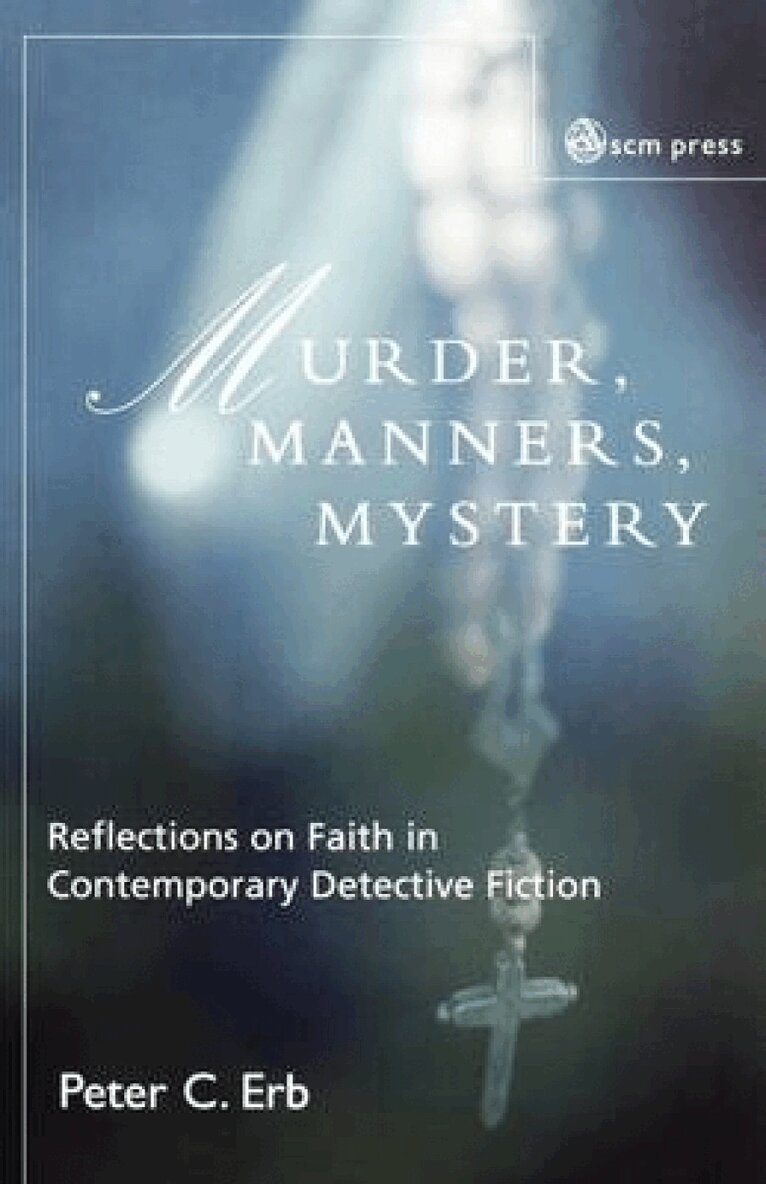
Highlighting popular works by P.D. James, Colin Dexter, Ian Pears and Umberto Eco, among others, this subtle and intelligently written monograph examines the treatment of religion in the genre of contemporary murder mystery novels, and the implications of this phenomenon for understanding Christian thought in a post-Christian society. The book begins by considering the critical question of authorial intent and the question of genre criticism and what makes a genre, a 'serious' literary specialism. Is crime fiction ever destined to be written by 'serious authors'? Erb argues that P D James proves this possible, writing for a multi-faceted, secular, popular audience and setting her books in a Christian context. The question, what is mystery is fully explored in the opening chapter, where Erb examines James' A Taste for Death and Devices and Desires, and contrasts their treatment of mystery with Colin Dexter's treatment in Death is now my Neighbour. The second chapter considers the popularity of detective fiction at large focussing on James' Original Sin and Umberto Eco's The Name of the Rose. The third chapter focuses on the problem of justice. Who is the murderer? This is the key to all detective novels: the murder itself is secondary. The narrative depends on the murderer's ability to replace a crime with a convincingly constructed illusion of innocence, and to escape punishment by means of good manners. Erb explores this problem, first evident in Exodus, in P D James' A Certain Justice and Ian Pears' An Instance of the Fingerpost. Finally Erb looks at retribution. Can justice ever be anything more than retribution, death without hope? What satisfaction can be made for the loss of a human life? How can a murderer ever fully confess a crime and experience thanksgiving in final release from the consequences? These questions are considered in light of James' Death in Holy Orders, and Colin Dexter's A Remorseful Day.