Peter Clegg - Böcker
Visar alla böcker från författaren Peter Clegg. Handla med fri frakt och snabb leverans.
10 produkter
10 produkter
1 693 kr
Skickas inom 10-15 vardagar
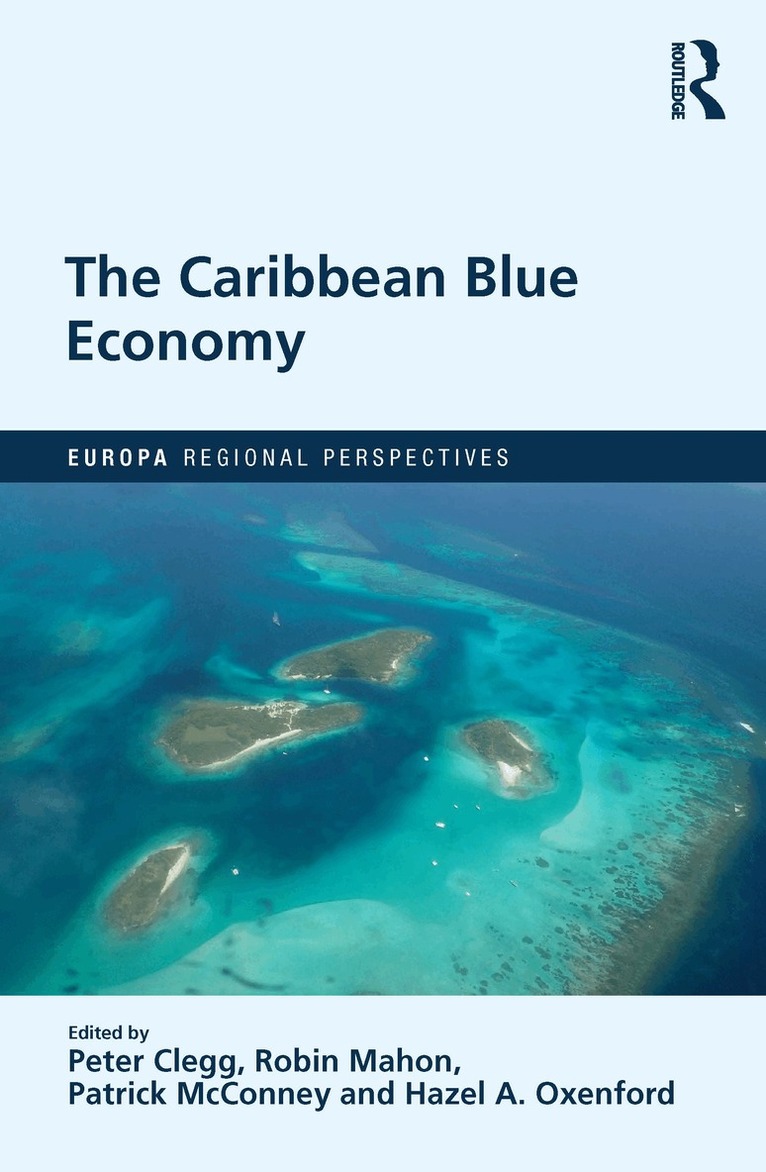
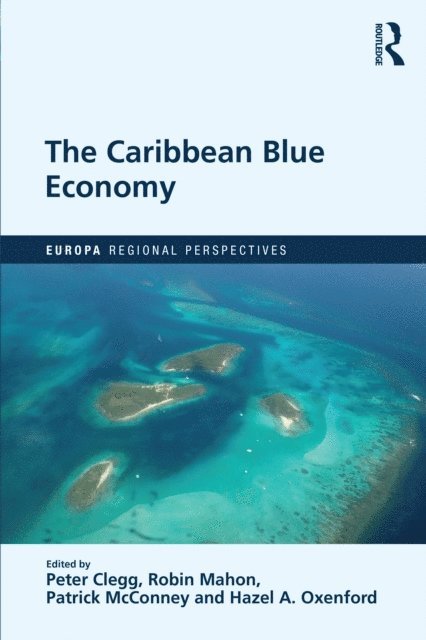
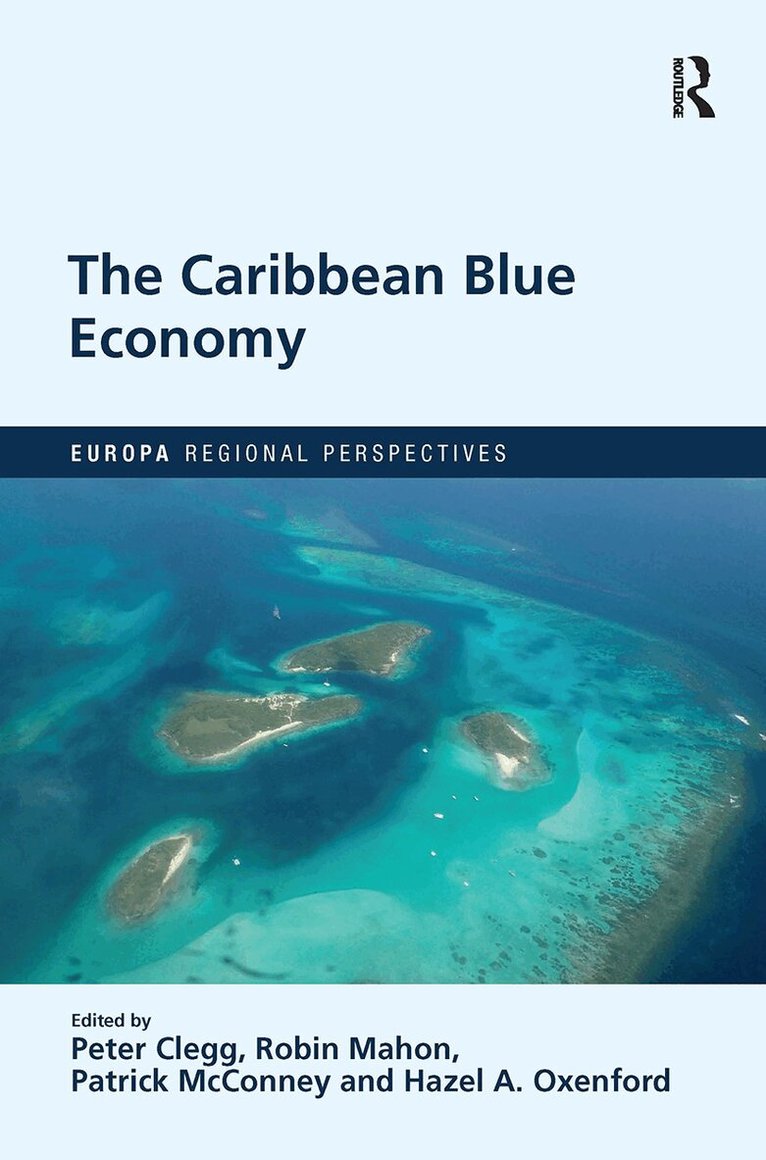
The Blue Economy is emerging on the global scene as a powerful and persuasive new concept for sustainable development based on economic activities associated with the ocean. Several regions globally have adopted this concept at national and regional levels, including the Caribbean. Given the complex, multisectoral and multilevel nature of the Blue Economy, it is clear that different approaches will be needed for different regions. Hence, this volume explores the opportunities, threats and risks involved in operationalising the Blue Economy in the Wider Caribbean Region, defined as northern Brazil to the USA and all mainland and island countries and territories in-between.The first part of the book looks at where the region stands in the global picture regarding adoption of the Blue Economy and what is planned. The second set of chapters examines key crosscutting issues such as ecosystem services, climate change and governance at national and regional levels that could make or break the Blue Economy initiative. The book then goes on to explore the main sectoral activities that will constitute the Blue Economies in the region: fisheries, tourism, shipping and transport, renewable energy, oil and gas, seabed mining and waste management are all considered. The book ends with a synthesis of the political and technical requirements to overcome threats and take advantage of opportunities in the Blue Economy.
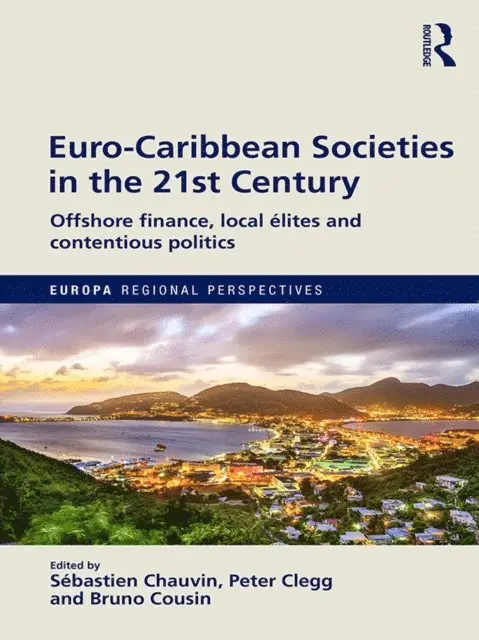
Euro-Caribbean Societies in the 21st Century
Offshore finance, local élites and contentious politics
Häftad, Engelska, 2020
582 kr
Skickas inom 10-15 vardagar
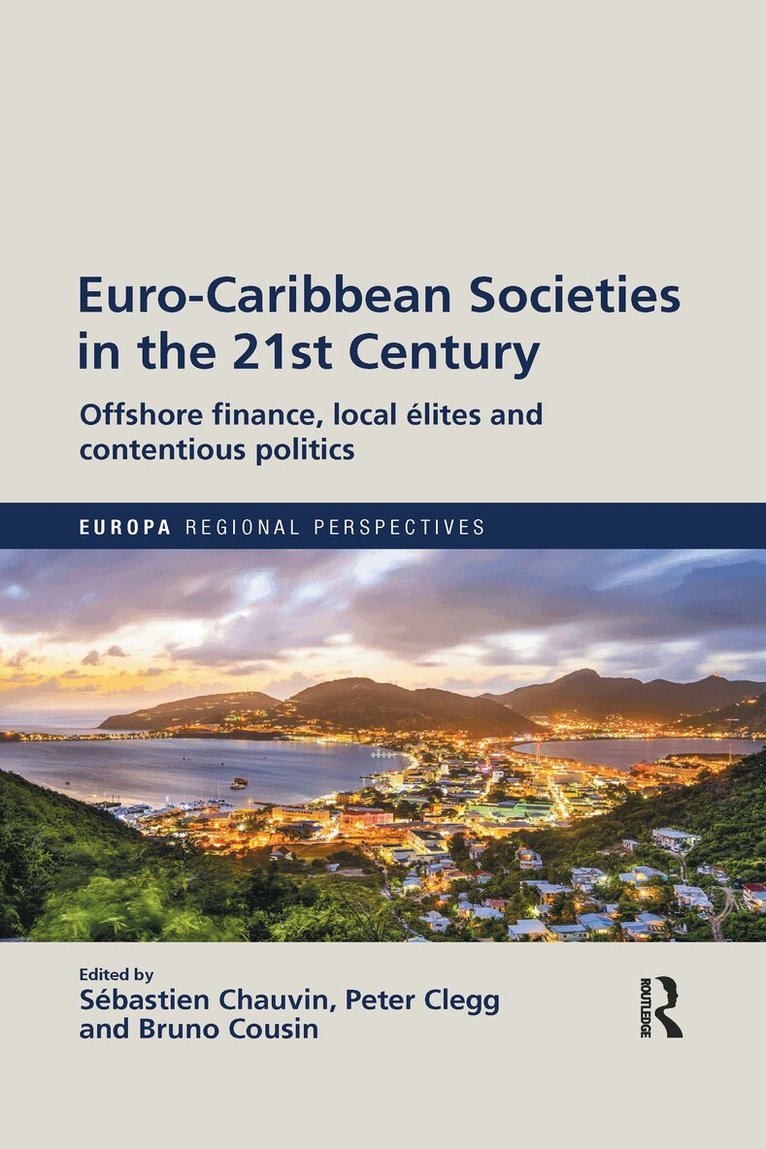
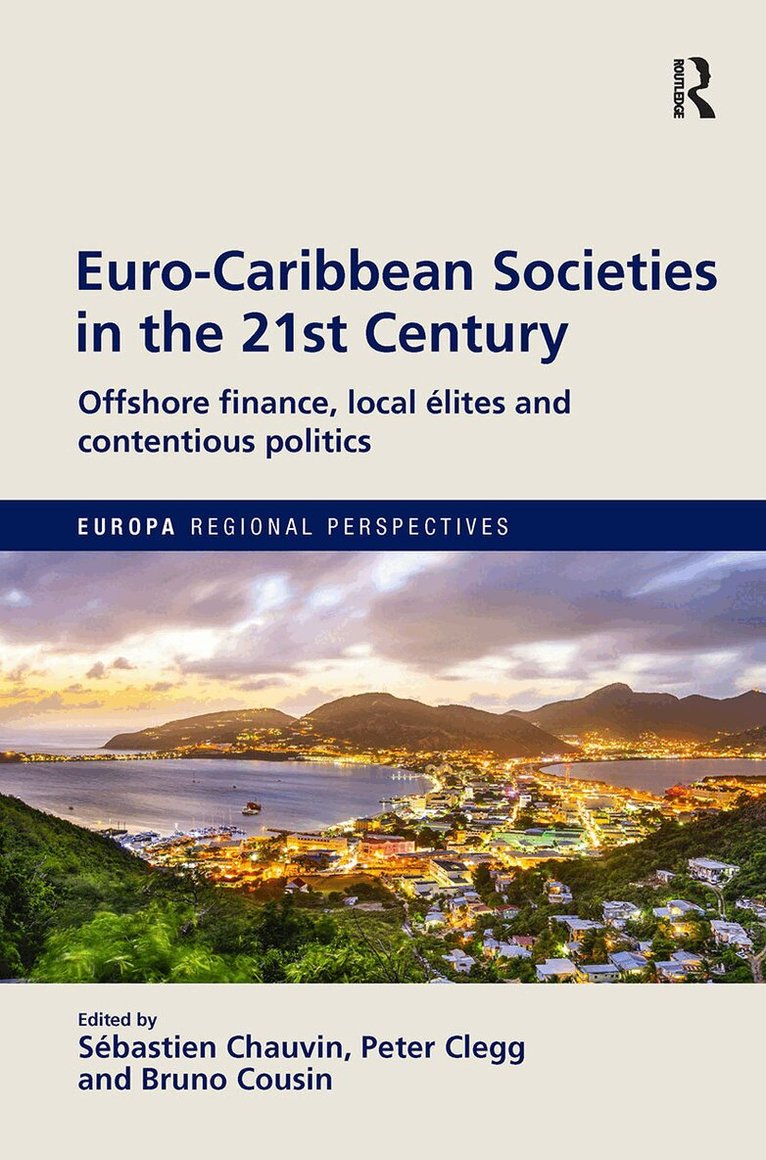
This edited collection examines the realities of the last remnants of the European colonial empires in the Caribbean, namely the British, Dutch and French overseas territories. Although known and perhaps infamous for their role as high-end tourist destinations and financial centres, these small jurisdictions are complex and multifaceted places. While this volume considers their role as financial centres, it does so from alternative and original perspectives by examining how the sector shapes the internal dynamics of these Caribbean societies, and how it is itself shaped by global trends. A range of contributions is included that highlight other key issues. Political relations between the territories and their metropolitan centres and with the European Union are the focus of several chapters, highlighting the stresses and strains, and in many cases the unfulfilled expectations of devolved governance. Further chapters describe the economic instability and factors of political conflict faced by some of these societies and the available options to address them. Finally, several chapters reflect more specifically on the territories’ internal social and ethnic dynamics, and the hierarchies and inequalities that result.Bringing together a variety of different disciplinary perspectives, from political science to sociology, and from anthropology to geography, this book will be of great interest to any academic or student who wishes to see how an often overlooked part of the world is actually a key site of socio-economic transformation and a crucial nexus in global affairs.Sébastien Chauvin is a sociologist and an Associate Professor at the Institut des Sciences Sociales at the University of Lausanne, Switzerland. His research deals with immigration, citizenship, gender, sexuality, law and labour in France and the USA. With Bruno Cousin, he has also developed a multi-sited research programme on social and symbolic capital and the cultural sociology of economic élites, with a focus on Western Europe (élite male social club sociability), the Caribbean region (Saint-Barthélemy), and new forms of conspicuous consumption among the global super-rich. His other ongoing writing explores the intersections of race, nationalism, sexuality and citizenship in the Netherlands, France and the USA. Peter Clegg is Associate Professor in Politics and Head of the Department of Health and Social Sciences at the University of the West of England, Bristol, UK. He was formerly Visiting Research Fellow at both KITLV/Royal Netherlands Institute of South East Asian and Caribbean Studies, Leiden, Netherlands, and at the Sir Arthur Lewis Institute of Social and Economic Studies (SALISES), University of the West Indies, Jamaica. His main research interests focus on contemporary developments within the United Kingdom Overseas Territories and the international political economy of the Caribbean. Bruno Cousin is Assistant Professor of Sociology at Sciences Po, France, and an affiliate of the Centre of European Studies and Comparative Politics (CEE), France. Previously, he was Assistant Professor at the University of Lille, France, and Postdoctoral Research Fellow at Harvard University, USA, and has held visiting positions at NYU, the University of Amsterdam and Birkbeck. His research interests focus on class relations, residential segregation, social capital and forms of bourgeois sociability, and the modes of élites’ legitimization. He is currently conducting research with Sébastien Chauvin on Saint-Barthélemy (French West Indies), whose first results have been published in Ethnologie française and Geographies of the Super-Rich (2013), and he has recently co-authored Ce que les riches pensent des pauvres (2017).
647 kr
Skickas inom 10-15 vardagar
The decision of the UK to ‘Leave’ the European Union (EU) was unexpected, and as a consequence the precise details of what would come next were left very unclear, and still today there is little certainty or agreement over what ‘Brexit’ will actually mean. It is within this context that this edited volume has been produced. The Commonwealth featured quite heavily in the referendum campaign, particularly on the ‘Leave’ side; claiming that a vote for Brexit would allow the UK to re-new and extend links with the countries of the Commonwealth. However, critics highlighted the potential limitations of a new bilateral link, and that in many instances the UK’s role is strengthened by its membership of the EU. The tension between aspiration and likely reality is a key theme of the volume. Another, is how the decision of the UK may have consequences across the Commonwealth in terms of both domestic policy and regional cooperation. In short, the volume shines a detailed light on the historical and contemporary nature of relations between the UK and the Commonwealth. Linked to this, and possibly of greatest utility, is the consideration of how policy should be formulated to best strengthen the relationship in the future. This book originally appeared as a special issue of The Round Table.
Non-Independent Territories of the Caribbean and Pacific: Continuity or Change?
Häftad, Engelska, 2012
446 kr
Skickas inom 5-8 vardagar
620 kr
Skickas inom 10-15 vardagar
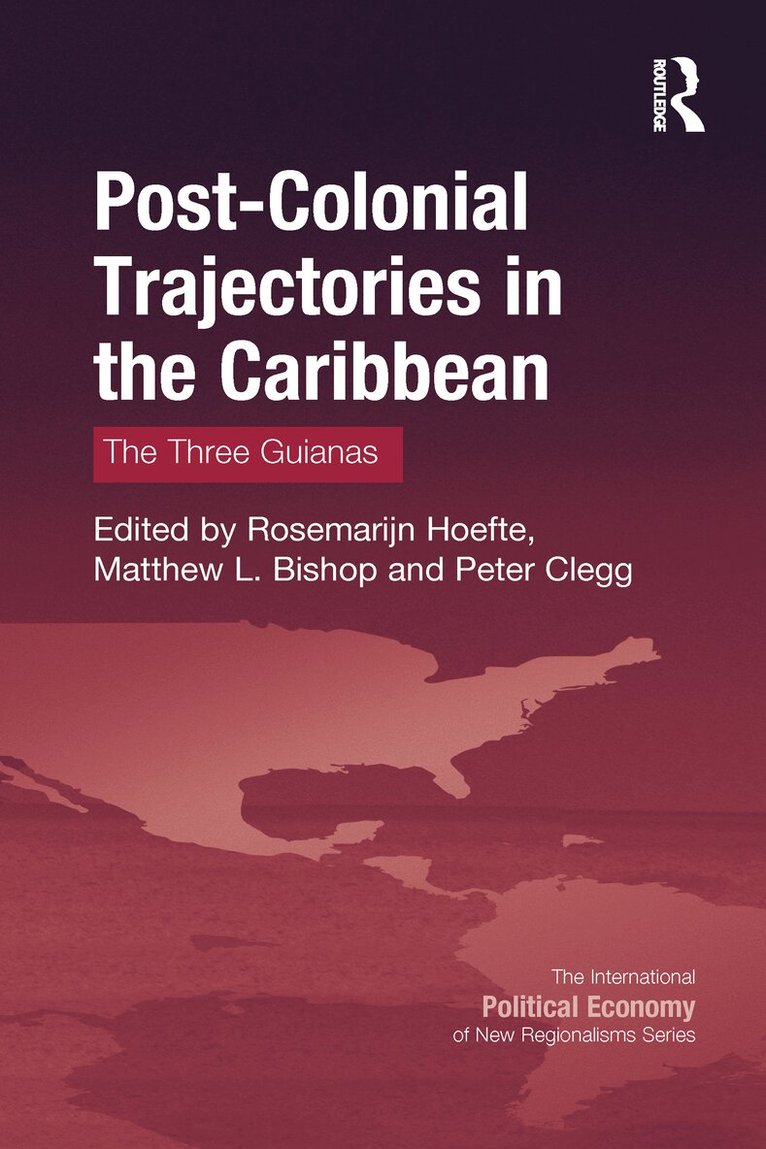
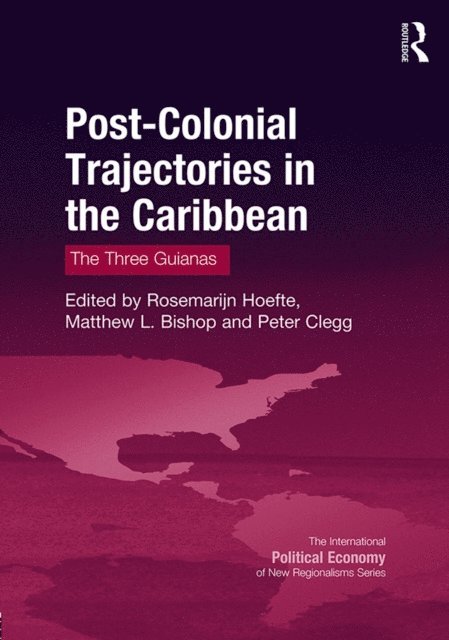
This book compares and contrasts the contemporary development experience of neighbouring, geographically similar countries with an analogous history of exploitation but by three different European colonisers. Studying the so-called ‘Three Guianas’ (Guyana, Suriname and French Guiana) offers a unique opportunity to look for similarities and differences in their contemporary patterns of development, particularly as they grapple with new and complex shifts in the regional, hemispheric and global context. Shaped decisively by their respective historical experiences, Guyana, in tandem with the laissez-faire approach of Britain toward its Caribbean colonies, was decolonised relatively early, in 1966, and has maintained a significant degree of distance from London. The hold of The Hague over Suriname, however, endured well after independence in 1975. French Guiana, by contrast, was decolonised much sooner than both of its neighbours, in 1946, but this was through full integration, thus cementing its place within the political economy and administrative structures of France itself. Traditionally isolated from the Caribbean, the wider Latin American continent and from each other, today, a range of similar issues – such as migration, resource extraction, infrastructure development and energy security – are coming to bear on their societies and provoking deep and complex changes.
470 kr
Skickas inom 10-15 vardagar
The Blue Economy is emerging on the global scene as a powerful and persuasive new concept for sustainable development based on economic activities associated with the ocean. Several regions globally have adopted this concept at national and regional levels, including the Caribbean. Given the complex, multisectoral and multilevel nature of the Blue Economy, it is clear that different approaches will be needed for different regions. Hence, this volume explores the opportunities, threats and risks involved in operationalising the Blue Economy in the Wider Caribbean Region, defined as northern Brazil to the USA and all mainland and island countries and territories in-between.The first part of the book looks at where the region stands in the global picture regarding adoption of the Blue Economy and what is planned. The second set of chapters examines key crosscutting issues such as ecosystem services, climate change and governance at national and regional levels that could make or break the Blue Economy initiative. The book then goes on to explore the main sectoral activities that will constitute the Blue Economies in the region: fisheries, tourism, shipping and transport, renewable energy, oil and gas, seabed mining and waste management are all considered. The book ends with a synthesis of the political and technical requirements to overcome threats and take advantage of opportunities in the Blue Economy.
2 098 kr
Skickas inom 10-15 vardagar
The decision of the UK to ‘Leave’ the European Union (EU) was unexpected, and as a consequence the precise details of what would come next were left very unclear, and still today there is little certainty or agreement over what ‘Brexit’ will actually mean. It is within this context that this edited volume has been produced. The Commonwealth featured quite heavily in the referendum campaign, particularly on the ‘Leave’ side; claiming that a vote for Brexit would allow the UK to re-new and extend links with the countries of the Commonwealth. However, critics highlighted the potential limitations of a new bilateral link, and that in many instances the UK’s role is strengthened by its membership of the EU. The tension between aspiration and likely reality is a key theme of the volume. Another, is how the decision of the UK may have consequences across the Commonwealth in terms of both domestic policy and regional cooperation. In short, the volume shines a detailed light on the historical and contemporary nature of relations between the UK and the Commonwealth. Linked to this, and possibly of greatest utility, is the consideration of how policy should be formulated to best strengthen the relationship in the future. This book originally appeared as a special issue of The Round Table.
2 230 kr
Skickas inom 10-15 vardagar
This book compares and contrasts the contemporary development experience of neighbouring, geographically similar countries with an analogous history of exploitation but by three different European colonisers. Studying the so-called ‘Three Guianas’ (Guyana, Suriname and French Guiana) offers a unique opportunity to look for similarities and differences in their contemporary patterns of development, particularly as they grapple with new and complex shifts in the regional, hemispheric and global context. Shaped decisively by their respective historical experiences, Guyana, in tandem with the laissez-faire approach of Britain toward its Caribbean colonies, was decolonised relatively early, in 1966, and has maintained a significant degree of distance from London. The hold of The Hague over Suriname, however, endured well after independence in 1975. French Guiana, by contrast, was decolonised much sooner than both of its neighbours, in 1946, but this was through full integration, thus cementing its place within the political economy and administrative structures of France itself. Traditionally isolated from the Caribbean, the wider Latin American continent and from each other, today, a range of similar issues – such as migration, resource extraction, infrastructure development and energy security – are coming to bear on their societies and provoking deep and complex changes.
Euro-Caribbean Societies in the 21st Century
Offshore finance, local élites and contentious politics
Inbunden, Engelska, 2018
1 895 kr
Skickas inom 10-15 vardagar
This edited collection examines the realities of the last remnants of the European colonial empires in the Caribbean, namely the British, Dutch and French overseas territories. Although known and perhaps infamous for their role as high-end tourist destinations and financial centres, these small jurisdictions are complex and multifaceted places. While this volume considers their role as financial centres, it does so from alternative and original perspectives by examining how the sector shapes the internal dynamics of these Caribbean societies, and how it is itself shaped by global trends. A range of contributions is included that highlight other key issues. Political relations between the territories and their metropolitan centres and with the European Union are the focus of several chapters, highlighting the stresses and strains, and in many cases the unfulfilled expectations of devolved governance. Further chapters describe the economic instability and factors of political conflict faced by some of these societies and the available options to address them. Finally, several chapters reflect more specifically on the territories’ internal social and ethnic dynamics, and the hierarchies and inequalities that result.Bringing together a variety of different disciplinary perspectives, from political science to sociology, and from anthropology to geography, this book will be of great interest to any academic or student who wishes to see how an often overlooked part of the world is actually a key site of socio-economic transformation and a crucial nexus in global affairs.Sébastien Chauvin is a sociologist and an Associate Professor at the Institut des Sciences Sociales at the University of Lausanne, Switzerland. His research deals with immigration, citizenship, gender, sexuality, law and labour in France and the USA. With Bruno Cousin, he has also developed a multi-sited research programme on social and symbolic capital and the cultural sociology of economic élites, with a focus on Western Europe (élite male social club sociability), the Caribbean region (Saint-Barthélemy), and new forms of conspicuous consumption among the global super-rich. His other ongoing writing explores the intersections of race, nationalism, sexuality and citizenship in the Netherlands, France and the USA. Peter Clegg is Associate Professor in Politics and Head of the Department of Health and Social Sciences at the University of the West of England, Bristol, UK. He was formerly Visiting Research Fellow at both KITLV/Royal Netherlands Institute of South East Asian and Caribbean Studies, Leiden, Netherlands, and at the Sir Arthur Lewis Institute of Social and Economic Studies (SALISES), University of the West Indies, Jamaica. His main research interests focus on contemporary developments within the United Kingdom Overseas Territories and the international political economy of the Caribbean.Bruno Cousin is Assistant Professor of Sociology at Sciences Po, France, and an affiliate of the Centre of European Studies and Comparative Politics (CEE), France. Previously, he was Assistant Professor at the University of Lille, France, and Postdoctoral Research Fellow at Harvard University, USA, and has held visiting positions at NYU, the University of Amsterdam and Birkbeck. His research interests focus on class relations, residential segregation, social capital and forms of bourgeois sociability, and the modes of élites’ legitimization. He is currently conducting research with Sébastien Chauvin on Saint-Barthélemy (French West Indies), whose first results have been published in Ethnologie française and Geographies of the Super-Rich (2013), and he has recently co-authored Ce que les riches pensent des pauvres (2017).
407 kr
Skickas inom 10-15 vardagar
Grenada: Revolution and Invasion is a wide-ranging collection of essays by academics in the Caribbean, the United Kingdom and the United States, each with a unique perspective on the revolution and its effects.