Peter Dear – författare
Visar alla böcker från författaren Peter Dear. Handla med fri frakt och snabb leverans.
18 produkter
Intelligibility of Nature
How Science Makes Sense of the World
Av Peter Dear
Häftad, 2008
386 kr
Lägg i varukorg
Throughout the history of the Western world, science has possessed an extraordinary amount of authority and prestige. Despite numerous evolutions and revolutions, it maintains its distinction as the knowing endeavor that explains how the natural world works and offers insight into the meaning of …
Discipline and Experience
The Mathematical Way in the Scientific Revolution
Av Peter Dear
Häftad, 1995
426 kr
Lägg i varukorg
Although the scientific revolution has long been regarded as the beginning of modern science, there has been little consensus about its true character. While the application of mathematics to the study of the natural world has always been recognized as an important factor, the role of experiment …
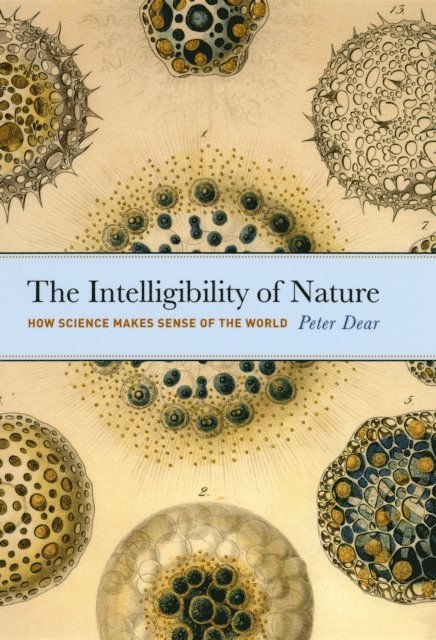
Intelligibility of Nature
How Science Makes Sense of the World
Av Peter Dear
E-bok, 2008
355 kr
Lägg i varukorg
Throughout the history of the Western world, science has possessed an extraordinary amount of authority and prestige. And while its pedestal has been jostled by numerous evolutions and revolutions, science has always managed to maintain its stronghold as the knowing enterprise that explains how the …
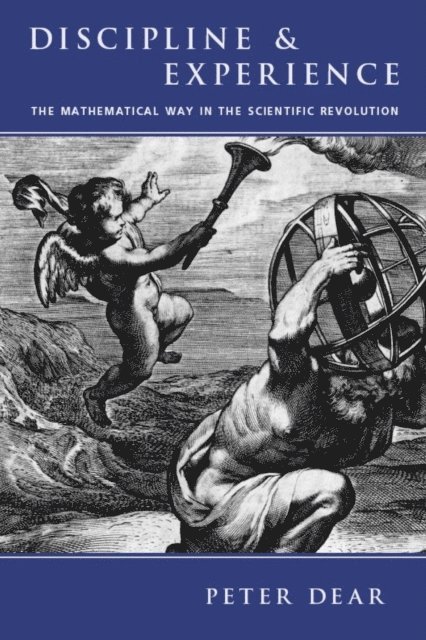
Discipline and Experience
The Mathematical Way in the Scientific Revolution
Av Peter Dear
E-bok, 2009
908 kr
Lägg i varukorg
Although the Scientific Revolution has long been regarded as the beginning of modern science, there has been little consensus about its true character. While the application of mathematics to the study of the natural world has always been recognized as an important factor, the role of experiment …
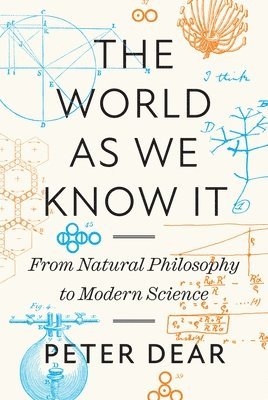
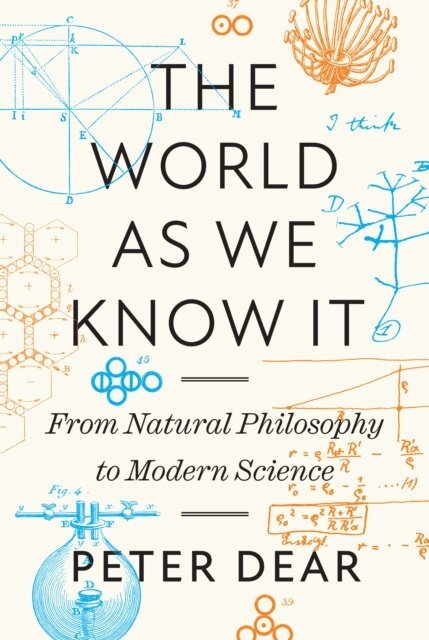
World as We Know It
From Natural Philosophy to Modern Science
Av Peter Dear
Inbunden, 2025
306 kr
Lägg i varukorg
From the award-winning author of Revolutionizing the Sciences, a monumental historical account of how we came to see the world through the lens of scienceScience is the basis of our assumptions about ourselves and our world, from ideas about our evolutionary past to our conceptions of the vast …
World as We Know It
From Natural Philosophy to Modern Science
Av Peter Dear
E-bok, 2025
428 kr
Lägg i varukorg
From the award-winning author of Revolutionizing the Sciences , a monumental historical account of how we came to see the world through the lens of science Science is the basis of our assumptions about ourselves and our world, from ideas about our evolutionary past to our conceptions of the vast …
Literary Structure of Scientific Argument
Historical Studies
Av Peter Dear
Inbunden, 1991
796 kr
Lägg i varukorg
In this volume, seven historians of science examine the historical creation and meaning of a range of scientific textual forms from the seventeenth to the late nineteenth centuries. They consider examples from the fields of chemistry, medicine, physics, zoology, physiology, and mathematics, …
Reason and Experience
Studies in Early Modern Science
Av Peter Dear
Inbunden, 2026
2468 kr
Kommande
Early modern Europe witnessed the rise of new ways of creating knowledge of the natural world, ways often encapsulated by historians under the label “Scientific Revolution.” The studies in this book investigate some of the most fundamental of these novelties, concentrating especially on the …
Scientific Practices in European History, 1200-1800
A Book of Texts
Av Peter Dear
Inbunden, 2017
2190 kr
Lägg i varukorg
Scientific Practices in European History, 1200–1800 presents and situates a collection of extracts from both widely known texts by such figures as Copernicus, Newton, and Lavoisier, and lesser known but significant items, all chosen to provide a perspective on topics in social, cultural and …
Scientific Practices in European History, 1200-1800
A Book of Texts
Av Peter Dear
Häftad, 2017
665 kr
Lägg i varukorg
Scientific Practices in European History, 1200–1800 presents and situates a collection of extracts from both widely known texts by such figures as Copernicus, Newton, and Lavoisier, and lesser known but significant items, all chosen to provide a perspective on topics in social, cultural and …
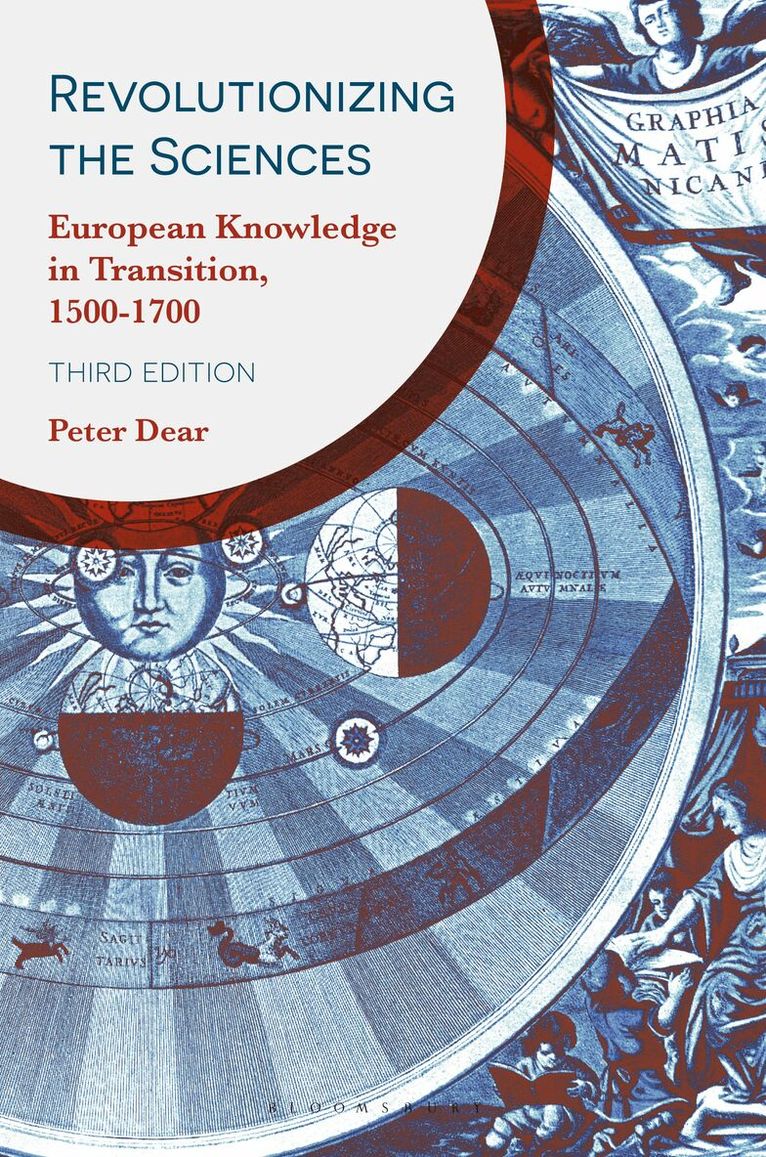
Revolutionizing the Sciences
European Knowledge in Transition, 1500-1700
Av Peter Dear
E-bok, 2018
466 kr
Lägg i varukorg
This heavily revised third edition of an award-winning text offers a keen insight into the development of scientific thought in early modern Europe. Including coverage of the central scientific figures of the time, including Copernicus, Kelper, Galileo, Newton and Bacon, this book provides a …
Scientific Practices in European History, 1200-1800
A Book of Texts
Av Peter Dear
E-bok, 2017
768 kr
Lägg i varukorg
Scientific Practices in European History, 1200–1800 presents and situates a collection of extracts from both widely known texts by such figures as Copernicus, Newton, and Lavoisier, and lesser known but significant items, all chosen to provide a perspective on topics in social, cultural and …
Scientific Practices in European History, 1200-1800
A Book of Texts
Av Peter Dear
E-bok, 2017
785 kr
Lägg i varukorg
Scientific Practices in European History, 1200–1800 presents and situates a collection of extracts from both widely known texts by such figures as Copernicus, Newton, and Lavoisier, and lesser known but significant items, all chosen to provide a perspective on topics in social, cultural and …
Revolutionizing the Sciences
European Knowledge in Transition, 1500-1700
Av Peter Dear
Häftad, 2018
428 kr
Lägg i varukorg
This heavily revised third edition of an award-winning text offers a keen insight into the development of scientific thought in early modern Europe. Including coverage of the central scientific figures of the time, including Copernicus, Kelper, Galileo, Newton and Bacon, this book provides a …
Revolutionizing the Sciences
European Knowledge in Transition, 1500-1700
Av Peter Dear
E-bok, 2018
466 kr
Lägg i varukorg
This heavily revised third edition of an award-winning text offers a keen insight into the development of scientific thought in early modern Europe. Including coverage of the central scientific figures of the time, including Copernicus, Kelper, Galileo, Newton and Bacon, this book provides a …
Literary Structure of Scientific Argument
Historical Studies
Av Peter Dear
E-bok, 2015
957 kr
Lägg i varukorg
In this volume, seven historians of science examine the historical creation and meaning of a range of scientific textual forms from the seventeenth to the late nineteenth centuries. They consider examples from the fields of chemistry, medicine, physics, zoology, physiology, and mathematics, …
Discipline and Experience
The Mathematical Way in the Scientific Revolution
Av Peter Dear
Inbunden, 1995
1007 kr
Tillfälligt slut
Although the scientific revolution has long been regarded as the beginning of modern science, there has been little consensus about its true character. While the application of mathematics to the study of the natural world has always been recognized as an important factor, the role of experiment …
Revolutionizing the Sciences: European Knowledge in Transition, 1500-1700 Third Edition
Av Peter Dear
Häftad, 2019
279 kr
Tillfälligt slut