Peter Earle - Böcker
Visar alla böcker från författaren Peter Earle. Handla med fri frakt och snabb leverans.
6 produkter
6 produkter
292 kr
Skickas inom 3-6 vardagar
246 kr
Skickas
"Treasure Hunt" is the story of a national obsession. Dreams of Spanish treasure, of unearned gold at the bottom of the sea, have been a part of the English psyche since long before effective diving equipment was invented. In 1687, Captain William Phips weighed anchor in English waters with an incredible cargo - nearly forty tons of silver and gold, the treasure of the Spanish galleon Concepcion, wrecked over forty years before on a coral reef in the middle of the ocean. This treasure in coins and bullion had been raised by naked divers, unaided by breathing equipment. The great British treasure-hunting boom had begun. Over the next two hundred years, many such adventures, most based on extremely dubious information, were begun, with many fortunes and lives lost in the process. The real boom for underwater treasure hunting took place in the 1690s, with the invention of crude, very dangerous diving equipment. And, with the advent of the stock market, gambling and treasure-hunting became closely connected to the birth of modern capitalism.In the 18th and 19th centuries, treasure-hunting became a professional occupation, with a new breed of diver emerging to salvage the wrecks of English and Dutch East-Indiamen carrying treasure to finance purchases in Asia. World-renowned naval historian Peter Earle returns with an extraordinary and little-known history of a peculiarly English phenomenon - of outstanding bravery, of exceptional recklessness, and above all, of dreams of treasure.
613 kr
Skickas inom 10-15 vardagar
550 kr
Skickas inom 10-15 vardagar
1 908 kr
Skickas inom 7-10 vardagar
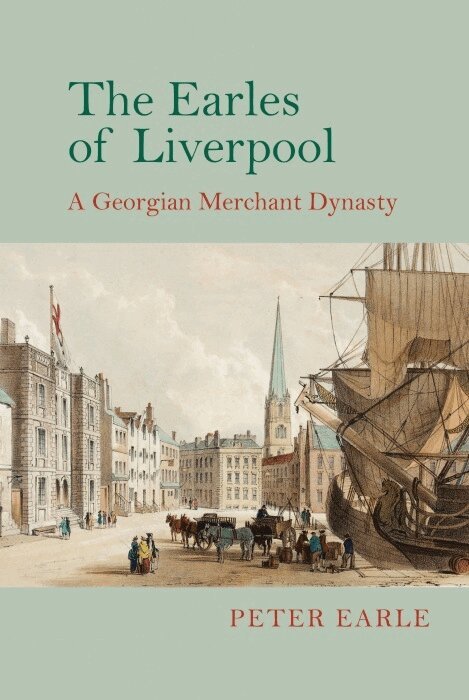
This book uses the experience of three generations of the Earle family to throw light on the social and economic history of Liverpool during its rise to prominence as a great port, from 1688 to 1840. The focus is on six members of this successful family, John who came to Liverpool as apprentice to a merchant in 1688, his three sons, Ralph, Thomas and William, who all became merchants specializing in different branches of the trade of the port, and William’s two sons, another Thomas and another William, who consolidated the fortunes of the family and began the process of converting their wealth into gentility. The approach is descriptive rather than theoretical, and the aim throughout has been to make the book entertaining as well as informative.Where sources permit, the book describes the businesses run by these men, often in considerable detail. Trading in slaves was an important part of the business of three of them, but they and other members of the family also engaged in a variety of other trades, such as the import-export business with Leghorn (Livorno) in Italy, fishing in Newfoundland and the Shetland Islands, the wine and fruit trades of Spain, Portugal and the Azores, the import of raw cotton for the industries of the Industrial Revolution and the Russia trade. Other family interests included privateering, art collection and the trade in art, a sugar plantation in Guyana, and the emigrant trade. While the book is mainly a work of economic history, there is also much on the merchants’ wives and families and on the social history of both Liverpool and Livorno.
519 kr
Skickas inom 7-10 vardagar
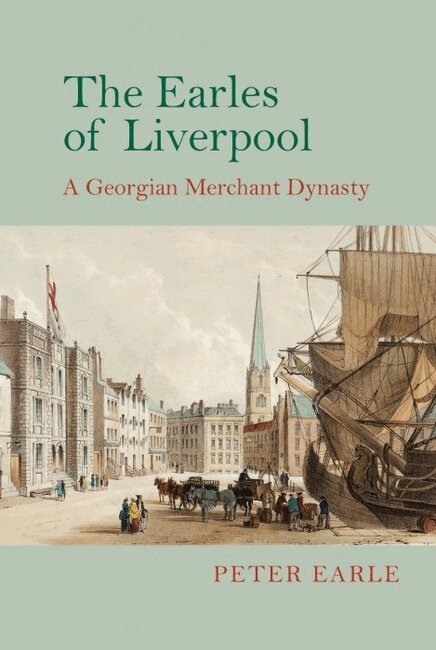
This book uses the experience of three generations of the Earle family to throw light on the social and economic history of Liverpool during its rise to prominence as a great port, from 1688 to 1840. The focus is on six members of this successful family, John who came to Liverpool as apprentice to a merchant in 1688, his three sons, Ralph, Thomas and William, who all became merchants specializing in different branches of the trade of the port, and William’s two sons, another Thomas and another William, who consolidated the fortunes of the family and began the process of converting their wealth into gentility. The approach is descriptive rather than theoretical, and the aim throughout has been to make the book entertaining as well as informative.Where sources permit, the book describes the businesses run by these men, often in considerable detail. Trading in slaves was an important part of the business of three of them, but they and other members of the family also engaged in a variety of other trades, such as the import-export business with Leghorn (Livorno) in Italy, fishing in Newfoundland and the Shetland Islands, the wine and fruit trades of Spain, Portugal and the Azores, the import of raw cotton for the industries of the Industrial Revolution and the Russia trade. Other family interests included privateering, art collection and the trade in art, a sugar plantation in Guyana, and the emigrant trade. While the book is mainly a work of economic history, there is also much on the merchants’ wives and families and on the social history of both Liverpool and Livorno.