Peter Faulkner - Böcker
Visar alla böcker från författaren Peter Faulkner. Handla med fri frakt och snabb leverans.
10 produkter
10 produkter
25 471 kr
Skickas inom 10-15 vardagar
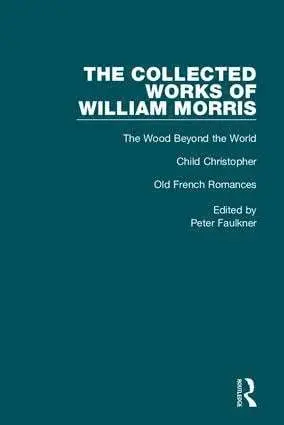
The definitive edition of the works of William Morris, (1834-1896) - poet, artist, manufacturer, socialist, author and one of the most remarkable men of recent times. Lovingly edited by his daughter May, it was originally published by Longmans, Green and Company in twenty-four volumes (1910 to 1915).The collection is exhaustive and includes the poetical works, prose romances and essays on art and politics as well as Morris's translations from the classics, Early English, French and Icelandic Sagas.Handsomely produced and printed in an elegant and easily-readable typeface, the original editions were limited to a total of just one thousand and fifty copies. The highly-informed and sympathetic introductions by May Morris make a substantial contribution to the value of this collection for both the general reader and scholar.
5 284 kr
Skickas inom 10-15 vardagar
The Critical Heritage gathers together a large body of critical sources on major figures in literature. Each volume presents contemporary responses to a writer's work, enabling students and researchers to read for themselves, for example, comments on early performances of Shakespeare's plays, or reactions to the first publication of Jane Austen's novels. The carefully selected sources range from landmark essays in the history of criticism to journalism and contemporary opinion, and little published documentary material such as letters and diaries. Significant pieces of criticism from later periods are also included, in order to demonstrate the fluctuations in an author's reputation. Each volume contains an introduction to the writer's published works, a selected bibliography, and an index of works, authors and subjects. The Collected Critical Heritage set will be available as a set of 68 volumes and the series will also be available in mini sets selected by period (in slipcase boxes) and as individual volumes.
2 288 kr
Skickas inom 10-15 vardagar
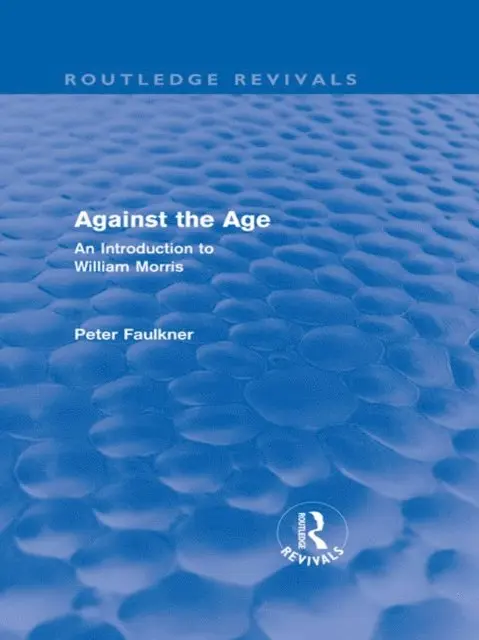
Students new to the work of William Morris will find the full range of his achievements covered in this reissue of Peter Faulkner's excellent biography, first published in 1980. The author has carefully placed Morris in the context of the Victorian age, but has also suggested the relevance of his ideas today. The six chapters are organised biographically and cover all aspects of Morris’s work in poetry, fiction, design and socialist politics. The emphasis is on his continuous struggle against the age in which he lived, seen as an idealism which went through various stages from the wistfulness of The Earthly Paradise through the practical activities of the firm of Morris & Company to the socialism of Morris's later years. The book quotes freely from writings by Morris which are not easily accessible and gives an overall account from which the student can develop his specialist interests. This reissue will appeal to sixth-formers and undergraduates interested in the Victorian period, as seen through one of its most striking personalities.When this book appeared in 1980, Morris’s reputation had risen again after the low estimates of the interwar period. This was due both to the reappraisal of his politics and to the expanding popularity of his designs. Against the Age offers a clear account of Morris’s career for those developing an interest in his numerous achievements. It covers the whole range of Morris’s work, and argues for his significance as a writer of both poetry and prose. Since 1980 our knowledge of Morris has been enriched by the publication of Norman Kelvin’s edition of his Collected Letters, by the late Nicholas Salmond’s editions of his contributions to the socialist journals, by Fiona MacCarthy’s biography of 1984, and by the increasing recognition of Morris as a pioneer of environmentalism. However, the book retains its value for its wide coverage and its balanced attitude to Morris’s achievements, and for its encouragement to readers to consider the issues that make Morris of continuing importance today.
612 kr
Skickas inom 10-15 vardagar
Students new to the work of William Morris will find the full range of his achievements covered in this reissue of Peter Faulkner's excellent biography, first published in 1980. The author has carefully placed Morris in the context of the Victorian age, but has also suggested the relevance of his ideas today. The six chapters are organised biographically and cover all aspects of Morris’s work in poetry, fiction, design and socialist politics. The emphasis is on his continuous struggle against the age in which he lived, seen as an idealism which went through various stages from the wistfulness of The Earthly Paradise through the practical activities of the firm of Morris & Company to the socialism of Morris's later years. The book quotes freely from writings by Morris not easily accessible at present and gives an overall account from which the student can develop his specialist interests. This reissue will appeal to sixth-formers and undergraduates interested in the Victorian period, as seen through one of its most striking personalities.
1 240 kr
Skickas inom 10-15 vardagar
First published in 1977, this book focuses on Modernism, one of the most frequently used terms in the discussion of twentieth-century literature and culture. It provides an historical account of the concept, showing the relation of Modernism to Victorian culture and uses the work of Henry James and W. B. Yeats in its analysis. The text focuses on the time period between 1910 and 1930 and considers the criticism of T. S. Eliot and Virginia Woolf, Joyce’s Ulysses, Pound’s Hugh Selwyn Mauberley and the complex relationship of D. H. Lawrence to Modernism. The author also includes a section on developments since 1930 to show both the value of Modernism as a critical term, and the problems of achieving an exact usage.
569 kr
Skickas inom 10-15 vardagar
First published in 1977, this book focuses on Modernism, one of the most frequently used terms in the discussion of twentieth-century literature and culture. It provides an historical account of the concept, showing the relation of Modernism to Victorian culture and uses the work of Henry James and W. B. Yeats in its analysis. The text focuses on the time period between 1910 and 1930 and considers the criticism of T. S. Eliot and Virginia Woolf, Joyce’s Ulysses, Pound’s Hugh Selwyn Mauberley and the complex relationship of D. H. Lawrence to Modernism. The author also includes a section on developments since 1930 to show both the value of Modernism as a critical term, and the problems of achieving an exact usage.
772 kr
Skickas inom 10-15 vardagar
The Critical Heritage gathers together a large body of critical sources on major figures in literature. Each volume presents contemporary responses to a writer's work, enabling students and researchers to read for themselves, for example, comments on early performances of Shakespeare's plays, or reactions to the first publication of Jane Austen's novels. The carefully selected sources range from landmark essays in the history of criticism to journalism and contemporary opinion, and little published documentary material such as letters and diaries. Significant pieces of criticism from later periods are also included, in order to demonstrate the fluctuations in an author's reputation. Each volume contains an introduction to the writer's published works, a selected bibliography, and an index of works, authors and subjects. The Collected Critical Heritage set will be available as a set of 68 volumes and the series will also be available in mini sets selected by period (in slipcase boxes) and as individual volumes.
290 kr
Skickas inom 5-8 vardagar
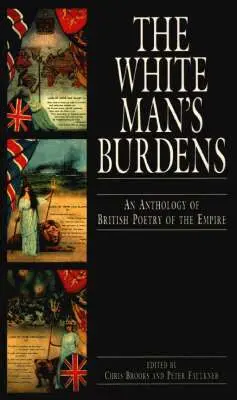
In 1898, notoriously, Kipling urged the imperialist nations to 'Take up the White Man's Burden' the following year, in Satan Absolved, Wilfrid Scawen Blunt angrily replied, 'The White Man's Burden, Lord, is the burden of his cash'. Such ideological conflicts - and a whole range of intermediate positions - feature in much of the poetry British writers produced about the British Empire over the four centuries of its rise and fall. The discourses of postcolonialism have drawn attention to the major and continuing significance of the cultural products of the period of Western imperialism. But, so far, they have concentrated largely upon fiction and upon the writings and experiences of those parts of the world that were subject to colonialism and imperialist oppression.For the first time, The White Man's Burdens offers a cross-section of British poetry in which the Empire was the burden of the song. The material, much of it previously uncollected, is drawn from a broad cultural spectrum that includes narrative poetry, heroic verse, patriotic ballads, music hall monologues, and poems from Punch. A substantial Introduction sets the poems in the context of the economic, political, and ideological development of British imperial rule, and headnotes historicize the poems themselves, which are presented chronologically - from George Chapman's 'De Guiana: Carmen Epicum' of 1596 to Fred D'Aguiar's 'At the Grave of the Unknown African' of 1993.The result is a poetic summary of the changing attitudes of an imperialist nation to its own imperialism, attitudes which range from jingoism and racism, through religious idealism and liberal anxiety, to outright disgust at the whole enterprise.
872 kr
Tillfälligt slut
In 1898, notoriously, Kipling urged the imperialist nations to 'Take up the White Man's Burden' the following year, in Satan Absolved, Wilfrid Scawen Blunt angrily replied, 'The White Man's Burden, Lord, is the burden of his cash'. Such ideological conflicts - and a whole range of intermediate positions - feature in much of the poetry British writers produced about the British Empire over the four centuries of its rise and fall. The discourses of postcolonialism have drawn attention to the major and continuing significance of the cultural products of the period of Western imperialism. But, so far, they have concentrated largely upon fiction and upon the writings and experiences of those parts of the world that were subject to colonialism and imperialist oppression.For the first time, The White Man's Burdens offers a cross-section of British poetry in which the Empire was the burden of the song. The material, much of it previously uncollected, is drawn from a broad cultural spectrum that includes narrative poetry, heroic verse, patriotic ballads, music hall monologues, and poems from Punch. A substantial Introduction sets the poems in the context of the economic, political, and ideological development of British imperial rule, and headnotes historicize the poems themselves, which are presented chronologically - from George Chapman's 'De Guiana: Carmen Epicum' of 1596 to Fred D'Aguiar's 'At the Grave of the Unknown African' of 1993.The result is a poetic summary of the changing attitudes of an imperialist nation to its own imperialism, attitudes which range from jingoism and racism, through religious idealism and liberal anxiety, to outright disgust at the whole enterprise.
1 086 kr
Skickas inom 5-8 vardagar
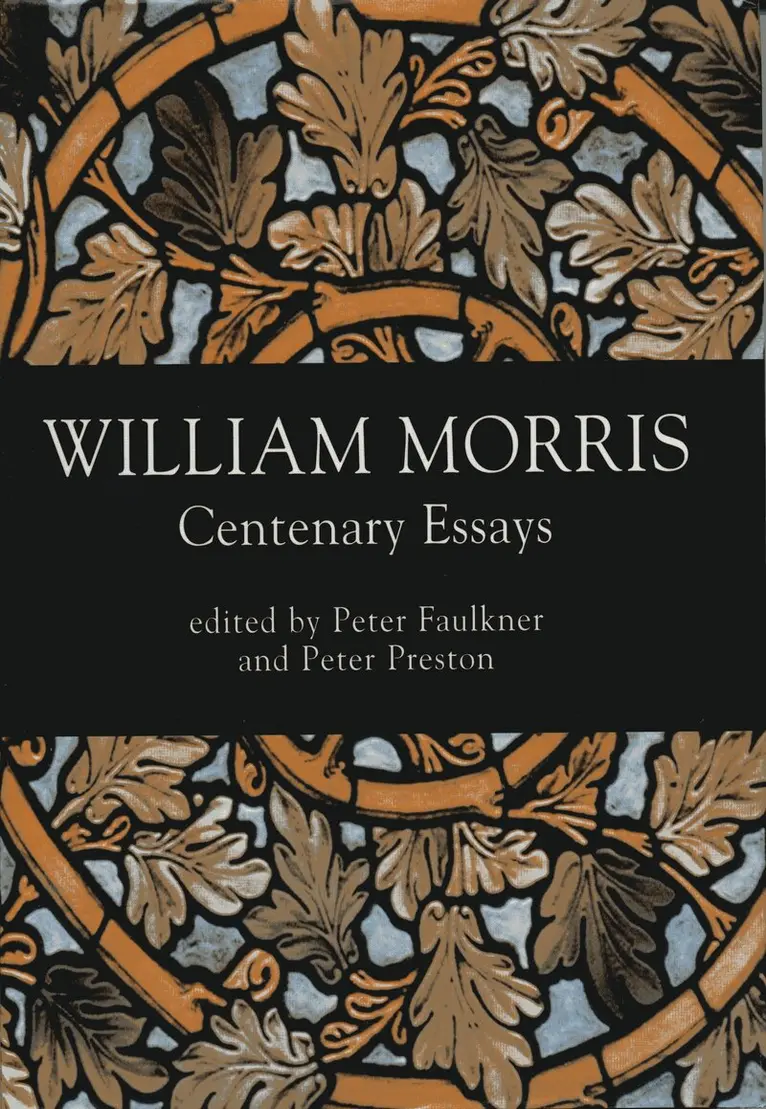
This well illustrated book celebrates every aspect of the wide-ranging achievements of William Morris - writer, designer, cultural critic, revolutionary socialist - with particular emphasis on their relevance to our own times. The book makes available up-to-date Morris scholarship in accessible form. Written by a group of international scholars who took part in a conference marking the centenary of the death of Morris in 1896, the book has sections devoted to Morris and Literature (covering texts from The Earthly Paradise to the late romances); Morris, the Arts & Crafts and the New World (including discussions of his influence in Rhode Island, Boston, Ontario and New Zealand); and Morris, Gender and Politics (with fresh consideration of his relation to Victorian ideas of manliness and of the particular qualities of his anti-statist politics). The latter section also draws attention to a hitherto unknown play by Morris's daughter May and concludes with an account of his biographer, the late E.P. Thompson.