Peter Guest - Böcker
Visar alla böcker från författaren Peter Guest. Handla med fri frakt och snabb leverans.
2 produkter
2 produkter
Del 126 - Archaeopress Roman Archaeology
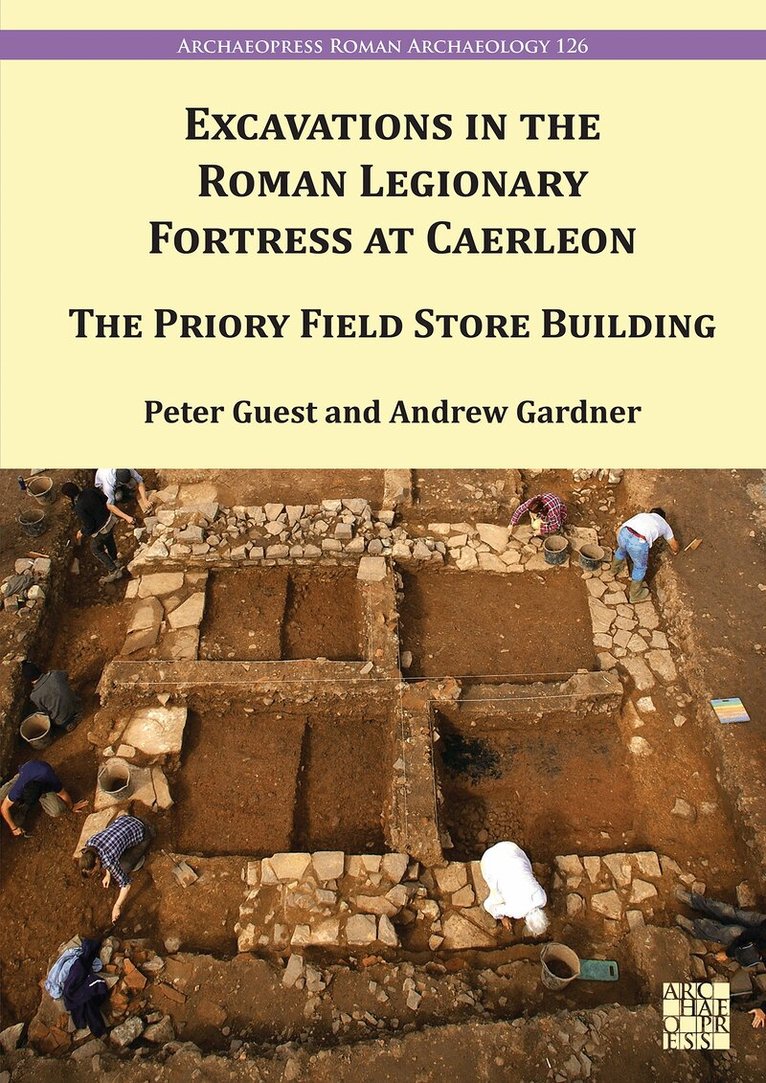
Excavations in the Roman Legionary Fortress at Caerleon
The Priory Field Store Building, 2007-2010
Häftad, Engelska, 2025
755 kr
Skickas
The Priory Field excavation, carried out between 2007 and 2010, was a research, training and engagement project that investigated a large courtyard store-building in the legionary fortress of Isca at Caerleon. This was the first building of its kind excavated to modern standards in the Roman Empire and the excavation exposed the building’s main entranceway, a guard chamber, a stairwell and four store rooms. The coins and pottery provide an excellent chronological sequence for the store, which was constructed around AD 90-100 and remained in use until the end of the 3rd century, after which it fell into a derelict state before being partially demolished and levelled by around 350. Debris from the building’s collapse and demolition sealed the floors of two store rooms, one of which was littered with items of military equipment, many of which survived in a very fragile condition. These included the highly fragmentary remains of a rare example of an elaborately decorated horse’s headpiece (chamfron), at least one set of dismantled Newstead-type lorica segmentata body armour, as well as another set of unusual scale armour. Two new buildings were constructed among the ruins of the partially demolished legionary store, including a cottage-like building that radiocarbon dating demonstrates was in use between 430 and 600. This wide-ranging and comprehensive report of the Priory Field excavation contains many fascinating stories about life in Caerleon during the Roman period and in the years after the ending of Britannia at the beginning of the 5th century.
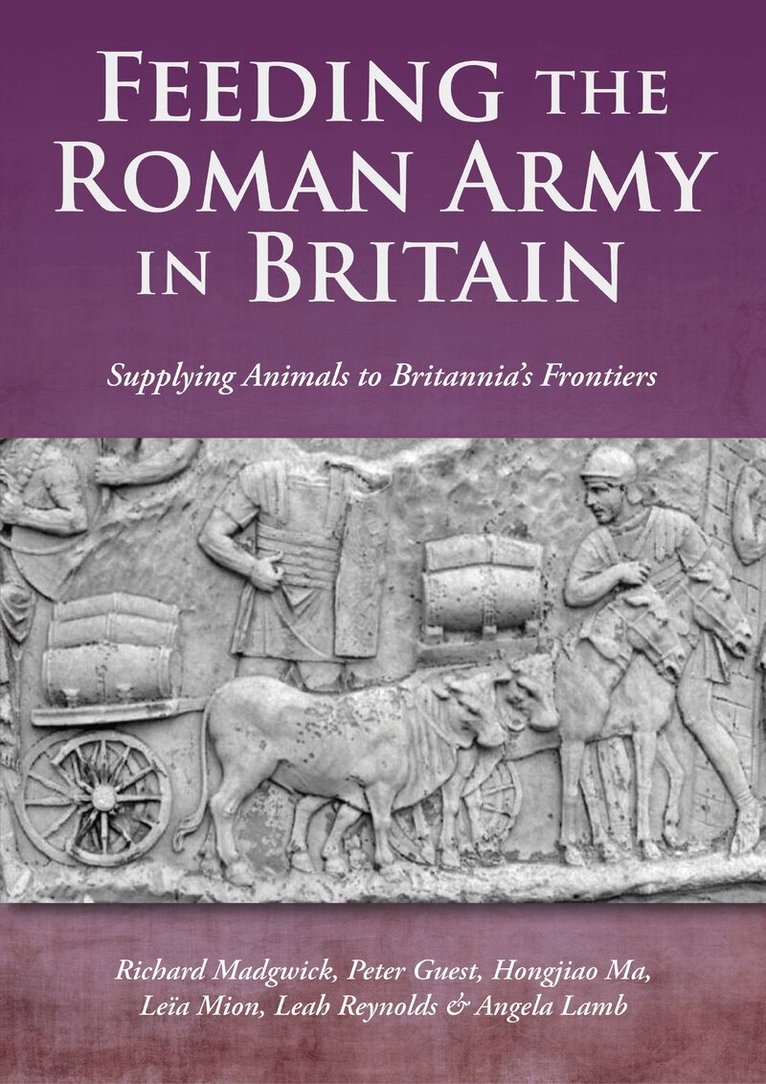
Feeding the Roman Army in Britain
Isotopes and the Provisioning of Animals to Britannia’s Frontiers
Häftad, Engelska, 2026
986 kr
Kommande
This volume presents the results of the Leverhulme Trust-funded project ‘Feeding the Roman Army in Britain’ (FRAB) – an ambitious interdisciplinary project that has transformed understanding of the supply networks and husbandry strategies that provisioned the army on Britannia’s frontiers.Rome’s success as an ancient superpower ultimately depended on the capacity to deploy and maintain large numbers of professional soldiers in static defensive frontier garrisons. Until recently we had only limited understanding of how the logistical challenges of supplying these frontiers were met, or the impact this had on frontier provinces and their populations. These themes are at the forefront of Roman studies and FRAB provides, for the first time, a more sophisticated understanding of the British frontiers as economic as well as militarised zones.Employing a groundbreaking programme of multi-isotope analysis, FRAB focuses on the production and supply of cattle, sheep/goats and pigs in Roman Britain’s frontier regions: South Wales, Hadrian’s Wall and the Antonine Wall. The project’s objectives are to:·identify the supply networks to forts and fortresses on the frontiers by establishing the origins of the main taxa consumed;·reconstruct animal and landscape management strategies (i.e. manuring, foddering regimes and diet), and investigate evidence for agricultural intensification and/or extensification to meet the needs of the Roman army;·explore chronological variation in supply and animal management, to establish if and how frontier supply changed over time.Cattle, sheep/goats and pigs were examined from 15 target sites in the three frontier regions, producing the largest faunal multi-isotope dataset yet delivered globally. Analysis concentrated on material from early occupation phases to explore the supply networks that fed the Roman army’s appetite for animals and animal products in the decades after the frontiers were established. These sites include legionary fortresses, auxiliary forts, supply bases, as well as selected rural settlements, bringing together, for the first time, two key categories of Romano-British settlements – military and rural – to examine how these sites (and landscapes) were connected.Four isotope systems were employed to provide evidence for animal origins and supply networks (strontium [87Sr/86Sr] and sulfur [δ34S]), and management strategies (carbon [δ13C] and nitrogen [δ15N]). This is the first project of this type to integrate archaeological, historical and scientific methods, while also connecting university research with (under-utilised) museum collections.After describing the background to the project and overviews of previous research on the provisioning of the Roman army, the results of the multi-isotope analytical programme are presented, which are followed by in-depth discussions of the project’s main research objectives.