Peter Hänggi - Böcker
Visar alla böcker från författaren Peter Hänggi. Handla med fri frakt och snabb leverans.
3 produkter
3 produkter
1 064 kr
Skickas inom 10-15 vardagar
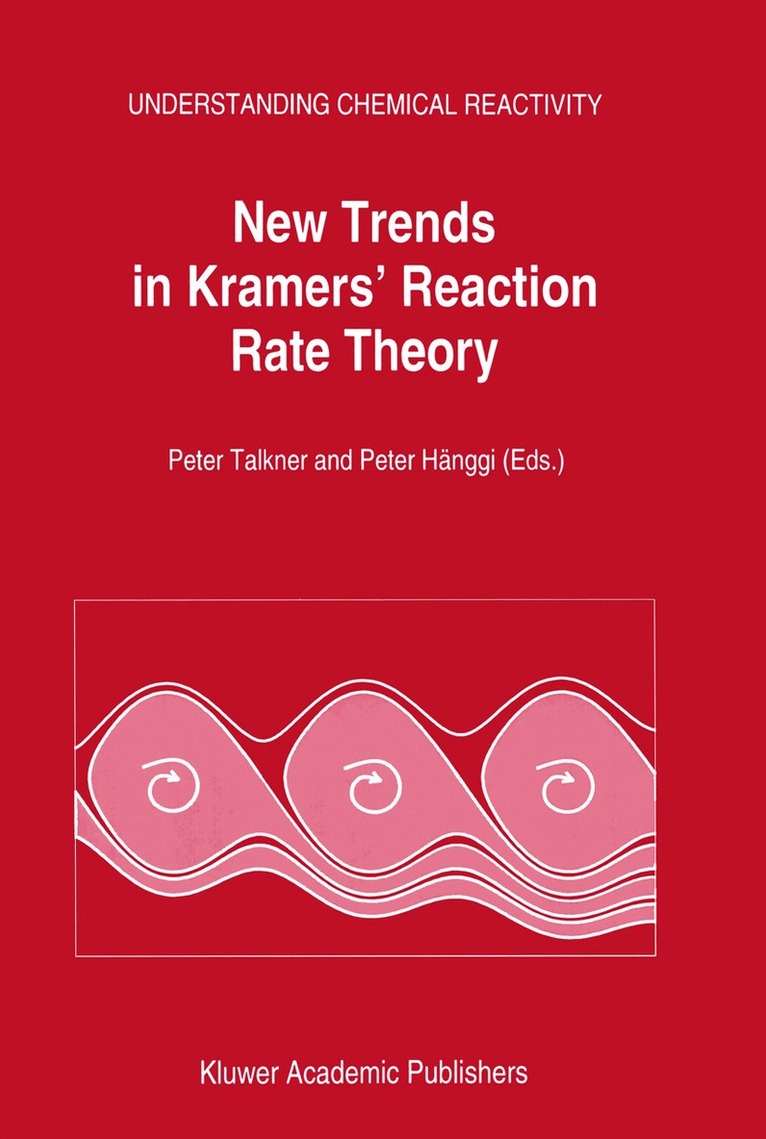
The theme of 'escape from metastable states', either via noise-assisted hop- ping and/or quantum tunneling, is pivotal to many scientific disciplines. It impacts on suchdiversephysical,chemicalandbiologicalprocessesasdiffu- sion in solids, chemical reactions per se, nucleation phenomenaand transfer ofmatter and information in biologicalcomplexes, to name only a few. With 'New Trends in Kramers' Reaction Rate Theory' this book fills yet another part of the multifaceted scope which underpins the Understanding of Chemical Reactivity. Since the publication of the comprehensive review about reaction rate theory in Rev. Mod. Phys. 52, 251 (1990) the field has witnessed many majordevelopments and extensions both in experiment and theory. In this book the focus will be on the theoretical progress. In doing so, the editorscollected aseries ofauthoritative articles from majorpractitioners in the field which as a whole give a representative- although notcomplete- sample ofthe novel recenttheoretical advances. As an inevitable consequence, the editors recognize that not all readers will wish to digest the volume in its entirety.We trust, however, that the reader will be able to choose from the many methods and techniques which he is interested in, and which he requires to perform his own new research in this area. There is the consistent underlying theme of noise-assisted barrier crossing that is running through all of the book. Nevertheless, each chapter should be considered as self contained. In this spirit the editors share the confident beliefthat the future research on the Kramers problem, and related topics, will be invigorated by the selectedcontributions herein.
1 064 kr
Skickas inom 10-15 vardagar
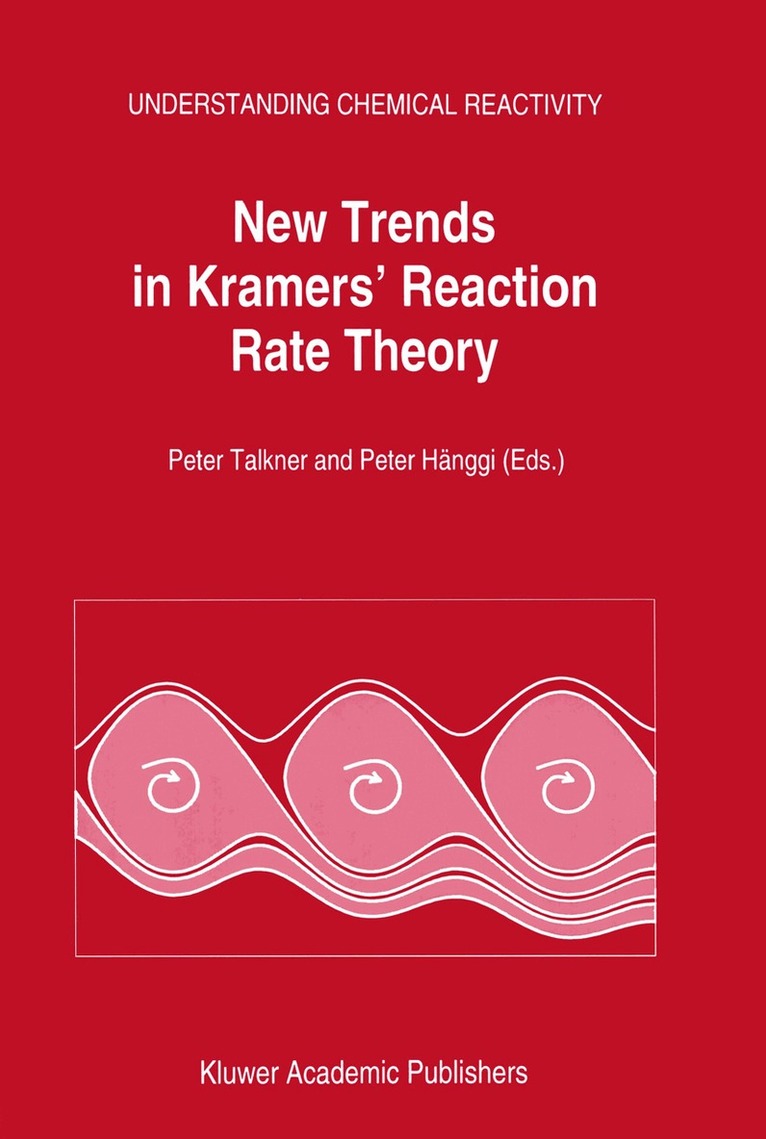
The theme of 'escape from metastable states', either via noise-assisted hop- ping and/or quantum tunneling, is pivotal to many scientific disciplines. It impacts on suchdiversephysical,chemicalandbiologicalprocessesasdiffu- sion in solids, chemical reactions per se, nucleation phenomenaand transfer ofmatter and information in biologicalcomplexes, to name only a few. With 'New Trends in Kramers' Reaction Rate Theory' this book fills yet another part of the multifaceted scope which underpins the Understanding of Chemical Reactivity. Since the publication of the comprehensive review about reaction rate theory in Rev. Mod. Phys. 52, 251 (1990) the field has witnessed many majordevelopments and extensions both in experiment and theory. In this book the focus will be on the theoretical progress. In doing so, the editorscollected aseries ofauthoritative articles from majorpractitioners in the field which as a whole give a representative- although notcomplete- sample ofthe novel recenttheoretical advances. As an inevitable consequence, the editors recognize that not all readers will wish to digest the volume in its entirety.We trust, however, that the reader will be able to choose from the many methods and techniques which he is interested in, and which he requires to perform his own new research in this area. There is the consistent underlying theme of noise-assisted barrier crossing that is running through all of the book. Nevertheless, each chapter should be considered as self contained. In this spirit the editors share the confident beliefthat the future research on the Kramers problem, and related topics, will be invigorated by the selectedcontributions herein.
876 kr
Tillfälligt slut
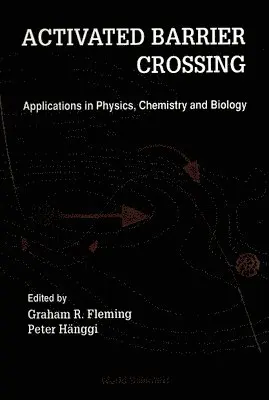
The passage of a system from one minimum energy state to another via a potential energy barrier provides a model for the microscopic description of a wide range of physical, chemical and biological phenomena. Examples include diffusion of atoms in solids or on surfaces, flux transitions in superconducting quantum interference devices (SQUIDS), isometrization reactions in solution, electron transfer processes and ligand binding in proteins. In general, both tunnelling and thermally activated barrier crossing may be involved in determining the rate. This book surveys key experiments chosen from physics, chemistry and biology, and describes theoretical methods appropriate for both classical and quantum barrier crossing. A major feature of the book is the attempt to integrate the experimental and theoretical work in one volume.